
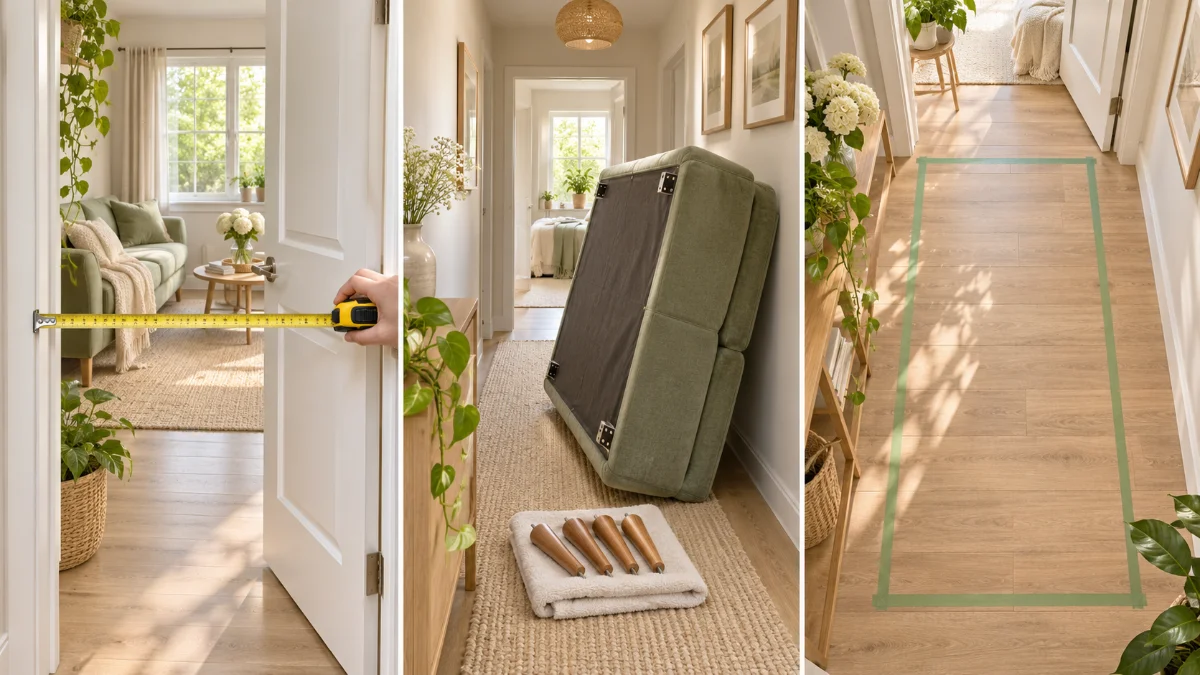
You found the sofa. The color is right, the price is right, and you can already picture it in your living room. Then a small voice asks: will my sofa fit through the door? Answer that before you click buy. Finding out later means two movers stuck in your hallway, each holding one end.
I learned this the hard way in my second apartment. The sofa was 2 inches narrower than my front door, so I thought I was safe. I wasn’t. The hallway turn was too tight. The store took the sofa back and charged me a restocking fee for it.
This guide shows you how to check the fit with a tape measure and about 30 minutes of your time. First you’ll measure the sofa. Then you’ll measure every tight spot from the building entrance to your living room. Last, you’ll compare the two using one rule. That rule is built around the sofa’s diagonal depth, a number most buyers skip. It works because movers almost never carry a sofa flat. They tip it on its back and angle it through the doorway.
You don’t need any special skills. Grab a tape measure and a friend, and let’s find out if this sofa is coming home.
1. Write down the sofa’s height, width, and depth from the product page
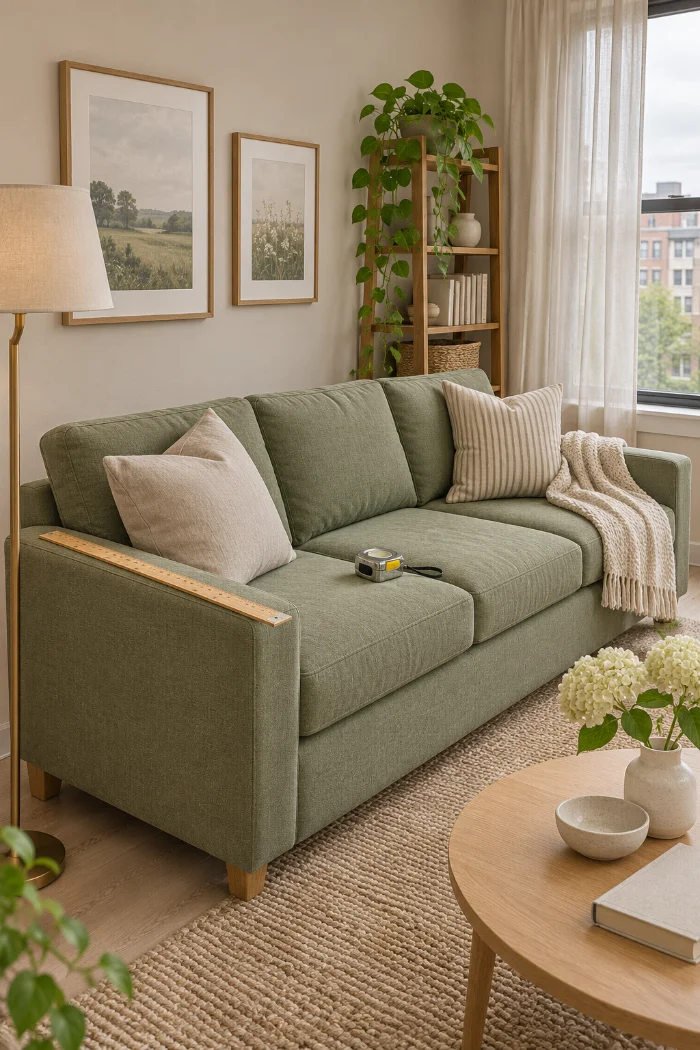
Skip the photos and scroll to the “Dimensions” or “Specifications” section. You need three numbers: height (floor to the top of the back), width (arm to arm), and depth (front edge to back). Write each one in inches. If the listing only shows centimeters, divide by 2.54. Shopping in a store? Ask for the spec sheet, or measure the floor model with your own tape.
2. Measure the sofa’s diagonal depth
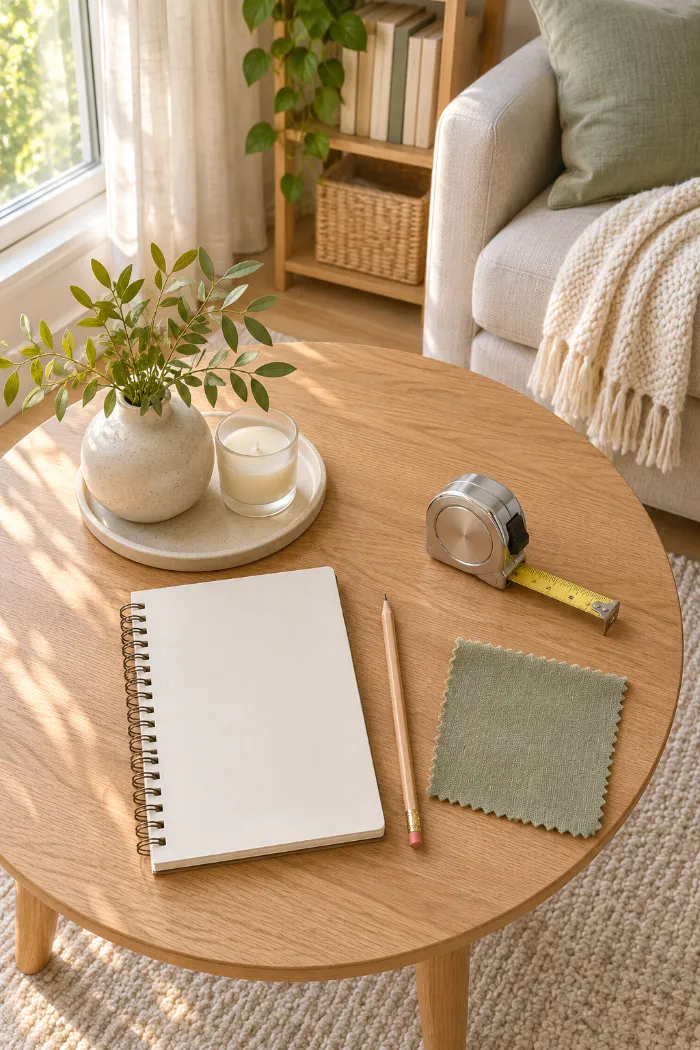
This is the number that decides almost every delivery. Movers tip a sofa onto its back to get it through a door, so the angled depth matters more than the flat one. Some brands list it as “diagonal depth.” If yours doesn’t, have your helper hold the board while you measure:
- Rest the board on the top of the sofa’s back and the front edge of the arm.
- Find the bottom back corner of the sofa frame.
- Measure from that corner straight to the board, keeping the tape square to it, like the corner of a book.
That last number is your diagonal depth.
3. Find out which parts of the sofa come off
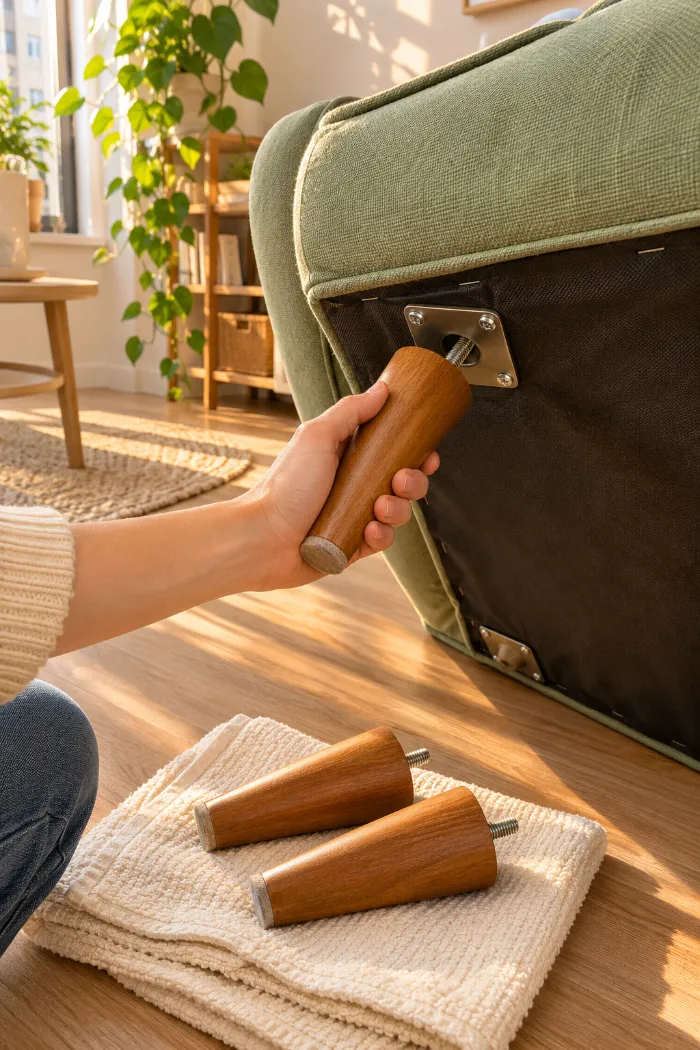
3 to 6 inches of height can come off once the legs are removed. That is often the difference between “no” and “yes.” Check the product details for “removable legs,” “detachable arms,” or “lift-off back.” Then write a second set of numbers without those parts. Some legs look like they screw off but are glued on, so check with the store before you count on it.
4. Walk the delivery path and list every tight spot
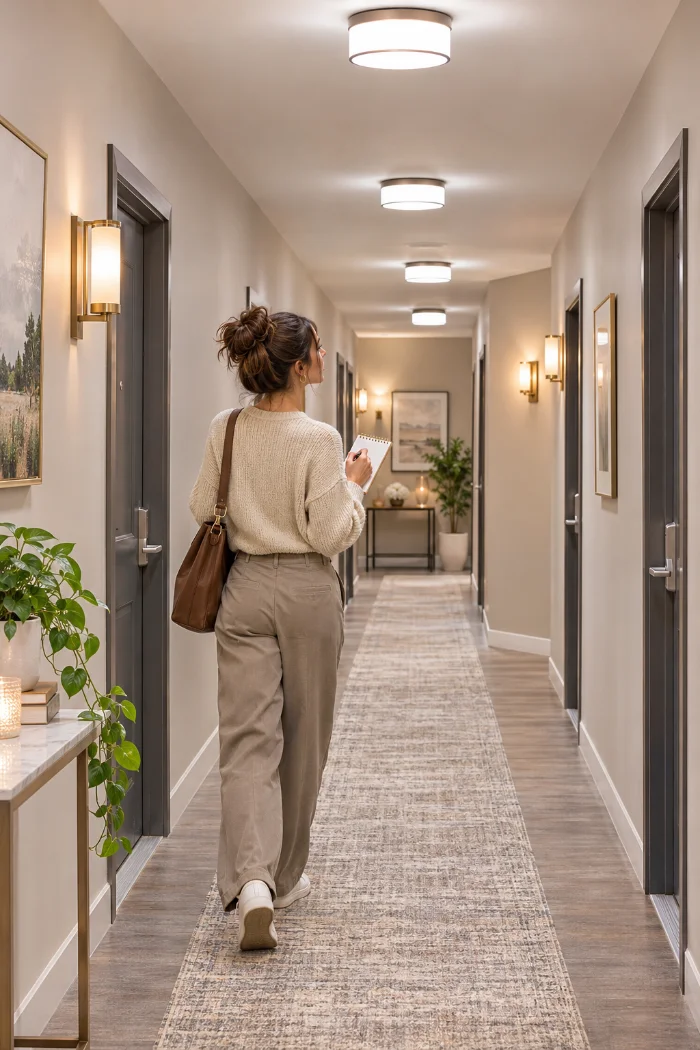
Sofas rarely get stuck at the living room. They get stuck on the way there. Start where the delivery truck will park and walk to the spot where the sofa will sit. Write down every narrow spot, in order:
- The building’s front door
- The elevator or stairs
- Any hallway corner
- Your apartment door
- Inside doors or tight turns
You’ll measure the building door and the inside doors the same way as your front door in Step 7.
5. Measure the elevator or stairwell the movers will use
Live on the ground floor with no steps? Go to Step 6.
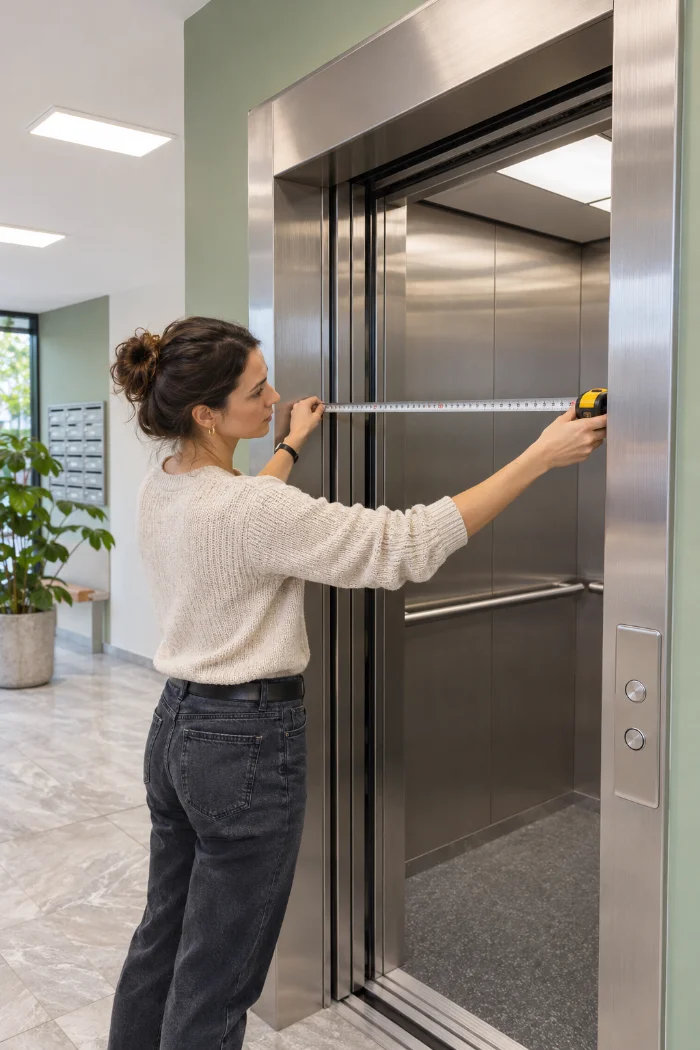
If there’s an elevator, measure the width of the door opening. Then measure inside, from the back wall to the closed door, and from floor to ceiling. Long sofas often ride standing on one end. For that, also measure from the bottom back corner up to the top front corner. That diagonal needs to be longer than the sofa’s width.
If it’s stairs, measure the narrowest point. That’s usually between the handrail and the wall, not wall to wall. Also check the ceiling height above every landing where the sofa has to turn.
6. Measure the hallway width outside your door
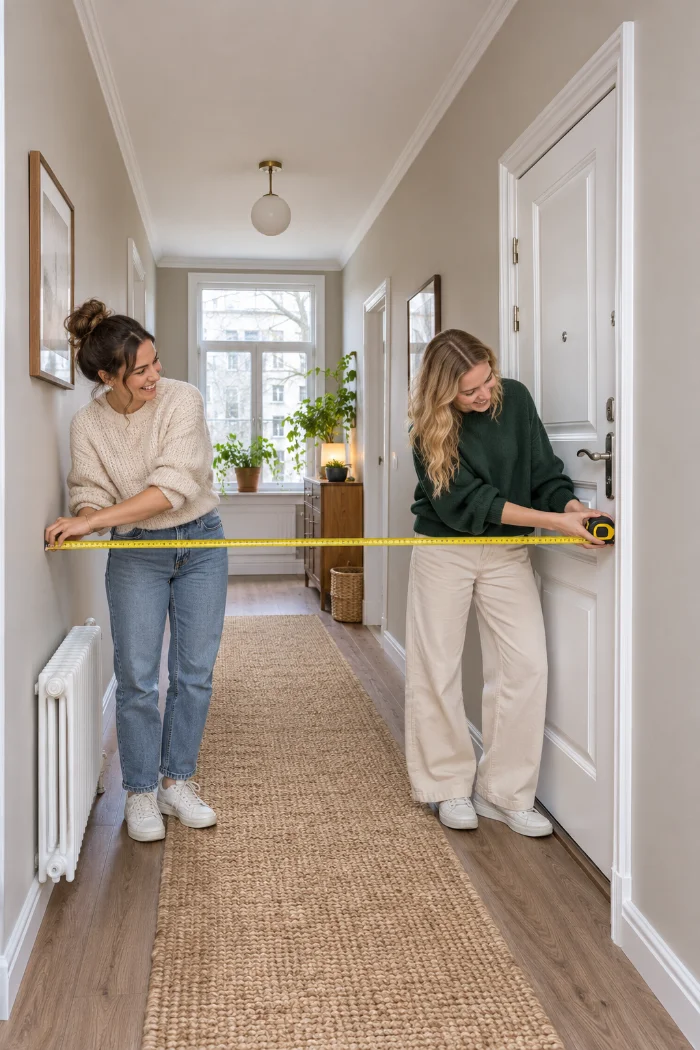
Two hallway numbers matter, and most people take only one. First, measure wall to wall directly in front of your door. Second, measure along the hall from the edge of your door frame to the nearest corner or wall. The second number tells you how much room the movers have to line the sofa up before they turn it into your door. Take both at waist height, since that’s where the sofa will be carried. Watch for anything that sticks out, like a radiator, a light fixture, or a fire extinguisher box. Each one takes away space.
7. Measure your door opening at its narrowest point
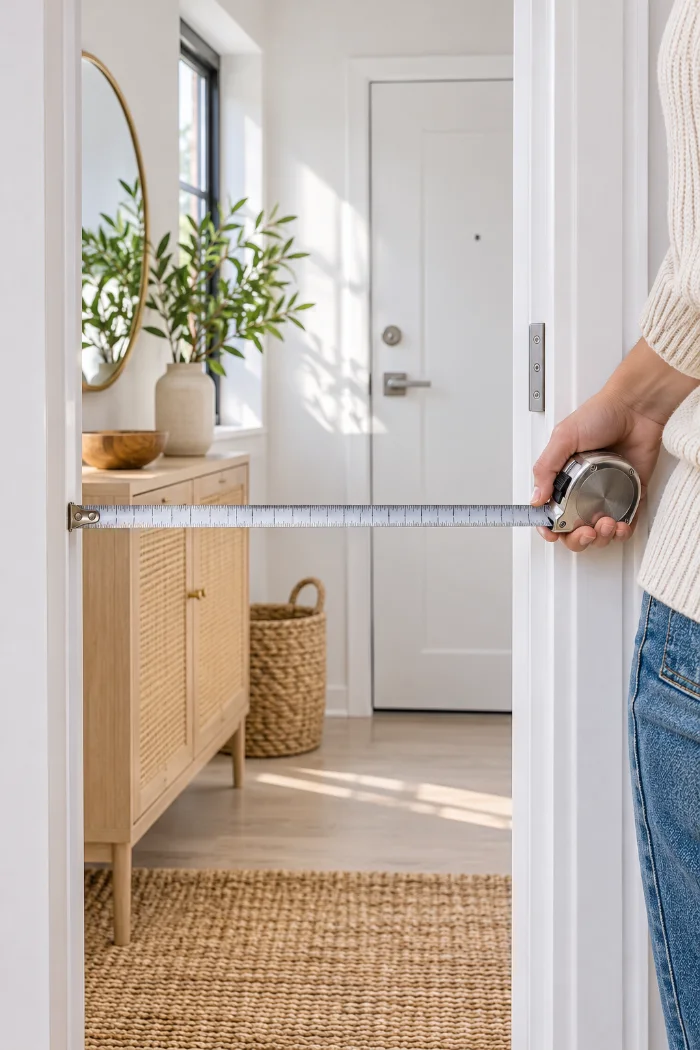
The size a door is sold as isn’t the space you actually get. Open the door all the way. Find the door stop on the latch side. That’s the thin wood strip the door closes against. Measure from it to the face of the open door on the hinge side. Measure at waist height, then near the top and near the bottom, and keep the smallest number. A door sold as 36 inches wide often gives only about 33 inches of real space.
8. Measure the height of the door opening
80 inches is the standard height for most US doors, but older buildings and basement units can be shorter. Measure from the top of the threshold (the raised strip on the floor) up to the underside of the door frame. This number matters when movers stand the sofa on its end to swing it through.
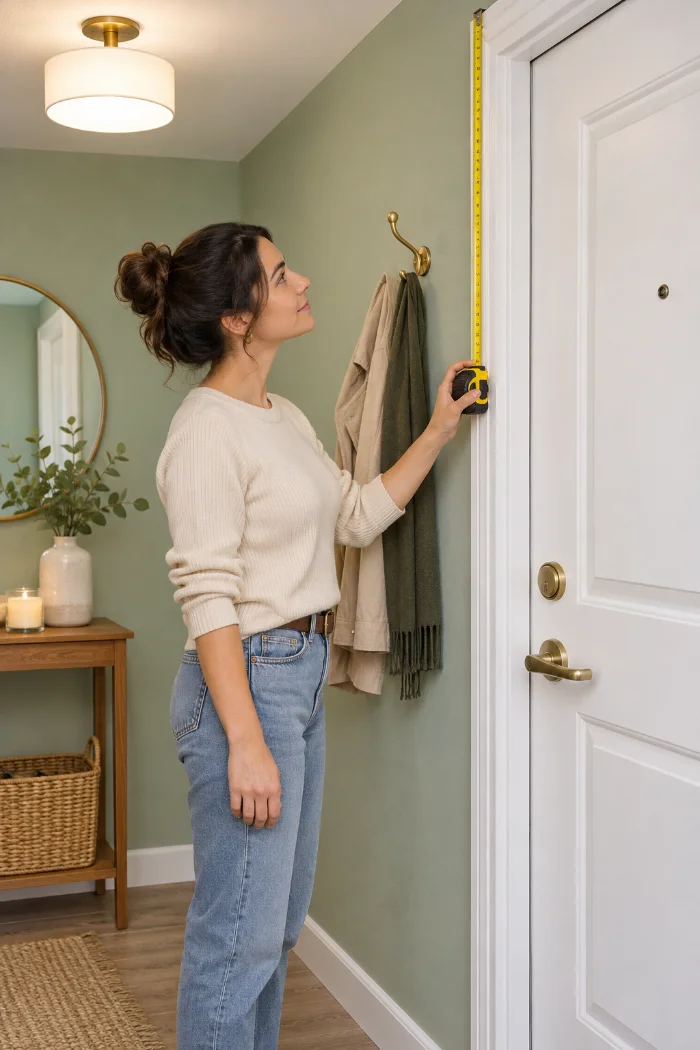
9. Compare your numbers to answer “will my sofa fit through the door”
Before you compare anything, circle the smallest width on your whole list. That spot is the real test, and it isn’t always your front door. If the legs come off, use your no-legs numbers from Step 3. Then check the sofa against that smallest width:
- It fits: The sofa’s height or depth is at least 1 inch smaller. It can go straight through.
- It fits with tilting: Only the diagonal depth is at least 1 inch smaller. Movers can angle it through.
- It doesn’t fit yet: The diagonal depth is bigger. Go to Step 11.
The 1 inch gap leaves room for moving blankets and the movers’ hands.
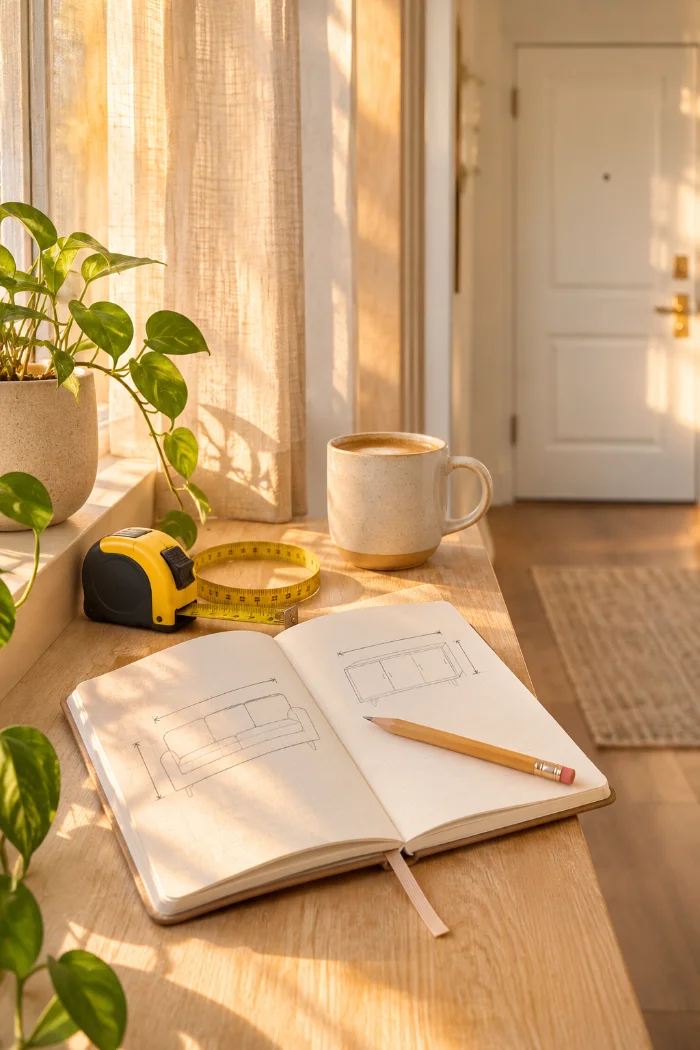
10. Tape the sofa’s outline on the floor to test the tightest turn
Corners are where numbers on paper stop helping. Go to the tightest turn on your list. That’s usually the hallway outside your door. Use painter’s tape to mark a rectangle the size of the sofa’s width by its diagonal depth. Line it up straight with the doorway, the way the sofa would sit right before going in. If the rectangle fits inside the hallway, the sofa can go straight through. If it runs into the far wall, movers will have to stand the sofa on its end. In that case, the sofa’s width must be less than your hallway ceiling’s height.
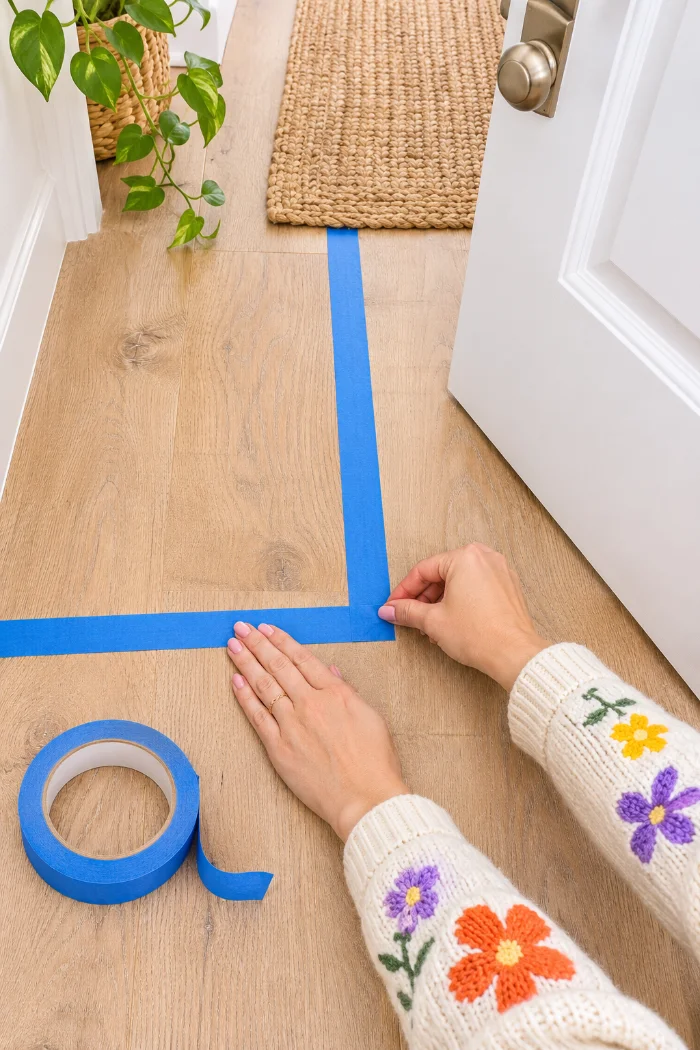
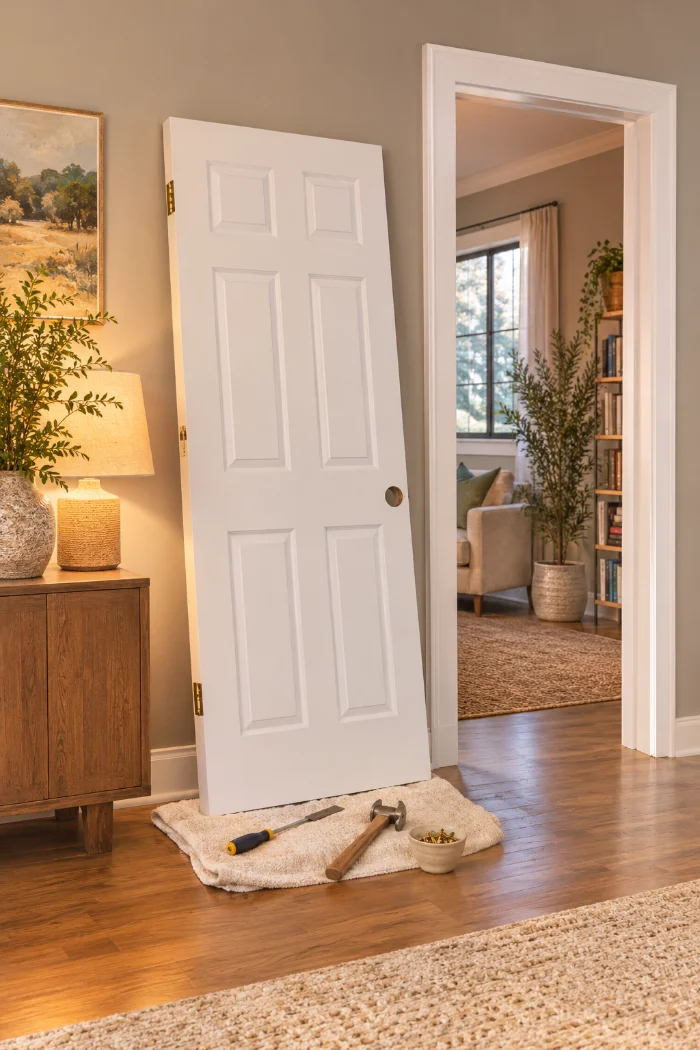
11. Take the door off its hinges for extra inches
1 to 2 inches is what you usually gain by taking the door off, because the open door no longer sticks into the opening. Close the door first so it stays steady. Then:
- Put the screwdriver tip under the lip of the bottom hinge pin’s head.
- Tap the screwdriver handle up with the hammer until the pin slides out.
- Do the same on the middle and top hinges while your helper holds the door.
- Lift the door free and lean it on a towel against a wall.
Keep the pins in a cup so none go missing. Renting? Taking the door off doesn’t damage anything, but put it back the same day.
12. Choose a backup plan if the numbers still come up short
Still short after all that? You have options, and none of them mean giving up on a good sofa. Look for models sold as modular, “sofa in a box,” or with bolt-on arms. They come apart into pieces that fit through almost any door. Already bought yours? Check the return window before delivery day, not after. Some cities also have furniture disassembly services that take a sofa apart in the hallway and put it back together inside.
It fits with tilting if only its diagonal depth is at least 1 inch less.
☐ A helper
☐ Straight board or broom handle
☐ Painter’s tape
☐ Notepad or phone
☐ Screwdriver and hammer
☐ Sofa product page
2. Measure diagonal depth
3. Check for removable legs and arms
4. Walk the path, list tight spots
5. Measure elevator or stairs
6. Measure hallway width and run
7. Measure door width at narrowest point
8. Measure door height
9. Compare against the smallest width
10. Tape out the tightest turn
11. Take the door off if needed
12. Pick a backup plan
You now know what to measure, where to measure it, and how to read the numbers. That means no guessing and no surprises in the hallway on delivery day. The next time you wonder “will my sofa fit through the door,” you can have a real answer in about 30 minutes.
Next, tape the sofa’s outline on your living room floor too, so you can see how much walking space it leaves.
Save this to your apartment board on Pinterest, so it’s ready before your next furniture order.