
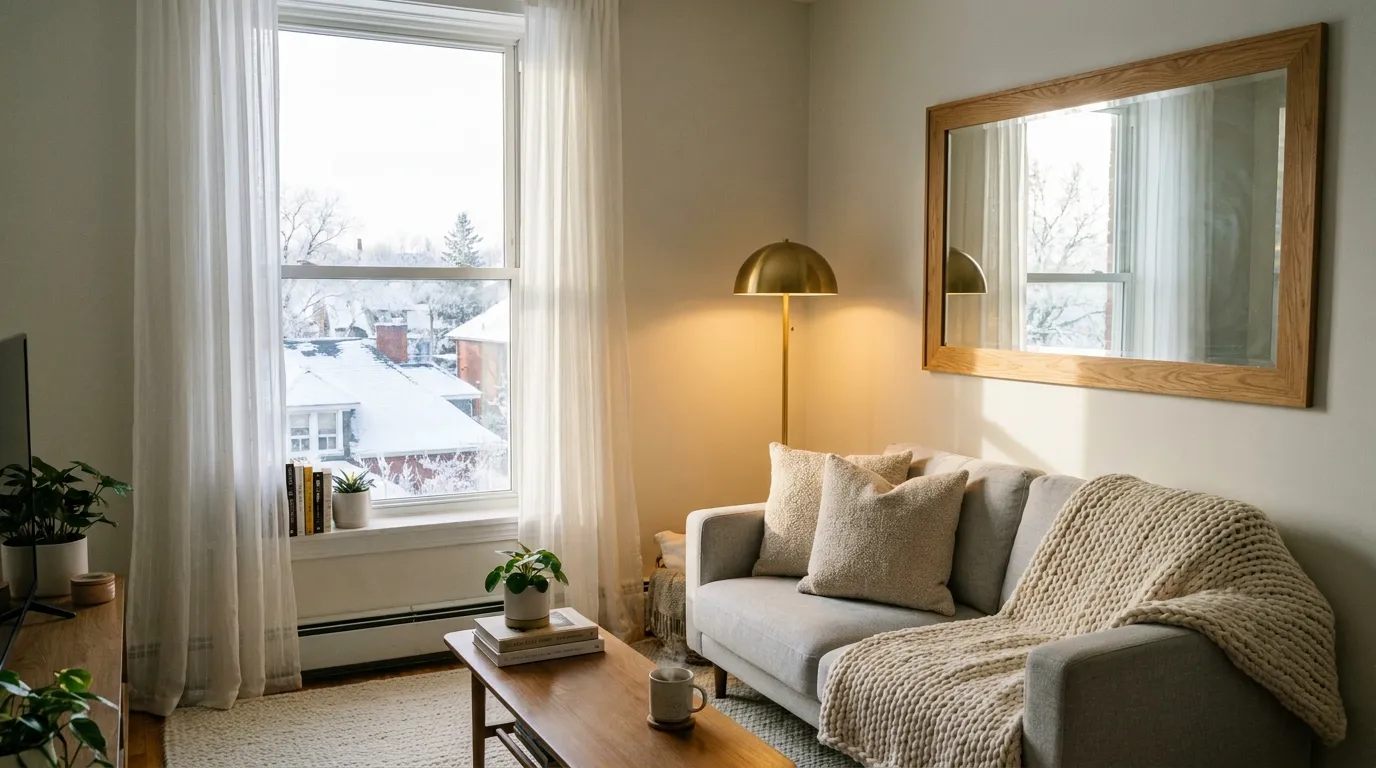
By mid-November, my apartment used to feel like a cave by 4 p.m. The sun dropped behind the building next door, my one window turned gray, and the ceiling light made everything look flat and tired.
If your place feels like that right now, you’re not doing anything wrong. Small apartments lose light fast in winter, and most of us never set them up to fight back.
This guide shows you how to make a small apartment brighter in one weekend. You won’t need paint, big tools, or a call to your landlord.
First you’ll clean and clear your windows so every bit of daylight gets in. Then you’ll spread that light deeper into the room with sheer curtains and a mirror. Last, you’ll fill the dark hours with warm lamp light that turns on by itself before sunset.
Why this order? Daylight is free, so we grab all of it first. Lamps only have to fill in what’s left.
Plan on about 4 hours of hands-on work, split across Saturday and Sunday. Nothing here is hard. It’s mostly cleaning, hanging, and plugging things in. Grab a spray bottle and a step stool, and let’s start at the window.
What You Need
- Spray bottle with 1 cup white vinegar + 1 cup warm water (or store glass cleaner)
- 2 to 3 microfiber cloths
- Old toothbrush
- Vacuum with a crevice tool
- Step stool
- Tape measure and painter’s tape
- Curtain rod 12 to 20 inches wider than your window, with brackets
- Screwdriver and a level (or a level app on your phone)
- 2 sheer curtain panels in white or ivory
- Large mirror, at least 24 x 36 inches
- Removable hanging strips rated for your mirror’s weight (or lean it on the floor)
- LED bulbs, 2700K to 3000K, 800+ lumens
- Floor lamp that points light upward
- Plug-in LED strip or plug-in wall sconce
- 2 to 3 plug-in timers or smart plugs
- Light-colored throw, pillow covers, or small rug
- Wash your windows, inside and out
- Move anything blocking the glass
- Hang the curtain rod higher and wider
- Swap heavy curtains for sheers
- Place a mirror where it catches window light
- Switch to warm white, higher-lumen LED bulbs
- Put a floor lamp in the darkest corner
- Add plug-in light where you work and cook
- Set lamps on timers before sunset
- Finish with light-colored textiles
1. Wash your windows inside and out, including the tracks
Winter sun is already weak, and a film of dust and fingerprints dims it even more before it reaches your floor. Mix 1 cup of white vinegar with 1 cup of warm water in a spray bottle. Spray one pane at a time and wipe it in an S shape, top to bottom, with a dry microfiber cloth. Wiping in one direction keeps streaks from glowing when low afternoon sun hits the glass. For the tracks, vacuum out loose dirt first, then scrub the corners with an old toothbrush.

Never lean out of a window above the ground floor to reach the outside glass. If you can’t clean it safely from inside, skip it and ask your building manager when the windows are next washed.
2. Move anything that blocks the glass
If something sits between the window and the room, it steals light all day long. Walk to each window and check four spots:
- Plants: move tall ones to the side of the frame.
- Furniture: pull it at least 12 inches back from the glass.
- Sill clutter: keep anything there under 6 inches tall.
- Blinds: raise them all the way up in the daytime, not halfway.
Your plants still get sun at the edge of the frame. You get the middle of the window back.
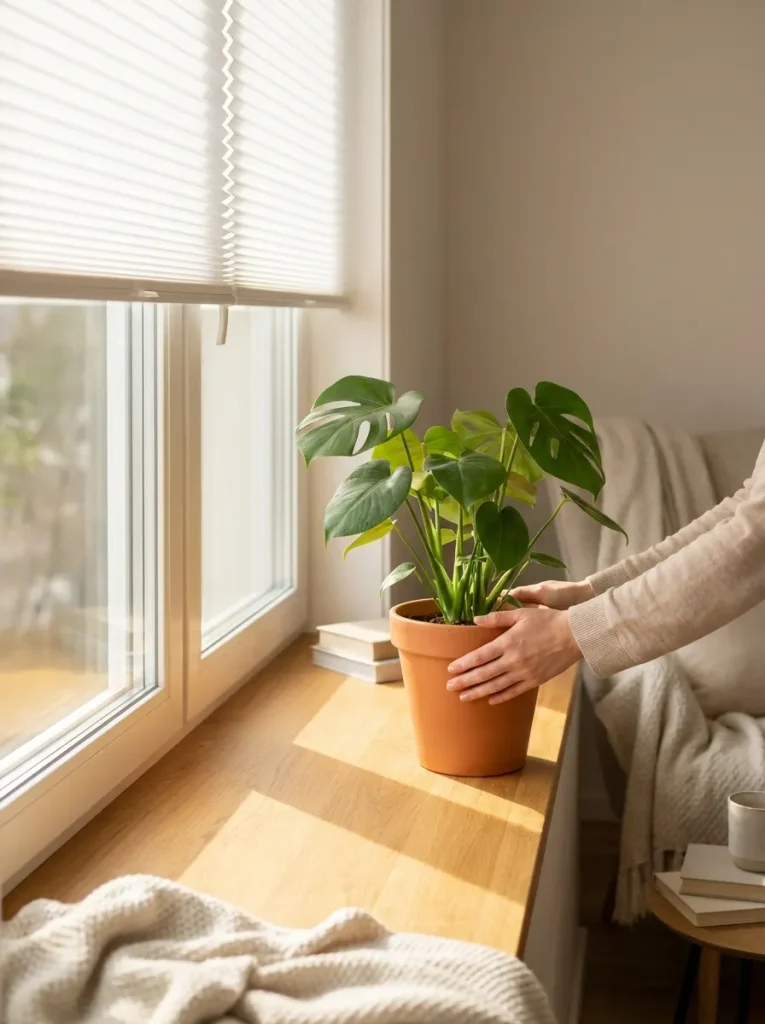
3. Hang the curtain rod higher and wider than the window frame
Six extra inches of rod on each side lets curtains rest on the wall instead of covering glass. Take the old curtains off the rod. Mark your new bracket spots 4 to 6 inches above the frame and 6 to 10 inches past each side, then screw the brackets in. Most leases allow small screw holes, and a dab of spackle hides them at move-out. If yours doesn’t, no-drill brackets that tap onto the window frame still let you go wider, though not higher.
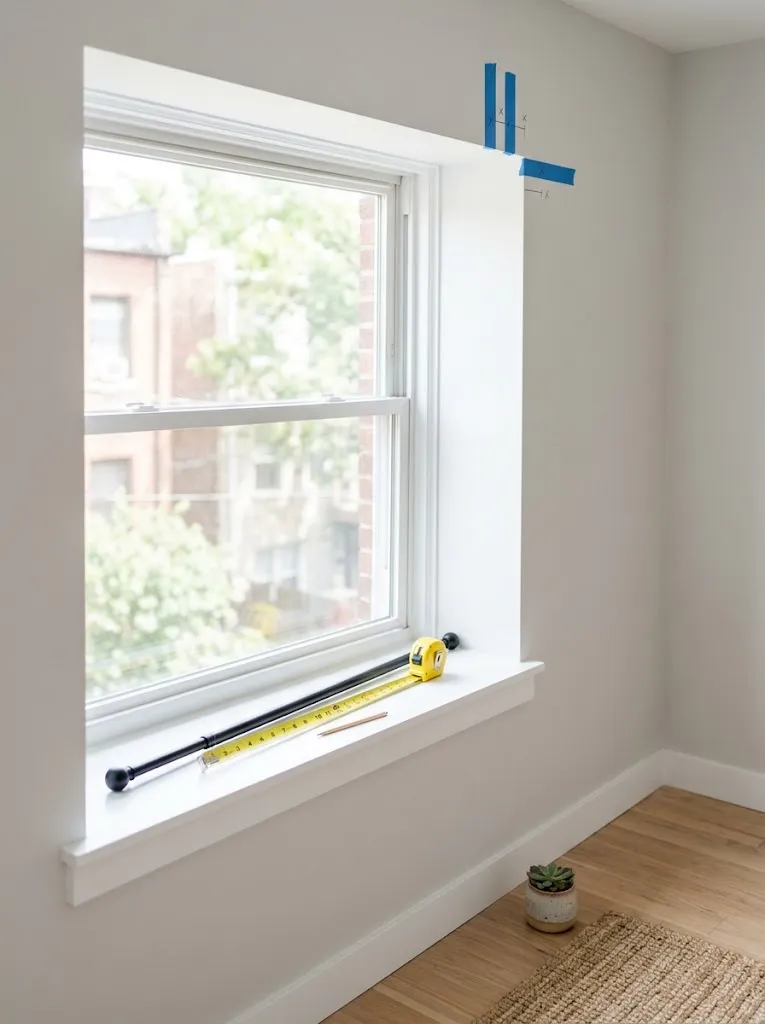
Mark both bracket spots with painter’s tape first. Rest the rod on the tape, set your phone on top with a level app open, and adjust until it reads flat. A crooked rod is hard to unsee once the curtains are up.
4. Swap heavy curtains for sheer panels
White or ivory sheers let the most daylight through. Gray and beige look soft in the store, but they dull a dark room by mid-afternoon. Measure from the rod to the floor and pick panels that stop about ½ inch above it. New sheers often show deep fold lines that stand out in low winter sun. Hang them anyway, then mist the creases with water and let the fabric’s weight pull them flat overnight. If your windows are drafty, keep your thermal curtains on a double rod behind the sheers and open them fully every morning.

5. Place a large mirror where it catches window light
Hold the mirror against the wall beside your window before you commit to a spot. Look at what it reflects. Sky, a sheer curtain, or a pale wall bounces light deeper into the room. A cluttered shelf bounces clutter. Aim for the mirror’s edge to sit about 12 inches from the window frame, at eye level. A side wall usually works better than the wall facing the window, which can throw glare back at you.
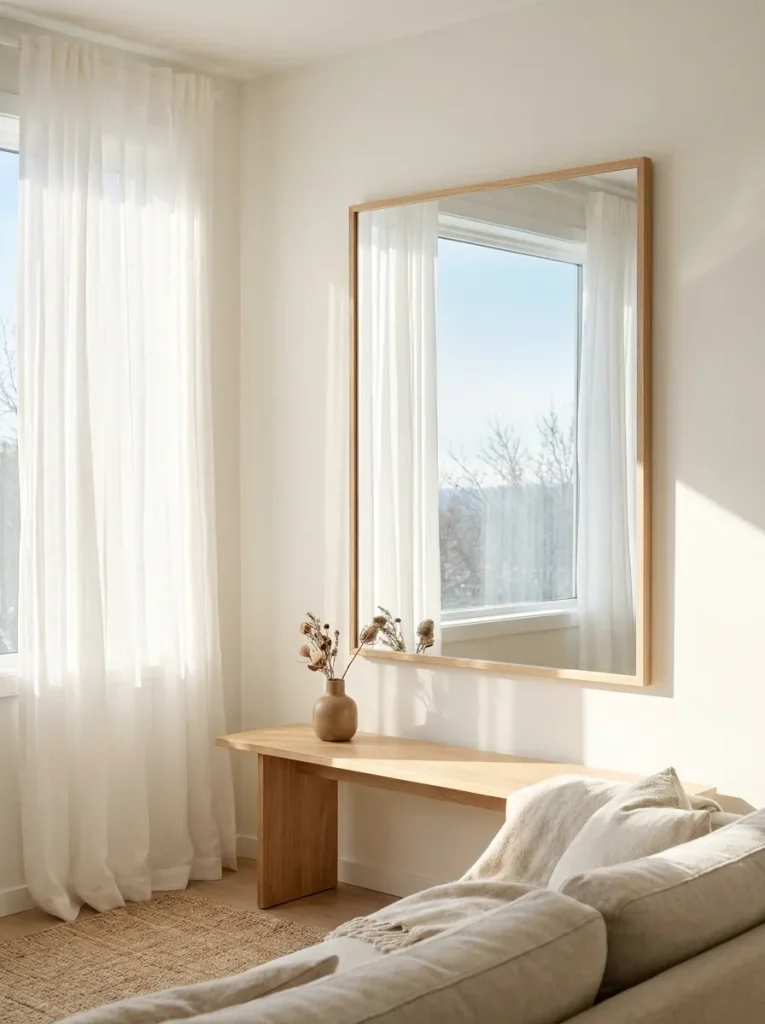
Removable strips have a weight limit printed on the box, and mirrors are heavier than they look. Weigh yours on a bathroom scale first. If it’s over the limit, lean it on the floor against the wall instead. A leaning mirror still bounces light well.
6. Replace your bulbs with warm white, higher-lumen LEDs
Two numbers on the box matter. Kelvin sets the color, and 2700K to 3000K gives warm light that feels cozy instead of clinical. Lumens set brightness, so pick at least 800 lumens for any lamp you read by. Use the same Kelvin for every bulb in one room. Mixed colors make a small space look patchy after dark.
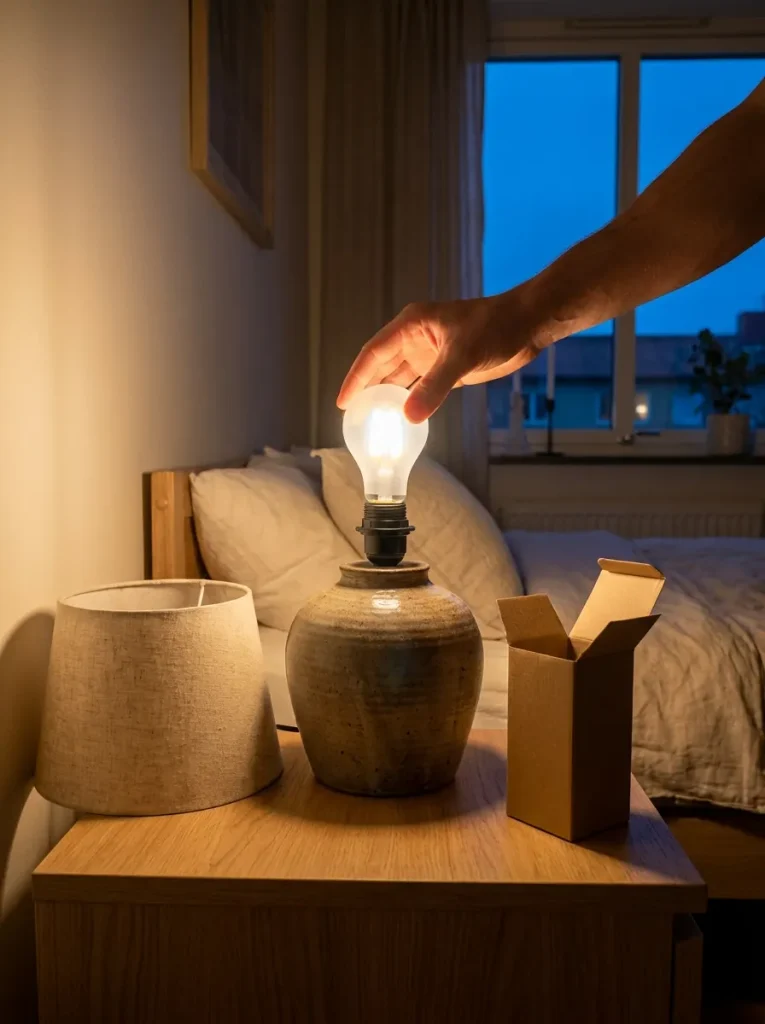
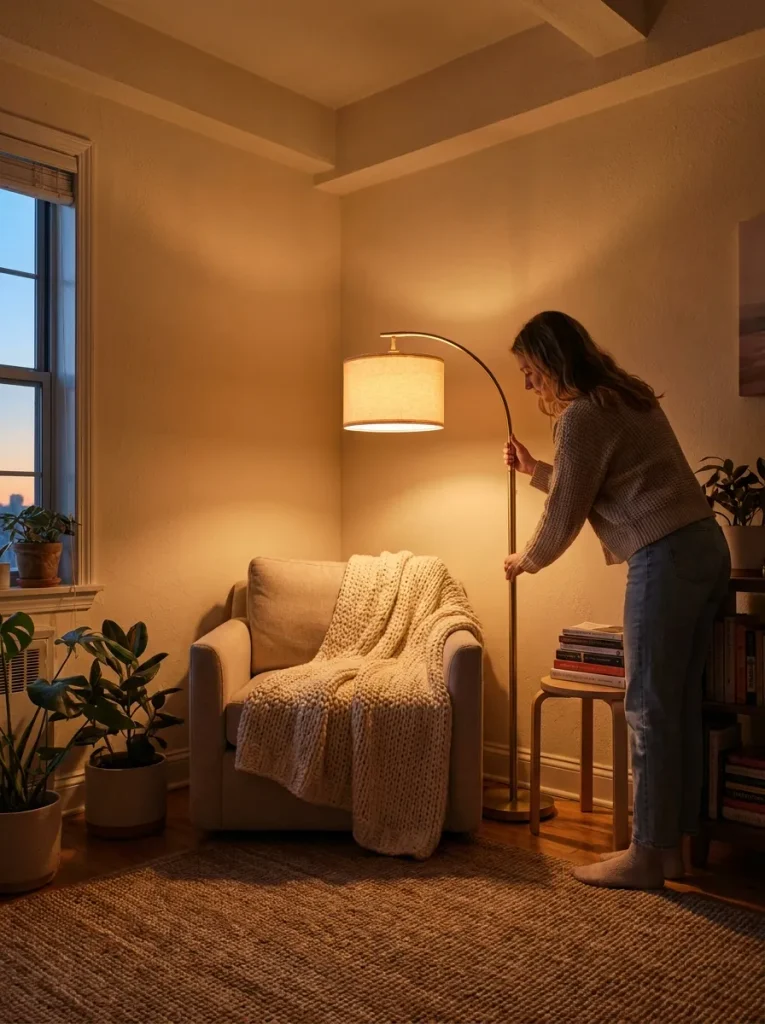
7. Put a floor lamp in the darkest corner
If your only light comes from the ceiling, every corner sits in shadow, and shadowy corners make walls feel closer. Find the darkest corner at 5 p.m. and set your floor lamp there, about 6 to 12 inches from both walls. A shade that points up at the ceiling spreads a soft glow across the room instead of making one bright spot. No floor space? A table lamp on a tall shelf or a sturdy stack of books does the same job.
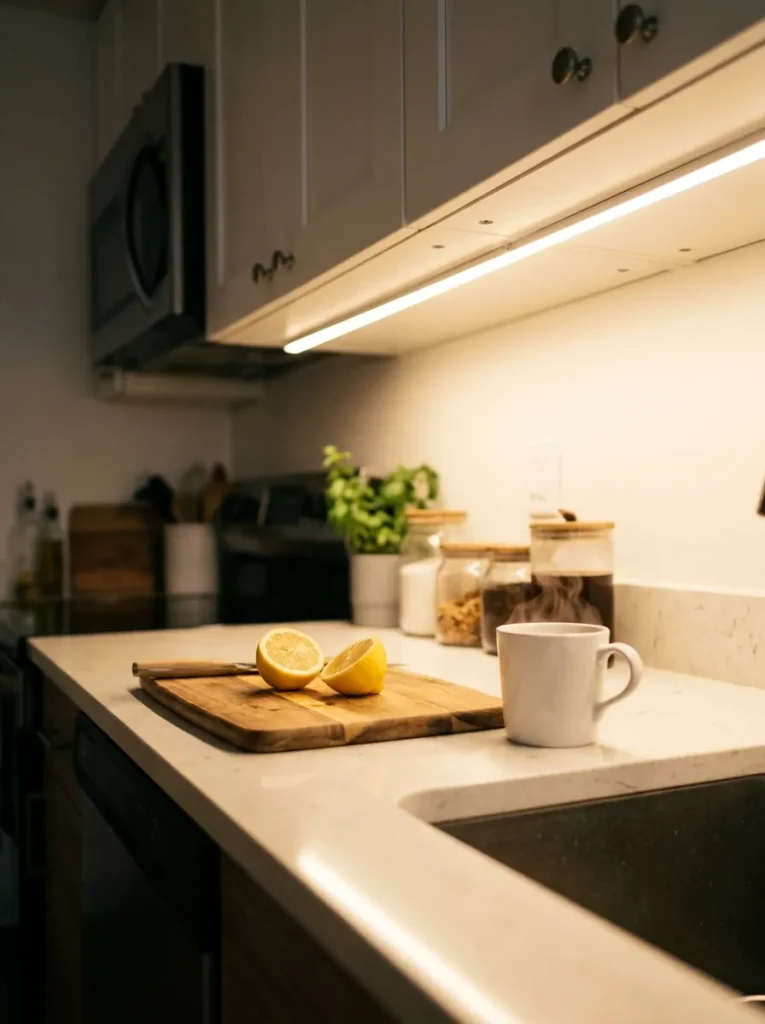
8. Add plug-in light where you work and cook
Counters and desks fall into your own shadow at night, since the ceiling light sits behind you. Light them from above:
- Kitchen: stick an LED strip under the upper cabinets, near the front edge, so light lands on the counter.
- Desk: mount a plug-in sconce 15 to 20 inches above the desk surface.
Tuck the cords along the wall with removable cord clips.
9. Set your lamps on timers to turn on before sunset
Walking into a dark apartment after work is what makes winter feel heavy. Plug each lamp into its own timer or smart plug, then plug the timer into the wall. Set it to turn on 30 minutes before sunset and off at bedtime. Leave the lamp’s own switch in the on position. If you turn the lamp off by hand, the timer has nothing to switch on, and that’s the most common reason it “stops working.” With a plain timer, check the settings once a month, because sunset keeps shifting through winter.
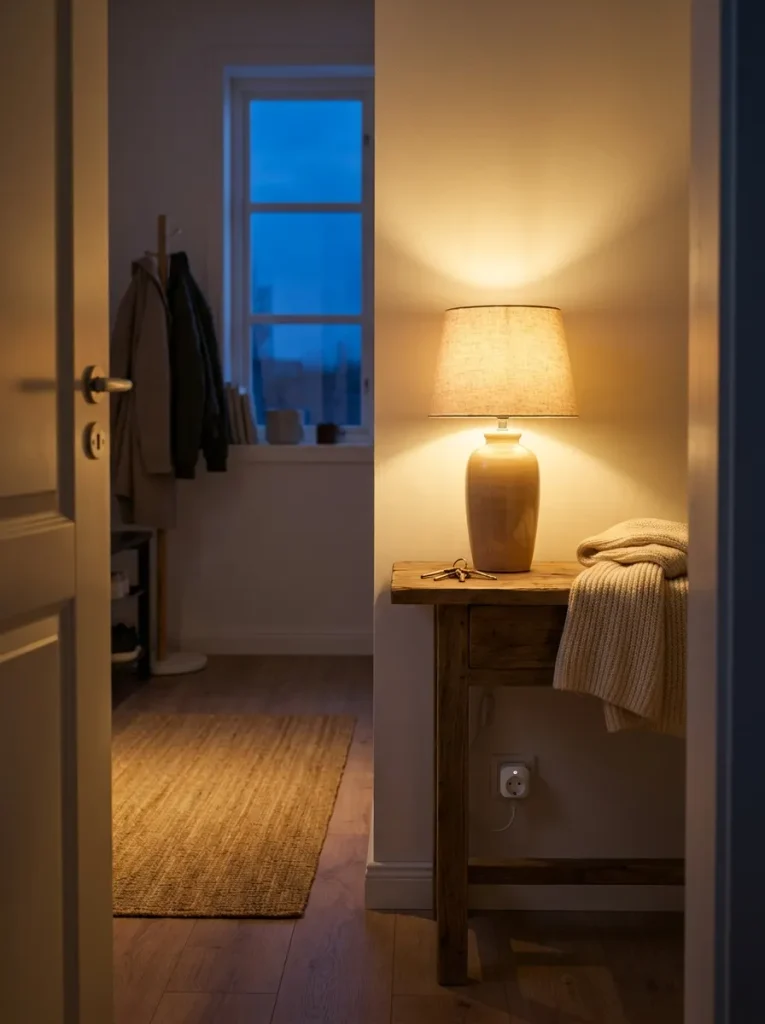
Most smart plug apps have a “sunset” option that follows your local sunset time. Choose it instead of a fixed time, and your lamps adjust on their own all winter long.
10. Brighten your small apartment with light-colored textiles
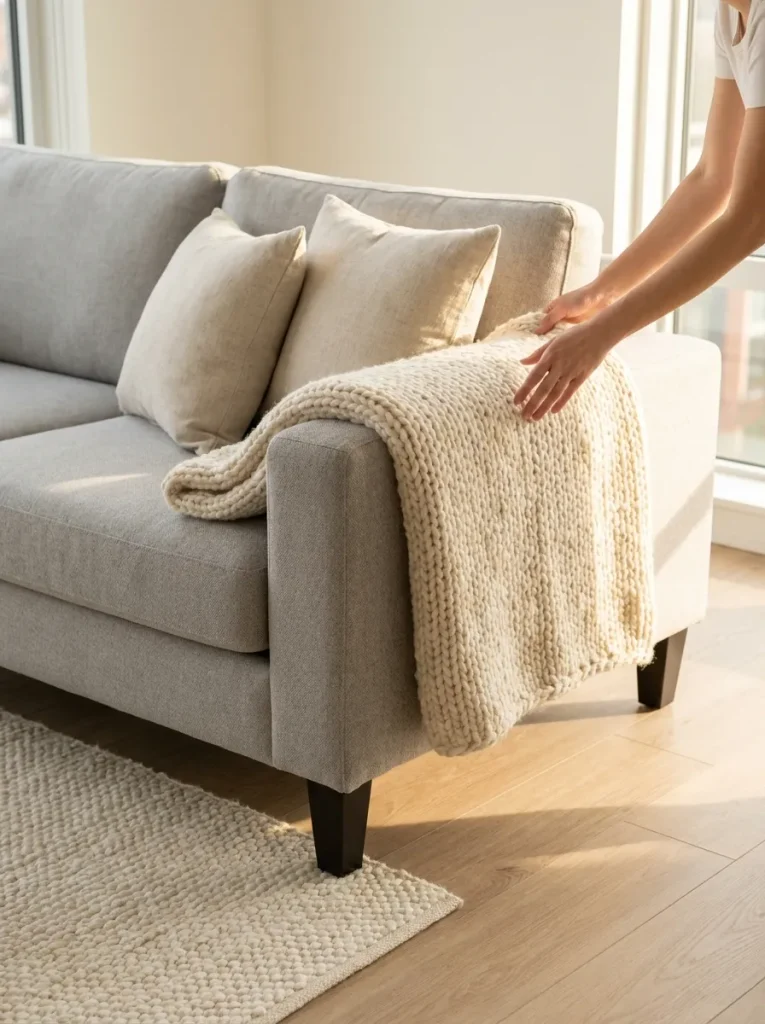
Three fabric swaps cover most of a small living space. Lay a cream or oatmeal throw over the sofa, slip 2 to 3 pillows into pale covers, and put a small light rug where your floor lamp shines. Dark fabric soaks up light, so a navy throw can make a corner look dim even with a lamp nearby. Pillow covers cost less than new pillows, and you can switch back in spring. Worried about winter boots? A washable cotton rug or a low-pile one cleans up fast.
Frequently Asked Questions
Most steps leave no marks at all. The curtain rod brackets add a few small screw holes, so check your lease first and fill them with spackle when you move out.
Sheers don’t hold in much heat. If your windows feel drafty, keep your thermal curtains on a double rod behind them and close them at night.
Daylight bulbs (around 5000K) look bright but feel cold and clinical in a living room at night. Keep 2700K to 3000K in living areas. A cooler bulb is fine in a desk lamp you use during the day.
Put it on the wall right beside the window. If that wall is full, lean a tall floor mirror on the next closest wall, angled toward the room.
No. A smart plug turns the power on and off, so any regular lamp with a regular bulb works. Leave the lamp’s switch on and let the plug do the rest.
- The room turns gray by mid-afternoon
- Heavy curtains cover part of the glass
- One ceiling light leaves the corners dark
- You come home to a dark apartment
- Dark throws and pillows soak up what light there is
- Daylight reaches deeper into the room
- The window looks taller and wider
- A soft, warm glow fills every corner
- Lamps are already on when you walk in
- Pale fabrics bounce lamp light around the space
- Vinegar spray, cloths, toothbrush, vacuum
- Step stool, tape measure, painter’s tape
- Wider curtain rod, brackets, screwdriver, level
- 2 white or ivory sheer panels
- Mirror (24 x 36 in. or larger) + strips
- 2700K to 3000K LED bulbs, 800+ lumens
- Floor lamp, LED strip or plug-in sconce
- 2 to 3 timers or smart plugs
- Pale throw, pillow covers, small rug
- Wash windows and tracks
- Clear the glass, raise blinds fully
- Hang rod 4 to 6 in. higher, 6 to 10 in. wider
- Hang sheers ½ in. above the floor
- Mirror on a side wall, 12 in. from window
- Swap to warm, 800+ lumen bulbs
- Floor lamp in the darkest corner
- Plug-in light over counter and desk
- Timers on 30 min. before sunset
- Swap in light-colored textiles
Conclusion
You cleaned the glass, cleared the window, and pulled every bit of daylight into your space. Your lamps now take over before dark, so the room never slips back into gloom. Now you know how to make a small apartment brighter without paint, big tools, or a call to your landlord.
Next weekend, carry the same idea into your bedroom with pale bedding and a bedside lamp on a timer.
Pin this guide so it’s ready the next time the afternoons turn gray.