
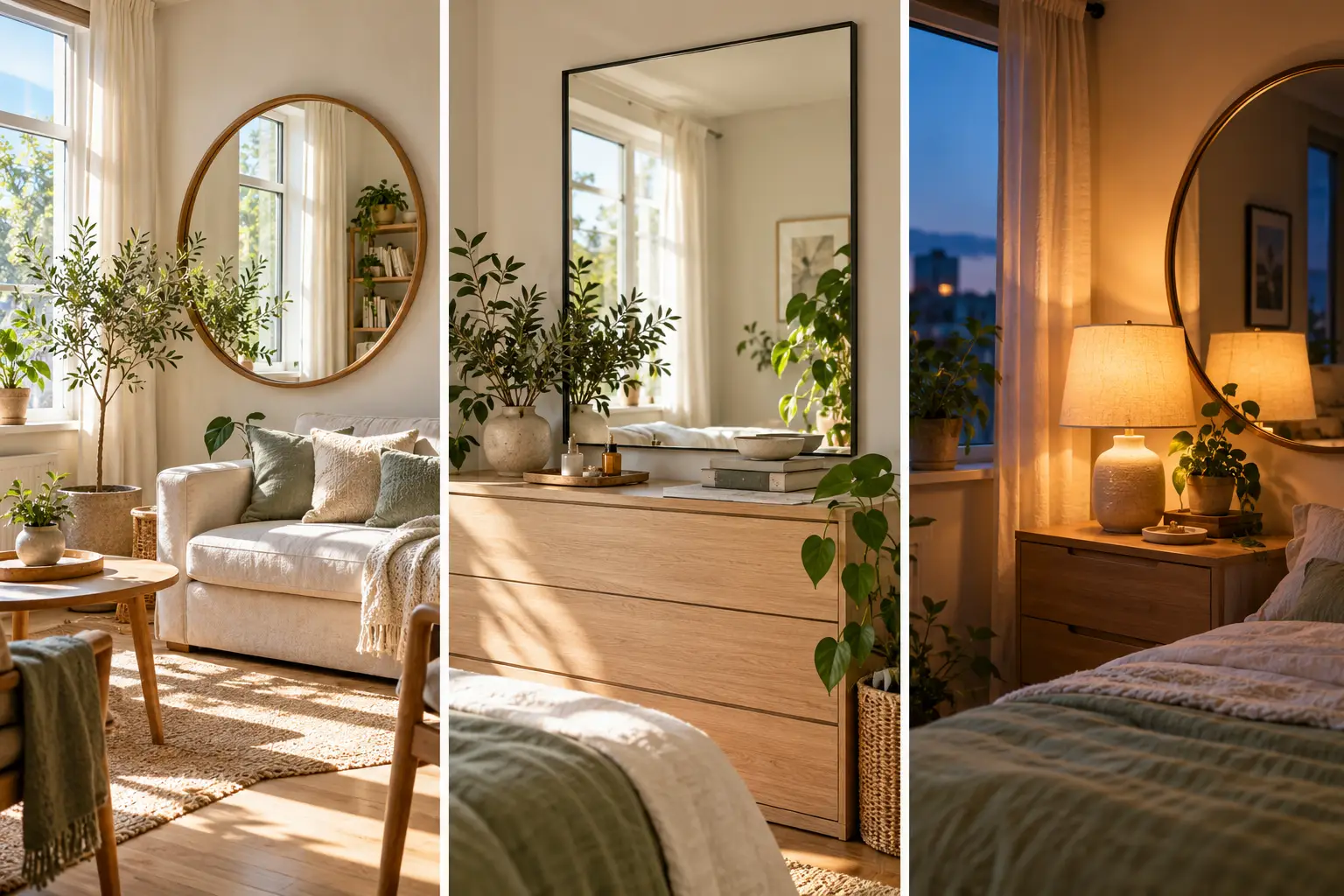
My first apartment had one window, and it faced a brick wall. By 3 p.m., the living room looked like dusk. So I bought a big mirror, hung it on the first empty wall I saw, and waited for the magic. Nothing changed. That’s when I learned that where to hang a mirror matters far more than how big it is.
A mirror does not make light. It moves light. Put it in the wrong spot and it bounces daylight right back out the window, or it shows you a closet door all day long. Put it in the right spot and it pushes light into the dark corner you’ve been fighting since move-in day.
This guide walks you through finding that spot in your own room. You’ll track your light, pick the best wall, test the placement with paper before you drill a single hole, and hang the mirror at the right height. By the end, your room will look brighter and feel more open, even on gray days.
The hands-on part takes under an hour. The paper test asks you to wait a day, and that wait saves you from patching holes later. No special skills needed. Renters, there’s a no-drill option for you too.
- ✓A mirror (you’ll size it in Step 4)
- ✓Tape measure
- ✓Painter’s tape
- ✓Kraft paper or the back of wrapping paper
- ✓Pencil and scissors
- ✓Small hand mirror (or your phone)
- ✓Level (a phone level app works)
- ✓Stud finder
- ✓Drill and drill bits
- ✓Hooks or wall anchors rated for your mirror’s weight
- ✓A table lamp with a warm bulb
- RRenter option: heavy-duty adhesive strips or a leaning floor mirror
1. Watch where the light lands at three times of day
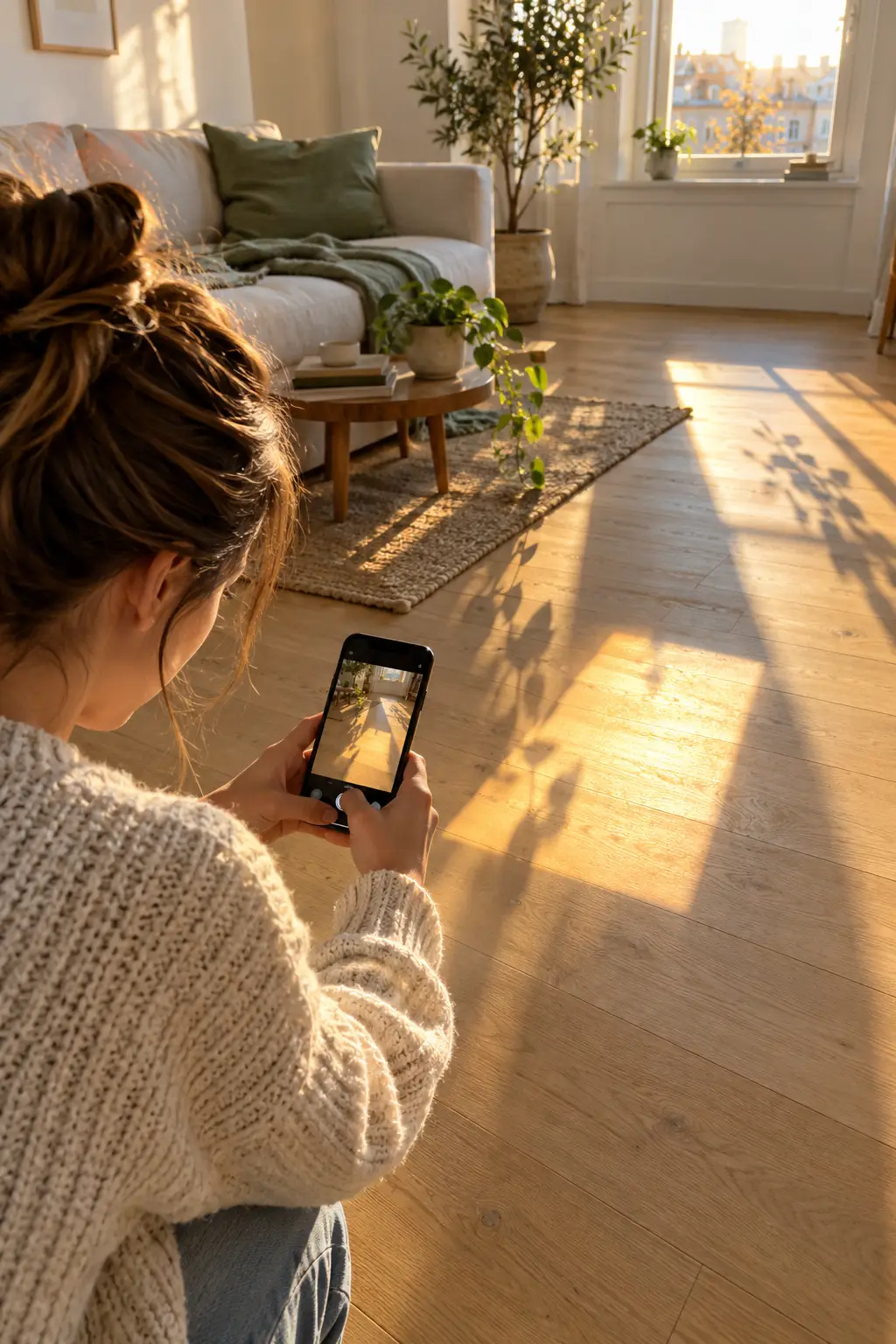
Light moves through your room all day, and your mirror needs to catch it at its best. Check the room at 9 a.m., 12 p.m., and 4 p.m. Each time, write down:
- Which window the light comes through
- Where the brightest patch lands
- Which corner stays the darkest
Take a phone photo at each check so you can compare later. Working all week? Do this on a Saturday. One full day of notes beats any general rule, because no two rooms get light the same way.
2. Choose where to hang a mirror based on your brightest window
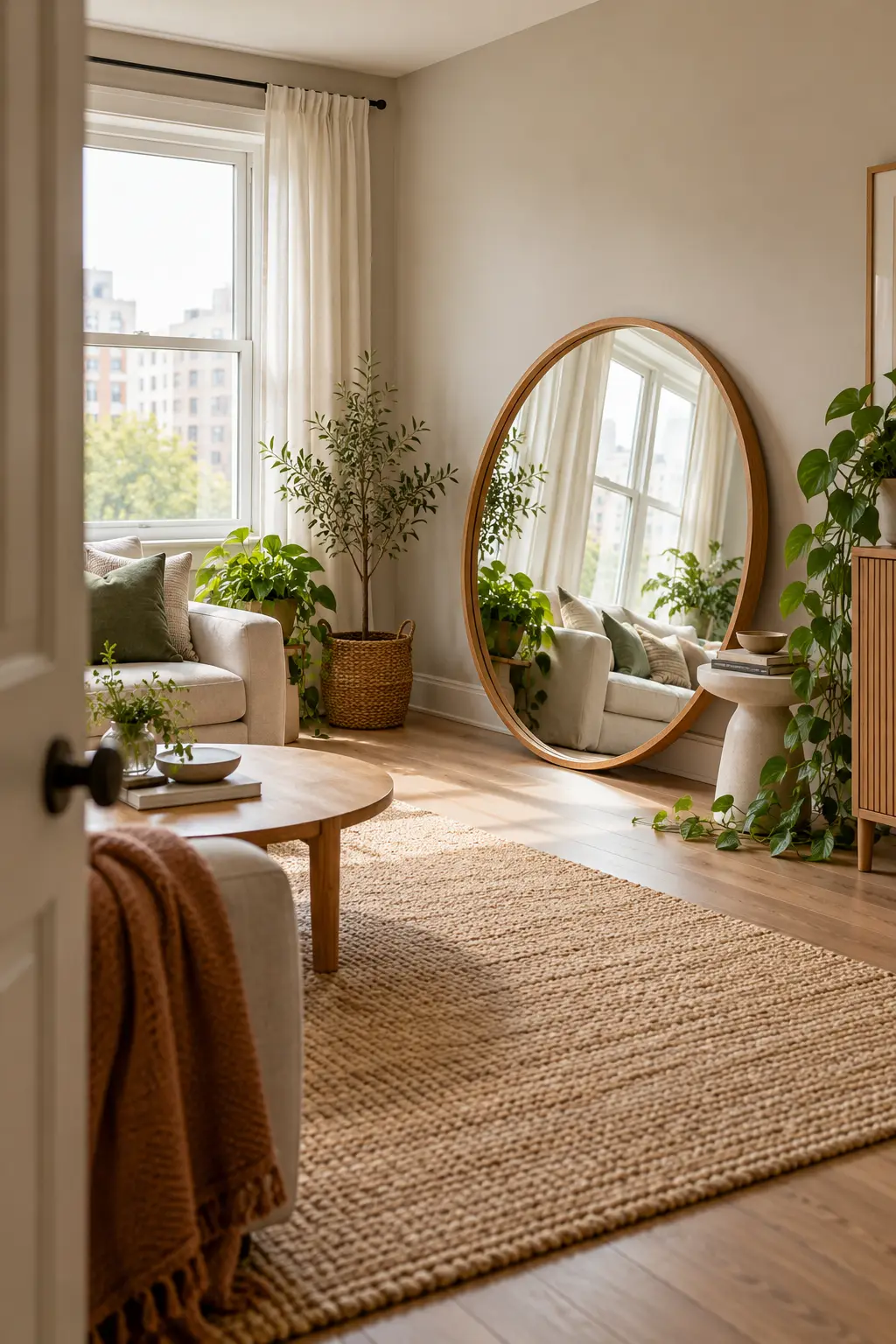
You have two good choices here. A wall beside the window catches light at an angle and sends it deeper into the room, toward the dark corner you found in Step 1. A wall across from the window bounces back the most light and repeats your view, so the room looks like it has a second window. For most small rooms, the side wall wins.
3. Check what the mirror will reflect from that spot
Whatever faces the mirror shows up twice. A plant or a window looks great doubled. A closet door does not. Hold a small hand mirror flat on the wall where the big one will go, then look into it from the couch, the bed, and the doorway. No hand mirror? Prop your phone on the wall with the front camera on.
4. Pick a mirror at least two-thirds the width of the furniture below it
A 36-inch dresser needs a mirror about 24 inches wide. That two-thirds ratio keeps the mirror from looking lost, and more glass means more light bouncing around. On a bare wall with no furniture, go as big as the wall allows while leaving at least 6 inches of space on each side.
Pick clear glass. Smoked, tinted, and antiqued mirrors look pretty, but they reflect less light, which works against you here. Before you buy, check the weight on the tag or listing. You’ll need that number in Step 7.
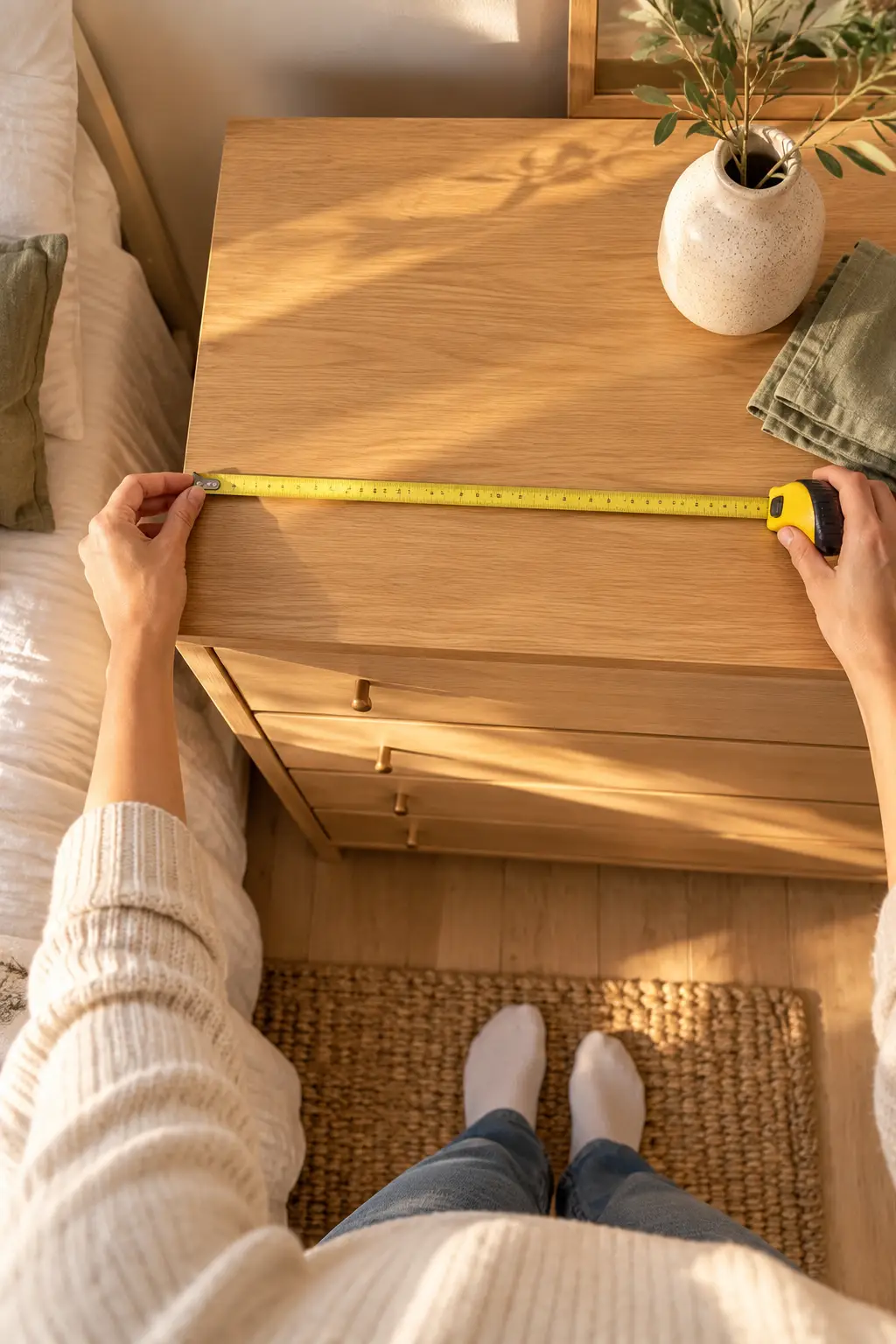
5. Measure 57 to 60 inches up to set the center height
Hanging it over a dresser, sofa, or console? Skip the floor measurement and leave 6 to 10 inches between the top of the furniture and the bottom of the frame.
On an open wall, measure 57 to 60 inches up from the floor and make a light pencil dot. That dot marks the center of the mirror. It sits at eye level for most adults.
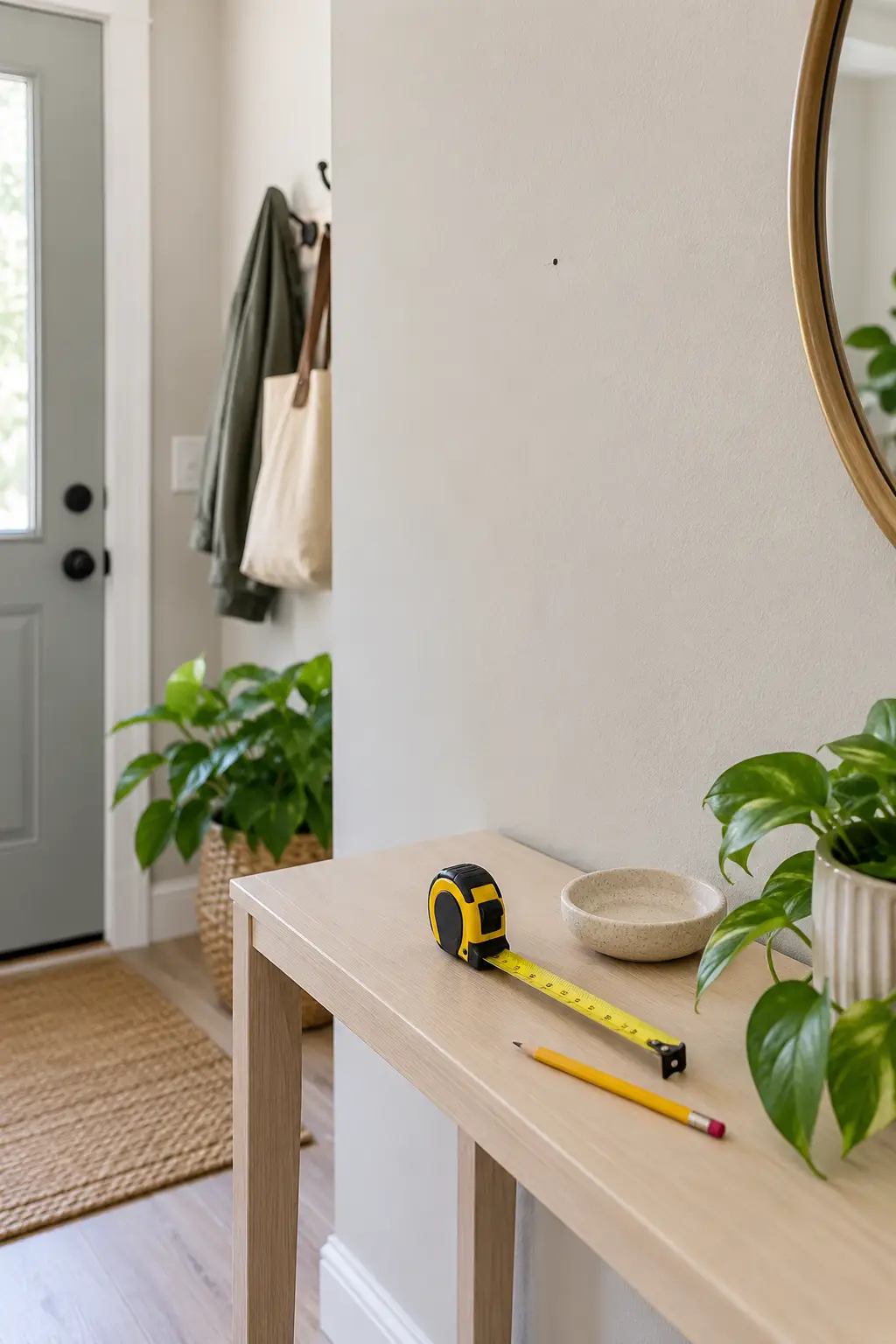
6. Tape a paper template to the wall and live with it for a day
Holes are hard to undo. Paper is not. Before any drilling:
- Trace the mirror on kraft paper and cut it out
- Flip the mirror over and measure from its top edge to the hanging hardware
- Mark that spot on the paper with an X
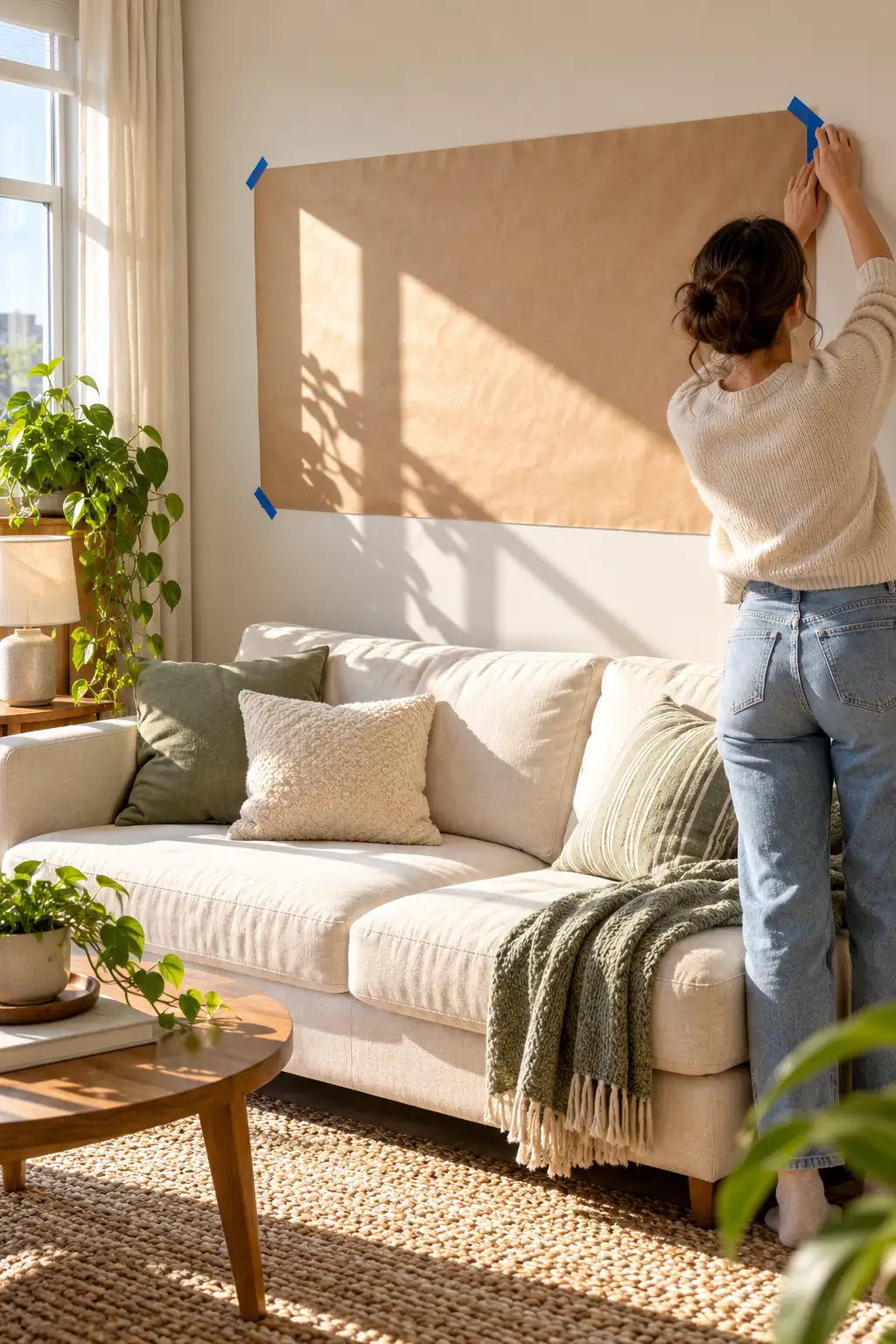
- Tape the paper so its center lines up with your pencil dot
Leave it up for 24 hours and look at it in morning light and again at night. Too small, too high, or off to one side? Move the tape.
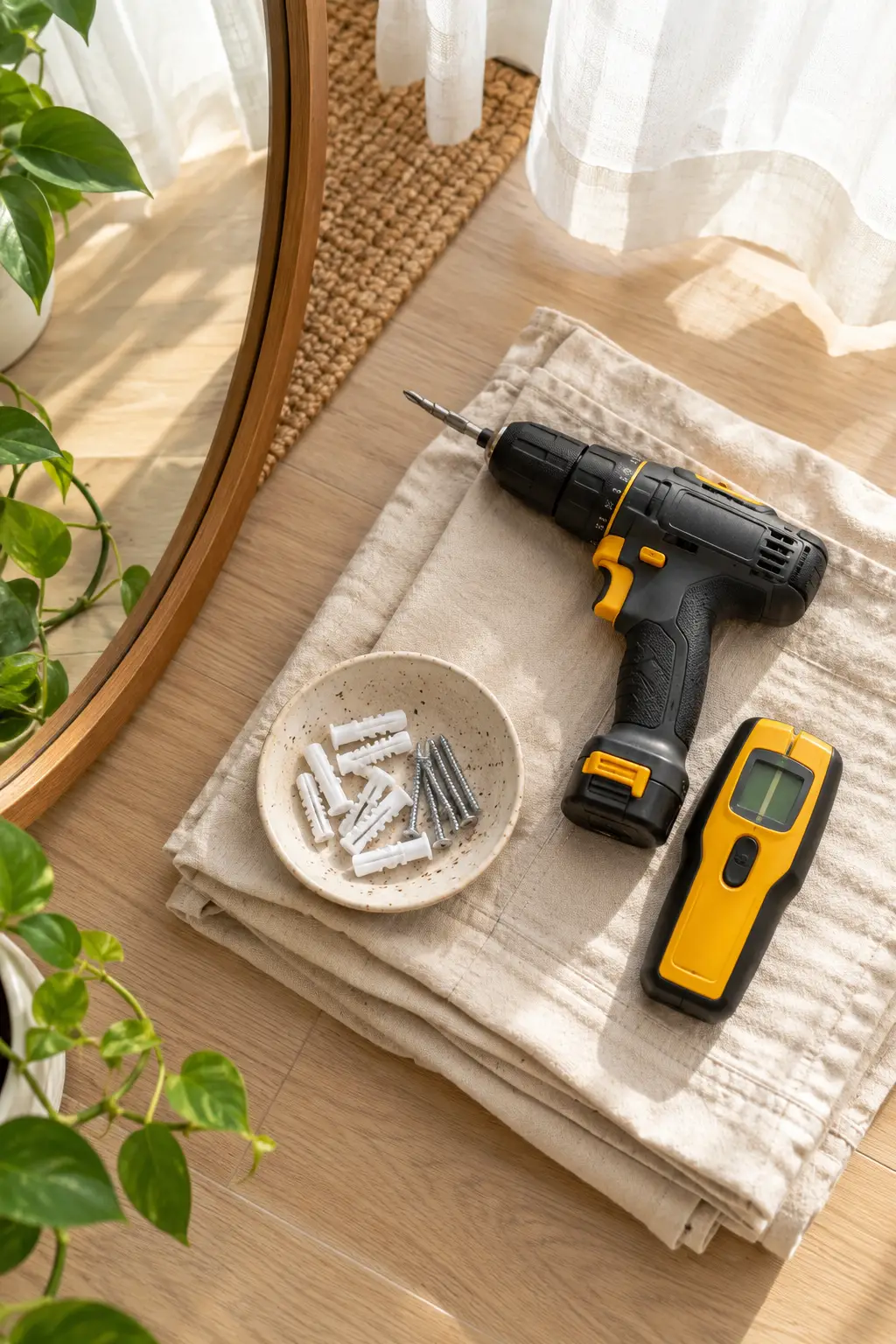
7. Find a stud or pick an anchor rated for the mirror’s weight
Run a stud finder slowly across the wall near your X. If a stud lines up, a screw into it will hold almost any mirror. No stud? Use a drywall anchor rated for at least twice your mirror’s weight, so a 15-pound mirror needs one rated for 30 pounds. Never hang a heavy mirror on a single nail in bare drywall. It can pull loose and shatter.
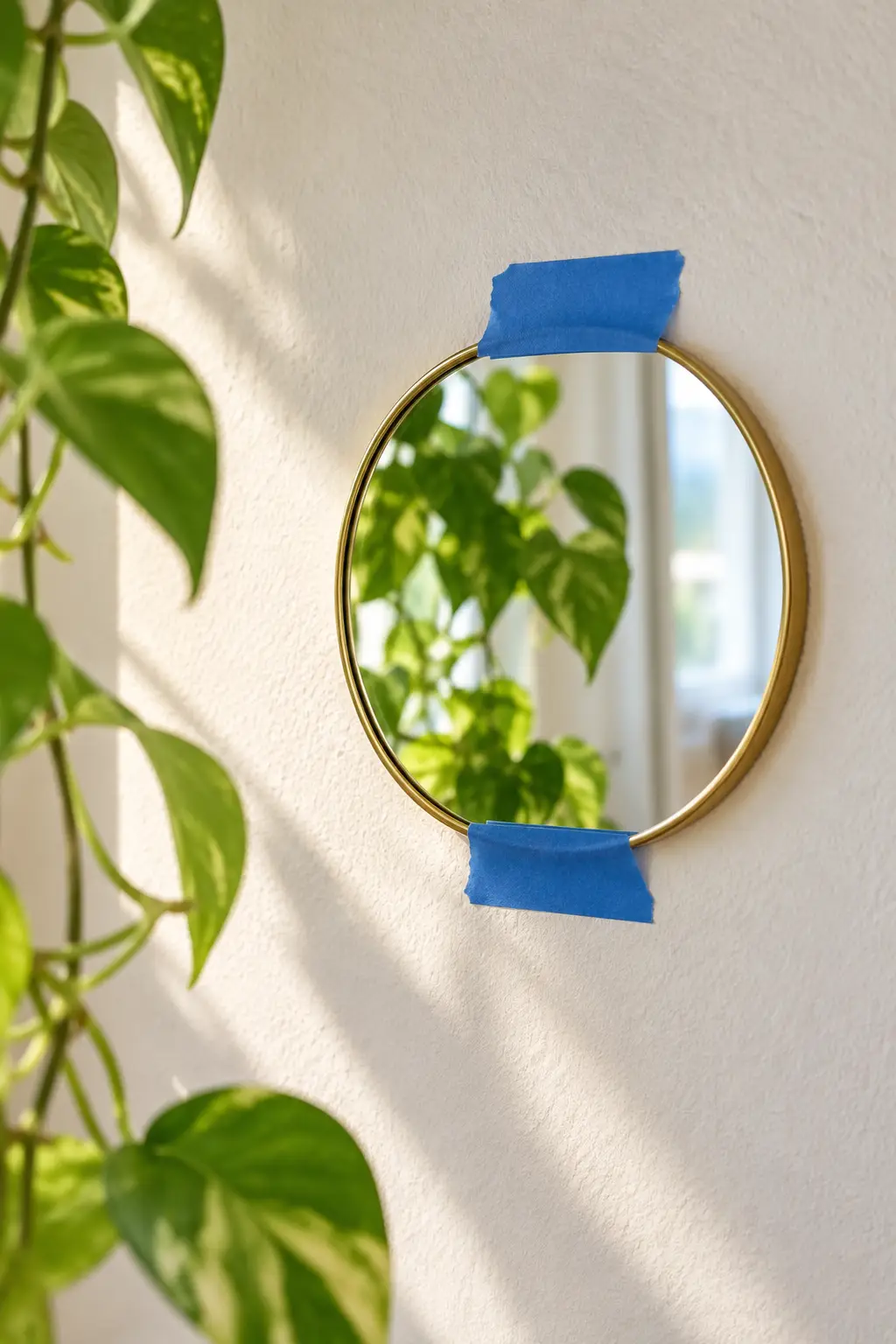
Renting? Heavy-duty adhesive picture strips work for lighter mirrors if you stay under the weight limit on the box. For heavier pieces, lean a floor mirror against the wall in the same spot instead.
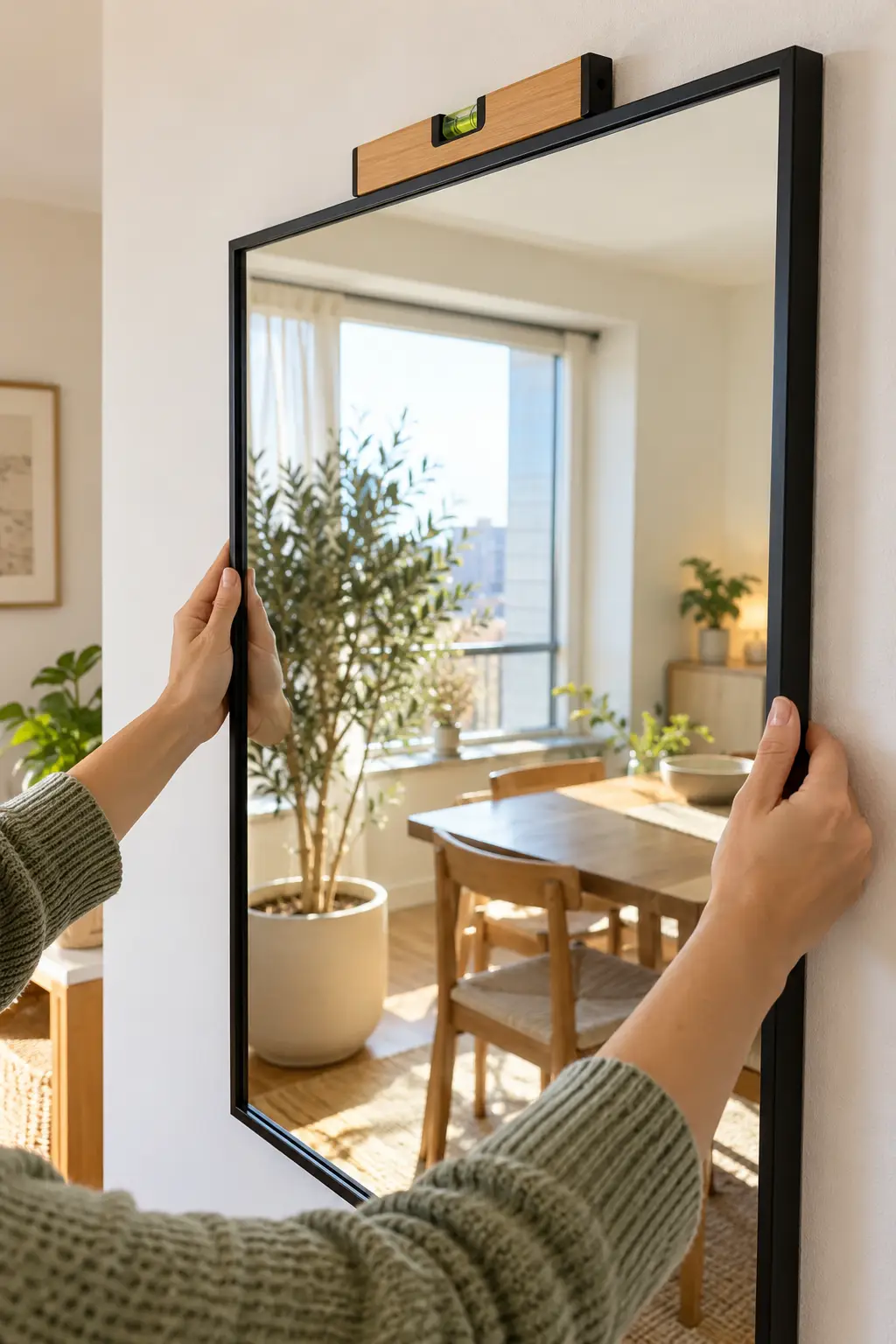
8. Hang the mirror and check it with a level
Drill straight through the X on your paper. That mark shows exactly where your hook belongs, so there’s no guessing. Tear the paper away, set the hook or anchor, and hang the mirror.
Rest a level on the top edge and nudge the frame until the bubble sits in the middle. Wire-hung mirrors tend to drift crooked over time, so stick a small felt bumper on each bottom corner to hold it in place. Wipe off any pencil marks with a damp cloth, then clean the glass so it reflects at full strength.
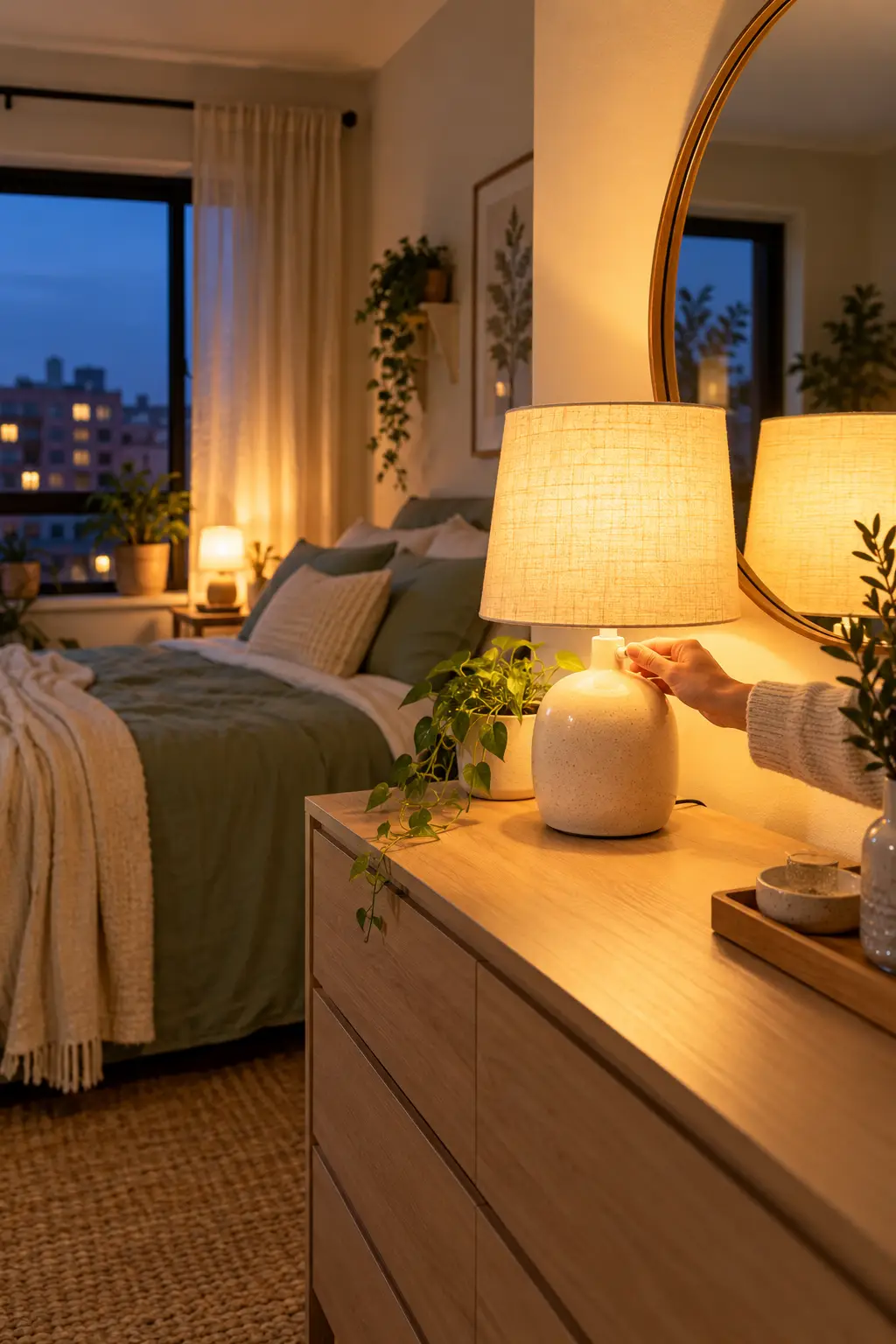
9. Place a lamp near the mirror to keep the glow going after dark
Daylight fades. Your bright corner doesn’t have to. Set a table lamp beside the mirror, about 12 to 18 inches from the glass, so it reflects the glow back into the room. Choose a lamp with a shade so you don’t see a bare bulb in the reflection.
Is it better to hang a mirror across from a window or beside it?
Beside the window spreads light deeper into the room. Across from it reflects the most light and repeats your view. In a room that gets strong afternoon sun, the side wall is the safer pick.
Can I hang a mirror across from my bed?
You can, but it may bounce morning sun into your eyes, and some people find seeing movement in it at night unsettling. A mirror on the wall beside the bed brightens the room without either problem.
How many mirrors should a small room have?
One large mirror usually does more than several small ones. Add a second only for a corner that stays dark, and don’t hang two mirrors facing each other, since the endless reflection feels busy.
Do mirrors really make a room look bigger?
Yes. A mirror shows more of the room back to you, which adds depth, and the extra light makes walls feel farther away.
How do I hang a mirror in a rental without drilling?
Use heavy-duty adhesive strips if the mirror is under the weight limit on the box. For anything heavier, lean a tall floor mirror against the wall or use an over-the-door mirror.
- Clear-glass mirror
- Tape measure and pencil
- Kraft paper, scissors, painter’s tape
- Hand mirror or phone
- Level and stud finder
- Drill and rated hooks or anchors
- Lamp with a 2700K bulb
- Renters: adhesive strips or floor mirror
- Track light at 9 a.m., noon, 4 p.m.
- Pick a wall beside or across from the window
- Check the reflection from your seats
- Size it at 2/3 the furniture width
- Mark center at 57 to 60 in.
- Tape a paper template for 24 hrs
- Find a stud or use a 2x-rated anchor
- Hang, level, add bumpers
- Add a shaded lamp 12 to 18 in. away
Your mirror is up, level, and pulling daylight into the corner that used to go gray.
You now know where to hang a mirror in any room by following the light instead of guessing.
Next time the room feels dim, try the same paper test with a smaller mirror in the darkest corner.
Save this to your small space Pinterest board so it’s ready for your next room or your next move.