
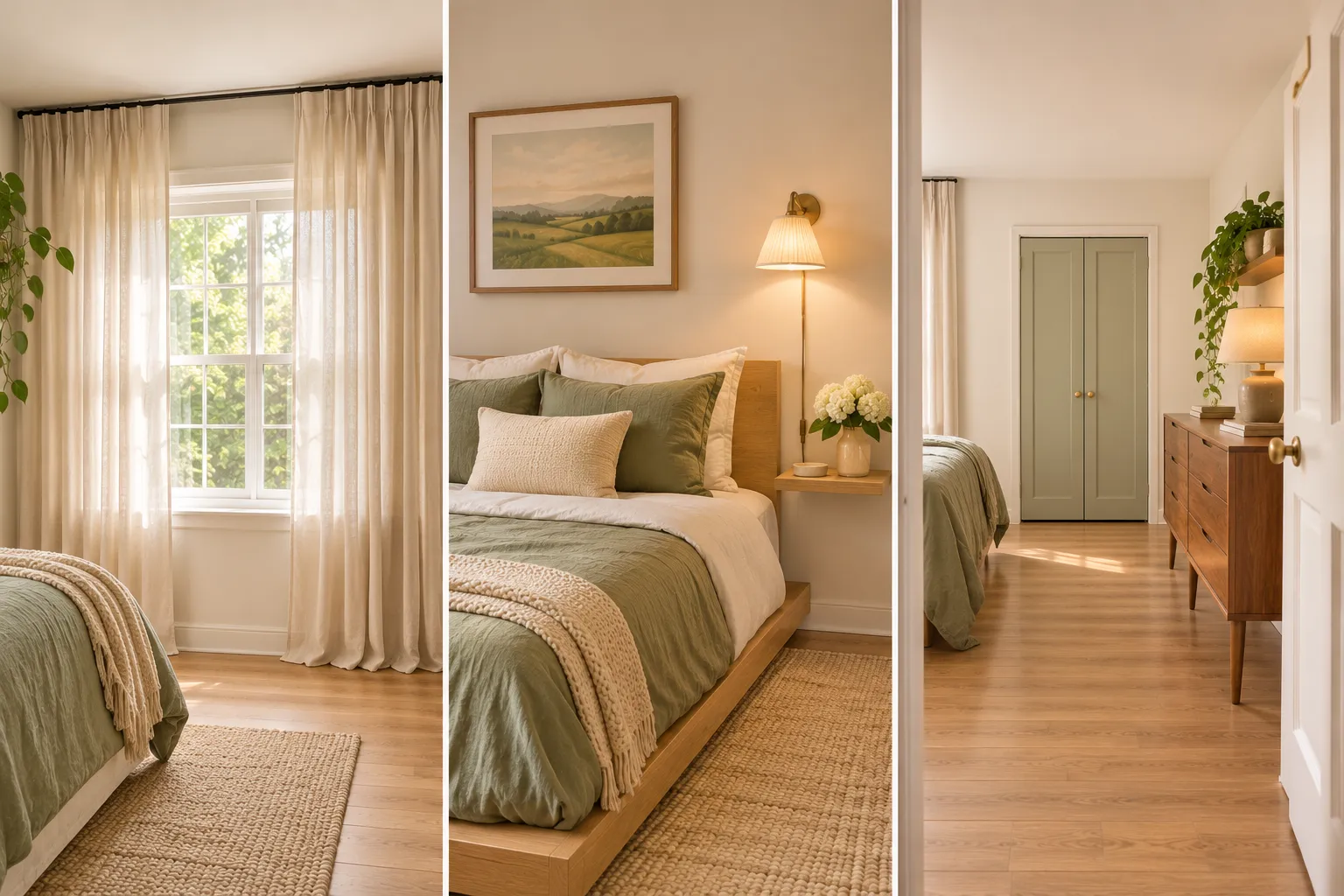
Most small bedrooms aren’t too small. They’re just set up in a way that makes them feel tight.
Nobody likes hearing that, because it means a bigger apartment isn’t the fix. The problem is the bed frame you bought on sale, the curtains hanging where the landlord left the rod, and the single ceiling light doing all the work after dark. None of these choices feels like a big deal on its own. Stack them together in a ten by ten room and the walls start to feel closer every week.
The good news is that most small bedroom mistakes are cheap to undo. A lot of them cost nothing at all. You don’t need to paint, knock down a wall, or buy a whole new set of furniture. You need to spot what’s crowding the room and swap it for something that gives space back.
Below are eight common mistakes I see in small bedrooms, each with a simple fix. Most work for renters, and you can tackle them one weekend at a time.
1. Choosing a Bed Frame With a Bulky Base and Tall Headboard
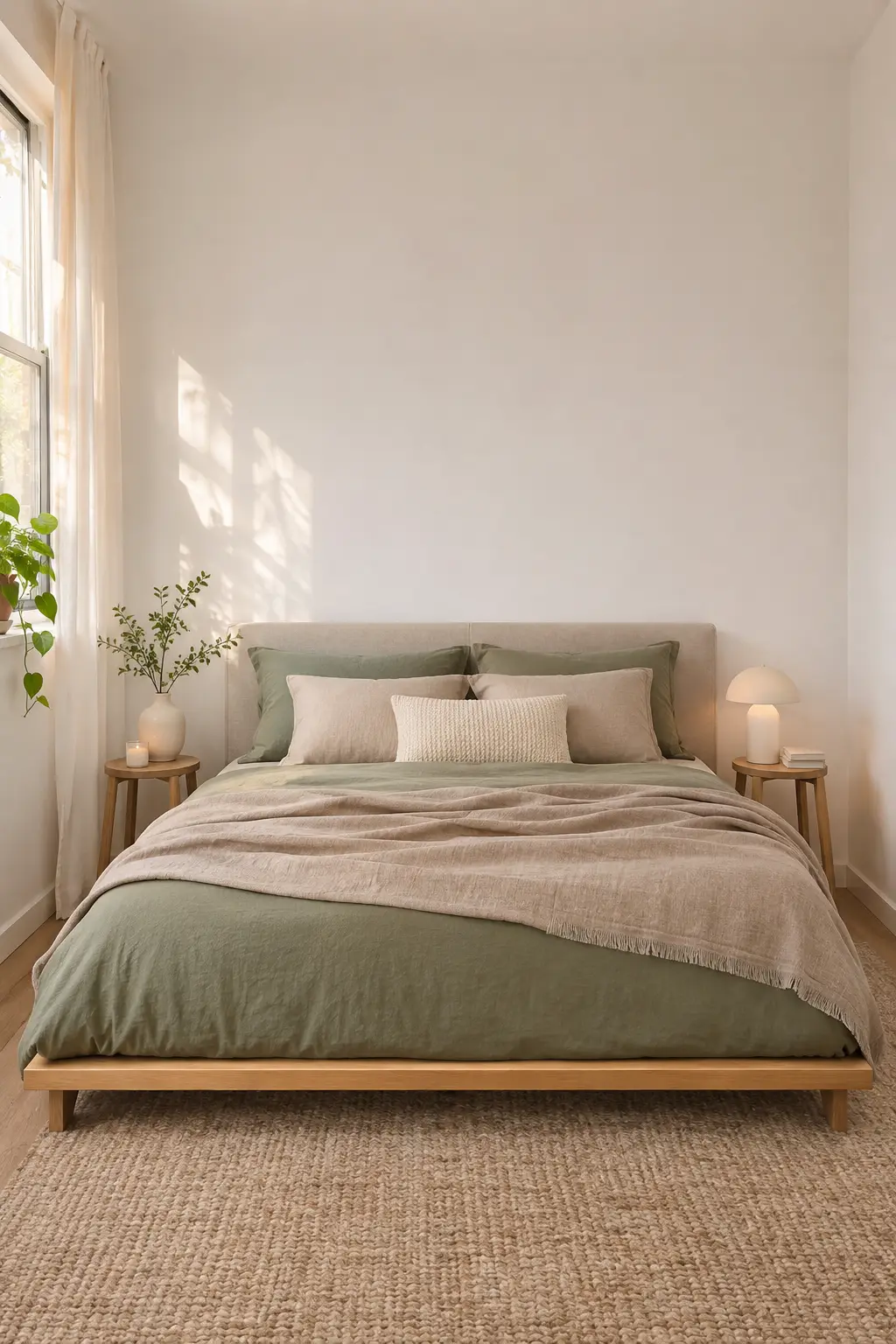
The bed is the biggest thing in the room, so its shape sets the tone for everything around it.
A lot of people fall for a chunky upholstered frame in the store, then wonder why the room feels boxed in at home. Thick padded rails add inches on every side, and in a small bedroom those inches come straight out of your walkway. A tall headboard covers half the wall and makes the ceiling feel lower. A footboard puts a second barrier at the end of the bed, right where you walk.
Measure the frame, not the mattress. The outside size on the tag is often several inches wider than you’d guess.
Side rails that sit close to the edge of the mattress.
A low headboard, or a flat panel mounted on the wall.
No footboard at all, or one that stays below the mattress.
Sleigh beds with curved, rolled ends.
Wingback headboards that wrap around the sides.
Padded rails that add bulk on every edge.
2. Hanging Curtains Right at the Top of the Window Frame
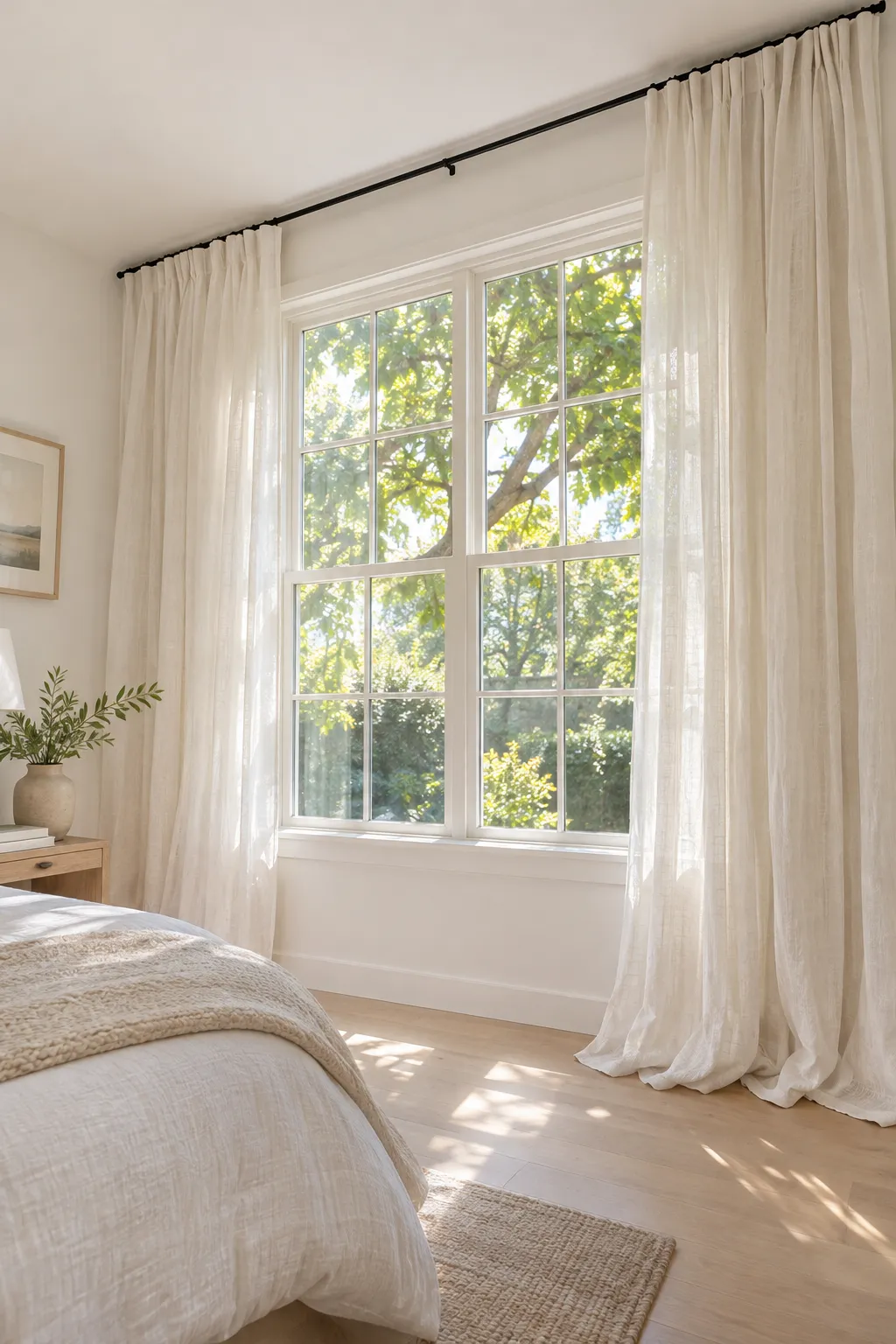
Move the curtain rod up. It’s the cheapest height boost a small bedroom can get.
When curtains hang right at the top of the window frame, they draw a hard line across the wall. Your eye stops there, and the ceiling suddenly feels low. Short panels that end above the floor make it worse, because they look like they shrank in the wash.
A rod hung higher and wider makes the window read as taller and bigger than it is. Panels pushed past the glass also let in all the daylight the window can give you.
Renters, don’t stress about the old screw holes. A dab of spackle covers them on move out day.
Mount the rod a few inches below the ceiling, or at least halfway between the frame and the ceiling.
Run the rod several inches past each side of the frame so open panels rest on the wall, not over the glass.
Pick panels long enough to just kiss the floor, in a light fabric that lets daylight through.
3. Lighting the Whole Room With One Ceiling Fixture
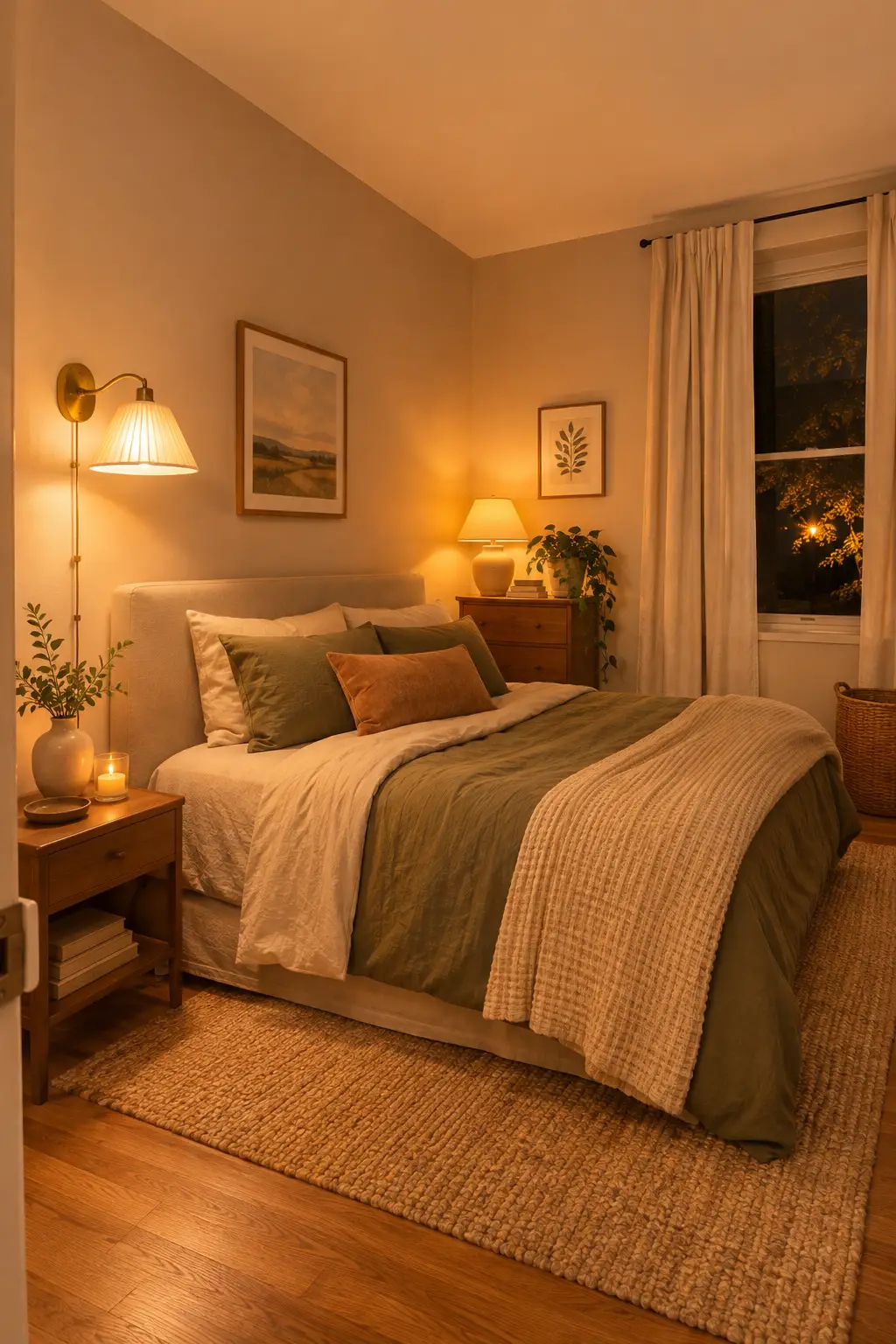
It’s late, you flip the switch, and one flush mount in the middle of the ceiling does all the work. The bed is bright. The corners go dim and gray.
Those dim corners are the real problem. When the edges of a room fall into shadow, the space seems to end sooner than it does. Light at a few different heights fills those edges in and makes the room feel wider.
You don’t need an electrician for this. Plug-in wall sconces and a couple of small lamps cover every layer, and none of them leave marks on a rental wall.
Stick with warm bulbs. They keep the room cozy instead of clinical.
4. Using a Rug That Stops Short of the Bed
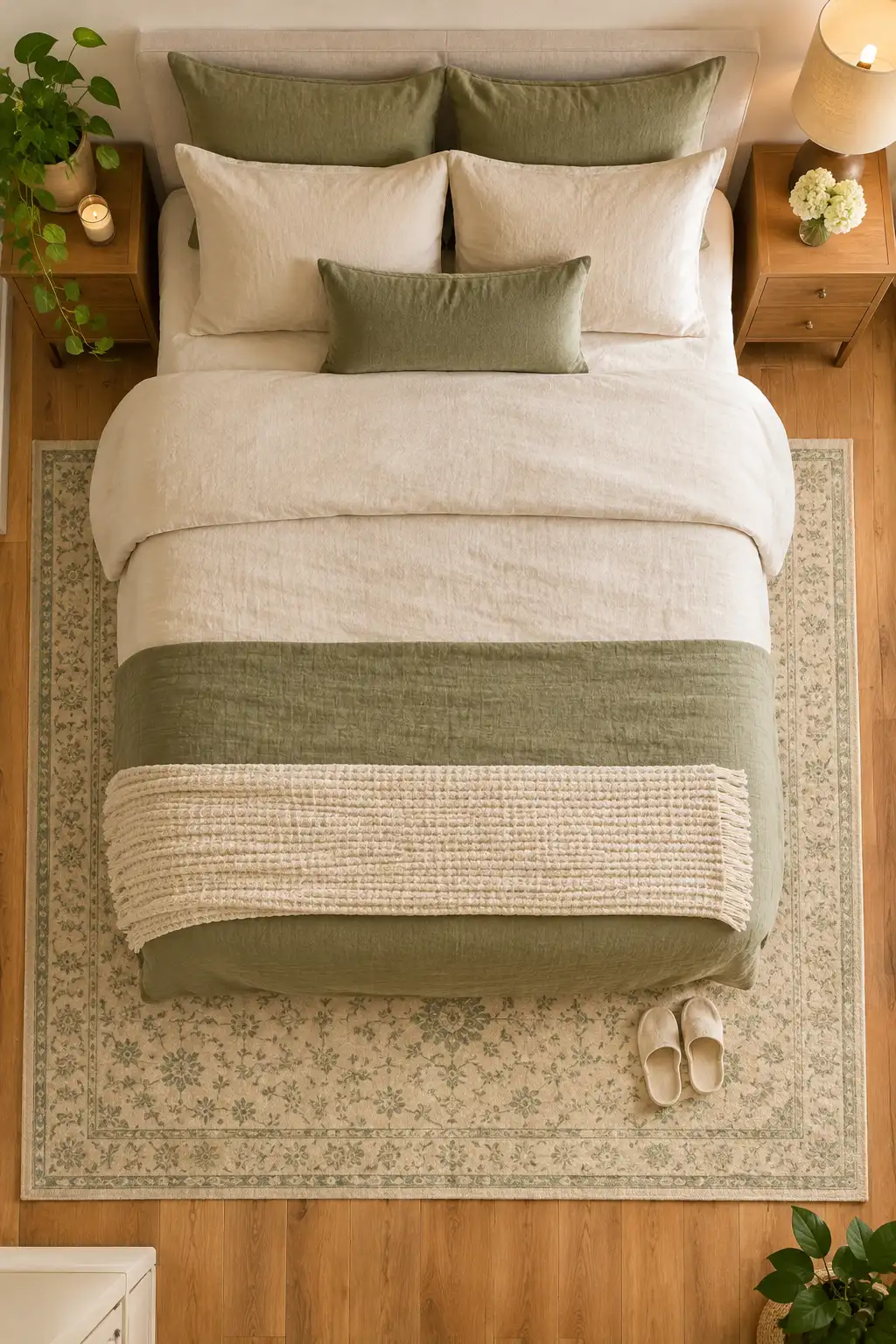
A small rug and a bigger one often cost close to the same at a discount store. In a small bedroom, they do opposite jobs.
A rug that only covers the floor in front of the bed, or floats in the open middle, chops the floor into little pieces. Each piece looks tiny, so the whole room does too. A larger rug that slides under the bed ties everything together and makes the floor look like one wide surface.
It feels backward to buy a bigger rug for a smaller room. It works, and your feet land on something soft every morning instead of cold floor.
| Too small | Right size |
|---|---|
| Sits at the foot of the bed or floats in the middle | Tucks under the bottom two thirds of the bed |
| Leaves a strip of bare floor beside the bed | Gives you a soft landing on both sides |
| Under a queen, a 5×7 usually looks lost | Under a queen, an 8×10 is the usual pick |
5. Letting Furniture Crowd the Path From the Door
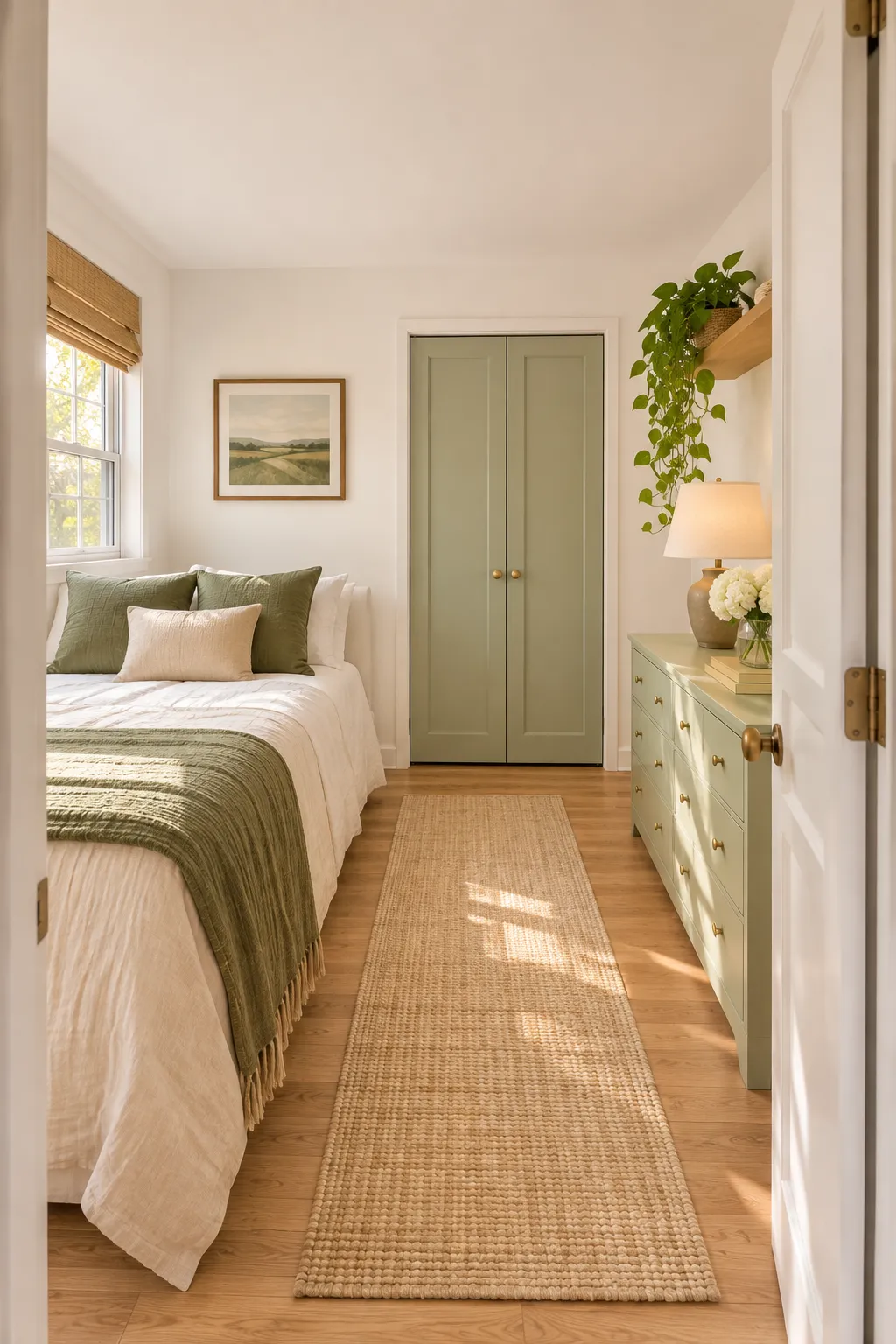
The door swings open and taps the corner of the dresser. To reach the closet, you turn sideways and squeeze past the bed.
That squeeze makes a room feel cramped more than its square footage does. When you edge around furniture every day, your brain files the room as tight, however nice it looks.
Walk the routes you use most:
- door to bed
- bed to closet
- closet to dresser
Anything that juts into those lines needs to move, shrink, or go. A common rule of thumb is about two feet of clear space for a walkway, with a little extra in front of drawers you pull open.
If a piece has no better spot, it might be the piece that has to go.
Dresser right beside the door, bed floating in the center, and a chair squeezed into the last open corner. Every trip to the closet is a sidestep.
Bed pushed against one side wall, dresser moved to face it, chair gone. The door swings freely and there’s one clear line to every spot you use daily.
6. Buying Dressers and Nightstands That Sit Flat on the Floor
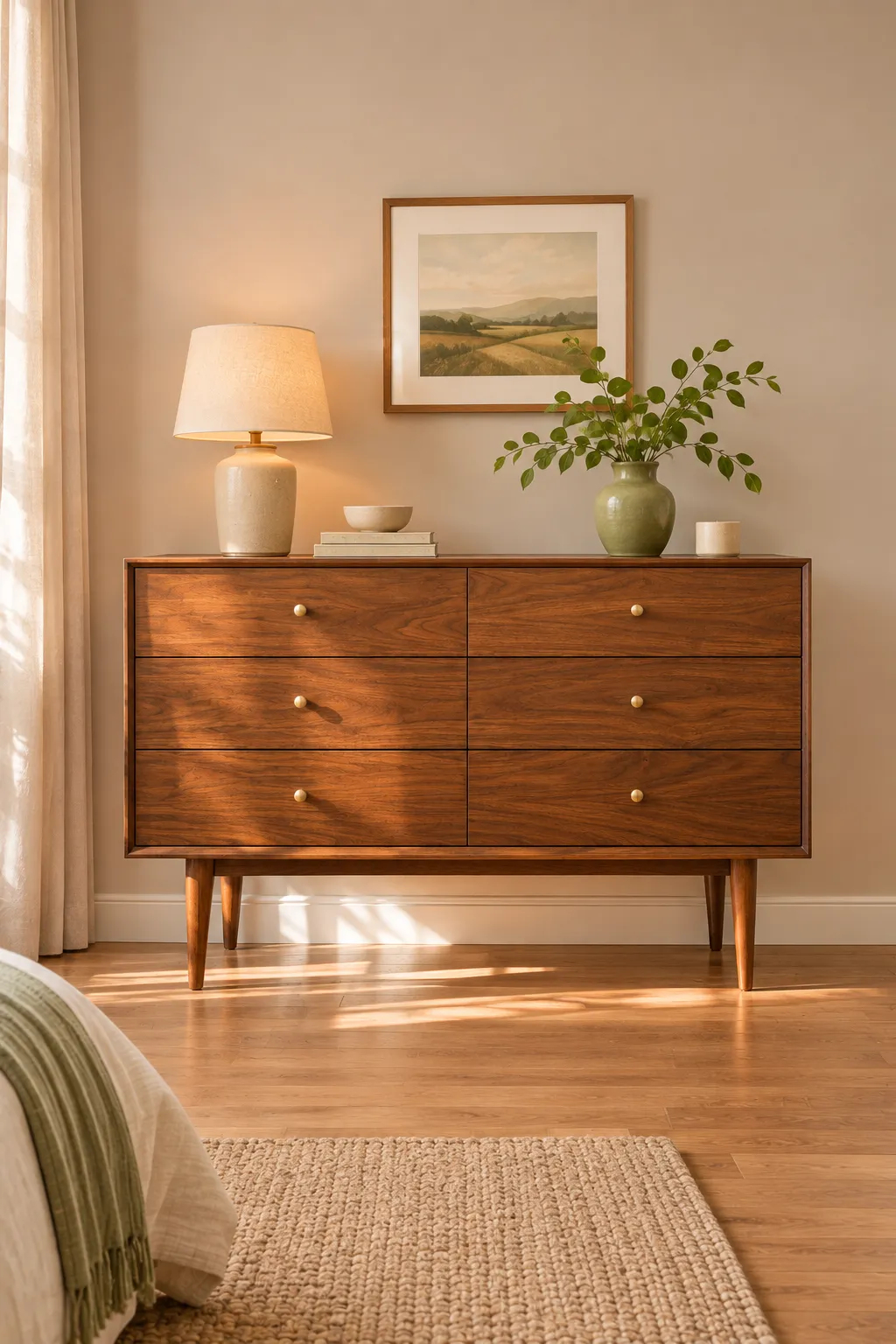
Here’s a quick rule for small rooms: the more floor you can see, the bigger the room looks.
A dresser or nightstand that sits flat on the ground reads as one solid block. Your eye hits it and stops. Put that same piece on legs and light slips underneath. The floor keeps going, and the furniture looks lighter than its actual size.
This matters most for pieces along the walls, where a heavy base makes the edges of the room feel boxed in.
Already own a flat-based dresser? Screw-on furniture legs from a hardware store can lift some pieces a few inches. Just check that the bottom panel is solid wood and not thin backing board.
💡 The Crouch Test
Before you buy, crouch down and look under the piece. If you can see the wall behind it through the gap, it will feel light in a small room. Bonus: a robot vacuum or a quick sweep can actually reach under it.
7. Covering Every Flat Surface With Small Stuff
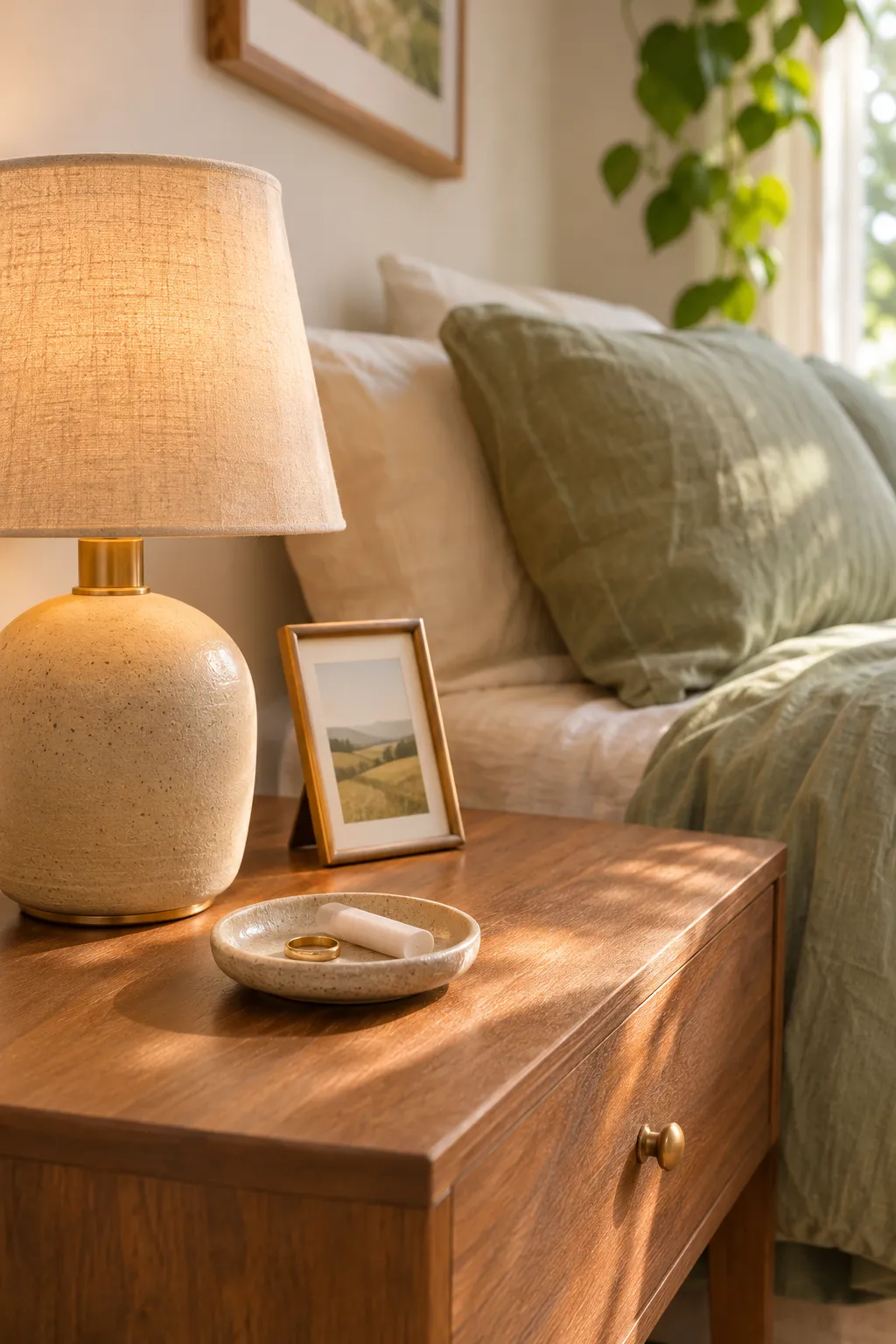
Nightstands are where small things go to pile up. Hair ties, receipts, three lip balms, a mug from Tuesday.
In a big room, that kind of clutter gets lost. In a small bedroom, every crowded surface adds visual noise, and noise makes a room feel smaller than it is. A dresser top covered in little bottles and frames can look busier than the entire rest of the room.
A simple limit helps. Give each surface three things at most:
- one useful thing, like a lamp
- one personal thing, like a photo or plant
- one small tray to catch the daily stuff
The tray is what keeps the reset from falling apart by Friday.
8. Leaving the Top Half of Your Walls Empty
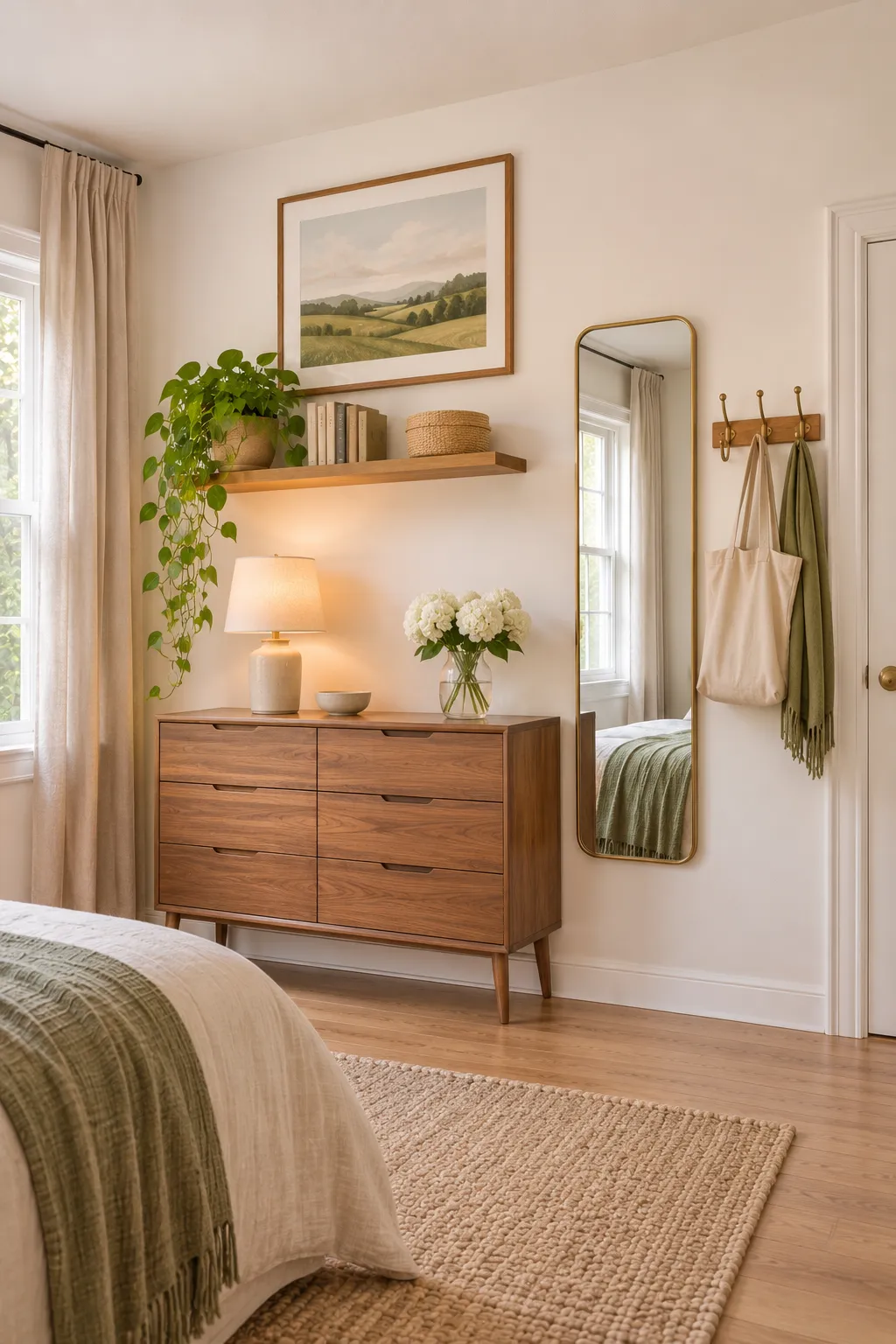
Bare walls don’t make a small bedroom look bigger. They make it look unfinished, and they keep all your storage stuck at waist height.
When every shelf, basket, and bit of decor sits low, the bottom half of the room gets crowded while the top half does nothing. Your eye stays down where the clutter lives. Moving a few things up pulls the eye toward the ceiling and frees floor and surface space at the same time.
Go up in stages. Two or three well-placed pieces do more than a wall packed with shelves.
Renters, check your lease before drilling. For anything heavier than a small frame, skip adhesive strips and use proper wall anchors.
What to move up the wall first
Making Your Small Bedroom Feel Like Enough
A cramped bedroom usually isn’t a size problem. It’s a handful of small choices that add up, and each one is easy to reverse once you can see it.
You don’t have to fix all eight this weekend. Start with the one that bugs you most. Maybe it’s the dark corners or the dresser by the door. Fix one, live with it for a few days, and the next change will feel obvious.
The best part about small bedroom mistakes is that the fixes rarely cost much. Mostly, they ask you to move things, raise things, and let go of a few things.
Save this list for the next time your bedroom starts to feel tight.
A small room feels bigger when your eye can keep moving: across clear floor, past calm surfaces, and up the wall.