
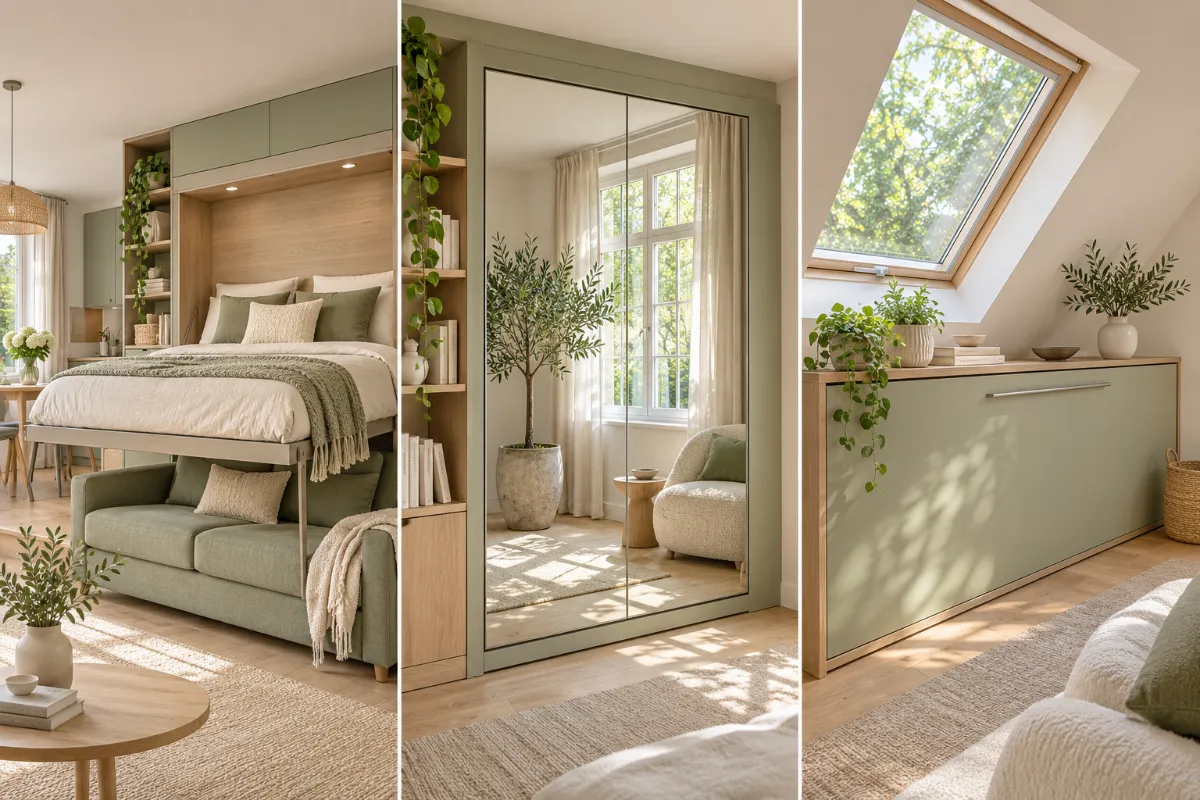
Most small apartments don’t have a space problem. They have a furniture problem.
In under 600 square feet, every piece has to earn its spot. Think of a coffee table that only ever holds a mug, a guest bed that sits empty most of the year, or a dining table you squeeze past sideways to reach the closet. Each one takes floor you can’t get back.
The usual advice is to own less. That helps, but you still need somewhere to sleep, eat, work, and sit with a friend. The better fix is space saving furniture for small apartments: pieces that do two jobs, fold out of the way, or lift off the floor so the room can breathe.
The 15 ideas below hold up in real small spaces. Some fold, some roll, and some hang on the wall. A few need screws in the studs, so renters will see a note when that’s the case. Start with the one that fixes your biggest daily annoyance, then build from there.
1. A Murphy Bed With a Desk Front for Studio Living
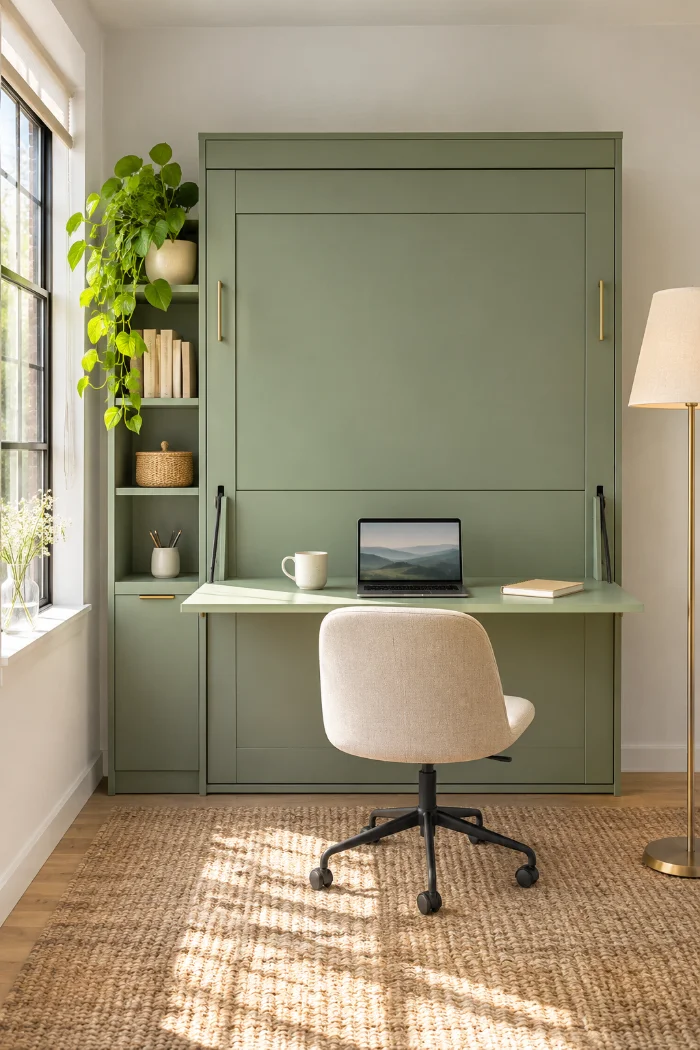
It’s 7 a.m., the bed is still down, and your studio feels like a bedroom you happen to cook in. A Murphy bed with a desk front changes that. During the day, the bed folds up into its cabinet and a desk sits in front of it. At night you lower the bed. On the better designs the desk stays level underneath, so your laptop and mug don’t have to move.
Check three things before you commit:
- How thick a mattress the frame allows, since many need a thinner one than you own now
- Whether it has side cabinets or shelves for the lamp and phone charger a nightstand would usually hold
- Your ceiling height and where the wall studs are
This is the biggest purchase on the list, so measure twice.
2. A Lift-Top Coffee Table That Rises to Dinner Height
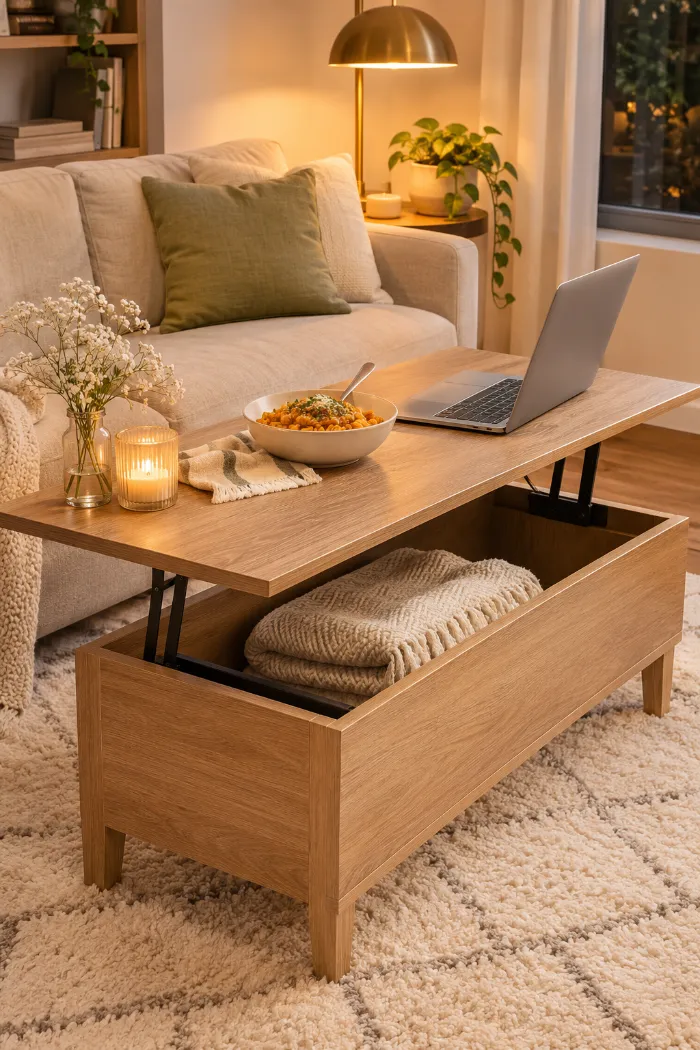
Dinner on the sofa gets a lot easier when the table comes up to meet you.
A lift-top coffee table has a top that raises on a hinge and moves closer to your knees. Your plate or laptop ends up at a comfortable height, and you stop eating hunched over. Under the top there’s usually a hidden bin for remotes, chargers, and the throw blanket that never has a home.
It’s the best fit for apartments with no room for a dining table at all.
💡 Quick Tip
Before you buy, sit on your sofa and measure from the floor to the top of the seat cushion. Then check the table’s lifted height in the listing. You want the raised top to land several inches above the cushion. If it only reaches cushion height, you’ll still be leaning forward over your food.
3. A Drop-Leaf Table That Folds Down to Console Depth
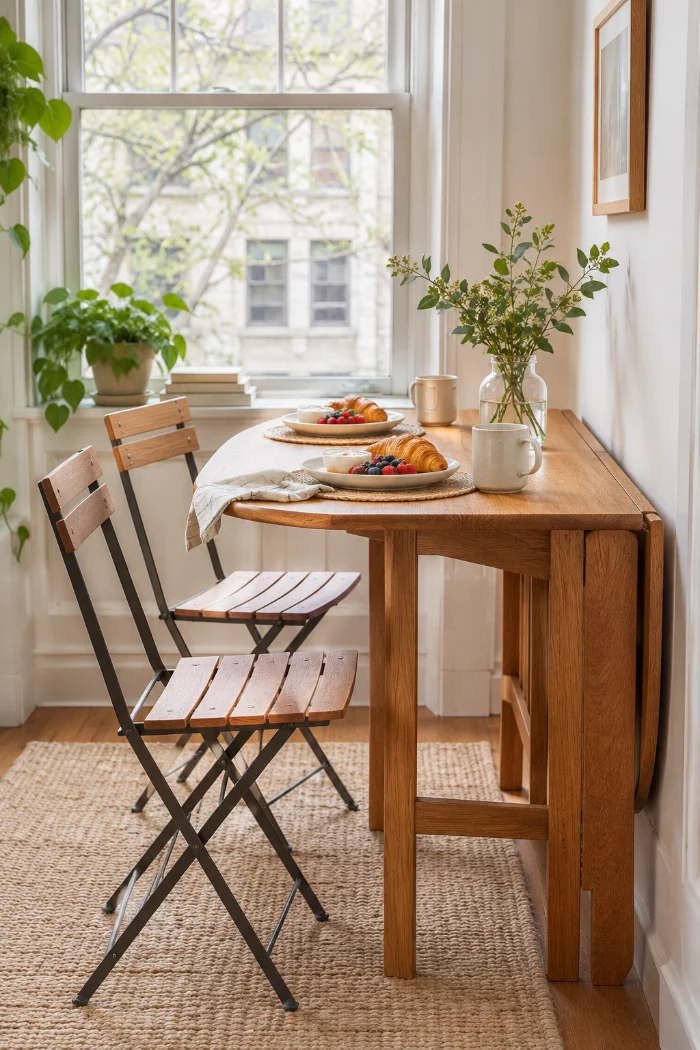
With both leaves down, a drop-leaf table is barely deeper than a hallway console. Most of the week it sits against the wall holding a lamp, a key bowl, and the mail you’ll get to later.
When friends come over:
- Slide it out from the wall
- Raise one leaf for two people, or both for four
- Pull the folding chairs off their hooks, like the peg rail in item 12
Gateleg styles use swing-out legs to hold up each leaf, which feels steadier than thin metal brackets. If you lean on the table while you eat, go gateleg.
A full dining table parked in the middle of the room. You turn sideways to get past it on the way to the closet, and it only gets used for real meals a couple of times a week.
The table lives flat against the wall as a slim console. The walkway stays clear, and the leaves only go up when someone is actually sitting down to eat.
4. A Daybed Instead of a Sofa and a Guest Bed
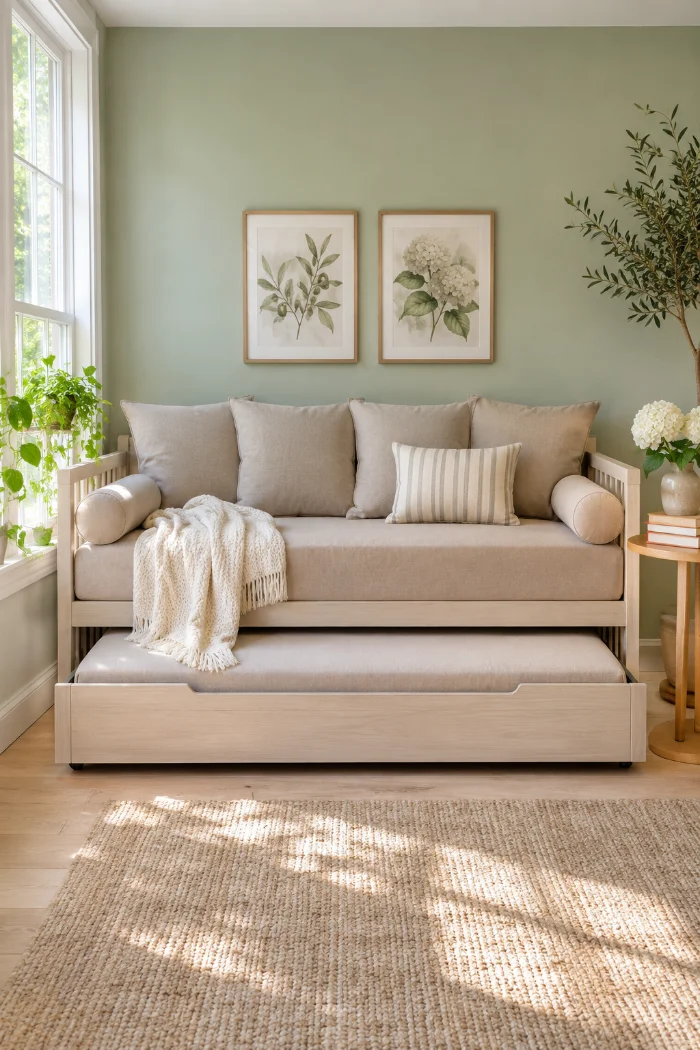
A sleeper sofa sounds like the smart pick until you unfold one. The frame needs a big patch of clear floor in front of it, and guests can often feel the support bar through the thin mattress.
A daybed is a real twin mattress on a frame with a back and sides. To make it look like a sofa during the day:
- Use a fitted cover instead of a fluffy duvet
- Lean two or three firm square pillows against the back
- Add a bolster at each end to act as armrests
When someone stays over, the pillows come off and the bed is ready. You don’t unfold anything or move the coffee table.
| Daybed | Sleeper Sofa | |
|---|---|---|
| Daily sitting | Deep seat, needs firm back pillows | Feels like a regular sofa |
| Guest setup | Pull off pillows, done | Clear the floor, unfold, make the bed |
| Floor space when open | Same as when closed | Needs open floor in front |
| Sleep comfort | Full twin mattress | Thinner fold-out mattress |
| Works best for | Frequent overnight guests | Guests a few times a year |
5. A Lift-Up Storage Bed for Suitcases and Winter Bedding
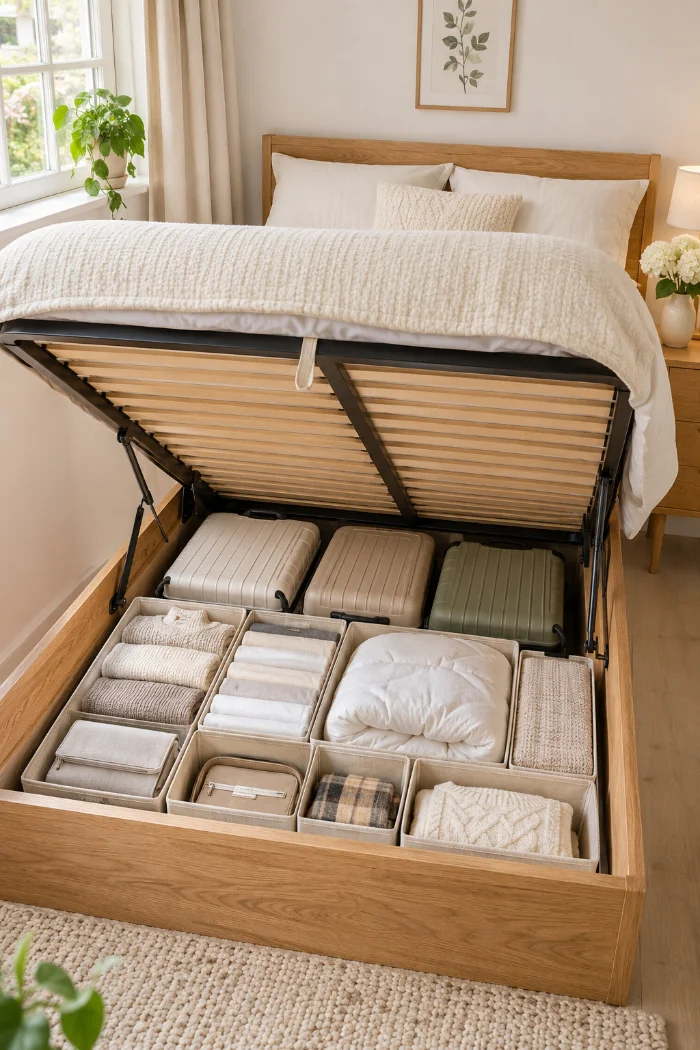
Suitcases are the worst roommates in a small apartment. They’re huge, you use them a few times a year, and they end up wedged behind a door or teetering on the closet shelf.
On a lift-up storage bed, gas pistons raise the whole mattress platform, a bit like a car hood. Underneath is one big open bin, with far more room than a pair of drawers.
Two things to check first:
- The pistons are rated for your mattress weight, because weak ones won’t hold a heavy mattress up
- You have room to stand beside or at the foot of the bed while it’s open
6. Nesting Side Tables That Tuck Away Between Guests
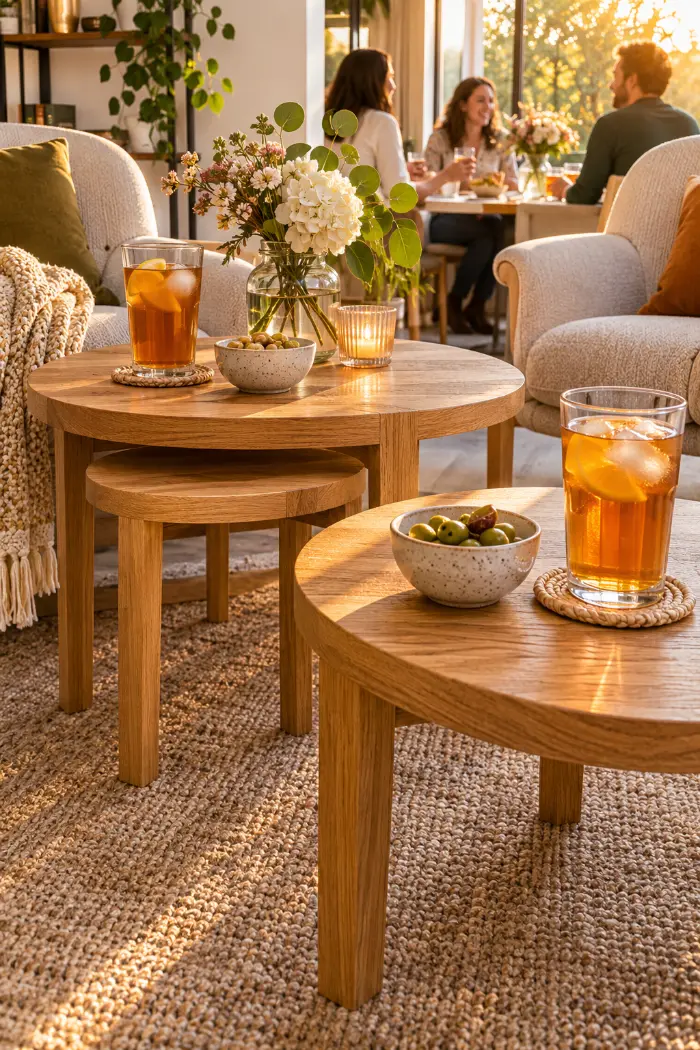
Most small living rooms have a coffee table that’s too big on a regular weeknight and too small the night friends come over. Nesting tables fix that.
A set of two or three slides together into the footprint of one small table. When people visit, pull them apart so every seat gets its own spot for a drink.
Look for sets where the smaller tables slide all the way in without the legs bumping. In tight walkways, round tops are easier to get around than square ones.
Three ways to use one set
- ▸Stacked together as a small coffee table on quiet nights.
- ▸Split up beside each seat when friends are over.
- ▸The smallest one carried to the daybed as a nightstand for an overnight guest.
7. An Open-Back Bookcase That Splits a Studio Into Zones
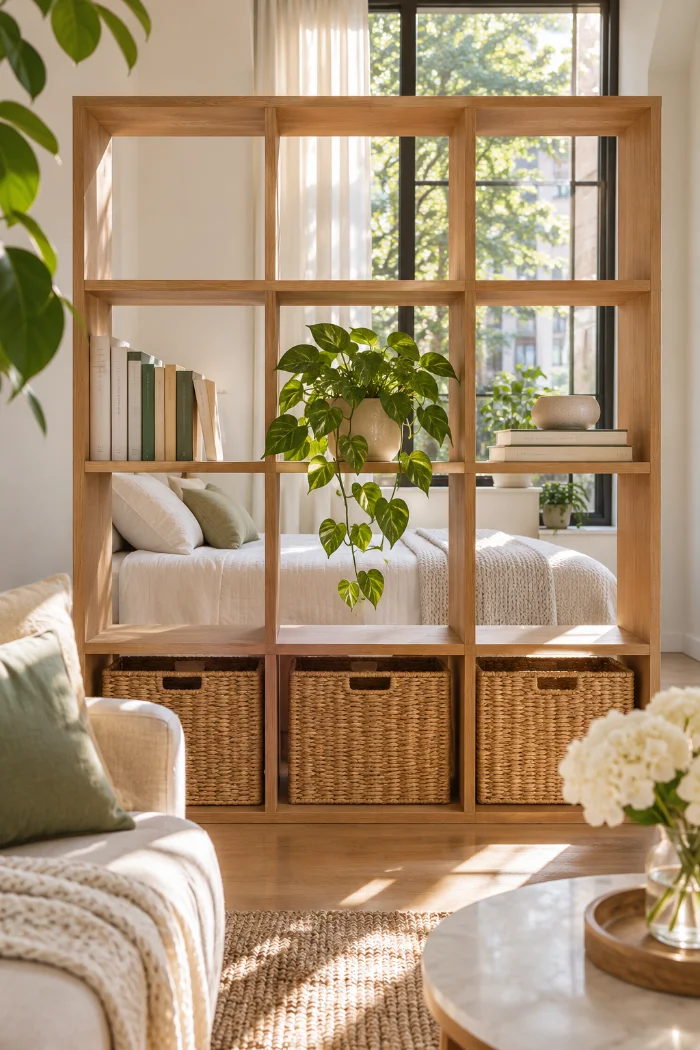
Heavy at the bottom, open at the top. That’s the rule for a bookcase that doubles as a wall.
Stand an open-back shelf unit at a right angle to the wall and it separates the bed from the living area without cutting off light from the window. Cube-style units work especially well because you can see through the gaps from both sides, so the room still feels like one space.
Style it so it looks good from both sides:
- Closed bins or baskets on the bottom row for weight and hidden storage
- Books and a trailing plant in the middle, with a few cubes left empty
- Only light things on the top row
It reads as a room divider, and it’s also the biggest bookshelf you’ll own.
Strap the end that touches the wall to a stud with an anti-tip kit. A tiny screw hole is easier to patch than a tipped shelf.
Leave a clear walkway at the open end so the bed area feels like its own nook.
A solid-back bookcase. It blocks light and leaves the bed side dark.
Running it across the full width of the room. That turns a zone into a hallway.
8. Floating Nightstands That Clear the Floor by the Bed
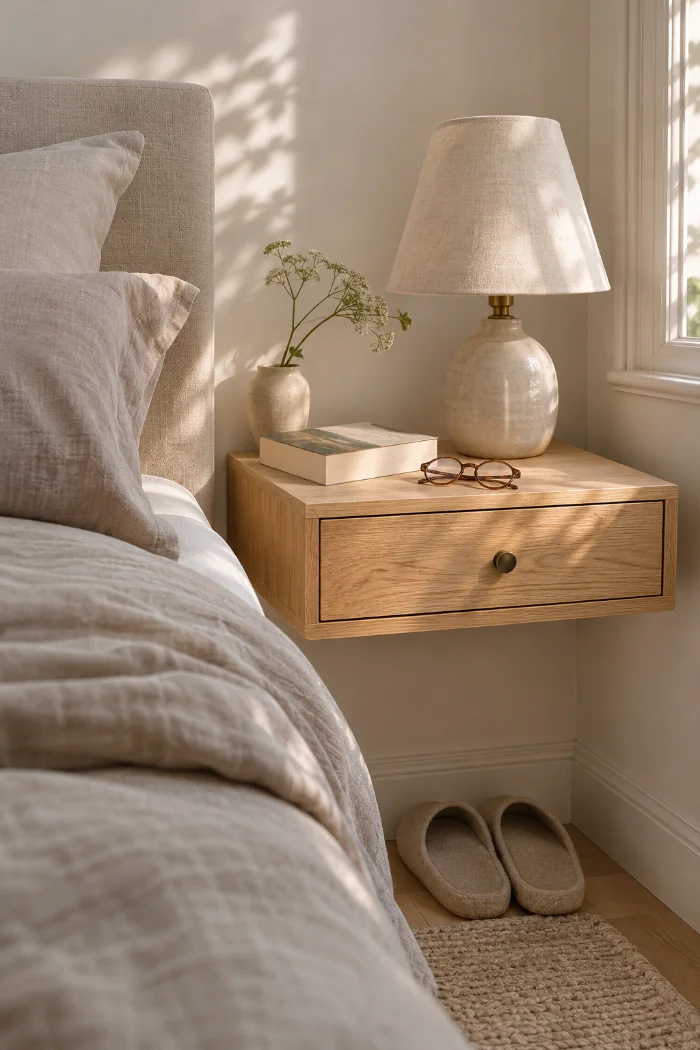
Put the nightstand on the wall and the floor beside your bed opens right up.
A wall shelf with one small drawer holds what you actually reach for at night: your phone, glasses, a book, and lip balm. With no legs in the way, slippers or a basket can slide underneath. It’s a smart swap when the bed nearly touches the walls on both sides.
Renters, this one means screw holes, so check your lease first. Small holes usually patch with a bit of spackle when you move out.
Find a stud with a stud finder. If there isn’t one where you need it, use wall anchors rated for more weight than the shelf plus what you’ll keep on it.
Line the top up with your mattress or a little above it, so reaching over for your phone feels natural.
Hold a level against the wall and mark both screw holes before you drill, so the drawer doesn’t slide open on its own.
9. A Fold-Down Wall Desk That Closes Over the Workday
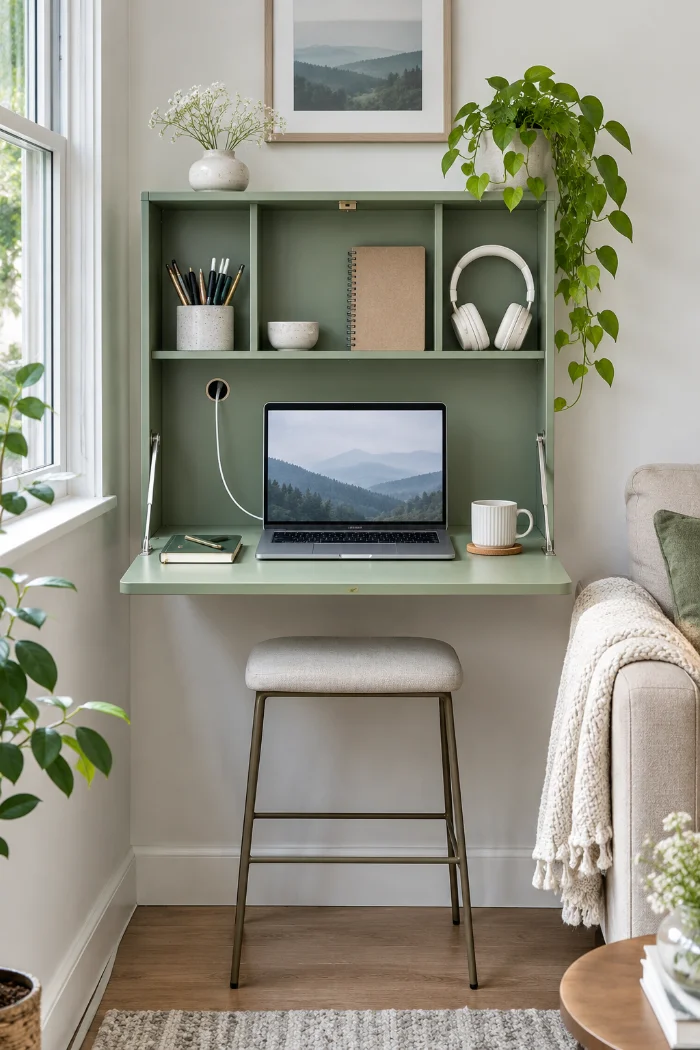
A lot of people think working from home means giving a corner of the room to a desk full time. In a small apartment, that desk usually becomes a second place to drop mail and laundry.
A fold-down wall desk is a shallow cabinet whose front drops into a work surface. Inside, little cubbies hold pens, a notebook, and your headphones.
Look for one with:
- A cable hole in the back so your charger can stay plugged in
- Enough depth for your laptop with the screen fully open
It mounts to the wall, so the renter note from item 8 applies here too.
A desk you can close gives you a clear end to the workday. When the front shuts, the room goes back to being your home instead of your office.
10. A Rolling Kitchen Cart That Works as an Island
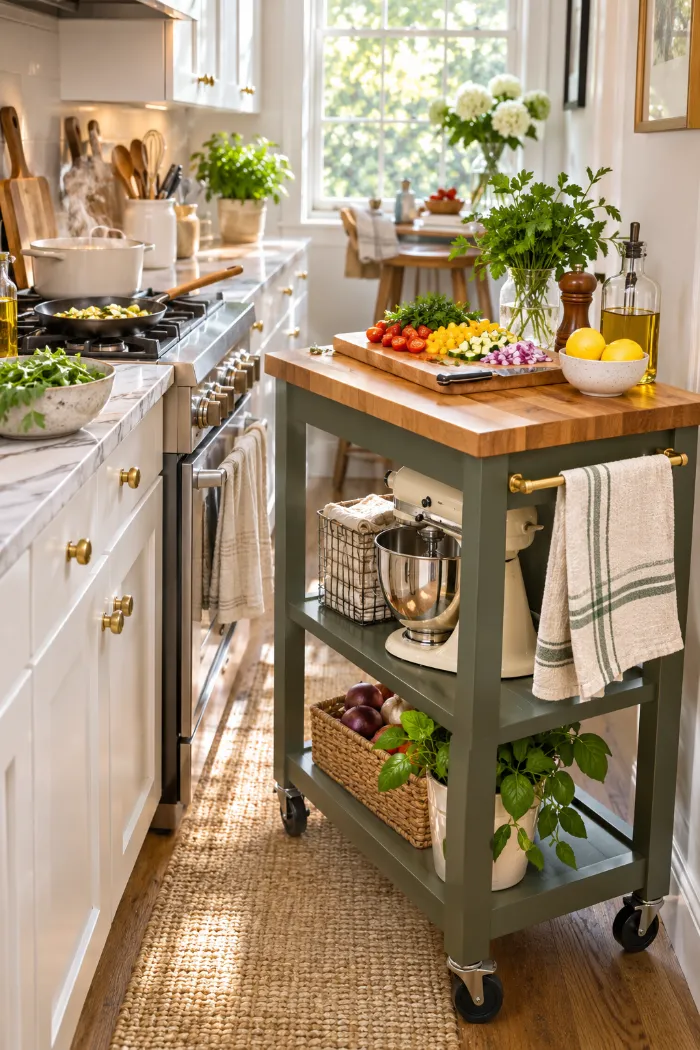
Small kitchens usually run out of counter space long before they run out of cabinets. With nowhere to set down a cutting board, the stovetop ends up as your prep area.
A rolling kitchen cart adds a work surface right where you’re cooking, then rolls back into a corner when you’re done. The lower shelves can hold the stand mixer, the fruit bowl, or the pots that never quite fit in a cabinet.
On movie night, wheel it over to the sofa for snacks and drinks.
What to look for in a cart
11. An Entry Bench With Shoe Cubbies Under the Seat
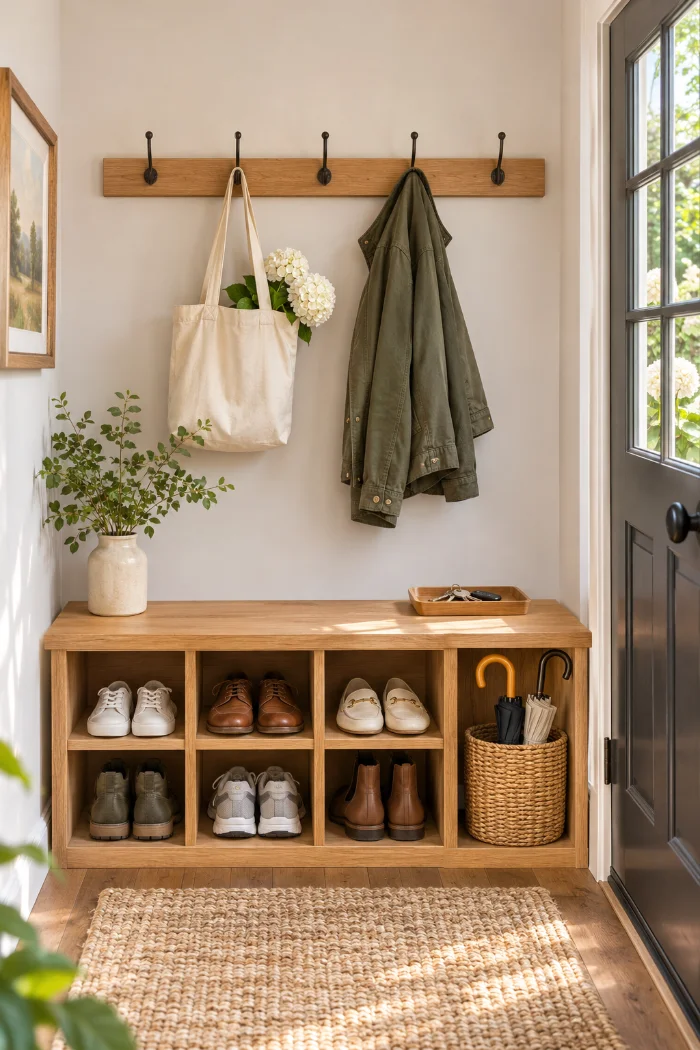
Picture a low bench by the door, shoes lined up in the cubbies underneath and a small tray on top for keys. That one piece sorts out the messiest few square feet in a small apartment.
In a lot of small places, the front door opens straight into the living room. With no drop zone, shoes spread across the floor and bags land on the sofa. A cubby bench gives every pair its own slot and gives you somewhere to sit while you tie your laces.
Measure your door swing before you shop. A bench that blocks the door ends up being moved within a week.
12. Folding Chairs That Hang on a Peg Rail
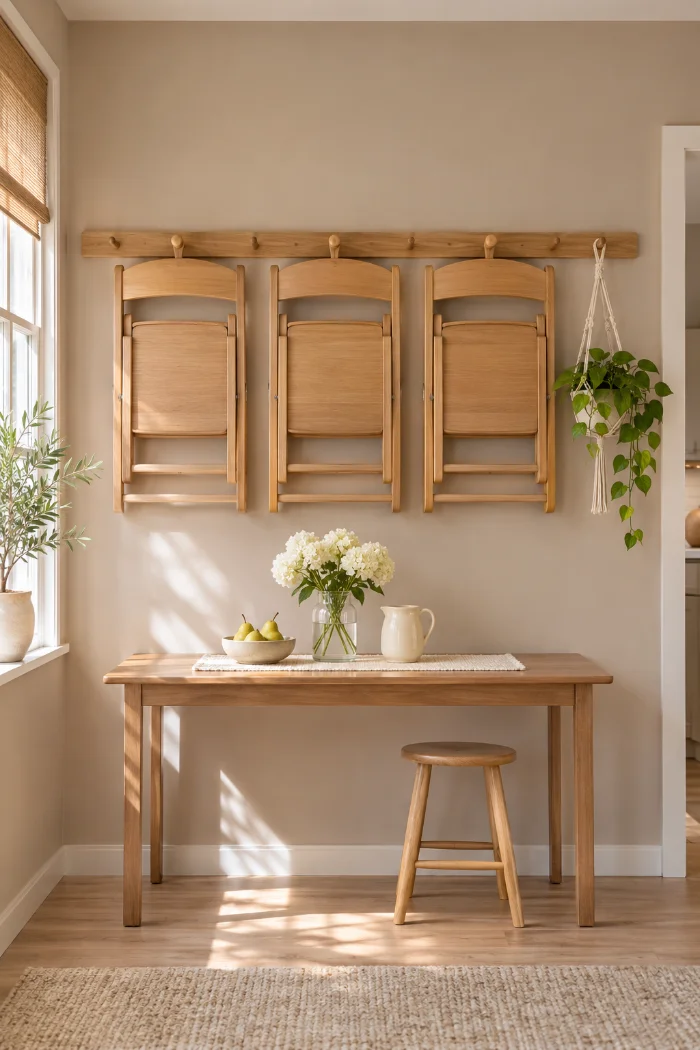
The usual mistake with folding chairs is stashing them behind a door or under the bed. They get scuffed, they slide over, and digging them out is such a hassle that you stop inviting people over.
Hang them instead. A wooden peg rail along a bare wall holds a few folding chairs flat, and lined up neatly they look like part of the decor rather than overflow storage.
Between dinners, the same pegs can hold a tote, a hat, or a hanging plant.
Pick chairs with a slim frame and a seat that folds completely flat.
⚠️ Watch Out
Drywall alone won’t hold a rail that gets chairs lifted on and off it. Screw the rail into studs, or use anchors rated well above the weight of the chairs. This one needs screws, so renters should check the lease first.
13. A Loft Bed With a Desk or Reading Nook Underneath
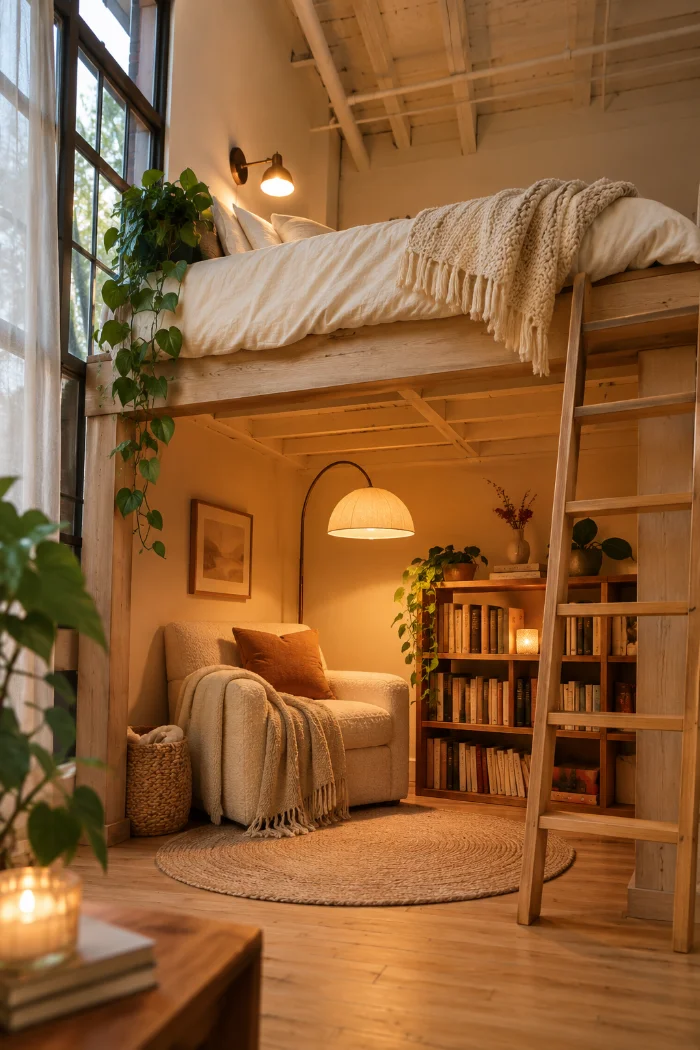
A loft bed gives you back the biggest footprint in your apartment, which is the floor under your bed.
With the mattress raised high, there’s room for a whole second zone underneath. It’s the closest you’ll get to adding a room without moving.
Check two things before you buy:
- Your ceiling height, so you can sit up in bed without hitting your head
- The clearance under the frame, which decides whether a desk chair fits or only a floor cushion does
Many loft beds are freestanding, which helps renters. A tall one is still worth strapping to the wall if your landlord allows it.
14. A C-Shaped Side Table That Slides Over the Sofa
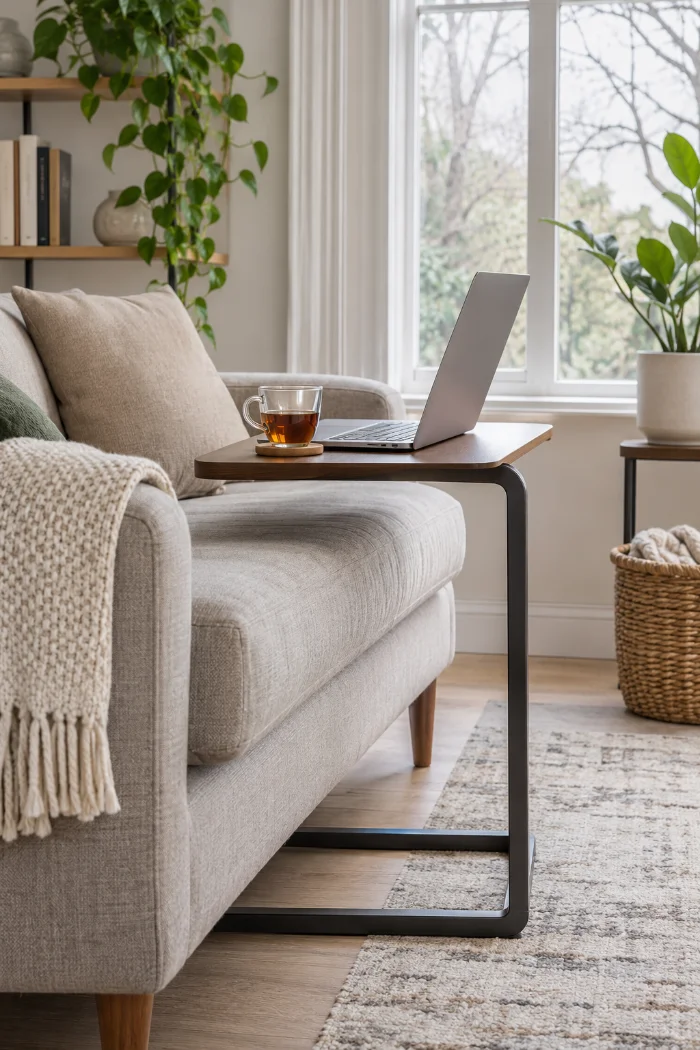
Sofas in small apartments rarely have room for a side table next to them, which is why mugs end up balanced on the armrest.
A C-shaped table fixes that by sliding partly under the sofa instead of standing beside it. The base tucks under the seat and the top sits over your lap or the cushion, holding a laptop, a plate, or a drink. When you’re done, push it back against the wall. It barely takes up any floor.
Check that your sofa has a gap underneath first. If it’s skirted or sits right on the floor, the base won’t slide in.
| C-Shaped Table | Standard Side Table | |
|---|---|---|
| Where it sits | Under the sofa, over your lap | Beside the sofa arm |
| Extra floor needed | Almost none | Its own spot next to the arm |
| Laptop use | Comfortable, right in front of you | Too low and off to the side |
| Holds a lamp | Not really, the top is small | Yes |
| Works with | Sofas on legs with a gap underneath | Any sofa |
15. A Leggy, Armless Sofa That Lets the Floor Show
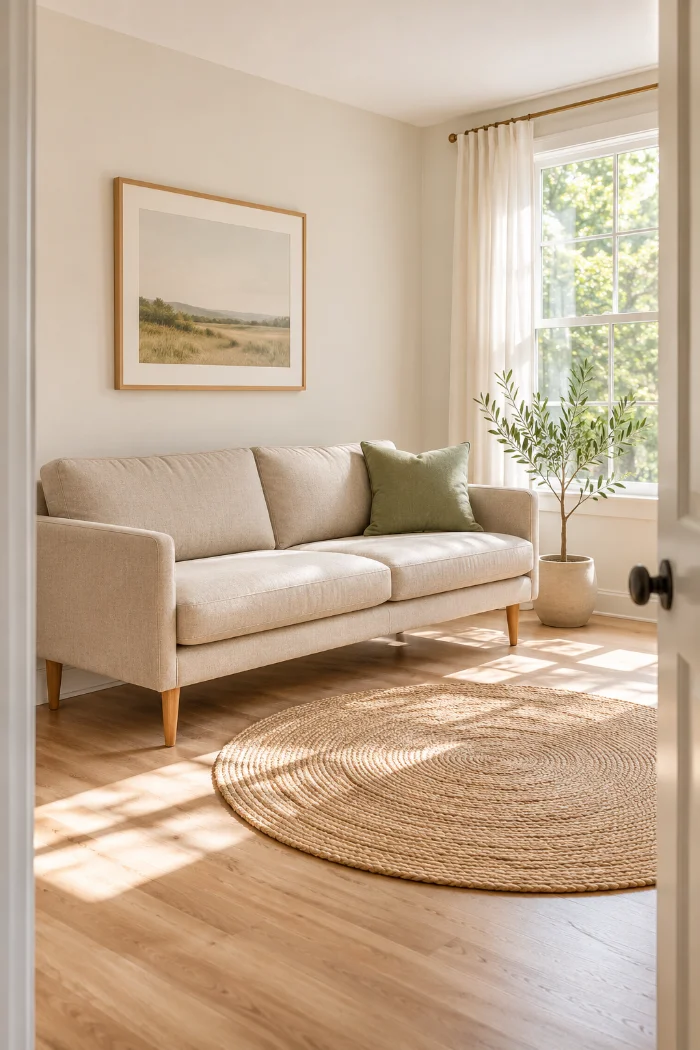
The more floor you can see, the bigger a room feels. A sofa on raised legs looks lighter than one with a skirt or a base that sits flat on the floor, even when both are the same size.
Arms matter too. Chunky rolled arms can use up several inches on each side without adding any seat.
When you shop, look for:
- Raised legs with a clear gap underneath
- Thin track arms or no arms at all
- A seat depth that leaves your walkway open
The gap underneath also makes vacuuming a lot easier.
A deep, skirted sofa with big rolled arms. It hides the floor, narrows the path to the window, and makes the whole room feel boxed in.
A slim sofa on raised legs with track arms. Light passes under it, the walkway opens up, and it still seats the same number of people.
Living in under 600 square feet doesn’t mean every room has to feel crowded. The trick is asking more of each piece: a bed that lifts for storage, a table that folds flat, a desk that closes when the workday ends.
You don’t need all 15. Start with the spot that bugs you most, like the pile of shoes by the door or the dining table you squeeze past every morning. Fix that first, and the rest of the apartment gets easier to plan around.
Good space saving furniture for small apartments earns its floor every single day. Save this list for the next time you’re furniture shopping or rearranging your place.
Before you buy any piece