
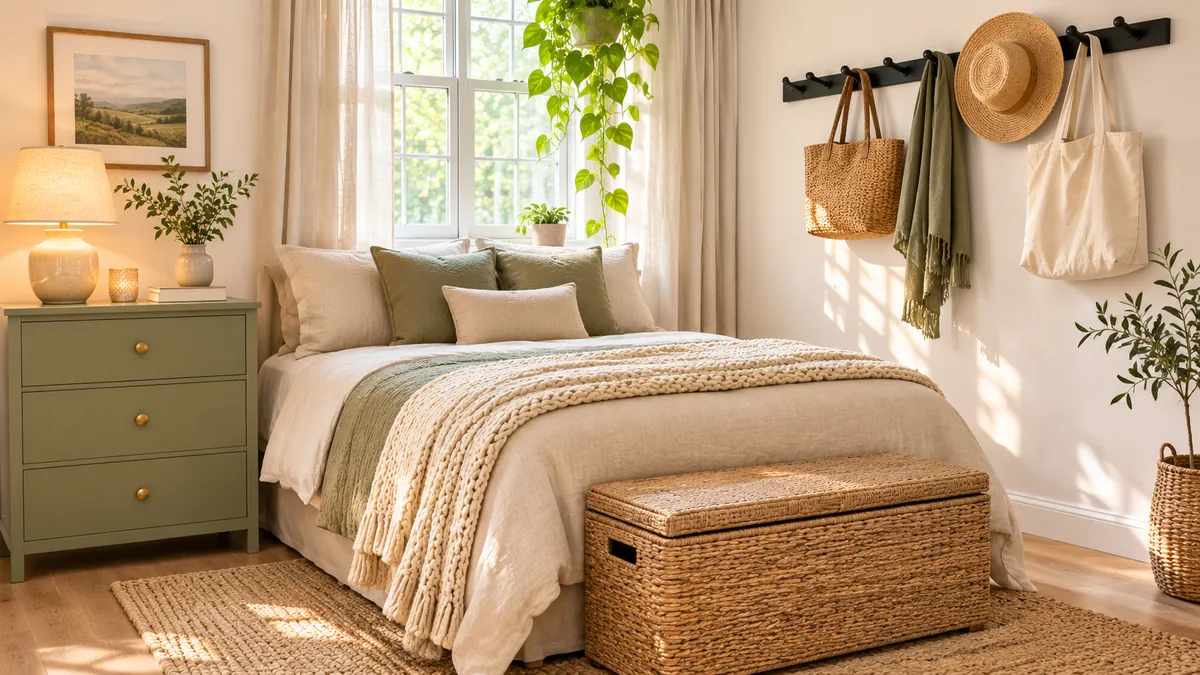
No closet doesn’t have to mean clothes on the chair and boxes under the desk. Plenty of small bedrooms, especially in older apartments and rentals, come with no built-in storage at all, or a closet so tiny it barely fits a winter coat. Most of these rooms are hiding more space than you’d think.
It’s under the bed, above the door, in the corner you walk past every day, and on the back of the door you close every night. Once you start seeing those spots as storage, the room changes fast.
These small bedroom storage ideas cover all of them. Some are weekend projects, like a built-in window seat. Others take a few minutes, like hanging an organizer over the door. There are hidden options for people who like a clean look, and open ones for people who want to see everything at once.
Pick two or three that fit your room and your budget. You don’t need all 15 to feel the difference.
1. Swap to a Lift-Up Ottoman Bed and Store Under the Whole Mattress
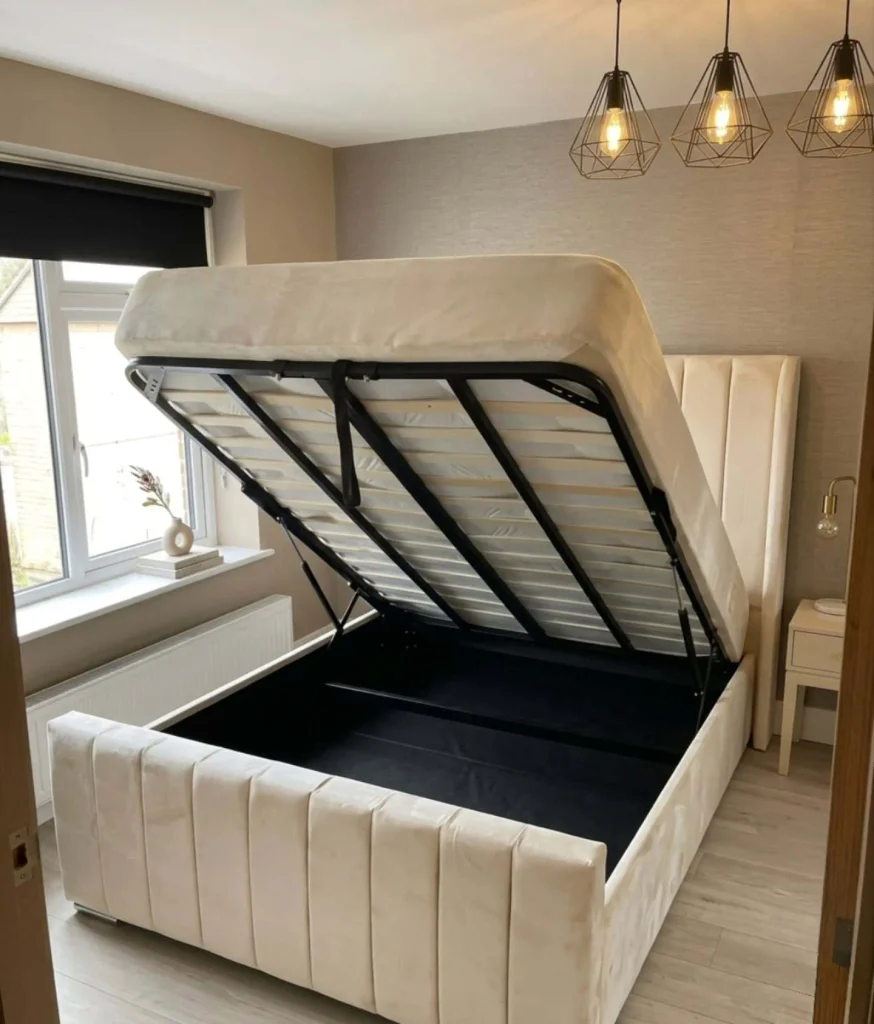
The whole bed becomes a storage chest. Pull the strap at the foot end and the mattress and slatted base rise together, held open by gas struts while you reach inside.
Underneath is one deep, open well that runs almost the full size of the frame. There are no drawer runners for things to fall behind, and the dark lining hides dust between cleanings.
Why it suits a small bedroom:
- Nothing slides out, so it works even when the bed sits close to a wall or radiator
- Closed, it looks like a regular upholstered bed
- It holds bulky things a dresser can’t
Save it for the things you reach for once a month or once a season, not every morning.
What to store in the base
2. Pick a Bed Frame With a Headboard Shelf and an Open Foot Cubby
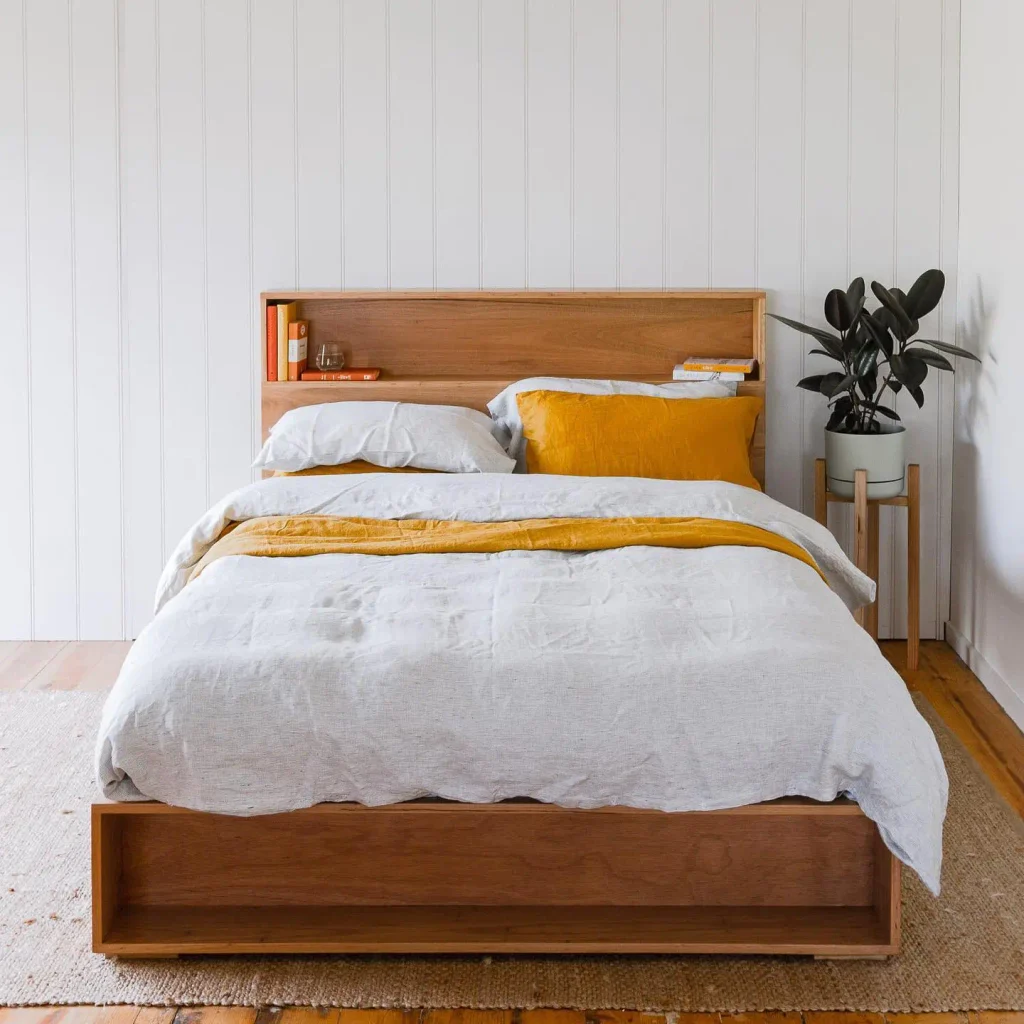
Open storage built right into the frame lets you skip the nightstand altogether. The headboard has a shallow ledge, deep enough for a short stack of paperbacks and a water glass. At the other end, the footboard is really an open box, a long low cubby running the width of the bed.
Keep both ends looking tidy:
- Limit the headboard ledge to two or three things you use at night.
- Fill the foot cubby with matching baskets or neatly folded throws.
- Line books up by height so the shelf reads as one clean shape.
Open shelves show everything. Edit them often and let the warm wood do the rest.
| 📚 Headboard shelf | 🧺 Foot cubby | |
|---|---|---|
| Reach it | From bed, without sitting up | Standing at the end of the bed |
| Store | Books, reading glasses, a water glass | Folded throws, spare pillows, slippers |
| Tidy with | A small tray for loose bits | Two or three matching baskets |
| Watch out | Tall items crowd your head | Loose clutter shows from the doorway |
3. Set Up an Open Wardrobe Unit With a Rail, Shelves, and Baskets
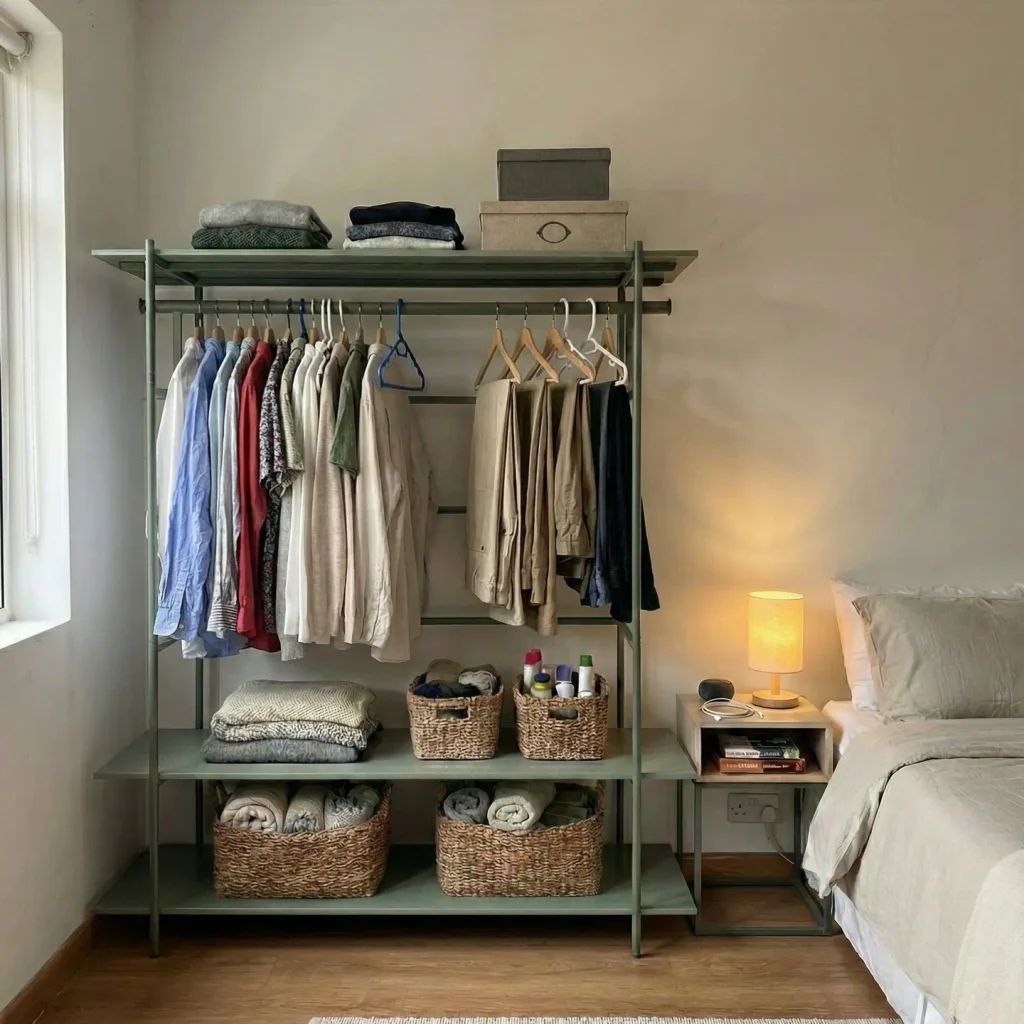
Sage green metal and woven baskets make a full wardrobe something you don’t mind seeing every day.
One freestanding unit handles everything a closet would. Shirts hang on the left, trousers on the right, so every option is visible at once. Folded knits share the top shelf with two lidded fabric boxes, and seagrass baskets below hold rolled towels and toiletries.
Matching hangers help more than you’d expect. Even in this tidy setup, the mix of wood and plastic is the one thing that looks busy.
Watch the rail. Keep it about three quarters full. Packed tight, it starts to look like a clearance rack.
4. Hang One Long Shelf Above the Bed, Wider Than the Frame
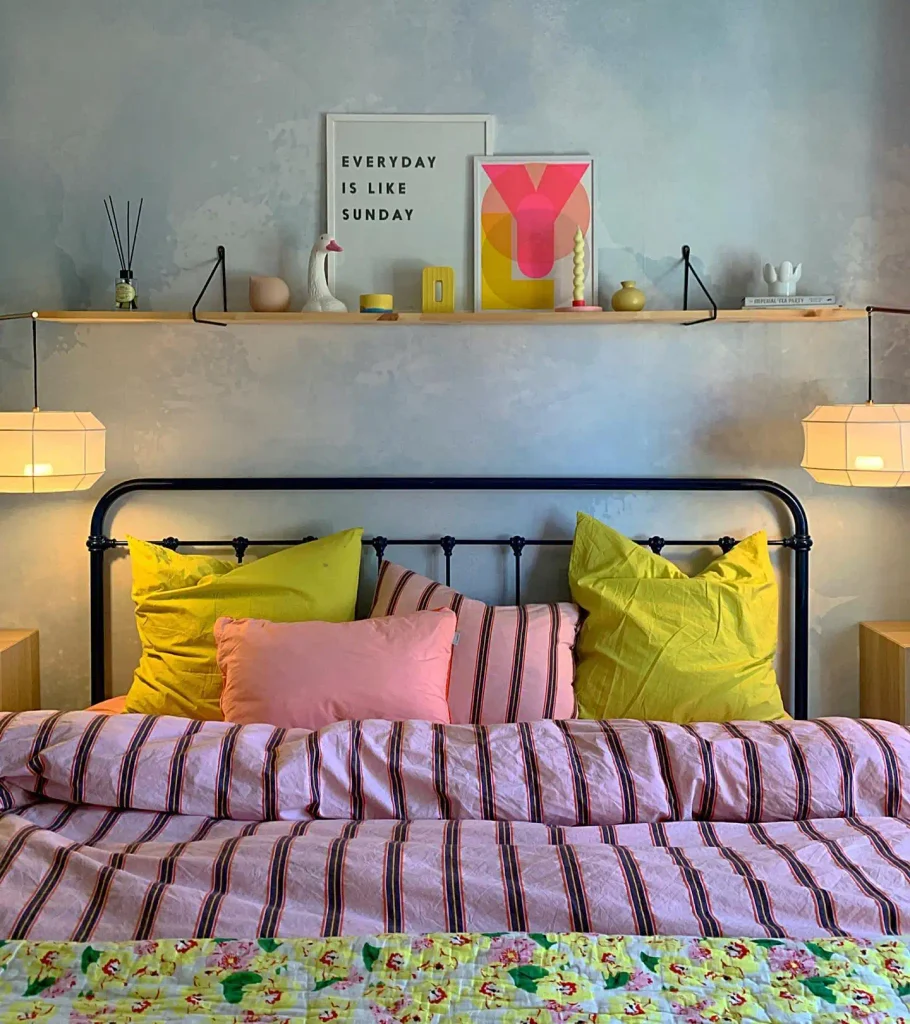
Most small bedrooms leave the wall above the bed blank. One long plank shelf puts that space to work, and it suits any bed, even a simple metal frame like this one with no storage built in.
Here the shelf runs past both sides of the bed on slim black brackets. It holds framed prints, a reed diffuser, small vases, and a book. The two fabric pendant lamps hang beside the bed, which keeps lamps off the nightstands entirely.
Split the shelf into thirds:
- Your side: glasses, a phone stand, a hand cream
- Middle: art or anything light and flat
- Other side: a short book stack or a small lidded box
Part display, part storage. In a small room, both earn their spot.
Screw the brackets into studs, or use anchors rated for what you’ll store.
Hang it high enough that you can sit up in bed without bumping it.
Stick to light things like prints, paperbacks, and small boxes.
Heavy glass or ceramics right above your pillow.
Piling weight in the middle, far from the brackets.
Tall frames that could slip forward when the door slams.
5. Mix Low Drawers and Woven Baskets Under a Regular Bed Frame
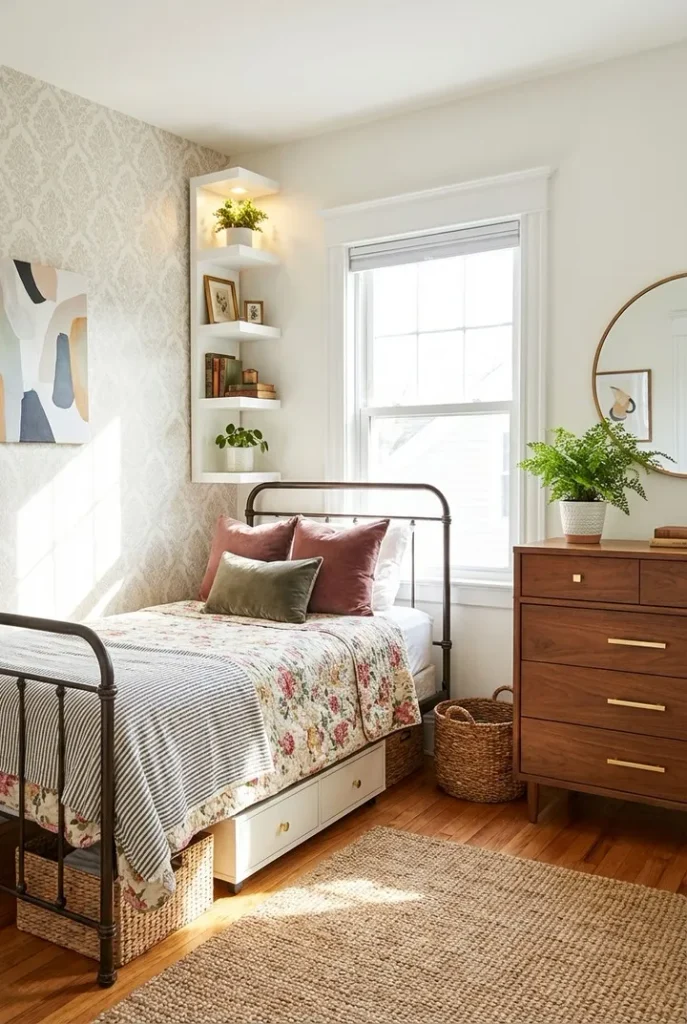
Drawers or baskets? Under this simple iron bed, the answer is both.
A white two-drawer unit tucks in along the side, and woven baskets fill the spots at the foot and near the wall. You don’t need a special storage bed for this, just a frame that sits high enough to clear them.
Drawers keep things flat and away from dust. Use them for folded tees, pajamas, and spare sheets.
Baskets are fast to grab. They suit throws, shoes, and the things you toss in at the end of a long day.
Measure the gap under your bed before buying anything. A drawer that’s a little too tall won’t slide in at all.
Recreate this under-bed setup
6. Build a Window Seat With Cupboards Underneath
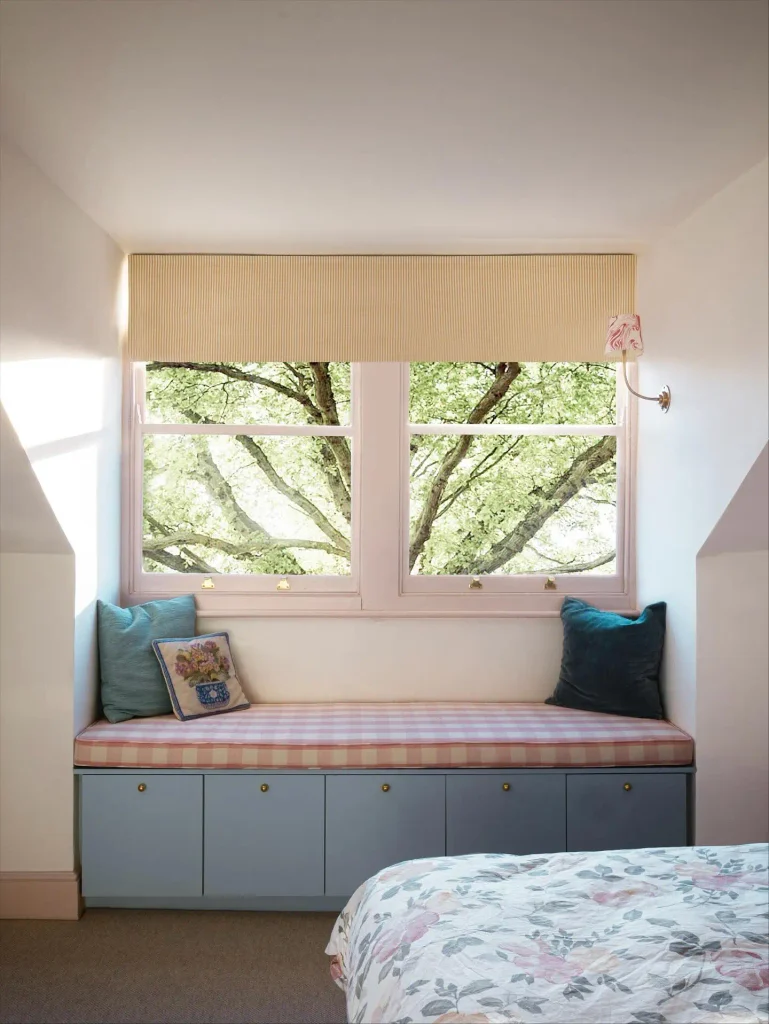
Awkward alcoves make the best storage. This dormer nook under a sloped ceiling would be hard to fit with regular furniture, so a built-in bench fills it from wall to wall.
Five painted blue cupboard doors with small brass knobs run along the base. Up top, a gingham cushion and a few pillows make the bench a spot for reading or putting on shoes.
Good things to hide behind the doors:
- Shoes and bags you use every week
- Extra blankets and pillow covers
- Board games, craft supplies, or a laptop at night
You get a seat and a cupboard in a space where a closet would never fit.
🔨 Make your own version
Measure the window wall, and note any radiator or outlet below the sill.
Line up low base cabinets across the space. Ready-made kitchen units work well.
Screw one solid board across the top and fix the whole run to the wall.
Paint it, add knobs that match your room, and top it with a cushion cut to size.
7. Run a Peg Rail Across One Wall for Bags, Robes, and Tomorrow’s Outfit
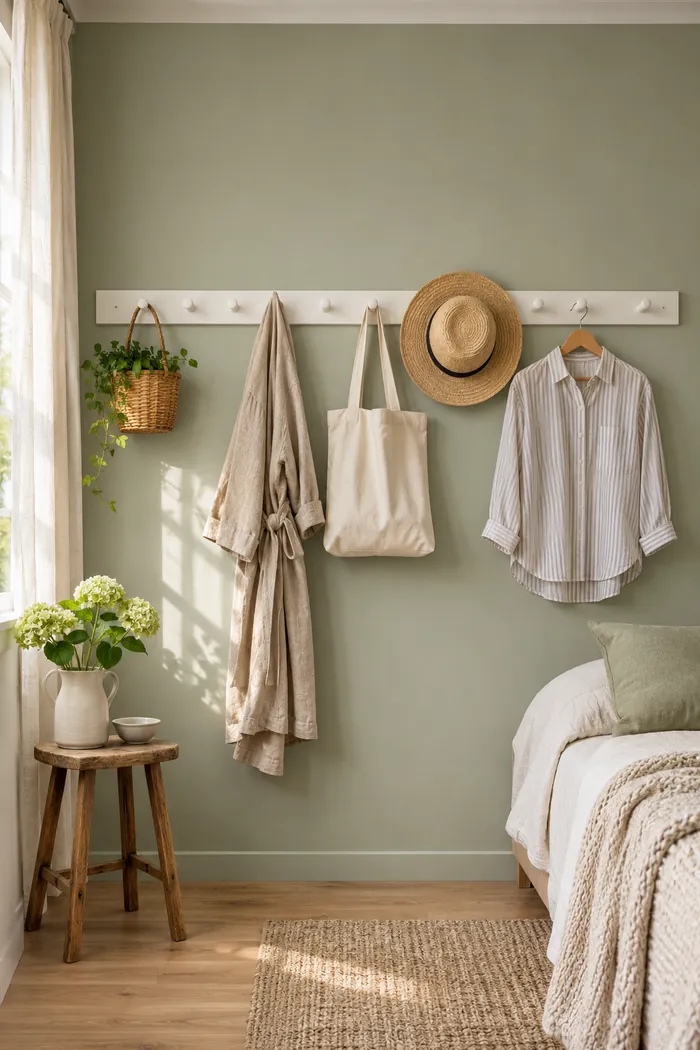
Wooden pegs hold a surprising amount while taking up no floor space at all. Mount a long rail at about shoulder height along a blank wall, or above a dresser, and it takes anything that hangs.
Set it up so it stays neat:
- Give each peg one job, like your robe, a tote, or tomorrow’s outfit on a hanger.
- Leave every third peg empty for a guest’s coat or a damp towel.
- Hang a small basket from one peg for keys and sunglasses.
Paint the rail the same color as the wall and it almost disappears when it’s empty.
8. Put a Lift-Top Storage Bench at the Foot of the Bed
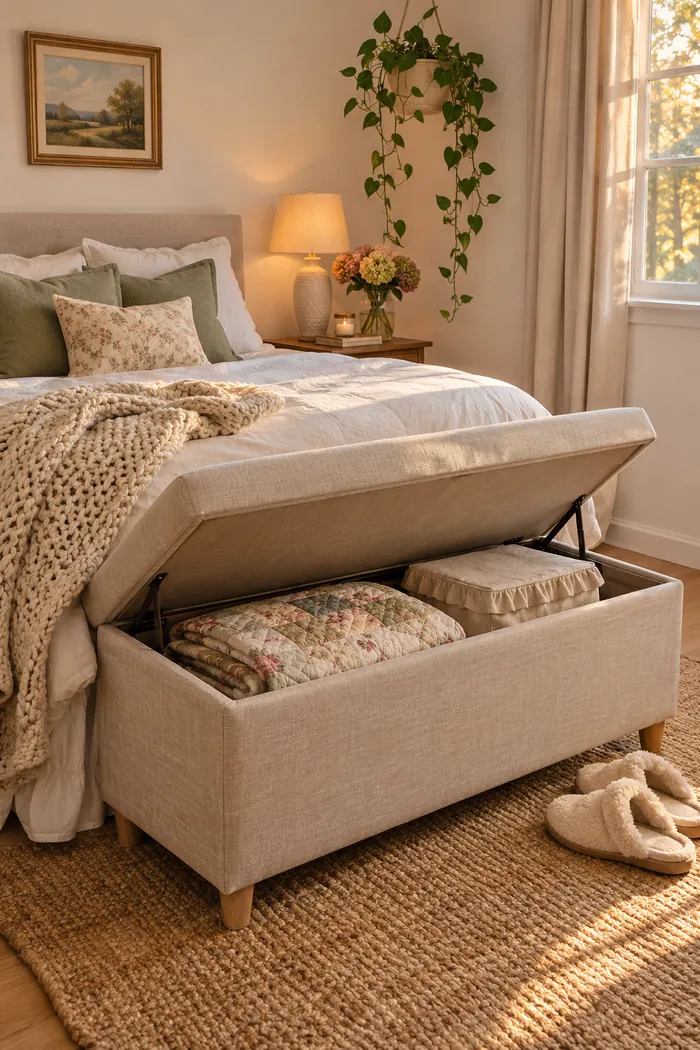
Every bedroom has a strip of floor at the end of the bed that does nothing. A storage bench gives that spot a seat on top and a deep chest inside.
Choose a lift-top style with a soft-close hinge so the lid never drops on your fingers. Inside, keep the extra quilt for cold nights on one side and a lidded box of scarves and gloves on the other.
Bonus jobs it handles:
- A place to sit while you pull on socks
- Somewhere to lay out tomorrow’s clothes
- A landing spot for throw pillows at bedtime
Leave enough walking room in front of it. Bumping your shins every morning gets old fast.
You add storage in a spot that already has to stay clear for walking, so the room gains space without feeling any smaller.
9. Use the Back of the Bedroom Door With an Over-the-Door Organizer
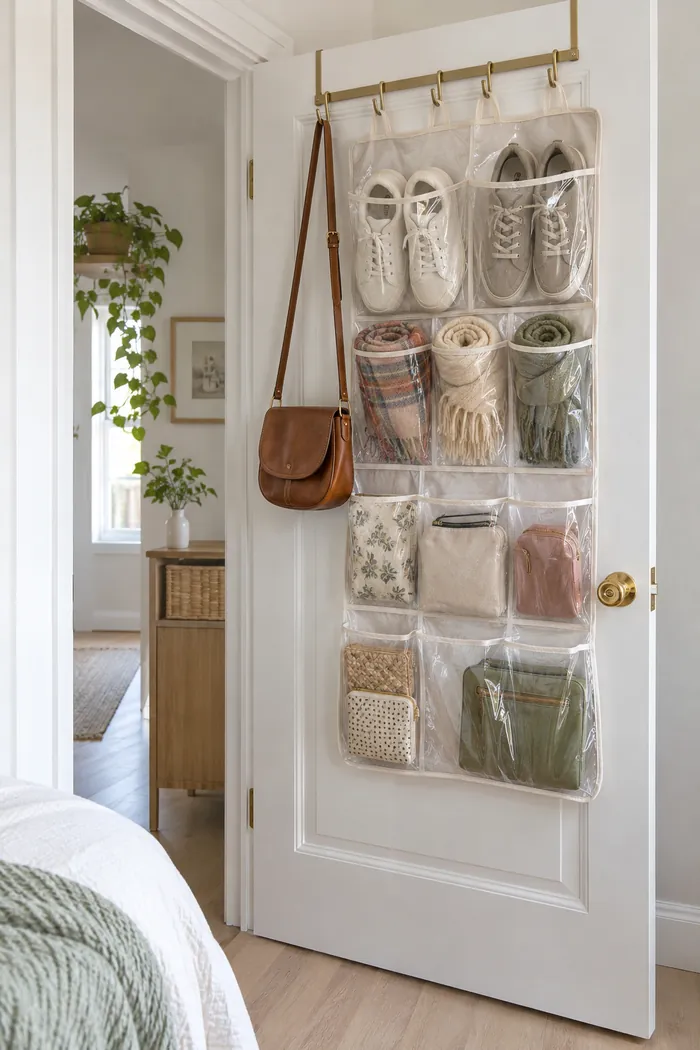
The back of your door is free wall space that happens to move.
Pick the style by what you need to store. Clear or fabric pocket organizers suit shoes, scarves, and the small things that vanish in drawers. A hook rack works better for bags, belts, and the jacket you wear most days.
Check two things before you buy. The door still has to close with the hooks over the top, and the organizer shouldn’t hit a doorknob or light switch as it swings.
Fill it from the bottom up with the heaviest things lowest, and the door won’t rattle every time it shuts.
Shoes piled by the bed, scarves stuffed in a drawer, and bags slung over the only chair.
Shoes in pockets, scarves rolled in a row, bags on hooks, and the floor and chair clear again.
10. Stack Floating Shelves Into an Empty Corner
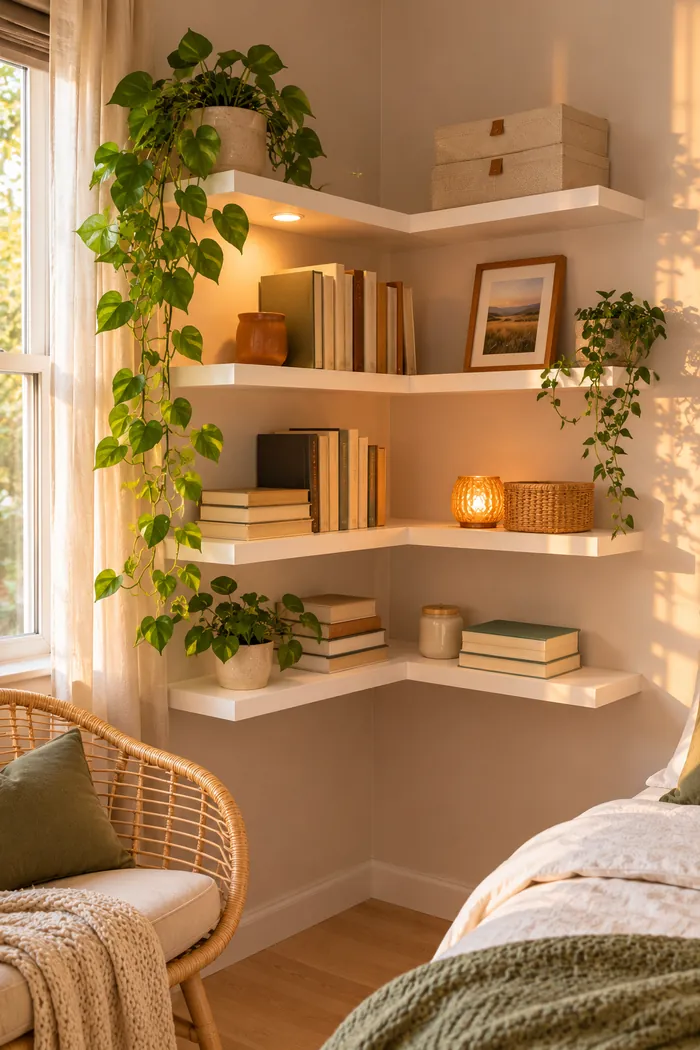
Corners are the most wasted spot in a small bedroom. L-shaped floating shelves that wrap both walls turn that dead angle into a stack of useful spots, and they never block a walkway.
Style them in a zigzag. Put a book stack on the left side of one shelf, then on the right side of the next, so your eye moves up the corner instead of landing on one heavy block.
Keep the weight right:
- Heavier books and boxes on the lower shelves
- Plants, photos, and lighter pieces up high
A small battery puck light under the top shelf makes the corner feel like a reading nook at night.
What goes on each level
11. Fit a Tall Narrow Dresser Into the Gap Nobody Uses
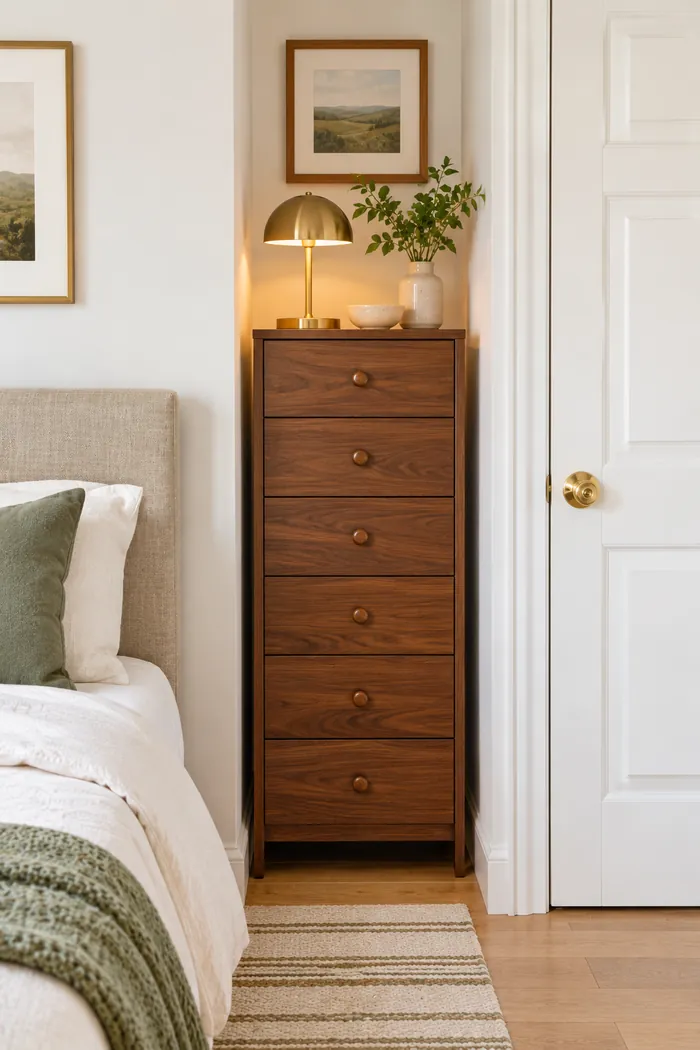
Wide dressers eat floor space that a small bedroom can’t spare. A tall, narrow chest flips that around and gives you plenty of drawers by building up instead of out.
Look at the gaps you already have, like the strip beside a door, the space between the bed and a wall, or a narrow stretch next to a window.
Tall and narrow: small footprint and lots of drawers, though the top ones sit high.
Wide and low: easy to reach and doubles as a surface, but it swallows floor.
In a tight room, floor space usually wins. Keep daily things in the middle drawers so you never have to stretch or crouch.
⚠️ Watch Out
Tall, narrow furniture tips over more easily than wide pieces. Anchor it to the wall with an anti-tip kit, especially with kids or pets around, and keep the heaviest things in the bottom drawers.
12. Hide Open Shelving Behind a Floor-Length Curtain
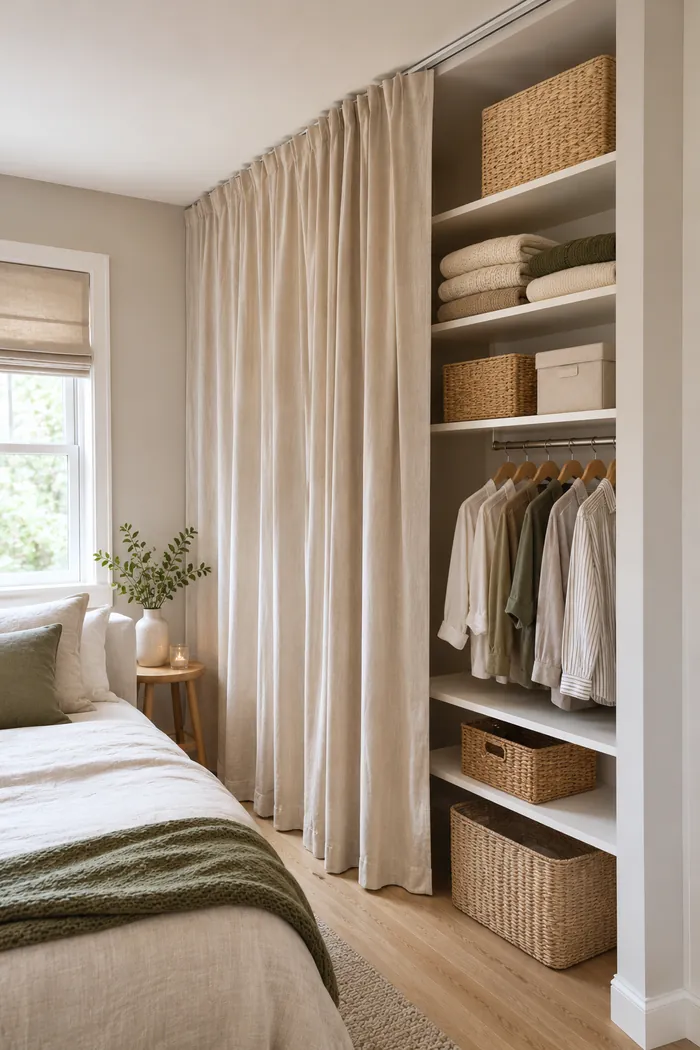
Curtains hide clutter for much less than wardrobe doors would cost, and they never need room to swing open.
- Line up open shelves or a clothes rail along one wall or in an alcove.
- Mount a ceiling track or curtain rod just in front, as wide as the whole setup.
- Hang a curtain that reaches the floor, in a color close to your walls.
Pull it shut and the room looks calm. Pull it open and everything is right there.
Pick a fabric with some weight, like linen or cotton canvas. Sheer panels show every box behind them.
| 🪟 Curtain | 🚪 Cabinet doors | |
|---|---|---|
| Swing space | None needed | Needs clear floor to open |
| Cost | Lower | Higher |
| Install | A rod or ceiling track | Hinges, framing, or a carpenter |
| Look | Soft and relaxed | Crisp and built in |
13. Lean a Ladder Shelf Against the Wall Instead of Mounting Shelves
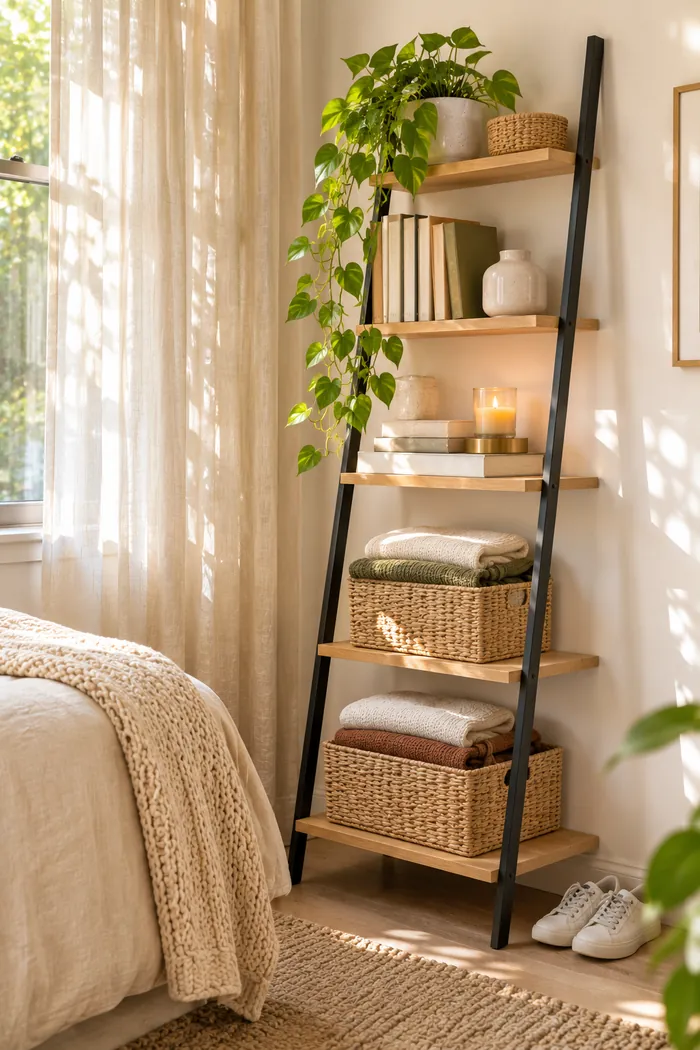
Leaning shelves suit renters and anyone who’d rather not fill a wall with holes. A ladder shelf rests at a slight angle, wide at the bottom and narrow at the top, so it looks light even when it’s full.
That shape decides where things go. The deep bottom shelves take baskets of folded clothes or shoes. The slim upper rungs suit a few books, a candle, or a small plant.
Many ladder shelves come with a small wall strap. It needs just one screw, and it’s worth it, because a gentle bump shouldn’t be able to send the whole thing sliding.
🪜 Styling a ladder shelf
- ▸Put the heaviest basket on the bottom shelf.
- ▸Leave a little empty space on every level.
- ▸Repeat one material, like woven baskets, as you go up.
- ▸Save the top rung for one light piece.
14. Swap Your Side Table for a Small Dresser
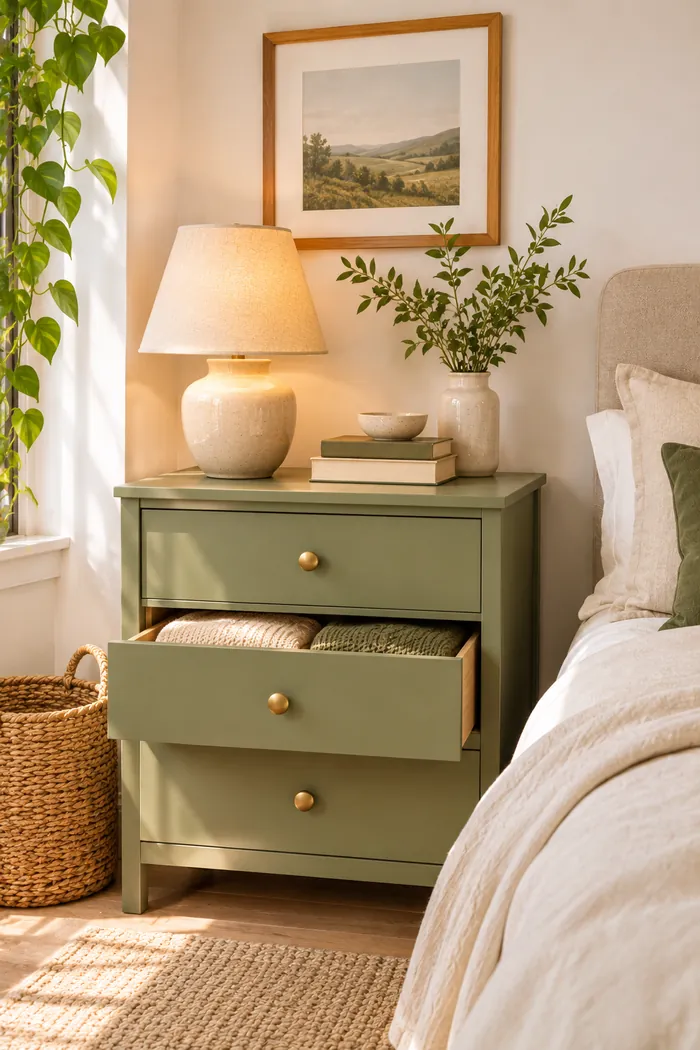
Nightstands with one shallow drawer waste prime space next to the bed. A low three-drawer dresser in the same spot holds far more and still gives you a surface for a lamp and a glass of water.
Give each drawer a job:
- Top: chargers, glasses, hand cream, the book you’re reading
- Middle: socks and underwear
- Bottom: gym clothes or folded jeans
Check the height before you buy. The top should sit close to your mattress height, so reaching for your phone at night isn’t a stretch.
A spindly side table with one small drawer, its top buried under chargers and books.
A small dresser with a clear top for the lamp and three drawers of everyday clothes below.
15. Add a Shelf Above the Bedroom Door for Things You Rarely Use
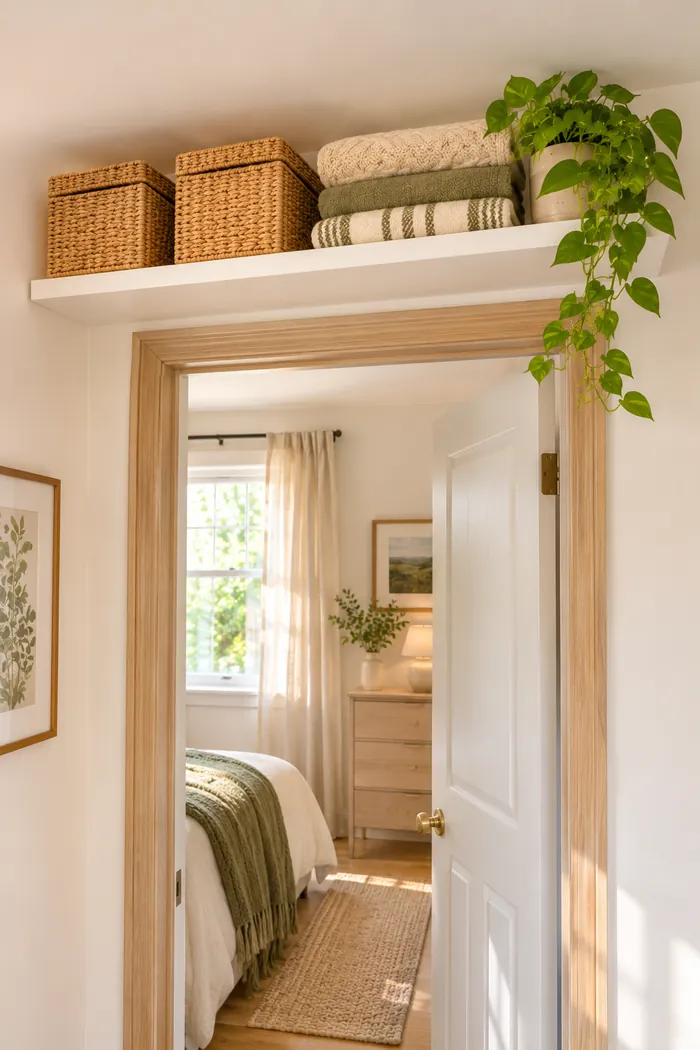
Above the door is the one wall nobody looks at, which makes it a great home for long-term storage. A single sturdy shelf mounted just over the frame stays completely out of the way.
- Measure the door and pick a shelf that runs a little past both sides of the frame.
- Screw the brackets into studs or solid wall, since this shelf will carry boxes.
- Fill it with matching lidded boxes close to your wall color, and label the front of each one.
Keep a small step stool nearby. You’ll only need it a few times a year, and you’ll be glad it’s there.
Holiday decor and keepsakes.
Off-season shoes in their own box.
Paperwork and manuals you have to keep.
Anything you reach for every week.
Heavy or breakable things over a door that slams.
Open bins that collect dust you can’t see.
Conclusion
A small bedroom with no closet can still feel calm and organized. The trick is using space you already have: under the bed, up the walls, behind the door, and in the corners.
Start with the spot that bugs you most. If clothes pile up, an open wardrobe or a peg rail fixes that quickly. If the floor is the problem, look under the bed and above the door first. Add one idea at a time and live with it for a week before buying the next thing.
Save these small bedroom storage ideas to your small space board, so they’re ready the next time your room starts feeling cramped.