
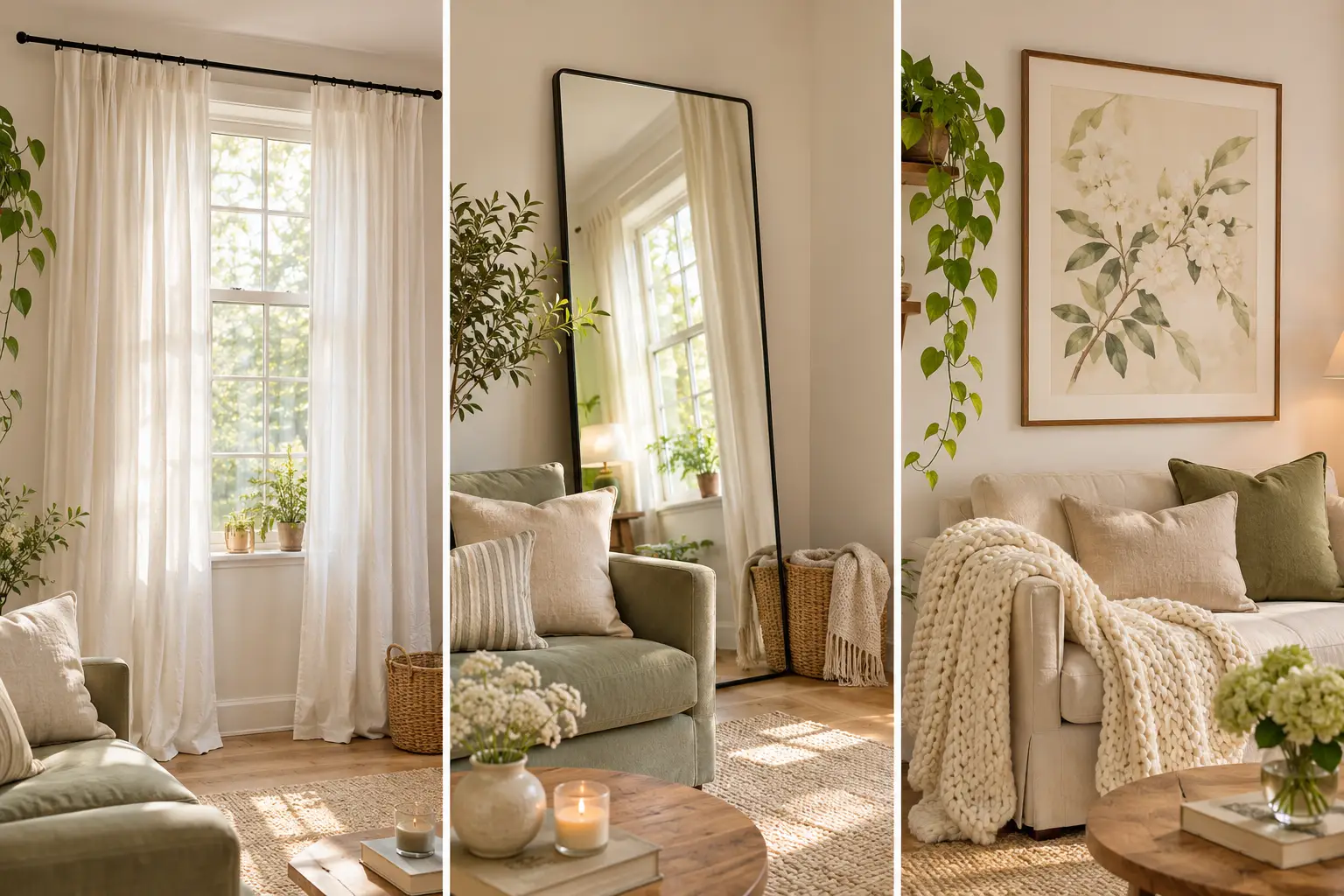
Most small living rooms don’t look cramped because they’re small. They look cramped because of a few easy-to-miss choices, like curtains hung too low, a rug floating in the middle of the floor, or one chair too many.
That’s good news if money is tight. The fixes usually cost less than people expect, and a lot of them don’t need paint, power tools, or your landlord’s blessing.
I put together these small living room ideas on a budget with one firm rule: every single one comes in under $100. Some are free. Most can be done in an afternoon, and almost all of them are easy to undo when you move out.
You won’t find a full makeover here. You’ll find twelve small moves that make the room feel bigger, brighter, and more like yours. Start with the one that bugs you most and work from there.
1. Hang Curtains High and Wide So Your Windows Look Taller
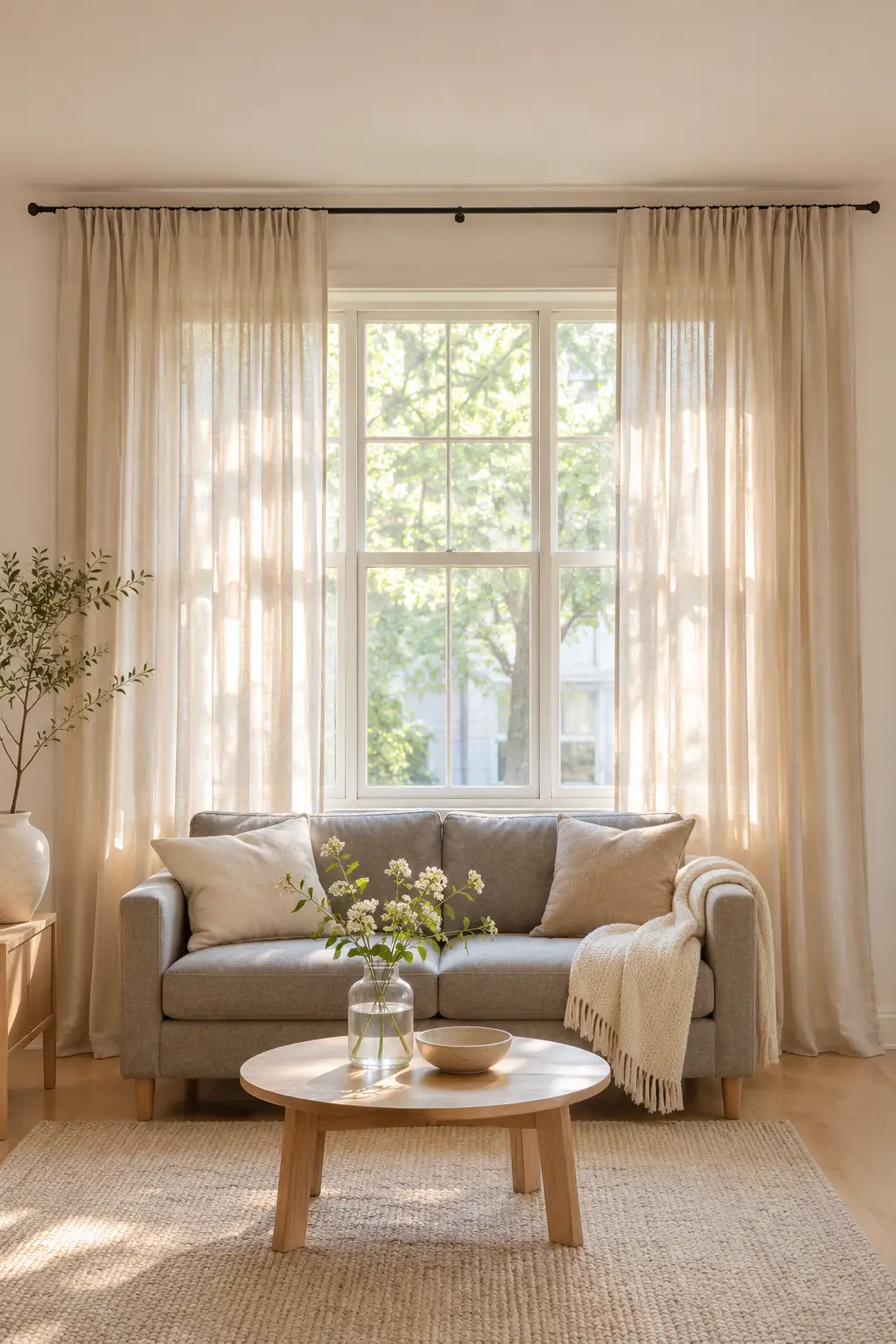
Curtains hung right at the top of the window frame cut the wall in half and make the ceiling feel lower.
Move the rod up and out instead. A few measurements do all the work:
- Mount the rod about halfway between the frame and the ceiling, or a few inches below the ceiling.
- Let it stick out 8 to 12 inches past each side so the open panels rest on the wall, not the glass.
- Pick panels long enough to just brush the floor.
Light linen-look panels in white or oatmeal let the most daylight through. If your lease is strict about holes, ask first. Small screw holes are usually easy to fill with spackle before move-out.
The rod sits right on top of the frame and the panels stop at the sill. The window looks small, and the ceiling feels low.
The rod sits near the ceiling and reaches past both sides of the frame. Floor length panels pull the eye up, and the whole window shows when they’re open.
2. Swap the Coffee Table for a Storage Ottoman You Can Also Sit On
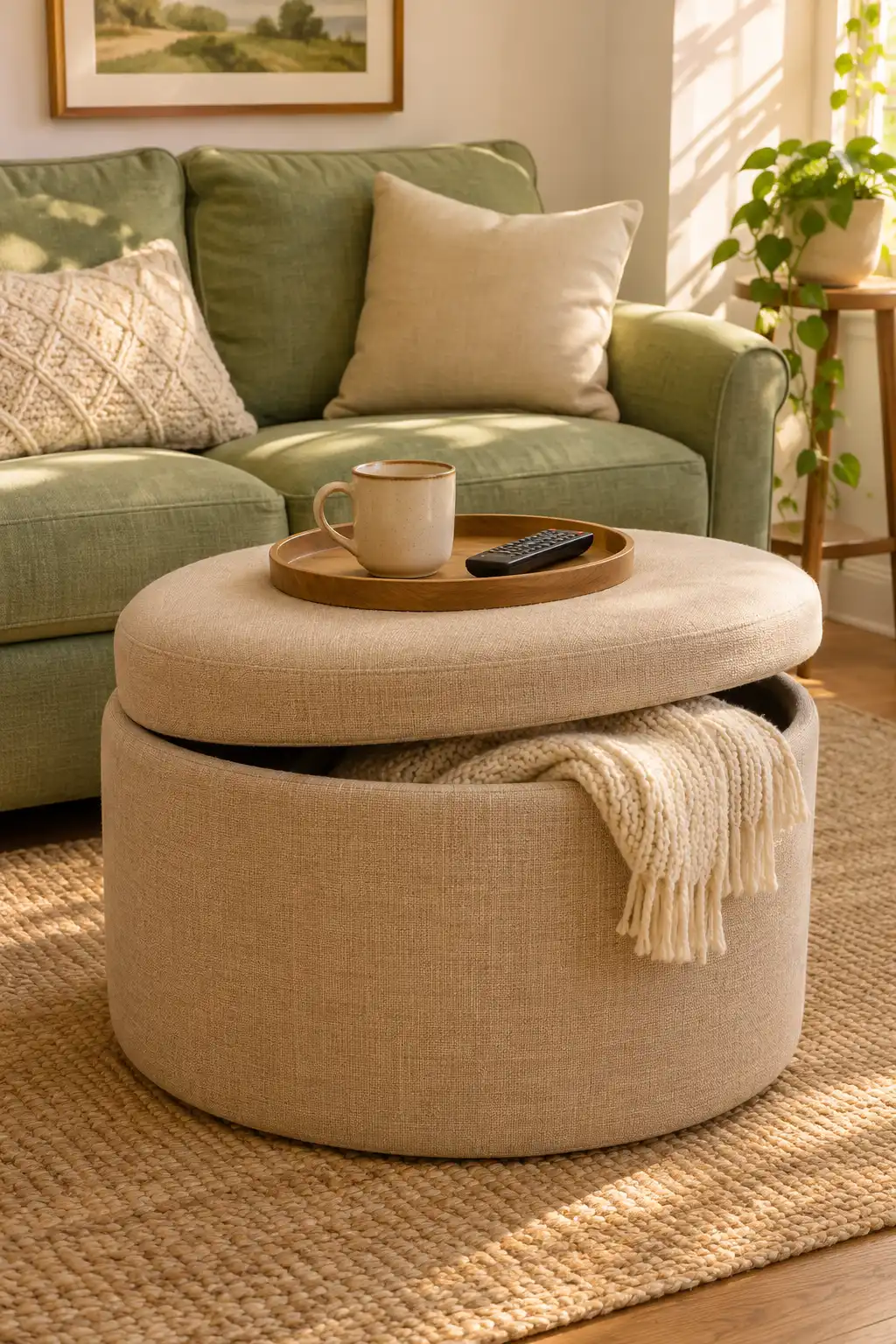
A coffee table does one job. A storage ottoman does three.
It holds the remote and your mug, it seats a friend when the sofa fills up, and the lid hides the stuff that usually piles up on the floor: spare blankets, board games, and the chargers that never seem to have a home.
Go round or oval if your walkway is tight, since there are no corners to bump into on the way past. Upholstered tops can wobble under a drink, so set a sturdy tray on top. That one small detail makes it work like a real table.
| Coffee table | Storage ottoman | |
|---|---|---|
| Extra seat | No | Yes, for one person |
| Hidden storage | Only with a shelf or drawer | Yes, under the lid |
| Corners | Often hard and square | Soft, easy on shins |
| Holding drinks | Flat and steady | Needs a tray on top |
3. Lean a Big Floor Mirror Across From Your Brightest Window
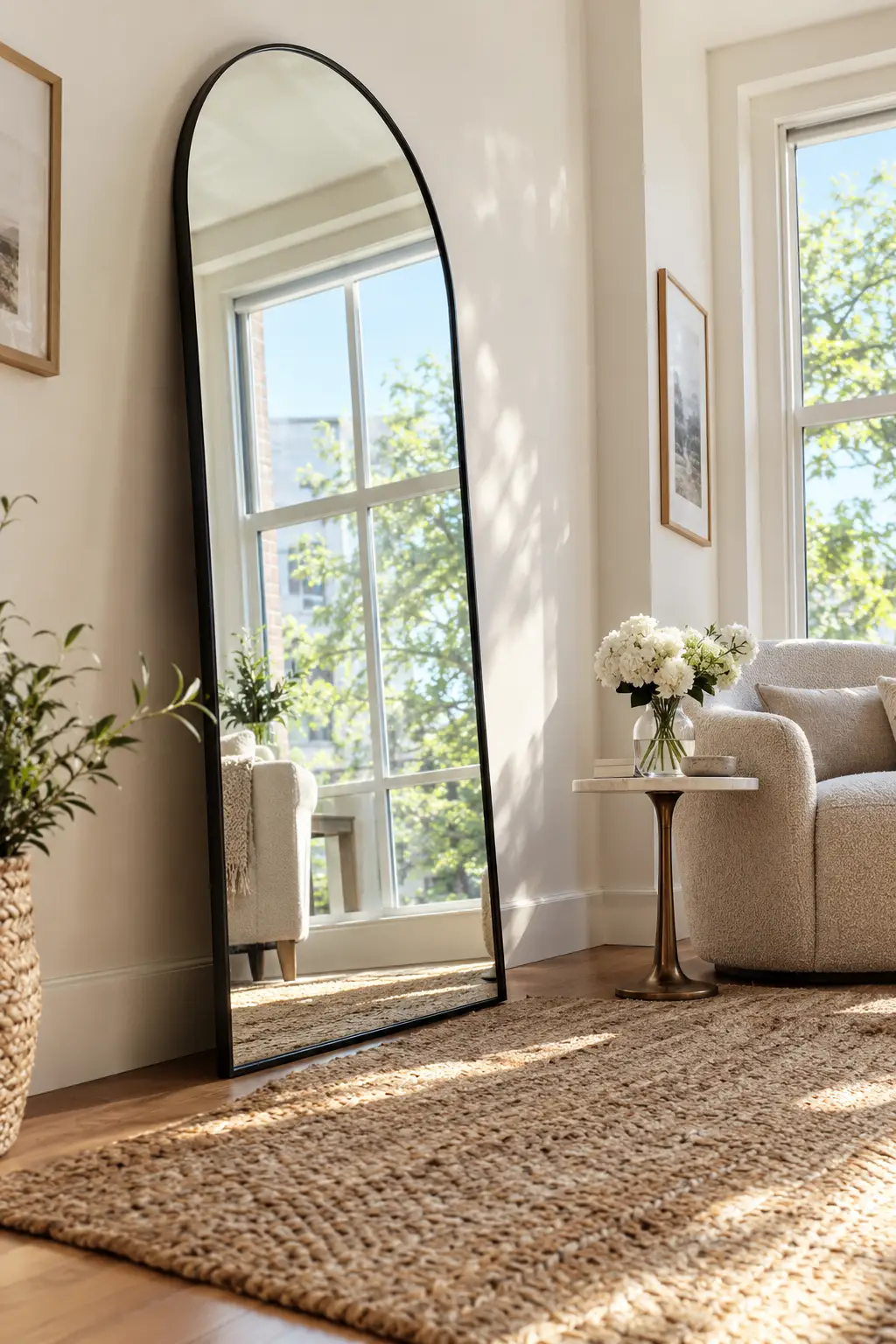
A mirror won’t add a single square foot. What it does is bounce light around, and a brighter room reads as a bigger one.
Placement is the whole trick. Put a tall mirror on the wall facing your brightest window so it catches daylight and throws it back into the room. A mirror facing the hallway closet just shows you more closet.
Leaning it takes no drilling. Two things keep it safe:
- Set the base on a rug or anti-slip pad so it can’t slide.
- If kids or pets live with you, add an anti-tip strap. It only needs one small screw.
Thin black or wood frames keep a big mirror from looking heavy.
4. Size Up Your Rug So the Sofa’s Front Legs Sit on It
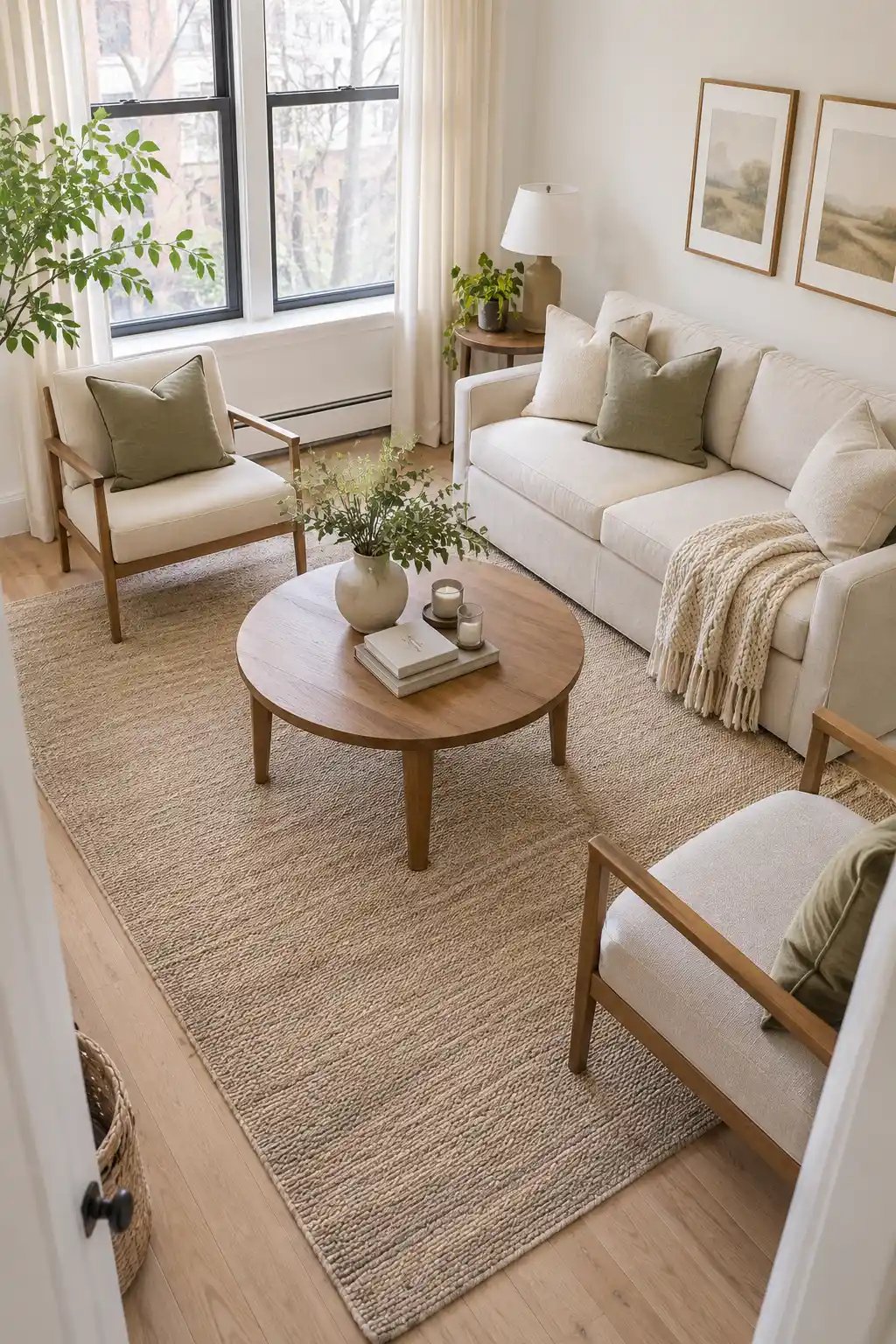
The most common rug mistake in a small living room is going too small.
A little rug floating in the middle of the floor chops the room into pieces and makes the furniture around it look scattered. A bigger rug that reaches under the seating pulls everything into one calm group, and the room looks wider for it.
The rule is simple. The front legs of the sofa and chairs sit on the rug, and the back legs can stay on the floor.
Flat-woven and washable rugs are usually the cheapest way to get the size you need. Tape the outline on the floor with painter’s tape before you order, and live with it for a day.
Let the front legs of every seat rest on the rug.
Leave a strip of bare floor showing around the edges.
Tape out the size on the floor before you buy.
A small rug that only fits under the coffee table.
A rug that runs wall to wall and hides the floor.
Ordering by guesswork from a product photo.
5. Add Plug-In Wall Sconces Instead of Another Floor Lamp
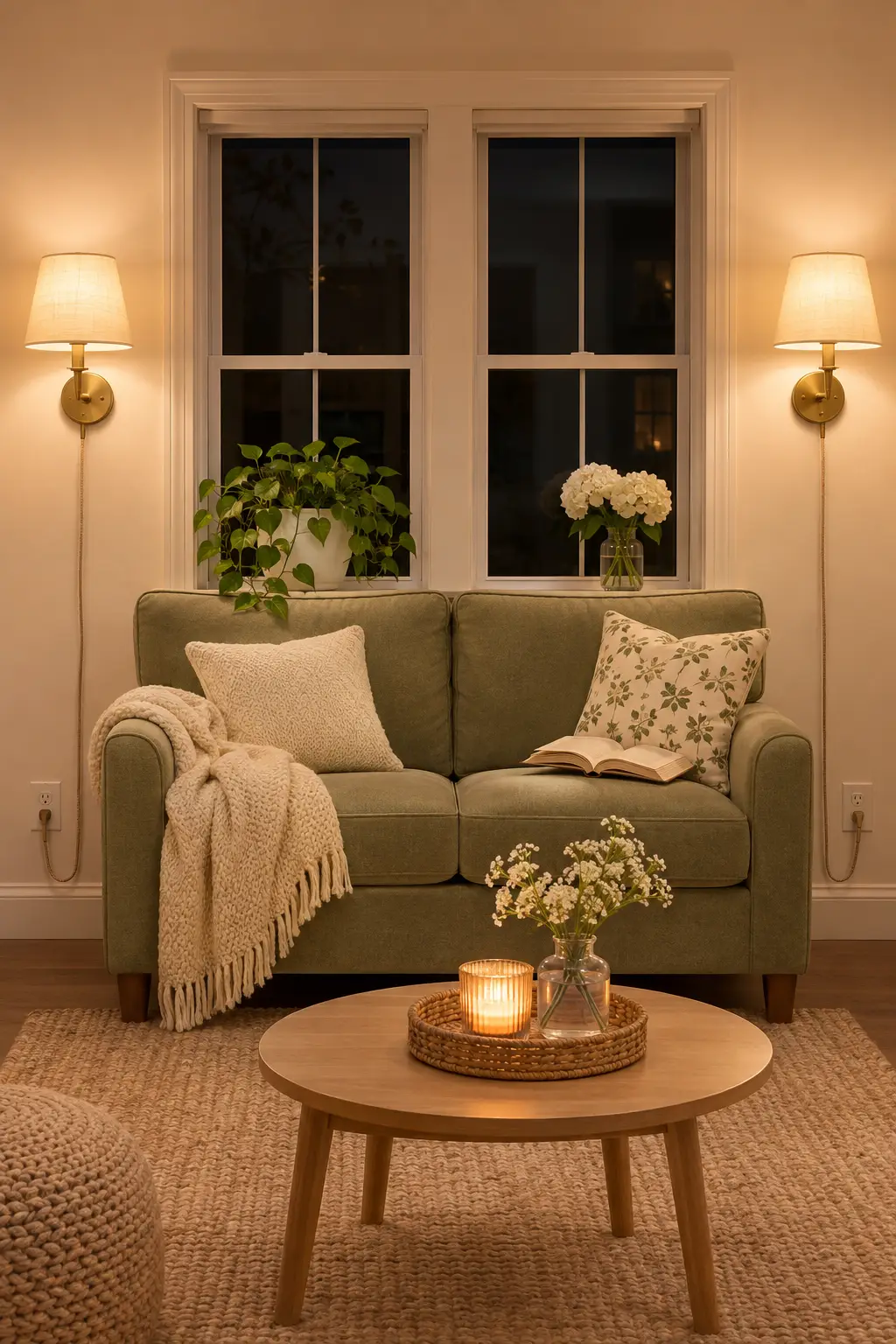
Small living rooms usually run out of floor space before they run out of dark corners.
Floor lamps take up room you can’t spare. Plug-in wall sconces lift the light up the wall and leave the floor clear. A pair on either side of the sofa, or one beside a reading chair, makes the room feel warmer at night than the overhead light ever will.
They need one or two small screws but no wiring, since the cord runs down to a regular outlet. Warm white bulbs around 2700K give a soft evening glow instead of an office feel.
If you can’t drill at all, rechargeable puck-style sconces stick on with adhesive strips. They’re usually dimmer, but there’s no cord to deal with.
💡 Quick Tip
Hang each sconce so the bottom of the shade sits a little above your eye line when you’re sitting on the sofa. Too low and the bulb shines in your eyes. Too high and the light lands on the ceiling instead of your book.
6. Fill the Empty Corner With One Tall, Low-Light Plant
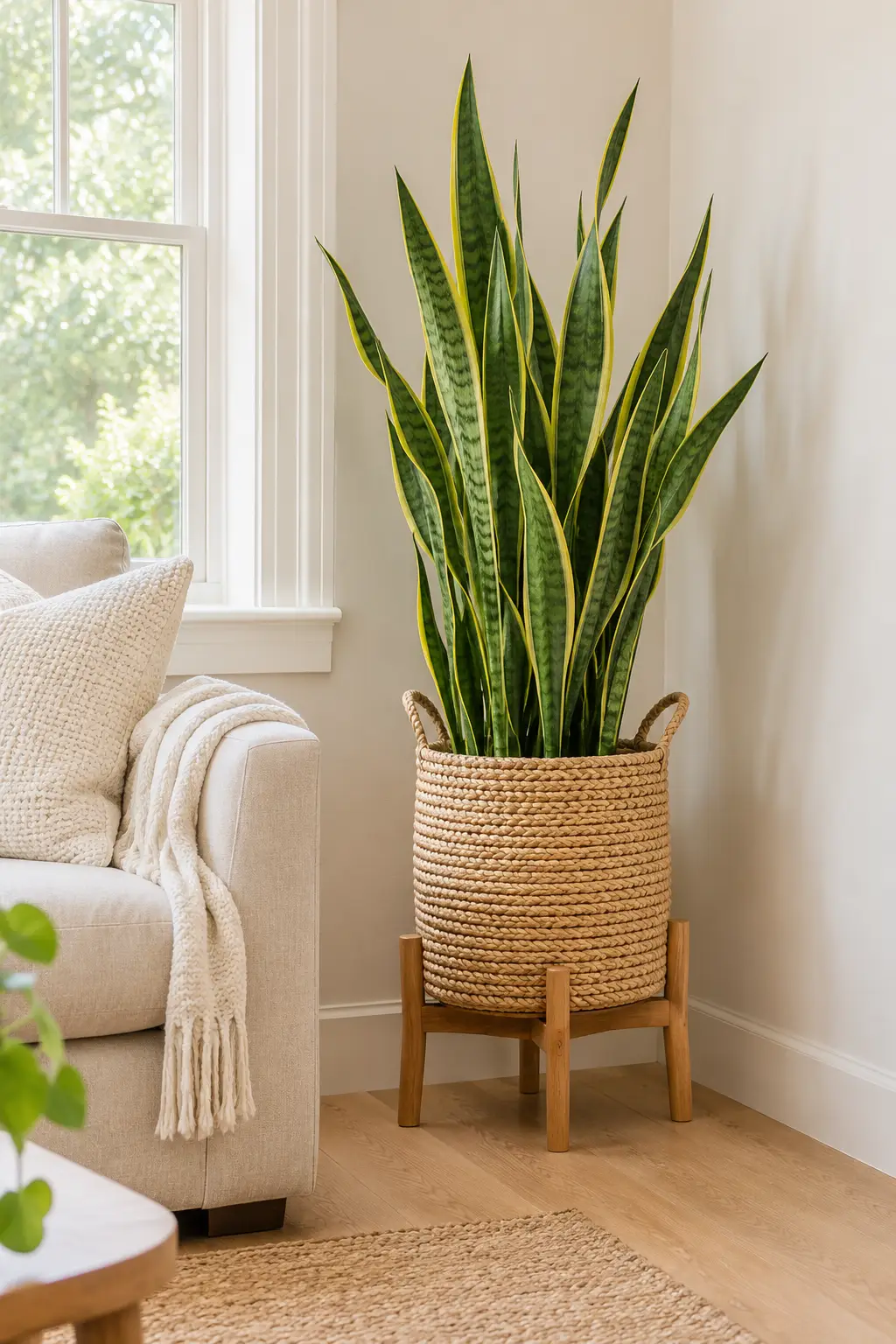
Every small living room seems to have one corner where the vacuum, a laundry basket, or nothing at all ends up living.
A single tall plant fixes that fast. It adds height, softens the hard angle where two walls meet, and gives the eye somewhere to rest. One big plant does more here than three small ones, which just look like clutter on the floor.
Pick something that handles your light, since most corners sit away from the window. A low plant stand gains you a few extra inches of height.
One honest note: snake plants and ZZ plants are toxic to cats and dogs if chewed. A good faux tree skips that worry completely.
7. Refresh a Tired Sofa With New Pillow Covers and One Good Throw
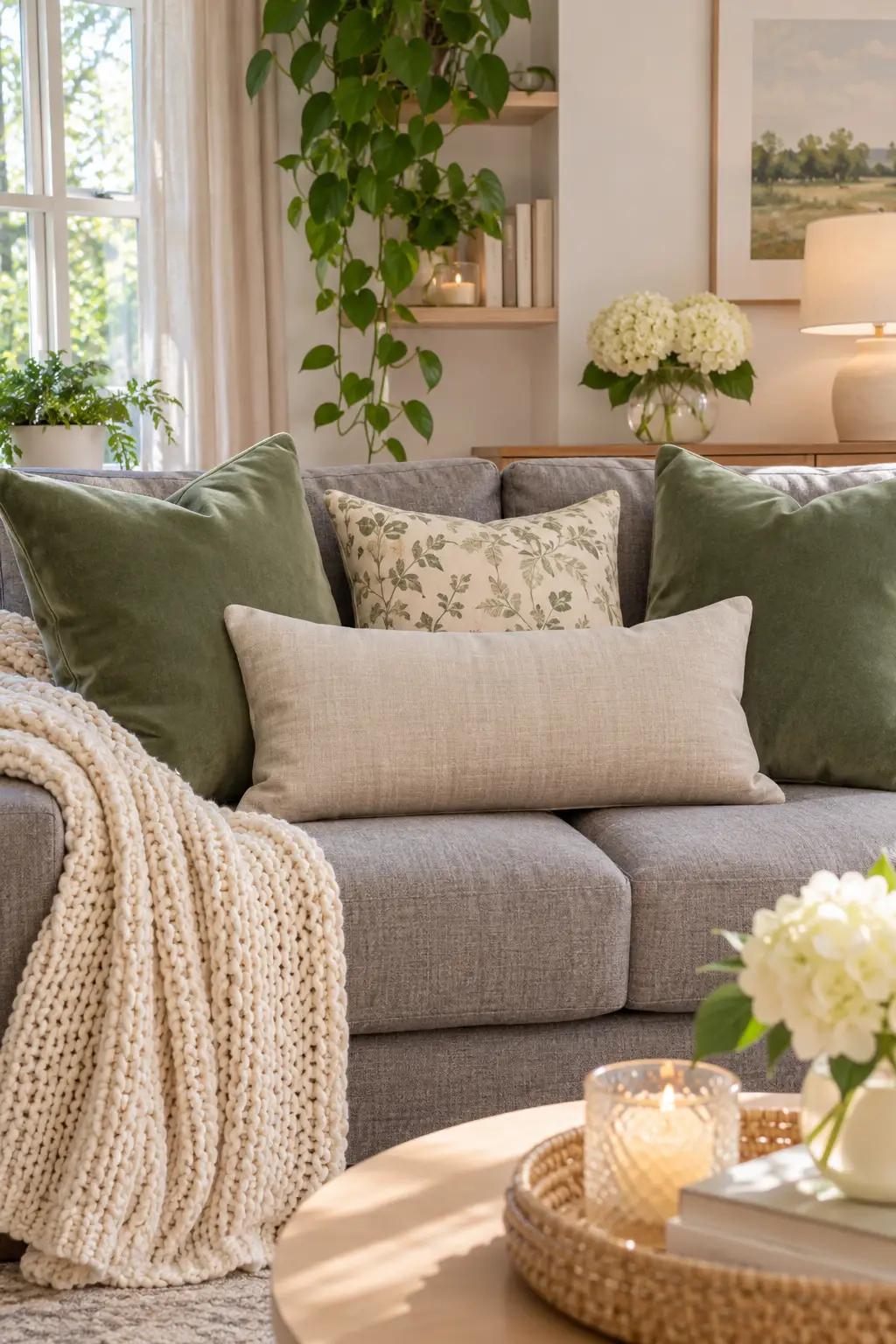
New pillow covers can make an old sofa look like a different sofa, for a fraction of what a new one costs.
Covers are the budget move. You keep the inserts you already own and only replace the outside. Measure your inserts, then buy covers an inch or two smaller so the pillows look full instead of flat.
Finish with one throw blanket in a color pulled from your rug or curtains. Drape it over one arm or fold it over a back corner, and leave the other side plain so it looks relaxed.
Swap the covers with the seasons and the room feels new a few times a year.
An easy pillow mix for a small sofa
- ▸Two solid covers in a texture like linen, boucle, or velvet.
- ▸One small or medium print to break up the solids.
- ▸One long lumbar pillow in the middle so the pairs don’t look stiff.
- ▸Stick to three colors total, all borrowed from things already in the room.
8. Put Peel-and-Stick Wallpaper on the Wall Behind the Sofa
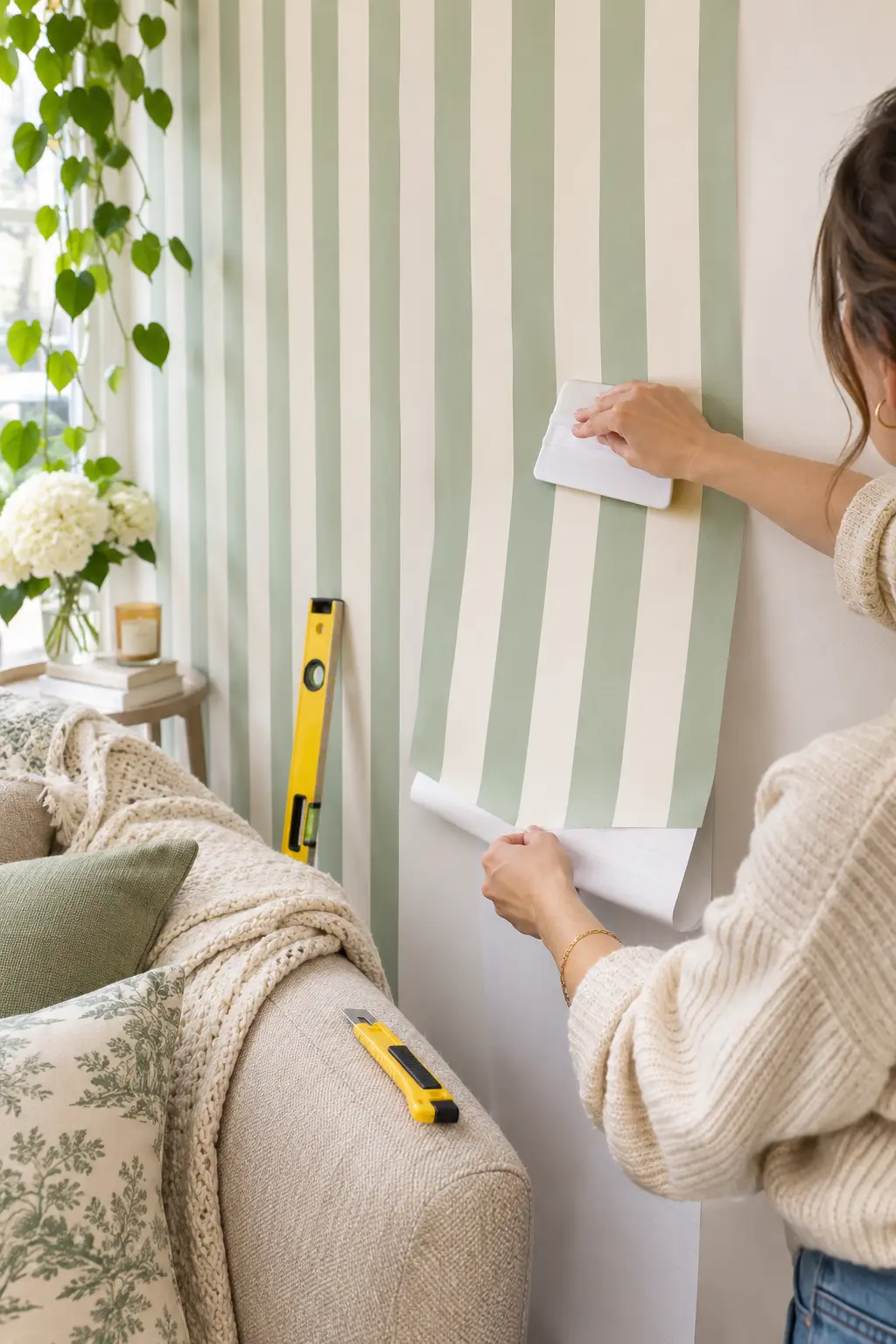
Start with the wall behind the sofa. It’s usually the first one you see when you walk in, and it’s small enough to cover without blowing the budget.
Peel-and-stick wallpaper gives you pattern with no paint or paste. It’s made to come off later, but results depend on your wall paint, so test a small piece in a hidden spot for a day or two first.
In a tiny room, go soft and low contrast. A faint stripe, a small botanical, or a grasscloth look adds interest without making the walls feel closer.
Vertical stripes pull the eye up, which helps a lot with low ceilings.
Wipe the wall clean and let it dry completely.
Use a level to draw a straight pencil line for your first panel. Every panel after it follows this one.
Peel the backing a little at a time and smooth from the center out with a plastic smoother.
Trim the top and bottom with a sharp utility knife, and snap off a fresh blade often so the edges stay clean.
9. Make One Oversized Piece of Art From a Poster Frame
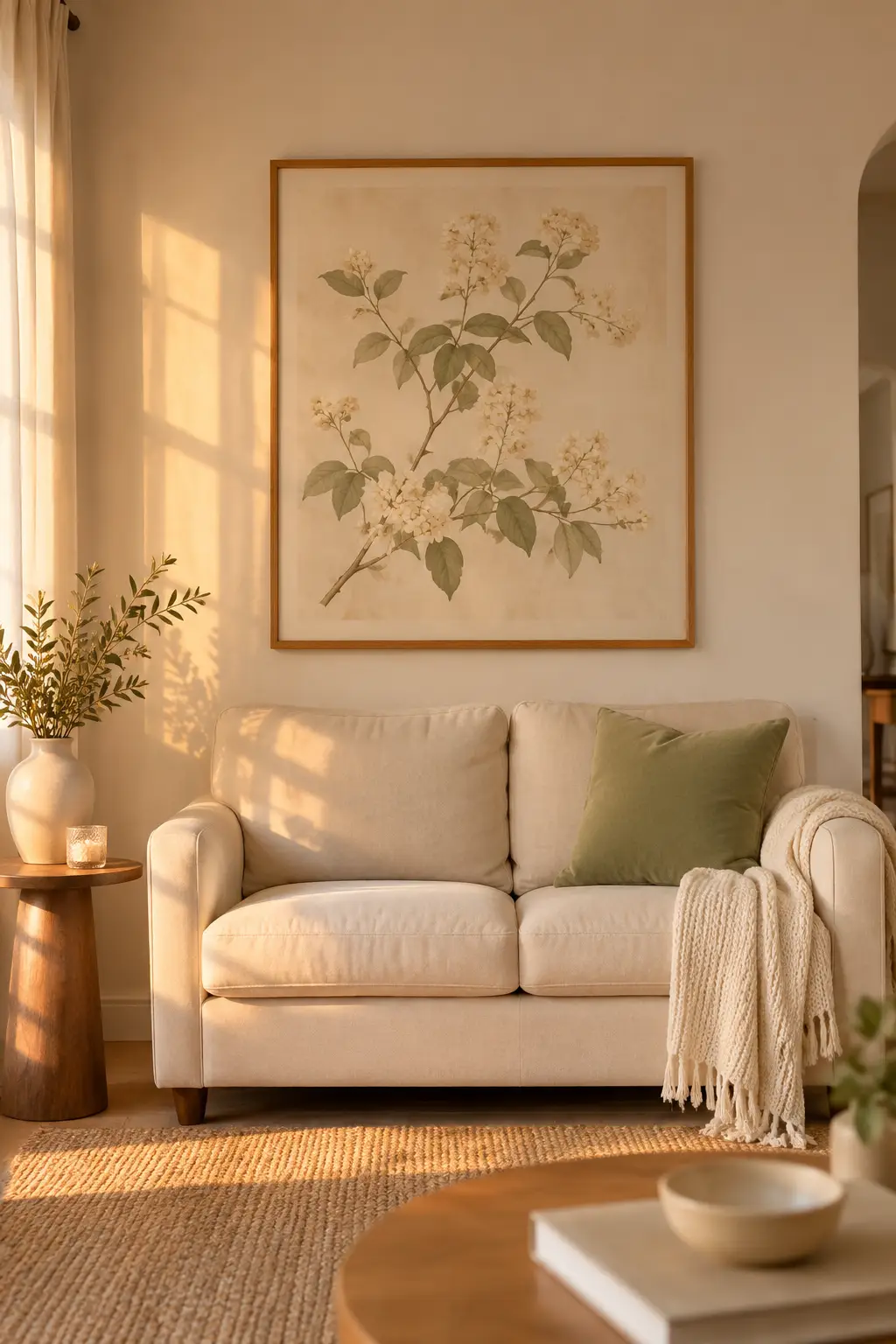
In a small room, one big piece of art beats five little ones.
A cluster of small frames reads as busy. One large piece reads as calm and makes the wall look finished. The catch is that big framed art gets pricey fast, so build your own.
Grab a large poster frame and fill it with something cheap:
- A digital print you buy once and have printed at a local print shop
- A piece of fabric or a linen tea towel wrapped around the backing board
- A vintage map or botanical page
Most poster frames are light enough for adhesive picture-hanging strips, so you may not need a single nail.
Go bigger than feels safe. Art over a sofa usually looks right at about two thirds of the sofa’s width, and most people buy a size too small.
10. Hide the Cord Mess Around the TV
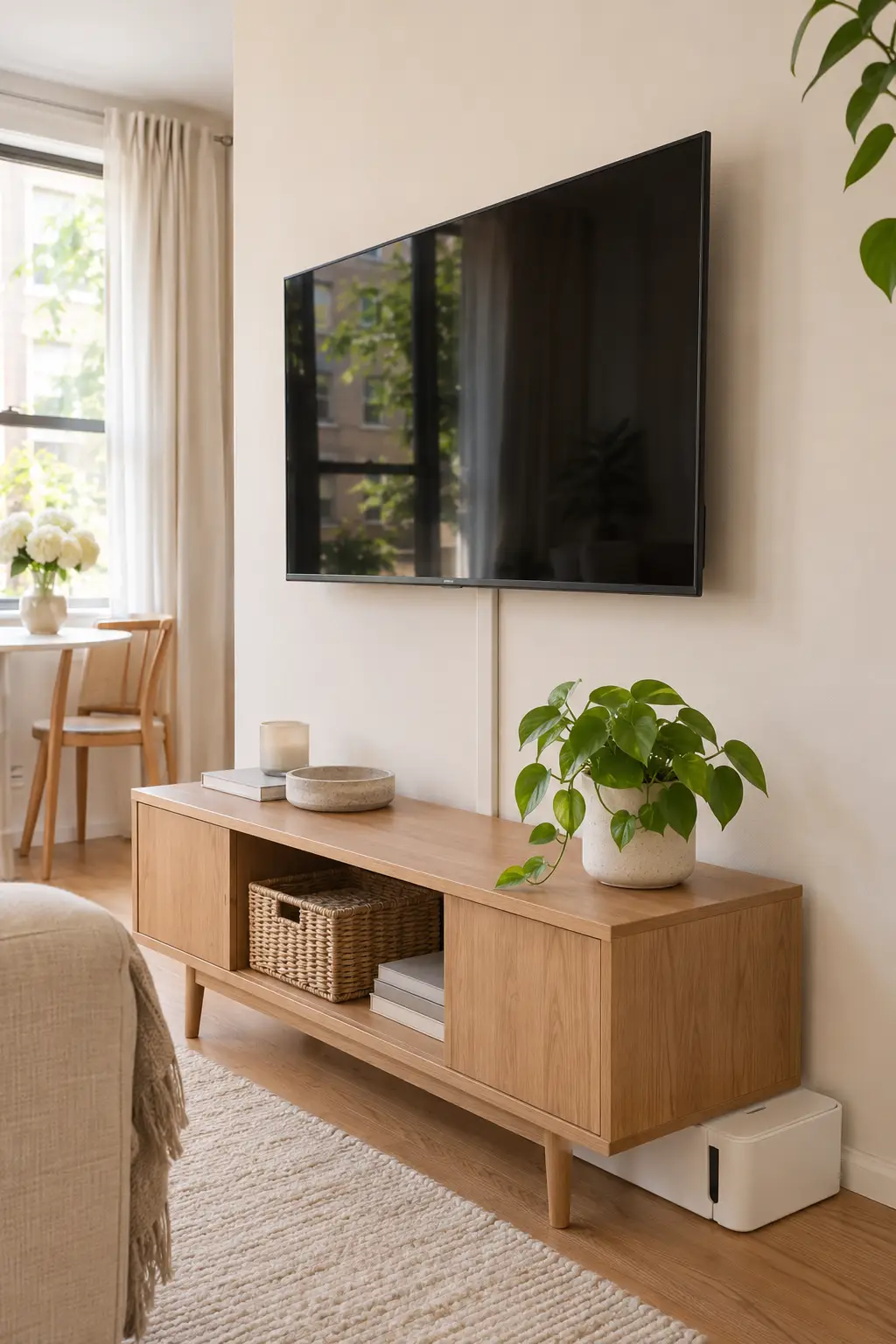
I never noticed how messy my TV wall looked until I saw it in a photo. The cords were the first thing my eye went to.
Taming them costs very little:
- Bundle loose cords with reusable hook-and-loop ties.
- Run them up the wall inside an adhesive cord cover painted to match.
- Tuck the power strip into a lidded cable box behind the TV stand.
- Stick a few cord clips to the back of the stand to keep everything off the floor.
It’s about a half-hour job, and the whole wall looks calmer once it’s done.
⚠️ Watch Out
Never run cords or power strips under a rug, and don’t plug one power strip into another. Covered cords can heat up where you can’t see them, and chained strips can overload the outlet. Choose a cable box with open slots so heat can escape.
11. Take One Piece of Furniture Out Before You Buy Anything
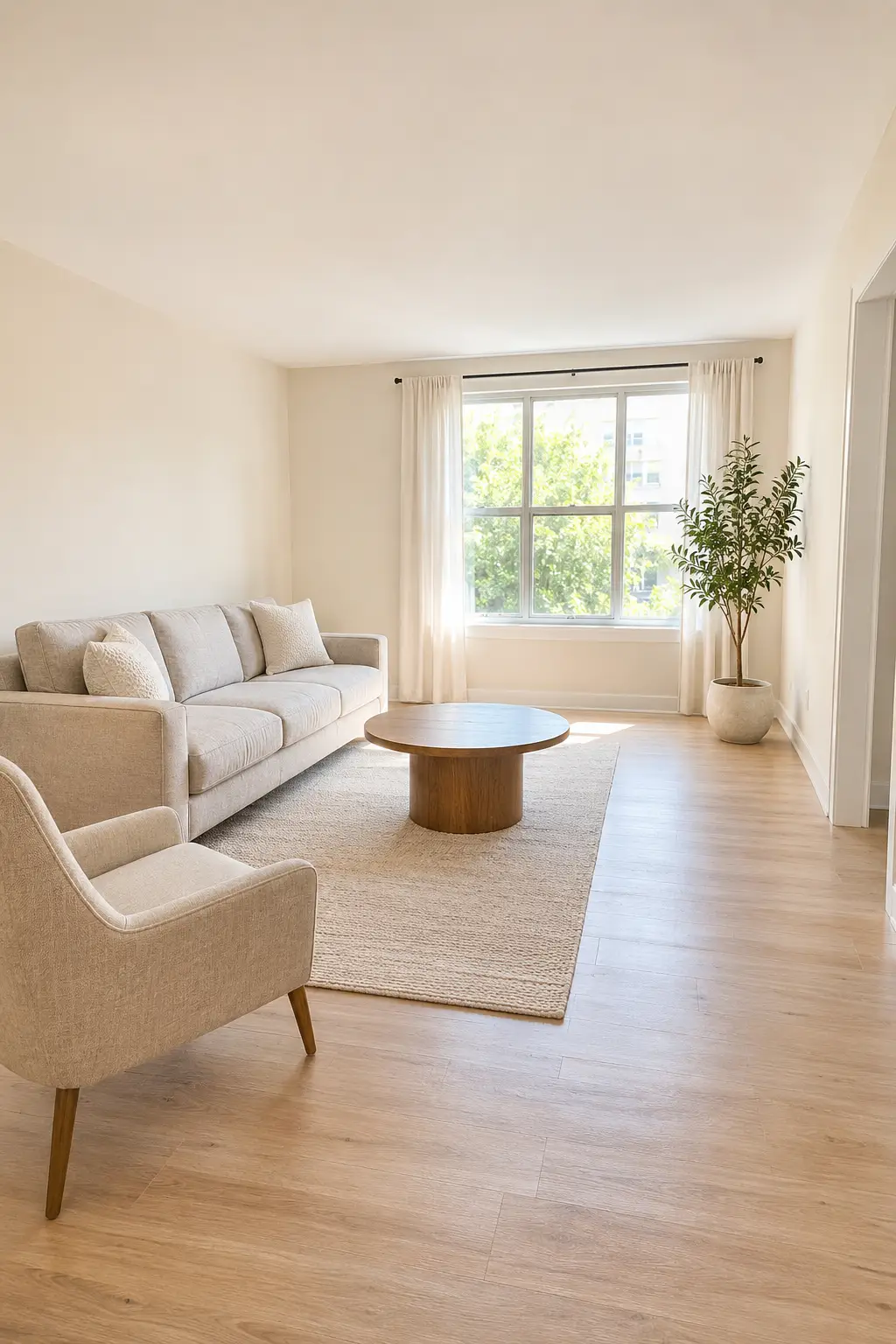
Buying something new feels like the natural first step. In a small living room, it usually isn’t.
Most cramped rooms have one piece too many: the extra side table, the armchair nobody sits in, the bookcase that juts into the walkway. Pull it out for a week and see if you miss it. Move it to another room, lend it to a friend, or put it in the closet if you’re not sure yet.
You’ll feel the difference in how you move through the room, not only in how it looks. You stop turning sideways to get past things.
Then spend your budget on what the room is actually missing.
A sofa, two armchairs, a coffee table, and two side tables. You squeeze sideways to reach the window, and every flat surface collects mail and mugs.
One armchair and one side table move out. There’s a clear path across the room, more floor shows, and the pieces that stayed finally have space around them.
12. Slide a Narrow Console Behind the Sofa for Baskets and a Lamp
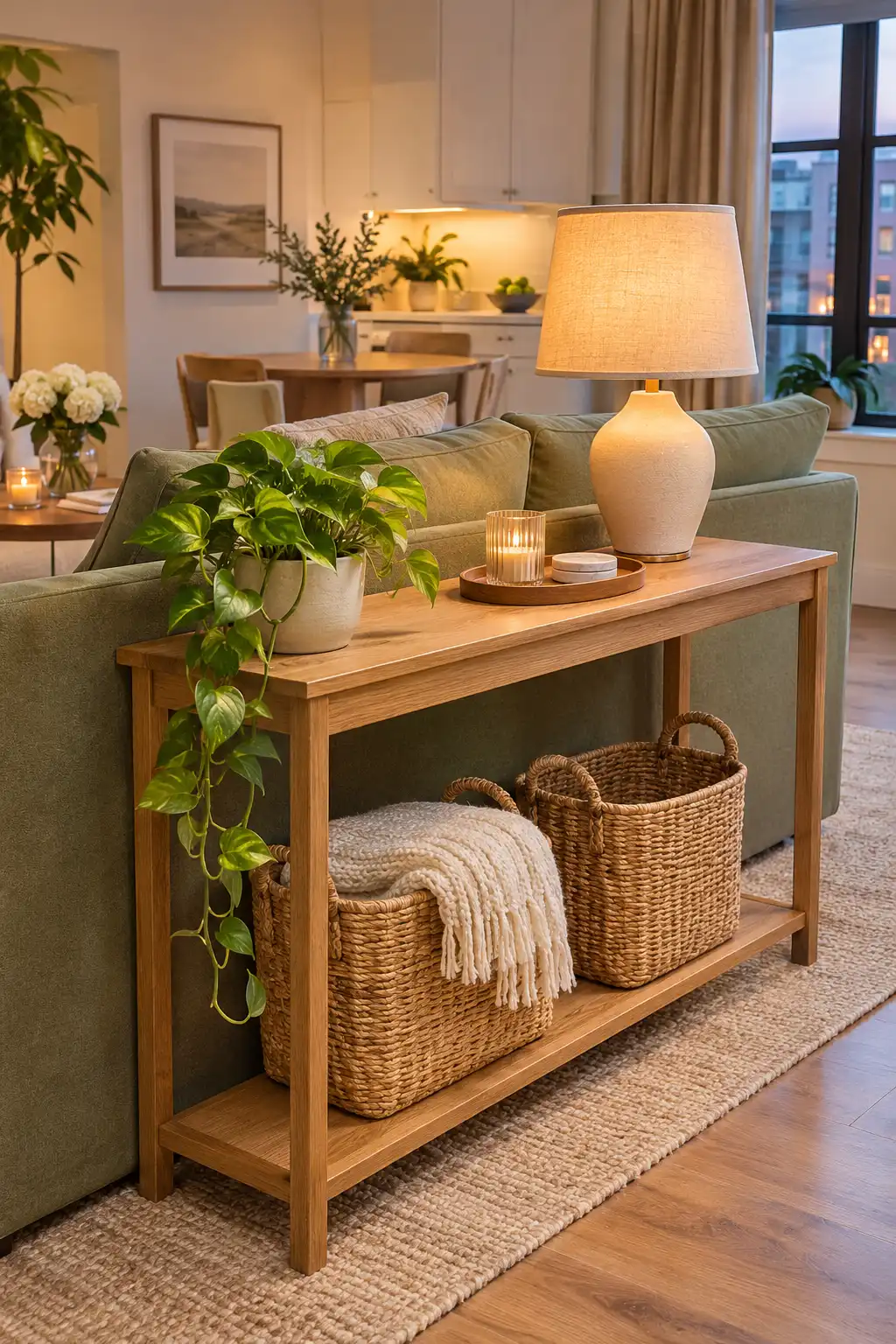
The back of a sofa that faces into the room is a blank wall of fabric, and the gap behind it collects dust and lost socks.
A narrow console table fixes both. Look for one shallow enough to sit right against the sofa back, around 10 to 12 inches deep, and about level with the top of the sofa or a little lower.
The top holds a lamp and a dish for keys. The bottom shelf fits two baskets for throws, magazines, or the toys that end up everywhere.
If your sofa is against a wall, slide the console beside it instead. It becomes a skinny side table with far more storage.
How to set up your console
Final Thoughts
A small living room doesn’t need a big budget to feel good. It needs a few smart choices: light that reaches the corners, furniture that earns its spot, and enough open floor to move around easily.
You don’t have to do all twelve. Pick one this weekend, live with it for a bit, and add the next when you’re ready. Small changes stack up faster than you’d think, and the room starts to feel more like yours along the way.
If these small living room ideas on a budget gave you a place to start, save this list to your apartment board so it’s there the next time your room needs a little refresh.
Not sure where to start? Try these first