
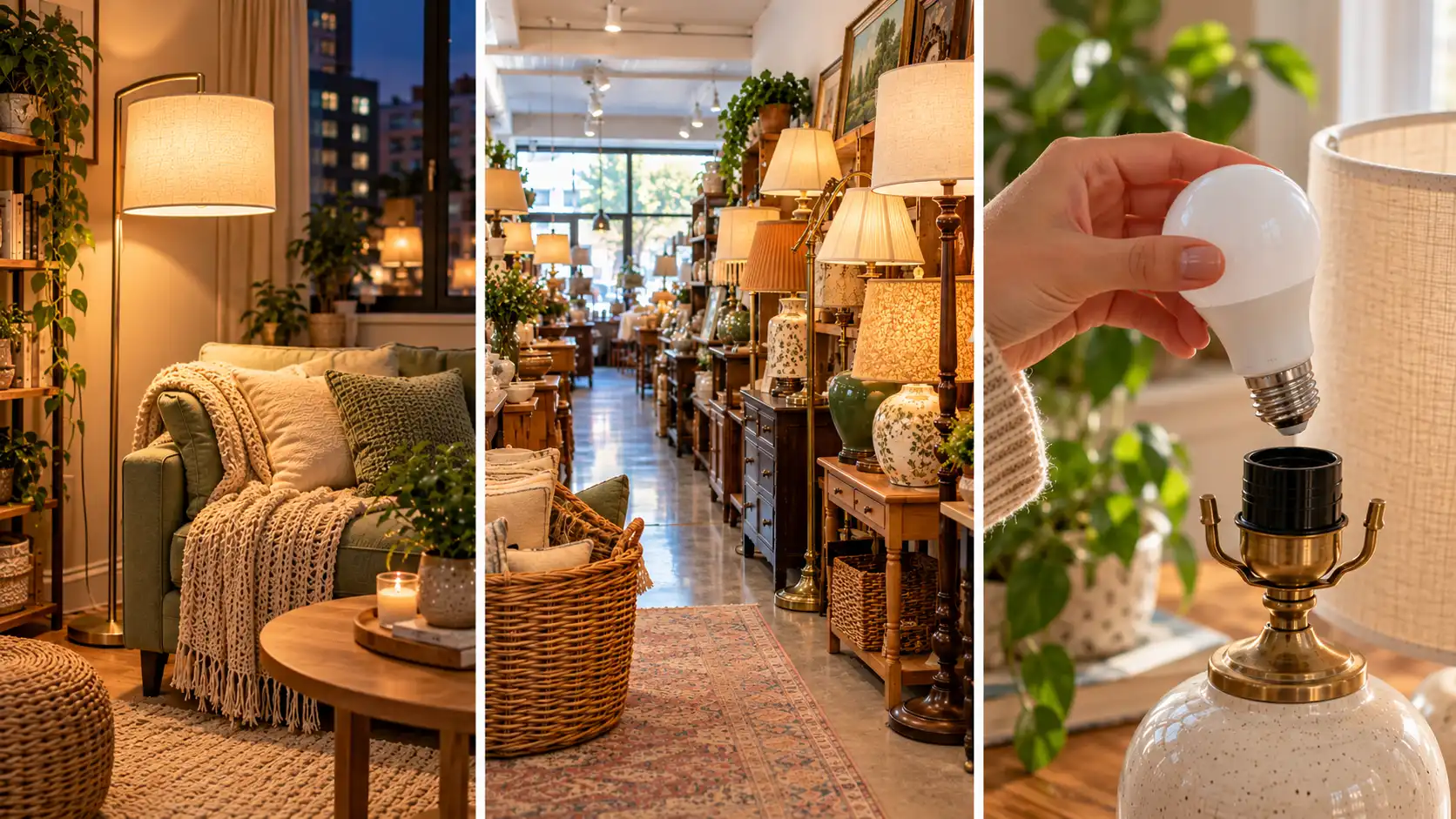
You flip on the ceiling light at 7 p.m. and the whole apartment looks like a waiting room. Bright in the middle, gray in the corners, and still too dark to read on the couch. Most cheap apartment lighting advice tells you to buy four or five lamps and “layer” them. That works if you have the money. If you can only afford one lamp right now, you need to pick the right one.
I’ve lived in four rentals with one sad ceiling fixture each. I’ve also wasted money on lamps that looked cute in the store and did almost nothing once I got them home. What finally worked wasn’t a fancier lamp. It was putting one good lamp in the exact spot I used most, with the right bulb inside it.
This guide walks you through that whole process. You’ll find the dark spot that matters, choose the lamp type and shade, buy the right bulb, and set it all up safely. Plan on about an hour of looking and measuring, plus a shopping trip. By the end, your room will feel warm instead of washed out, and you’ll know exactly what to add later when your budget grows.
1. Turn off the overhead light after dark and find your dimmest corner
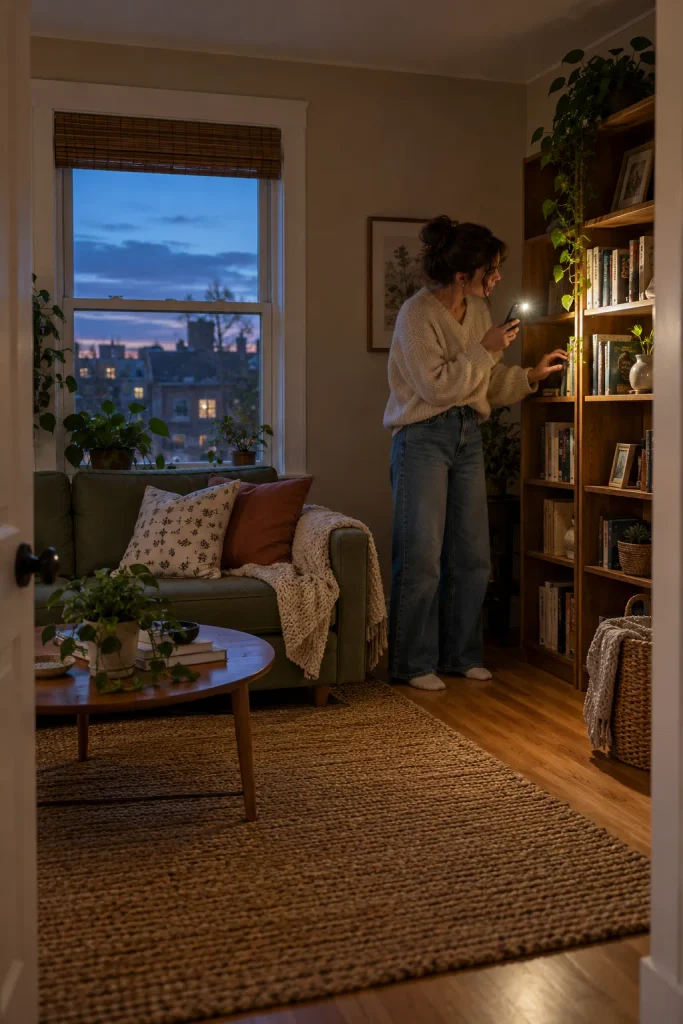
Daylight hides the problem. Wait until at least 30 minutes after sunset, when no outside light can help. Leave on any lamps you already own and walk the room slowly. Notice where you’d need your phone flashlight to read a book title or find your keys. Write those spots down. A ceiling light shines from one point, so the corners and the area right beside your couch are usually the darkest. Those are the places one lamp can fix.
2. Pick the one seat where you spend the most evening hours
If you’re torn between two spots, count the hours you sit in each. Your couch, reading chair, or the side of the bed where you scroll at night usually wins. Light that seat first, because you’ll feel the difference every evening. A lamp glowing in an empty corner looks pretty in photos but does little for you. Bonus: if your most-used seat is also a dark spot from Step 1, you’ve found your answer.

3. Measure the floor space and outlet distance next to that seat
Three numbers decide which lamps will fit:
- Floor space beside the seat, width and depth. Most floor lamp bases need about 10 to 12 inches across.
- Side table height, floor to top, if you have one.
- Distance to the nearest outlet. Most lamp cords run 5 to 6 feet.
Mark the lamp spot with a square of painter’s tape. Tripod lamps spread wider, often 18 to 24 inches, and that tape square will stop you from buying one that blocks your walkway.

4. Choose a floor lamp unless a table already sits at elbow height
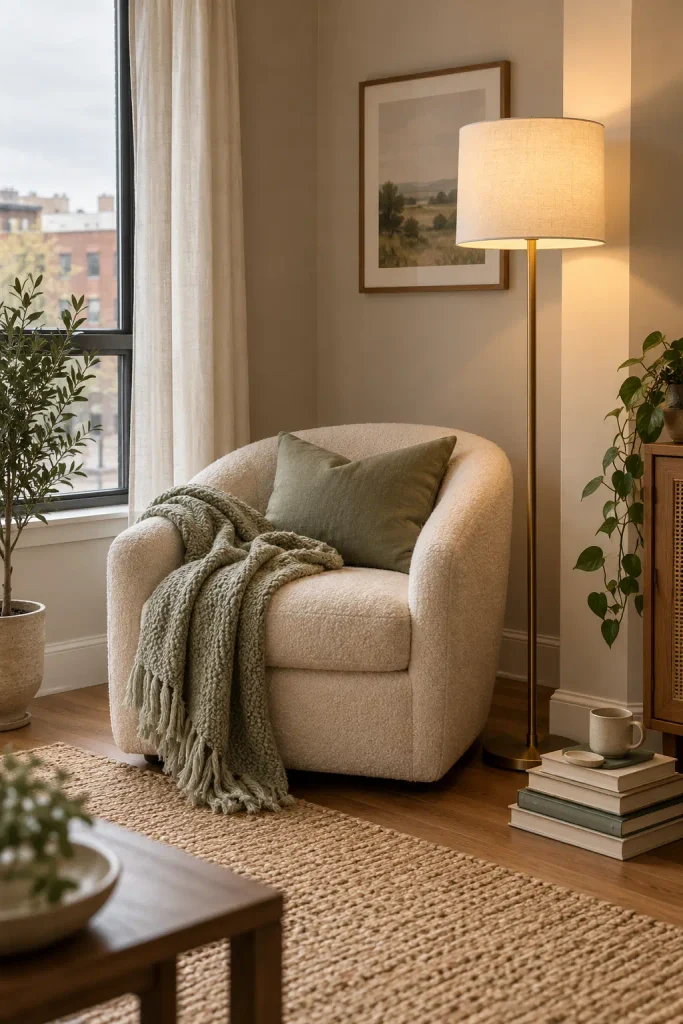
A floor lamp lights more of the room for the money. It stands tall, so the glow spreads across your whole seating area instead of pooling on one tabletop. Aim for one around 58 to 64 inches tall, so the bottom of the shade lands near your shoulder when you sit. A table lamp only wins if you already own a side table about as high as your sofa arm, usually 24 to 28 inches. Skip the bowl-shaped uplight style if you read in that seat. It bounces light off the ceiling and leaves your book in shadow.
5. Look for a fabric or frosted shade that spreads light softly
Here’s where most cheap lamps go wrong. White, cream, or light linen fabric lets light glow out the sides as well as the top and bottom, so the whole corner feels lit. Frosted glass does the same job. Dark fabric, metal, and thick paper shades push the light into one hard circle on the floor and leave the rest of the room dim.
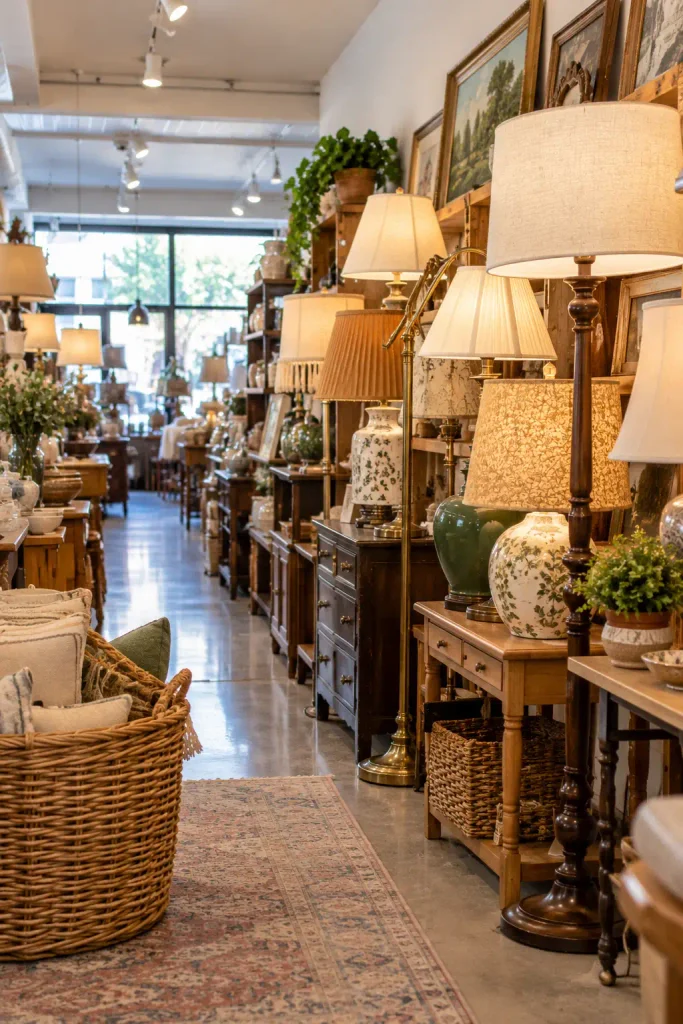
6. Check secondhand shops before you pay full price
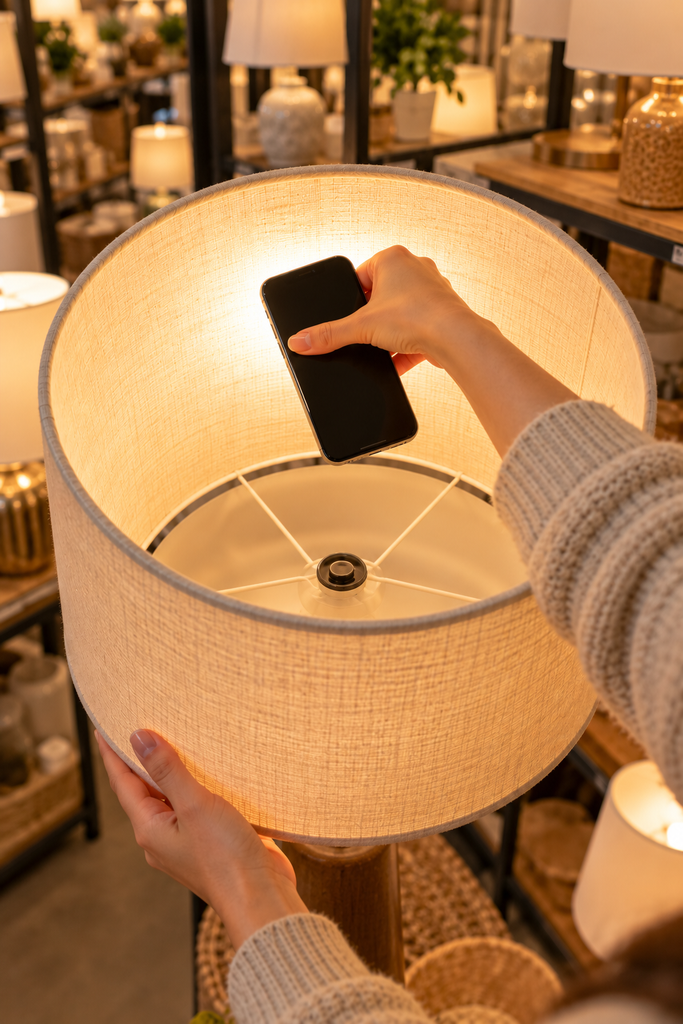
Secondhand floor lamps often sell for $10 to $25, about half the price of a basic new one. Try thrift stores, Facebook Marketplace, garage sales, and local Buy Nothing groups. Before you hand over any cash, run these checks:
- Bring a spare bulb, plug the lamp in, and switch it on.
- Look along the whole cord for cracks, tape, or bare wire.
- Push the top gently. It shouldn’t wobble or tip.
If the cord fails, walk away. Still empty-handed after a week? Basic new floor lamps at big-box stores usually cost $25 to $50.
7. Buy a warm white LED bulb that matches the lamp’s wattage limit
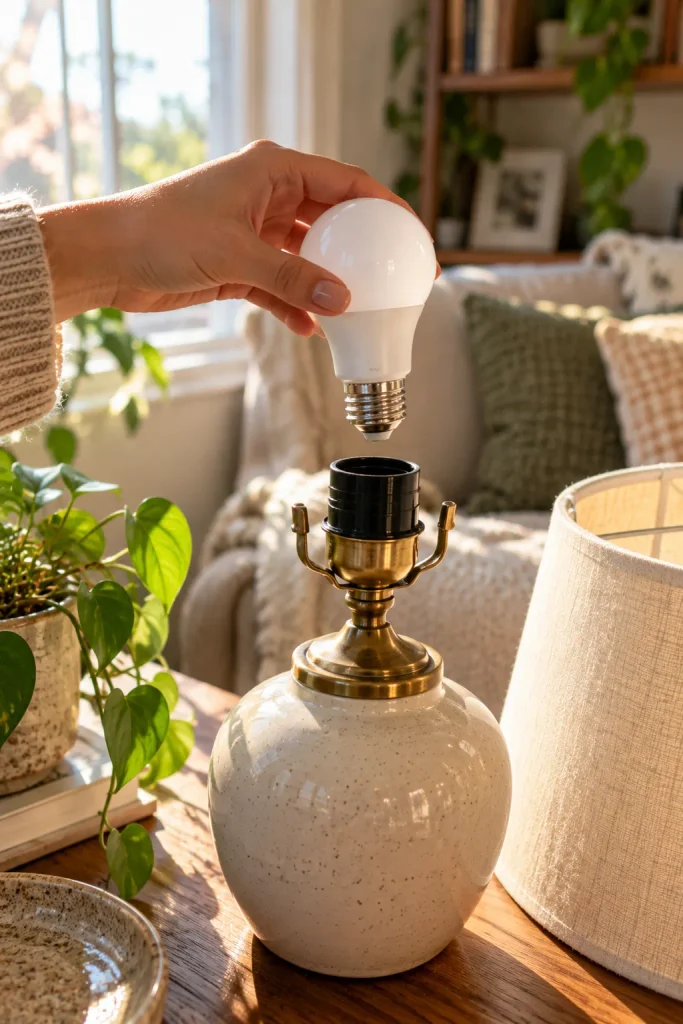
Bulb boxes are covered in numbers, but two matter most. Color temperature should read 2700K, the warm, cozy glow. Anything at 4000K or higher looks cold and bluish at night. Brightness is listed in lumens. A floor lamp lighting a seating area needs 1100 to 1600 lumens, while a table lamp does fine with about 800. Before you shop, look inside the lamp socket for a small sticker that says something like “Max 60W.” Snap a photo of it.
8. Place the lamp beside or behind your seat, never in front of it
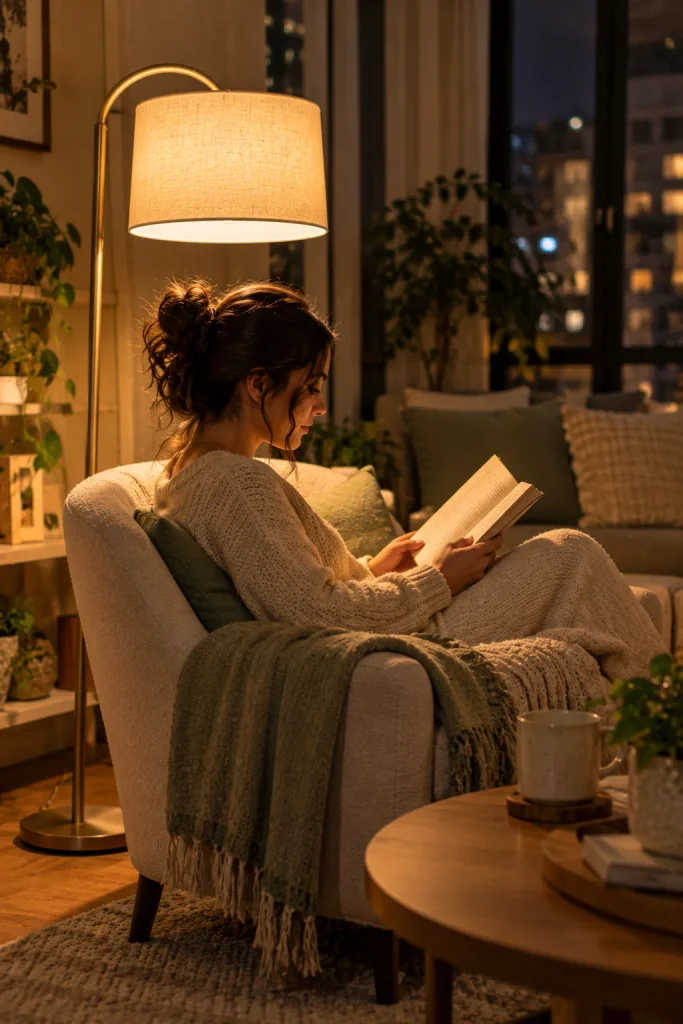
Glare is the sign a lamp is in the wrong spot. Set it at your side, slightly behind your shoulder, about 6 to 12 inches from the seat. Then sit down. If you can see the bare bulb from your normal position, slide the lamp back an inch or two until the shade hides it.
9. Run the cord along the baseboard so nobody trips on it
A cord stretched across the floor gets kicked and yanked within a week. Press it flat against the baseboard and hold it in place with removable adhesive cord clips every 2 to 3 feet. They peel off without pulling paint, which matters when you rent. No clips on hand? Tuck the cord behind the couch or a bookcase instead. If the outlet sits too far away, use a flat-plug extension cord made for indoor use.

Troubleshooting Your New Lamp
Frequently Asked Questions
What to Expect Once Your Lamp Is Set Up
Quick Reference Card
• Phone (flashlight + camera)
• Painter’s tape
• $20 to $60 budget
• 1 floor or table lamp
• 1 LED bulb, 2700K
• Cord clips (optional)
2. Pick your most-used evening seat
3. Measure space and outlet distance
4. Choose a floor lamp, 58 to 64 in. tall
5. Pick a light fabric or frosted shade
6. Shop secondhand, test the cord
7. Buy 2700K LED, 1100 to 1600 lumens
8. Place beside or behind your shoulder
9. Clip the cord along the baseboard
Your Room, Lit the Right Way
One well-placed lamp now does the work of three. It lights the spot where you sit, it glows warm instead of harsh, and it’s safe from the plug to the bulb.
Cheap apartment lighting doesn’t have to look cheap. It comes down to putting your money where you spend your evenings.
When you’re ready for lamp number two, start with the second-darkest spot on your Step 1 list.
Save this pin to your apartment ideas board so it’s ready the next time you’re standing in a thrift store aisle, wondering which lamp to grab.