
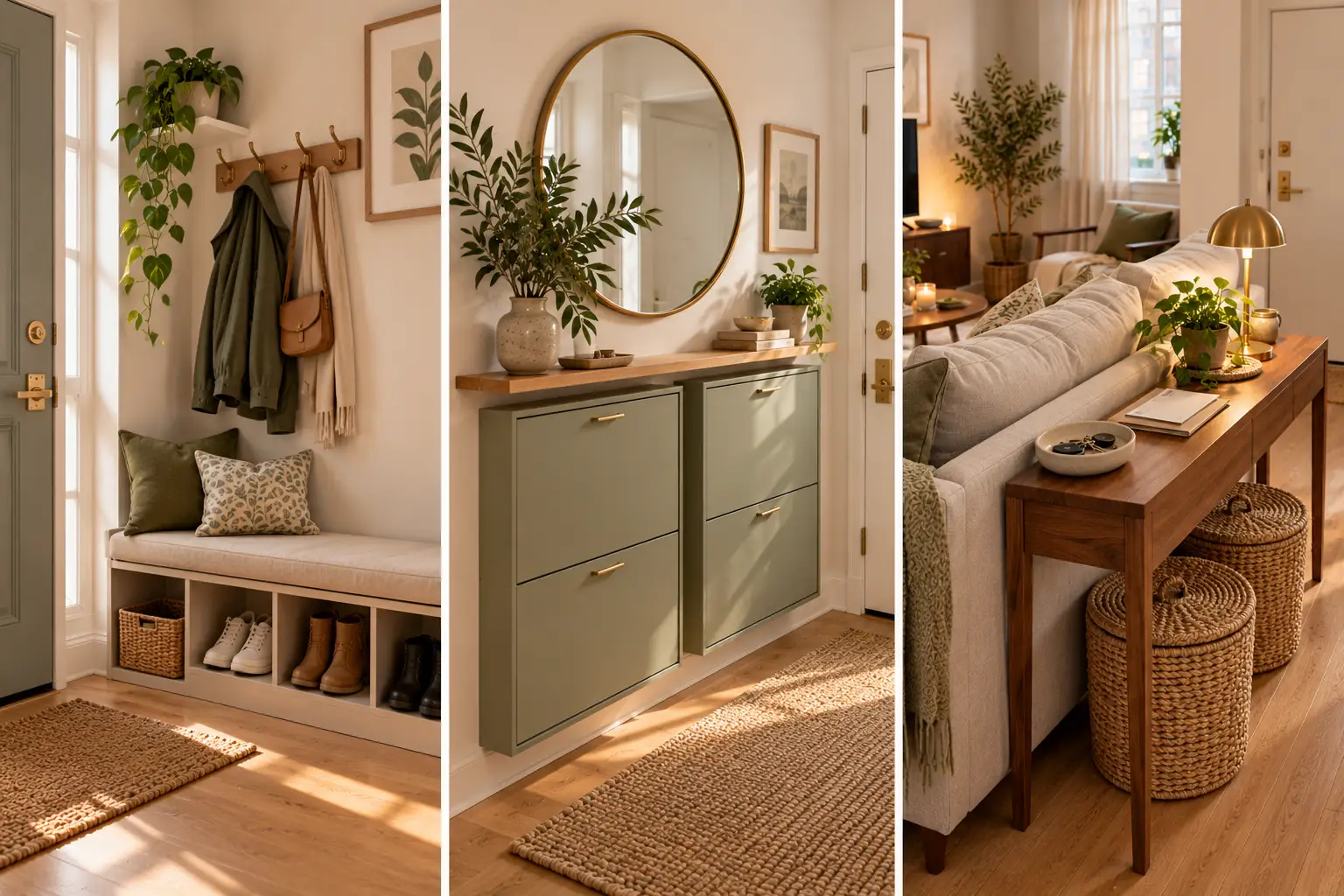
The front door swings open and you’re already standing in the living room. There’s no hallway, no foyer, and no obvious place for the shoes, bags, and keys that come in with you every day. So they land on the couch, the kitchen counter, and the floor right by the door.
That pile isn’t a sign you’re messy. It’s a sign your apartment never gave you a drop zone. The good news is you can make one yourself, even if all you have is a short wall, an empty corner, or the back of the door.
These apartment entryway ideas mix real setups with fresh ones. You’ll find a cushioned corner bench, slim shoe cabinets that hang off the floor, a coat closet with its doors taken off, and even a mirror that hides the breaker box. Several are renter friendly, and a few need no drilling at all.
Pick the one that fits your space and start there. Your couch will thank you.
1. Turn the Bare Wall Beside Your Door Into a Faux Entryway
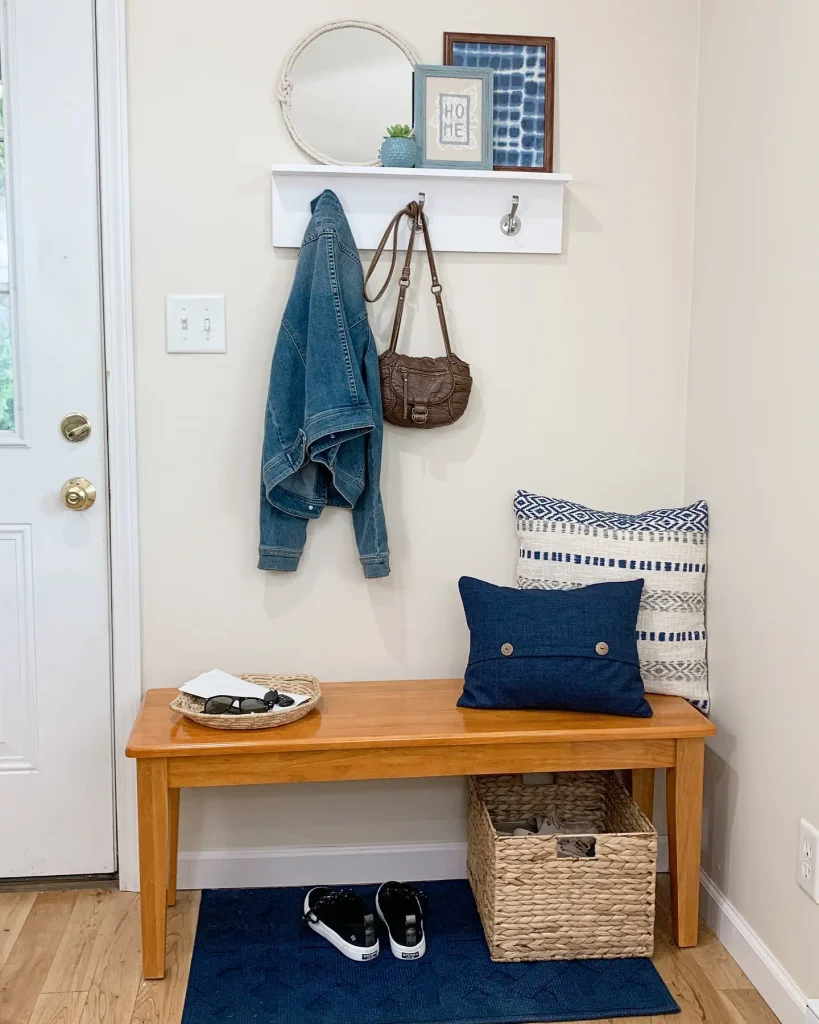
No foyer? The short wall next to your front door can do the whole job. This setup fits a full drop zone into a few feet of space, and every piece has a task.
What makes it work:
- A white shelf with three metal hooks holds a jacket and an everyday bag. The ledge on top doubles as a spot for a round mirror and a little art.
- A woven tray on the bench catches keys, mail, and sunglasses before they pile up on the kitchen counter.
- A basket under the bench hides spare shoes, while the pair you wear most waits on the rug.
The navy rug matters more than it looks. It marks off the “entry,” so the corner reads as its own little zone.
2. Tuck a Cushioned Shoe Bench Into the Corner by the Door
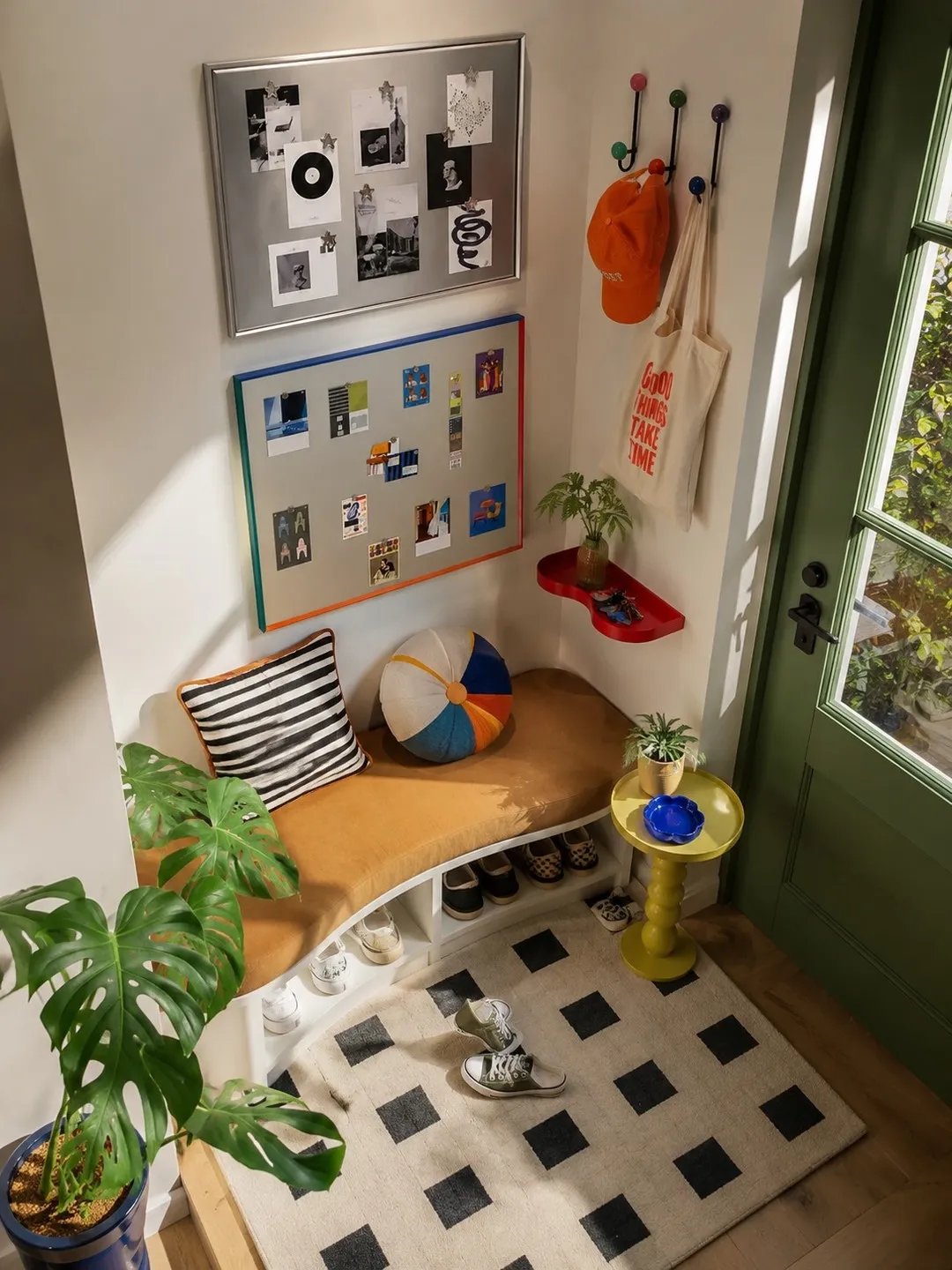
Corners near the door usually go to waste. Here, one becomes the hardest working spot in the apartment.
The curved bench does most of the work. A soft mustard cushion makes it a real seat for pulling on sneakers, and the open cubbies underneath keep shoes in neat rows instead of a pile on the floor.
Paper clutter goes up, not down. Two memo boards above the bench hold cards and photos, and a tiny wavy shelf right by the door keeps keys at grab height.
Bright color keeps it fun. A red shelf, a yellow side table, and ball-topped hooks make storage look like decor, so you won’t mind seeing it every day.
Pick open cubbies so you can see every pair and grab one fast.
Add a thick cushion so the bench works as a comfy seat.
A lift-top bench. Pillows and bags pile on top, so you stop opening it.
A bench so deep it gets in the way of the door swing.
3. Hang Slim Shoe Cabinets and Link Them With One Long Shelf
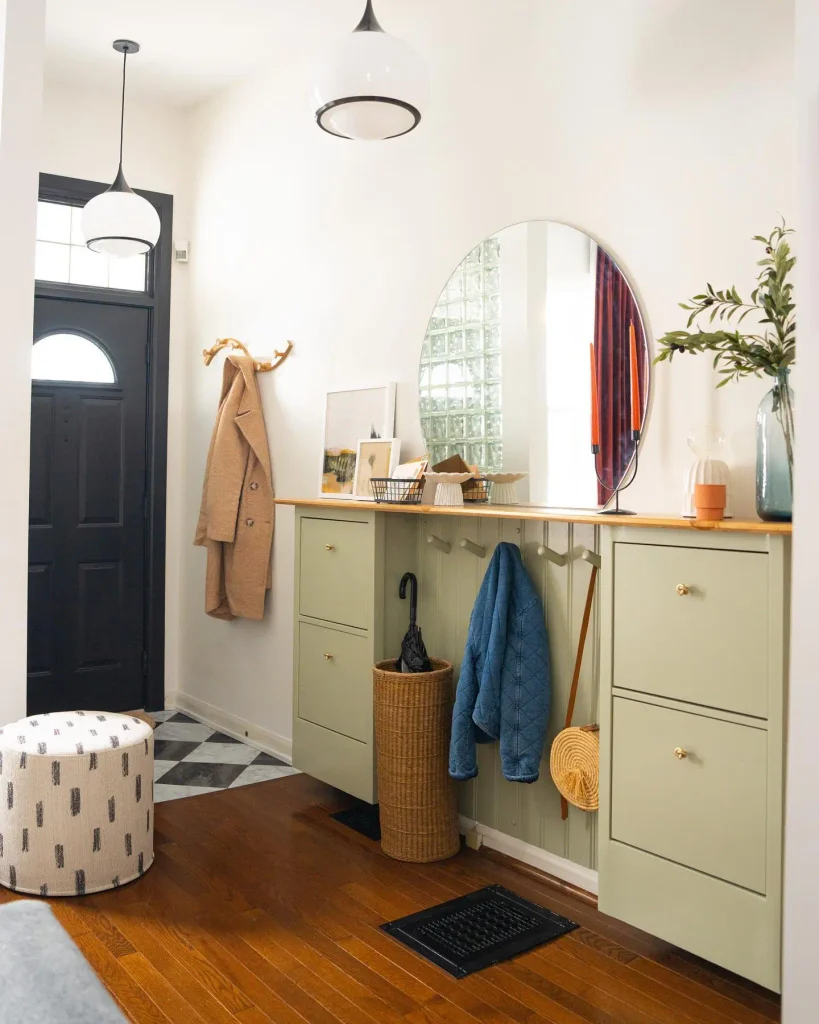
Slim is the secret here. These shoe cabinets are shallow, and their drawers tip out, so they hug the wall instead of eating up your walkway.
How to copy it:
- Mount two slim cabinets on the wall with a gap between them, raised so you can sweep underneath.
- Lay one long wood plank across both tops. It ties them together and becomes a ledge for mail, a big round mirror, and candles.
- Fill the gap with a beadboard panel and a row of wooden pegs for jackets and bags.
- Slide a tall basket into the gap for umbrellas.
Painting the cabinets and panel the same soft sage makes them blend in, so the whole wall looks built in.
| Slim Tip-Out Cabinet | Open Shoe Rack | |
|---|---|---|
| Looks | Shoes hidden behind fronts | Shoes always on show |
| Floor | Can hang off the floor | Sits on the floor |
| Top | Works as a drop ledge | Usually holds more shoes |
| Boots | Often too tall to fit | Easier to fit |
| Best for | Narrow walkways | Closets or wider spots |
4. Make Your Entry Storage Look Like Living Room Furniture
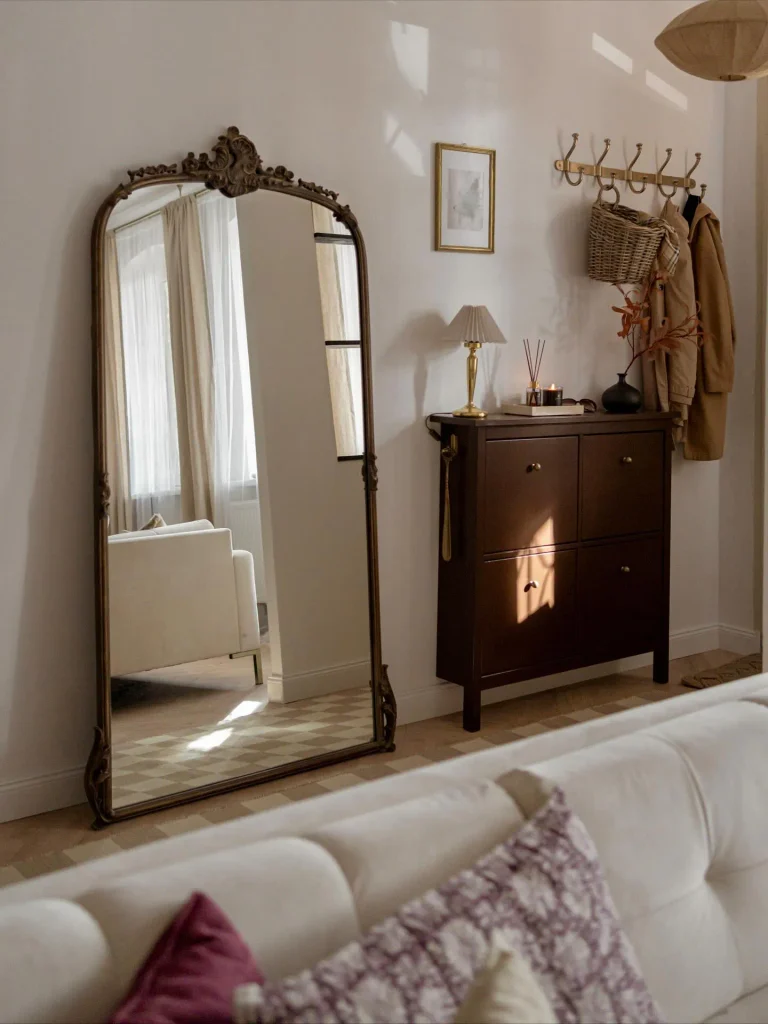
When the front door opens right into the living room, your entry storage is always on show. This setup handles that by dressing it up to match the rest of the room.
A dark wood shoe cabinet stands in for a side table, topped with a brass lamp, a lit candle, and a small vase of dried stems. Next to it, a tall gilded mirror leans on the wall for a last outfit check.
Where do the small things go? Into a wicker basket hanging from the hook rail.
And the shoehorn? It clips onto the side of the cabinet, right where you need it.
Warm brass and dark wood tie it all together, so guests see a cozy corner, not a coat dump.
Coats tossed over the sofa arm, shoes kicked off by the couch, and keys lost somewhere in the cushions.
Every item gets a hook, a drawer, or a tray, and the wall looks like a styled corner of the living room.
5. Turn the Back of Your Front Door Into a Storage Wall
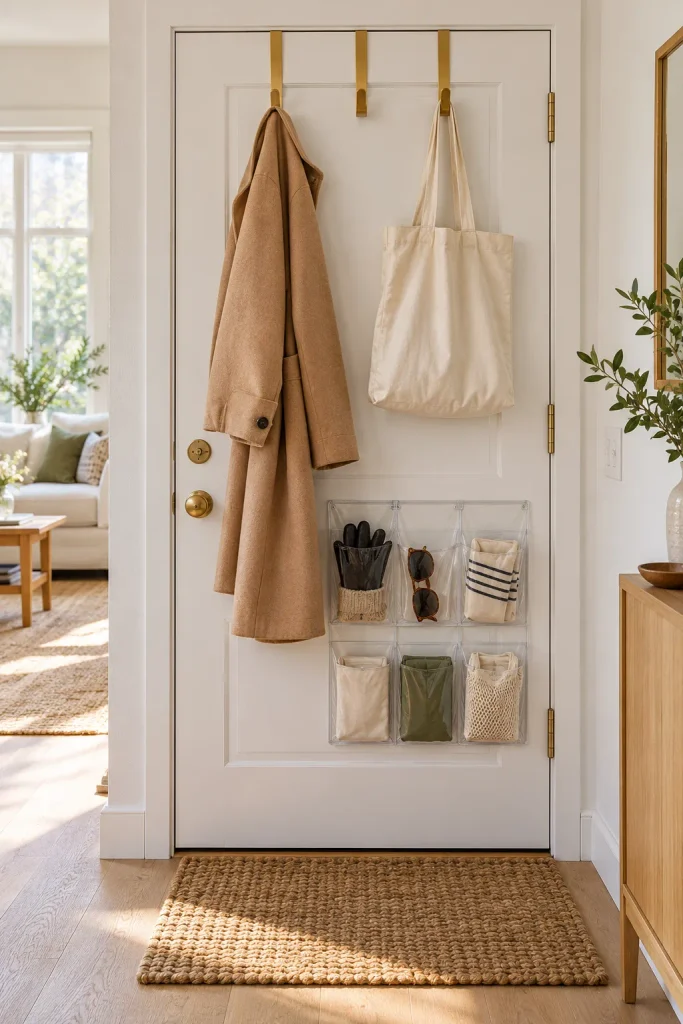
The back of your front door is free storage that most renters never touch. Over-the-door pieces simply hang on, so there’s no drilling and no risk to your deposit.
Load it up like this:
- Over-the-door hooks up top for coats, totes, and the dog’s leash
- A clear pocket organizer below for gloves, sunglasses, and earbuds
- Light items only, so the door still swings easily
One catch: check that the door still closes all the way once it’s full. Thick puffer coats can stop it from latching, so keep the bulky ones in the closet.
Which pocket gets what
6. Park a Skinny Console Behind the Sofa as Your Drop Zone

Sofas that face away from the door leave a strip of empty space behind them. Put a narrow console table there, and you have a landing spot the moment you walk in.
The top takes keys, mail, and your phone. Underneath, two lidded baskets swallow shoes and bags, and the sofa back hides them from the rest of the room.
Choose a console no taller than the back of your sofa. Anything higher starts to look like a wall and blocks the view across the room.
Set it up in 3 steps
Leave enough room to walk around both ends of the sofa.
Pick a slim console with open space underneath for baskets.
Add a small lamp on top so you come home to a lit room at night.
7. Take the Doors Off Your Coat Closet and Build a Mini Mudroom
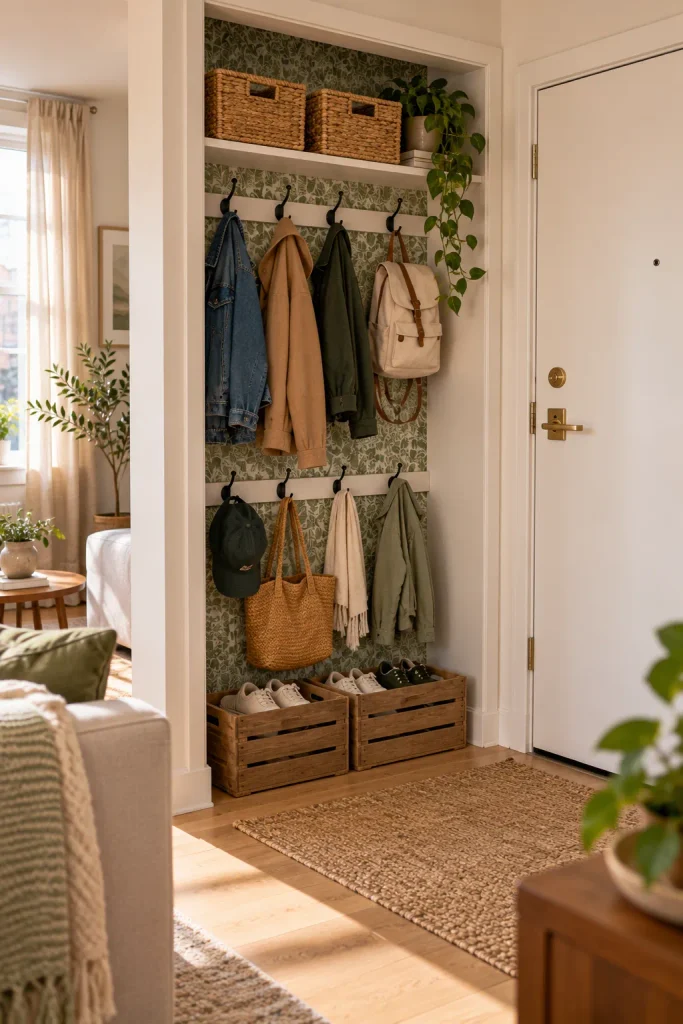
Doors off, problem solved. A cramped coat closet near the door becomes an open nook you can actually use, and you stop fighting a door that bangs into everything.
How to set it up:
- Store the doors, hinges, and screws somewhere safe so you can rehang them before you move out.
- Swap the single rod for hooks at two heights, one row for coats and a lower row for bags.
- Slide a low shoe rack or a few wooden crates onto the floor.
- Line the top shelf with bins for hats, gloves, and seasonal stuff.
Peel-and-stick wallpaper on the back wall makes the nook look planned, and it comes off cleanly when you leave.
8. Build a Fake Entry Wall With an Open Bookcase Divider
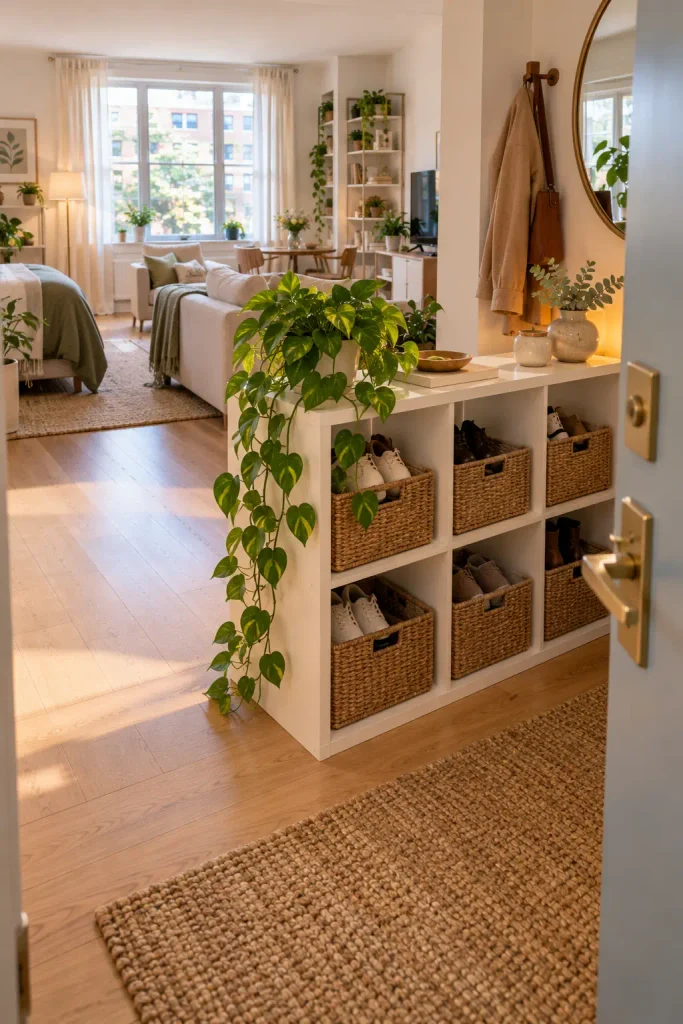
Need an entryway that doesn’t exist? Build one out of furniture.
Set a low open bookcase at a right angle to the wall, just past the front door, and it splits the space into “entry” and “living room.” The cubbies facing the door hold baskets for shoes, bags, and dog gear. The side facing the sofa gets books and plants, so it looks good from both directions.
Go for shelves without a back panel. Light still passes through, and the room won’t feel cut in half.
Before you buy
9. Hide the Breaker Box Behind a Mirrored Key Cabinet
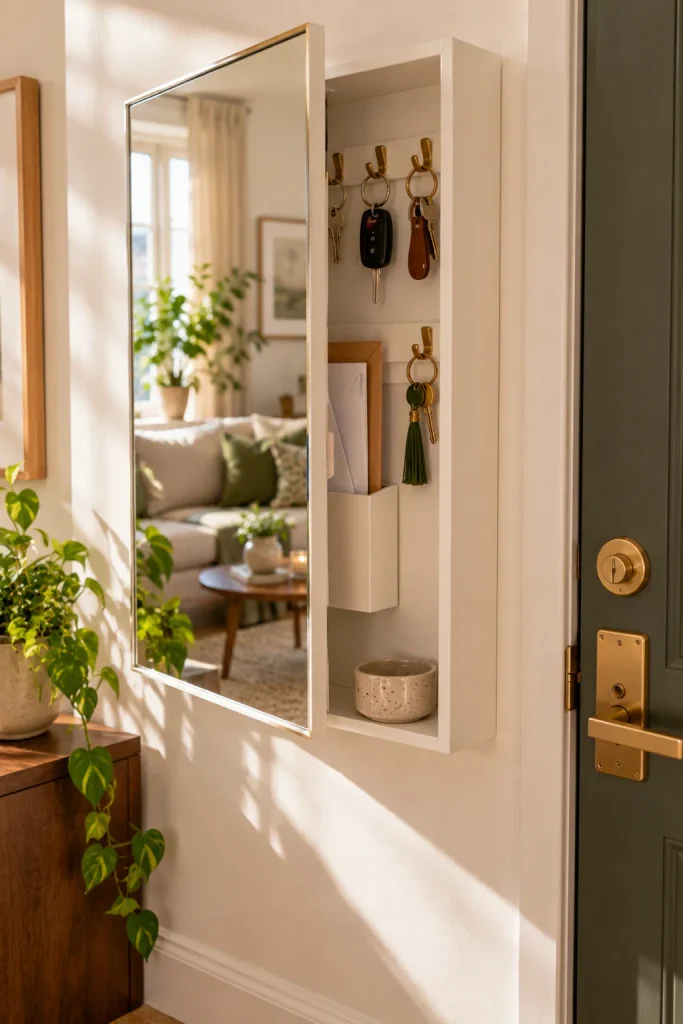
Most apartments put something ugly by the door, like a breaker box, an intercom panel, or a thermostat. A shallow wall cabinet with a mirror door covers it up and gives you storage at the same time.
Inside, it can hold:
- Small hooks for every key in the house
- A slim slot for mail and receipts
- A little cup for spare change and earbuds
From the outside, it’s just a mirror for one last look before you head out. Nobody has to know what’s behind it.
⚠️ Watch Out
Never seal off a breaker box. Choose a cabinet whose door opens wide with no tools, so you can reach the switches fast in an emergency. Ask your landlord before mounting anything over the panel.
10. Add a Shelf Above the Front Door for Things You Rarely Grab
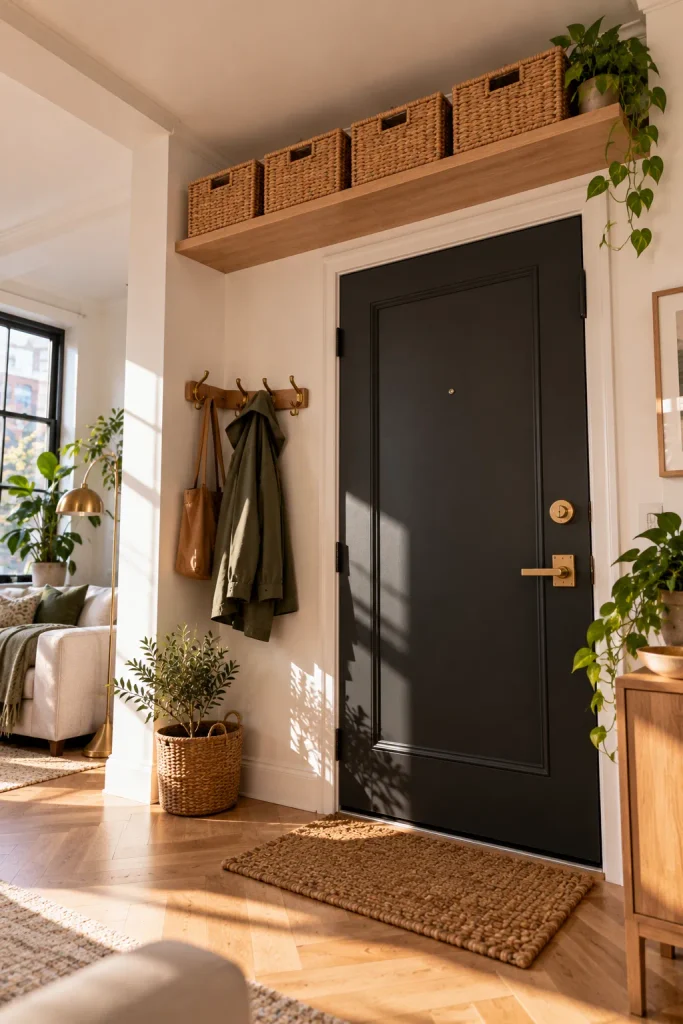
Look up. The wall above your front door is usually bare, and it’s great space for anything you don’t need every day.
Mount a sturdy shelf just above the door frame and line it with matching baskets.
Up high: winter hats, spare umbrellas, beach bags, and the reusable bags you keep forgetting.
Down low: only the daily stuff, so your hooks and drop zone stay clear.
A small folding step stool tucked nearby makes the top easy to reach. Matching baskets keep it looking tidy, even when what’s inside is a jumble.
Moving rarely used things up and out of the way frees the space at arm’s reach for what you grab every single day.
Final Thoughts
You don’t need a real entryway to walk into a calm home. You just need a few spots that catch everything before it spreads across the apartment.
Start small. Pick one wall, one corner, or one door, and give your keys, shoes, and bags a home there. Live with it for a week and notice what still ends up on the couch. That’s your next fix.
Feel free to mix and match, too. A shelf above the door pairs well with hooks below it, and a console behind the sofa works nicely with a pocket organizer on the door.
Save this to your small space board so these ideas are ready when you need them.