Most small apartments don’t have a storage problem. They have a habit problem.
You buy the bins. You spend a Saturday folding and sorting. A week later the counter is buried again, the chair by the bed is holding three days of clothes, and you start to think you’re just bad at this.
You probably aren’t. A lot of organizing advice was written for houses with a garage, a hall closet, and a spare room. In a studio or one-bedroom, those same habits backfire. They add extra steps, hide the things you need, and fill up the little space you have left.
This list covers nine organizing mistakes that make a small place messier, and what to do instead. None of the fixes need a big budget or a full weekend. Most just ask you to notice how you really live, then set up your home for that person, not the tidy version of you who never shows up.
1. Buying Storage Bins Before You Decide What to Keep
The store makes it feel like progress. You come home with a stack of matching bins, and the problem looks solved.
But bins sized for your current pile lock that pile in place. You end up neatly storing things you never wanted, like cords for phones you no longer own. And the bins take up space of their own.
Do it in this order instead:
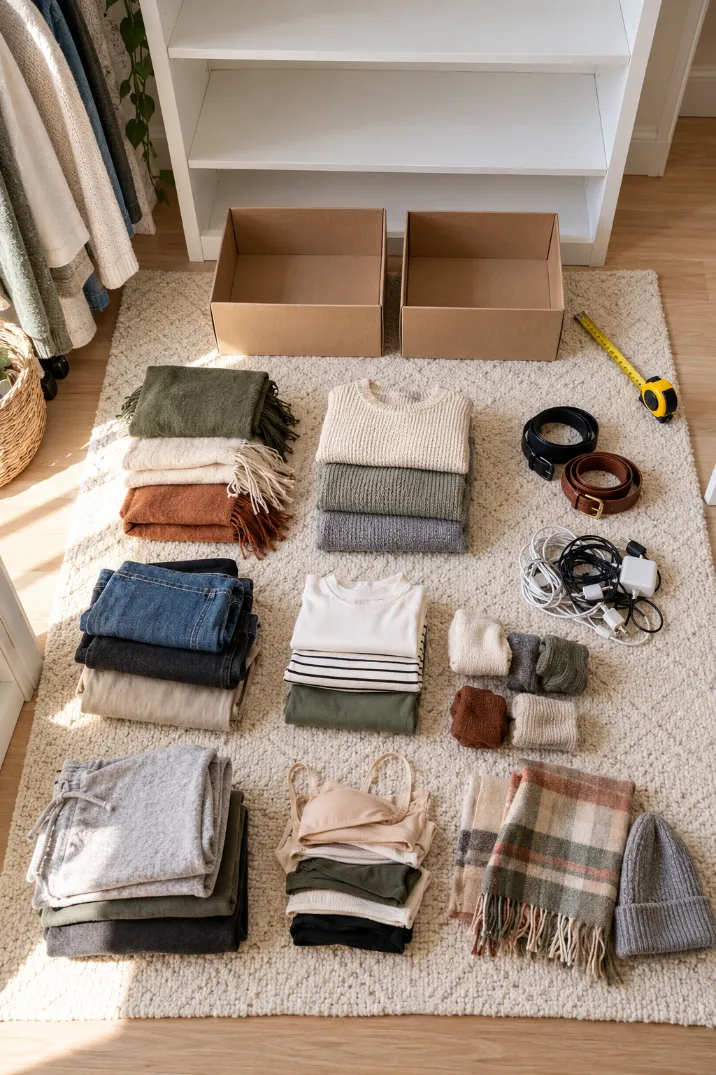
- Pull out everything in one category and look at it.
- Keep what you use or truly love.
- Measure the shelf or drawer, then buy containers that fit what stayed.
Most people find they need fewer bins than they planned.
Sort first, then measure the exact space you have.
Test your setup with shoeboxes for a week before buying anything.
Buying a matching set before you know what needs a home.
Picking bins by the photo on the package instead of your shelf depth.
2. Making “Put It Away” Take Three Steps Instead of One
If putting something away takes more effort than dropping it, it will get dropped.
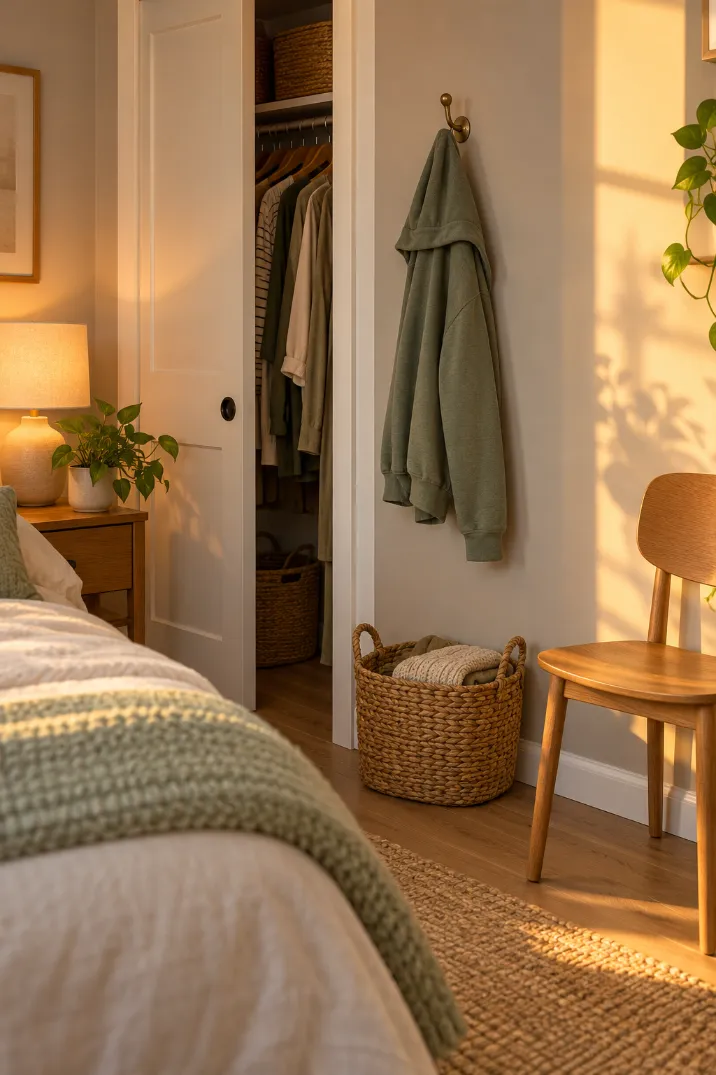
That’s the whole rule. Think about the hoodie that lives on the chair. The closet door sticks, the empty hanger is buried, and the shelf is crammed. Three small hurdles, and the chair wins every time.
Count the steps for the things you use every day. Lifting a lid, unstacking a bin, moving one thing to reach another. Each step is a reason to skip it. For daily items, aim for one motion: hang it, drop it, or slide it in.
Pick the three things you leave out most often.
Watch where each one lands for a few days.
Give it a one step home right there: a hook, an open basket, or a shallow tray.
3. Skipping a Landing Spot by the Front Door
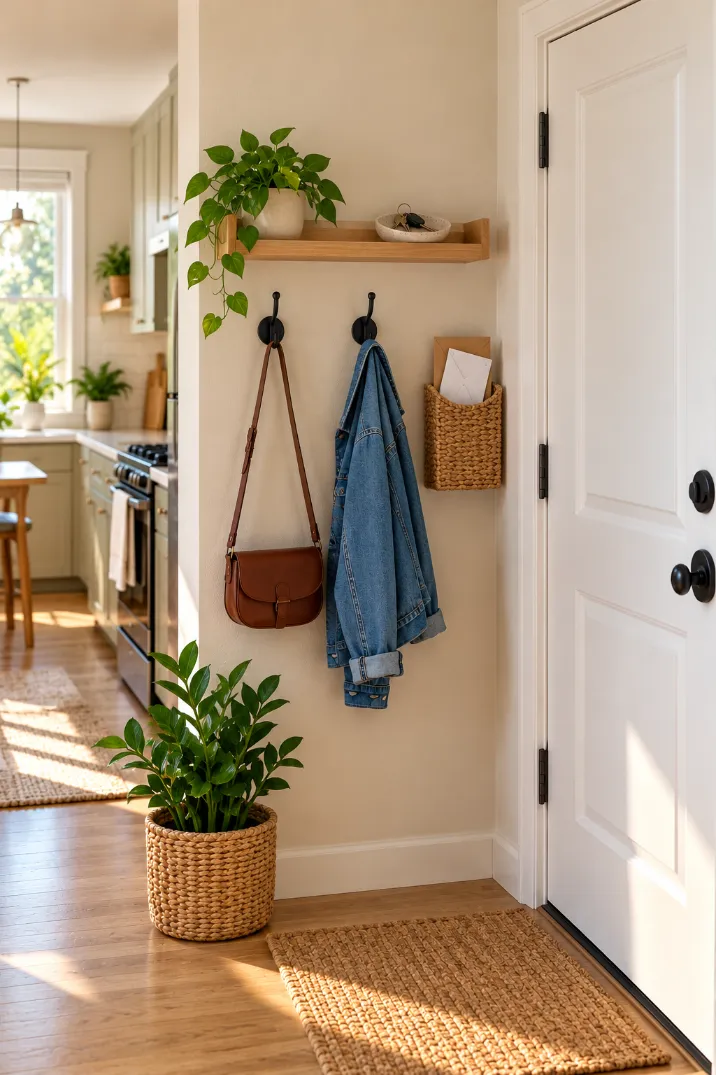
You walk in with keys, mail, a bag, and maybe dinner. Your hands need to empty somewhere, so they empty on the first flat surface they find.
In a small apartment, that’s usually the kitchen counter or the table. Now the place you cook or eat is holding yesterday’s receipts.
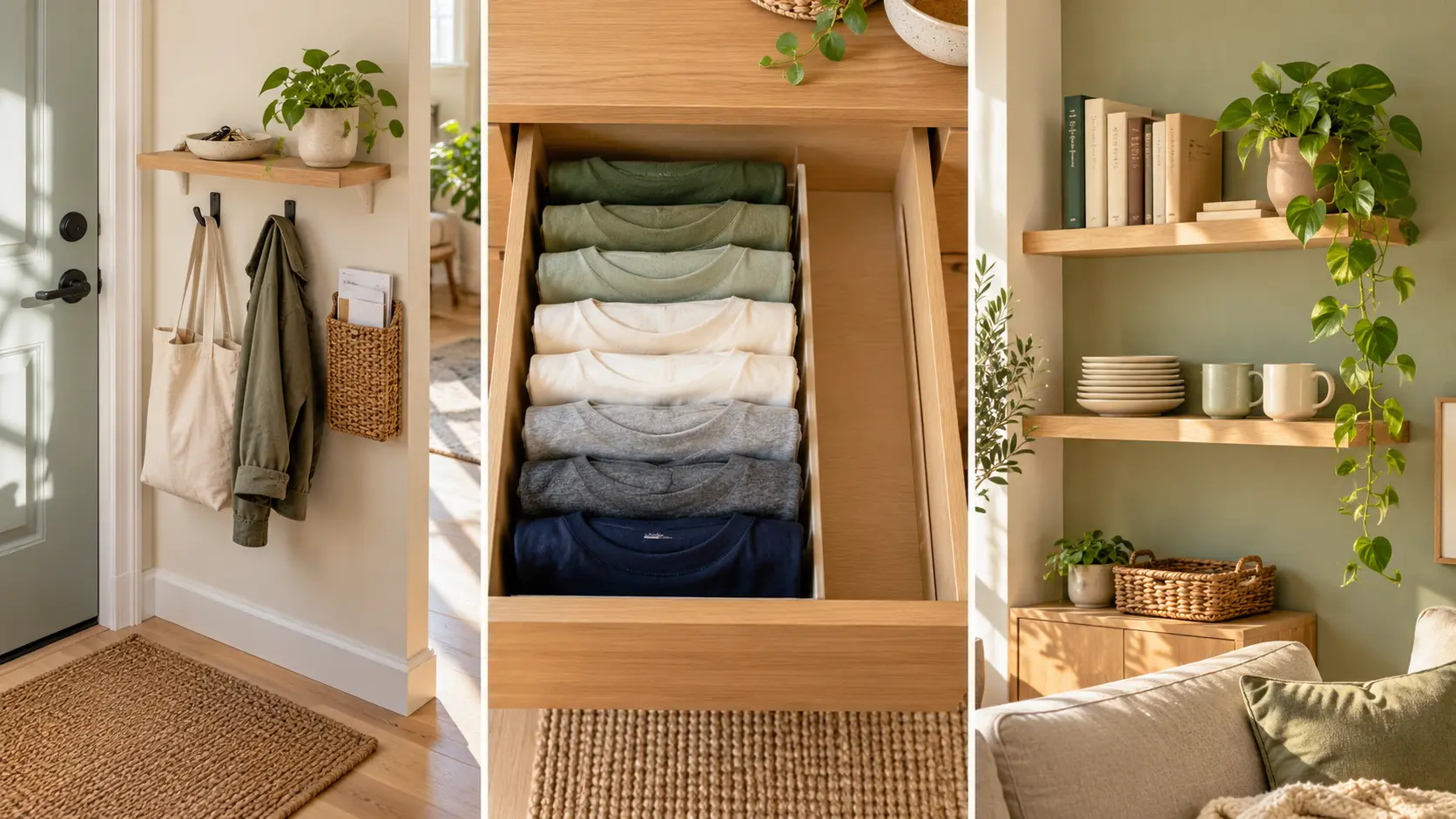
A landing spot fixes this, and it barely needs any room. Keys, mail, and your everyday bag each get one small, set place within a step of the door.
Keep it small on purpose. A big table by the door just becomes a bigger pile.
4. Storing Things Where They Should Go, Not Where You Use Them
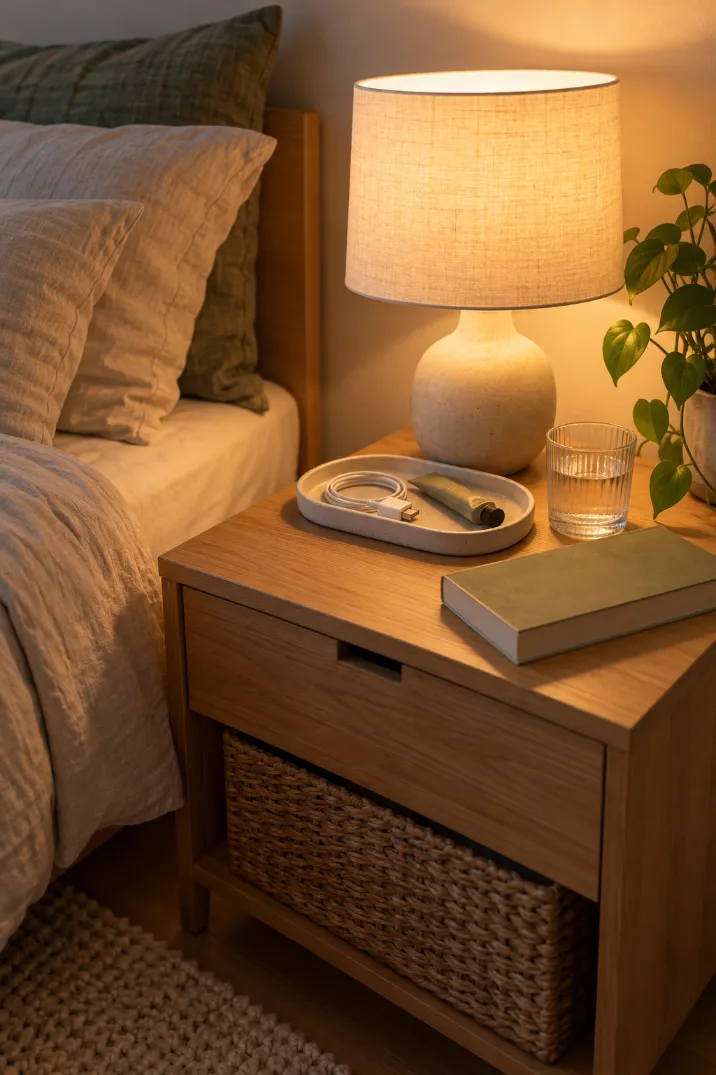
Some things never make it back to their proper home, and there’s usually a good reason.
The charger belongs in the desk drawer, but you charge your phone in bed. The lotion lives in the bathroom, but you put it on while watching TV. So both end up on the nightstand or the arm of the couch anyway.
Stop fighting it. Follow the trail instead. Notice where an item keeps ending up and store it there, or as close as you can. A small apartment actually makes this easier, since nothing is ever far away.
The simple version: daily things live close, rare things can live anywhere.
| Use it daily: keep it where you use it | Use it rarely: store it high or deep |
|---|---|
| Phone charger in a nightstand tray | Holiday decor on the top closet shelf |
| Hand cream in a basket by the couch | Spare sheets in an under bed bin |
| Tote bags on a hook by the door | Off season shoes at the back of the closet |
5. Packing Every Shelf and Drawer to the Edge
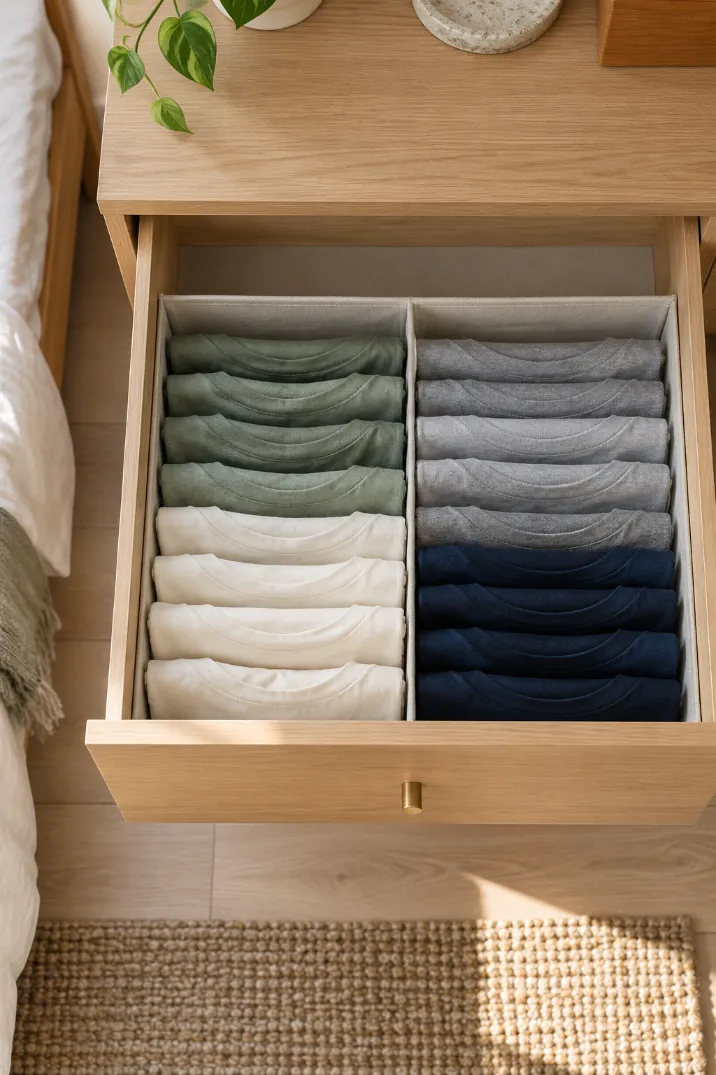
A drawer that only shuts after a shove is already telling you something.
Tight storage works against you in ways you can see. Pull out one shirt and two more come with it. Grab a pan from the bottom of the stack and the whole cabinet rattles. Putting things back takes effort, so things quietly stop going back.
Leave a little breathing room in every drawer and on every shelf. A gap lets you see what you own, grab one thing without moving three, and put it back fast.
When a space is full, treat it as a signal. Something goes out before anything new comes in.
Shirts stacked so tight that pulling one drags out the pile. You dig, give up, and wear whatever is on the chair.
Shirts folded and filed upright with a hand’s width of space left over. You see every one, and the drawer closes on the first push.
6. Hiding Everything in Lidded Bins With No Labels
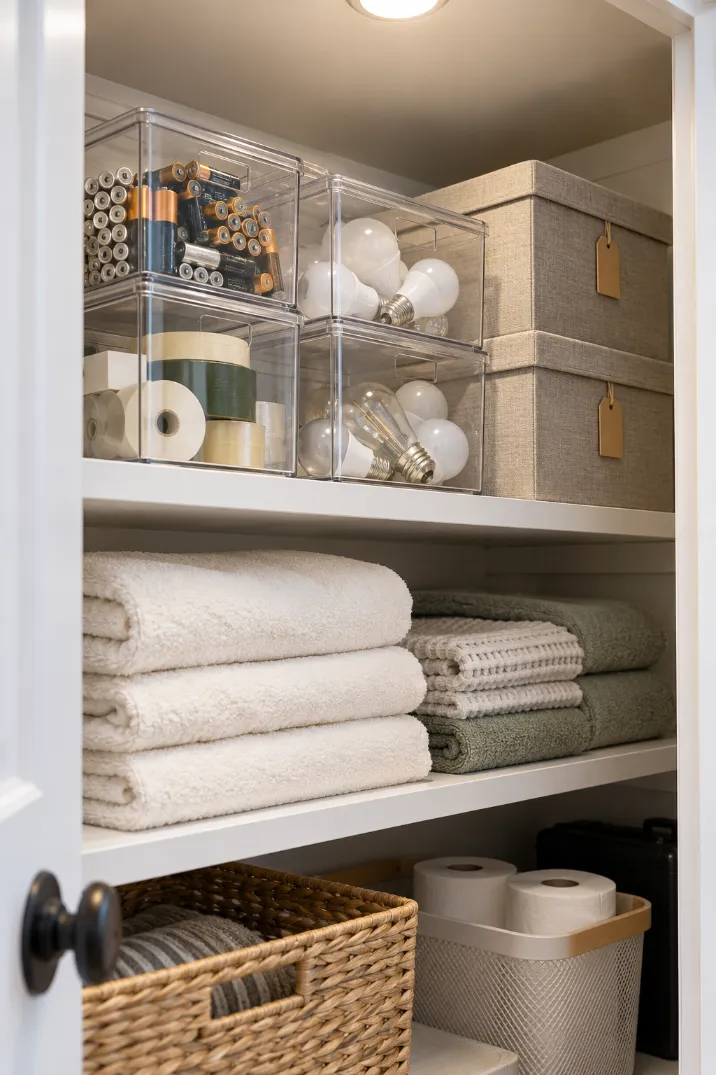
“Out of sight, out of mind” sounds like a good thing. In a small apartment, it’s how you end up buying a third roll of tape.
Solid bins with lids make a shelf look calm. The trouble starts when you can’t remember what’s inside. You open four bins to find the batteries, leave the lids off, and now the shelf looks worse than before you started.
A few easy fixes:
- Use clear or open bins for things you grab every week.
- Save lidded bins for things you rarely touch.
- Label every closed bin on the side that faces you.
Pretty boxes are fine. Mystery boxes are the problem.
💡 Quick Tip
Write what’s actually inside, not a category. “Batteries, tape, light bulbs” helps you far more than “Misc.” Use labels you can peel off and rewrite, so the label stays true when the contents change.
7. Letting Open Shelves Turn Into Overflow Storage
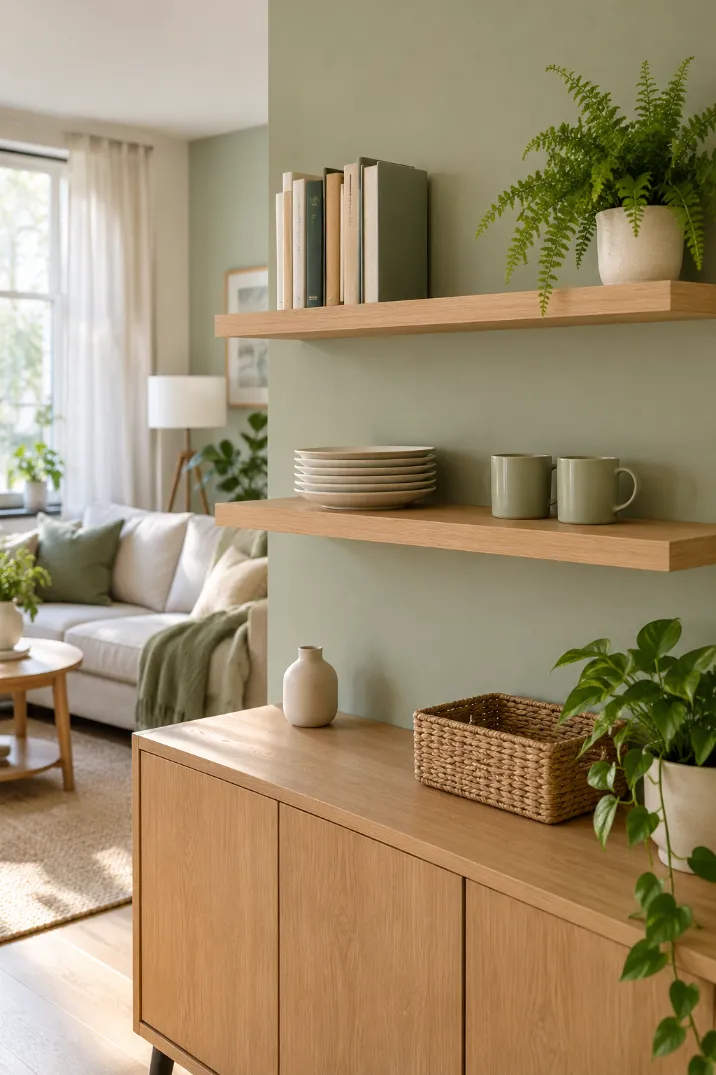
Open shelves can make a small room feel lighter. They can also become the place where everything without a home goes to wait.
It starts with a stack of mail and a charger. A month later the shelf holds a hair tie, two mugs, a plant that needs water, and a bag of loose screws. Because the shelf is open, all of it is on display.
Give each open shelf one job. One for books and a single plant. One for the dishes you use every day. Anything that doesn’t match that job moves to a closed spot.
A short weekly sweep keeps the strays from creeping back.
8. Keeping Duplicates and “Just in Case” Extras
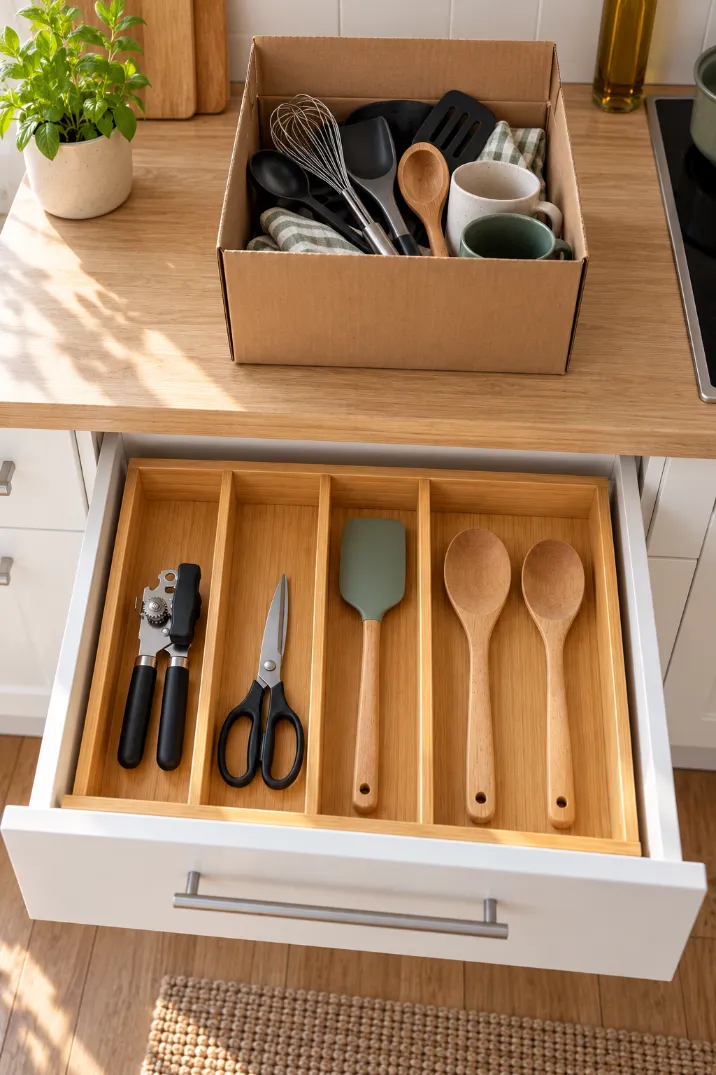
One good can opener earns its spot. Three can openers just make a drawer that sticks.
Doubles sneak in quietly. You move in with someone, get a gift, or buy a new one before the old one turns up. Each extra feels harmless, but in a small kitchen or closet, they take the space your real stuff needs.
Ask one question about each extra: when did I last need two of these at the same time? If you can’t remember, keep the best one and let the rest go.
Things you use up, like toothpaste or paper towels, are different. One backup is plenty.
Doubles worth checking first
9. Trying to Organize the Whole Apartment in One Weekend
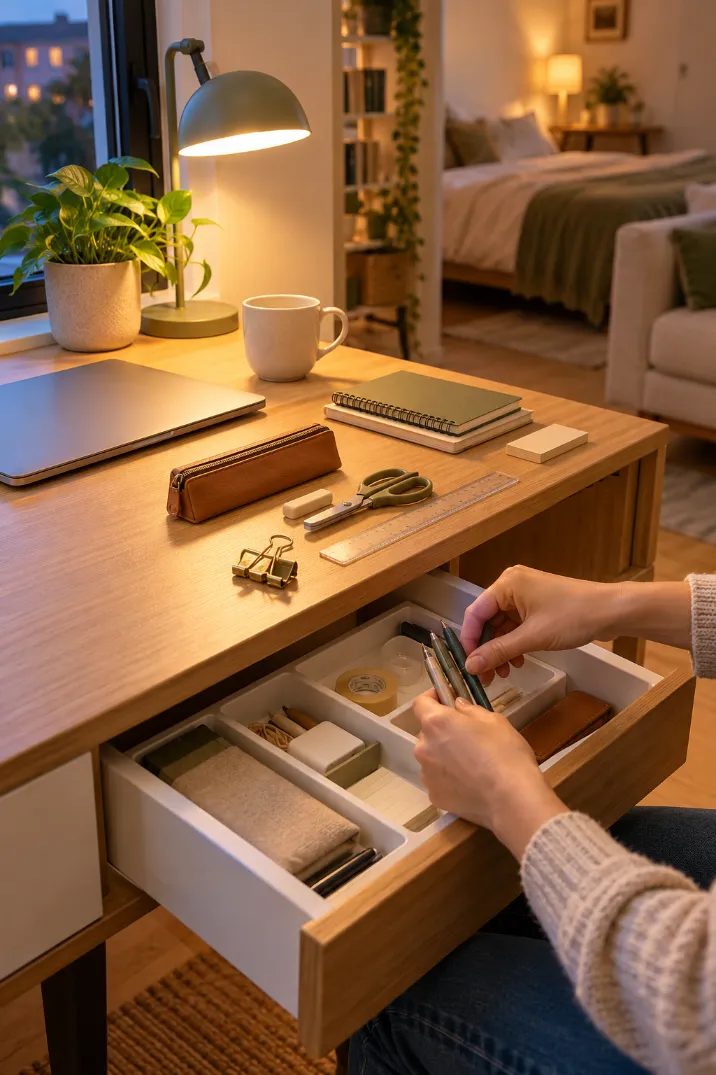
Pick one drawer tonight. Just one.
The big weekend makeover sounds efficient, but it usually goes the same way. Everything comes out at once, the bed disappears under piles, and by Sunday night half of it gets shoved back wherever it fits. Now the place is messier than when you started, and you’re tired of trying.
Small zones work better in a small home. Finish one spot fully before you open the next:
- one drawer, one shelf, or one corner at a time
- “done” means everything in it has a home
- stop while you still have some energy left
A few small wins each week add up faster than one exhausting weekend.
If you can’t finish a spot before bed, the spot is too big. Make the zone smaller, not the effort bigger.
A Calmer Apartment Starts Small
A messy small apartment rarely means you’re lazy or that you need more storage. Most of the time, a few organizing mistakes are making tidy harder than it has to be. Too many steps, drawers packed too tight, and things stored far from where you actually use them.
You don’t have to fix all nine this week. Pick the one that sounds most like your place, maybe the counter by the door or the drawer that won’t close, and start there. Once one spot gets easier, the next one feels less like a chore.
Save this list for the next time your apartment starts feeling crowded again.