
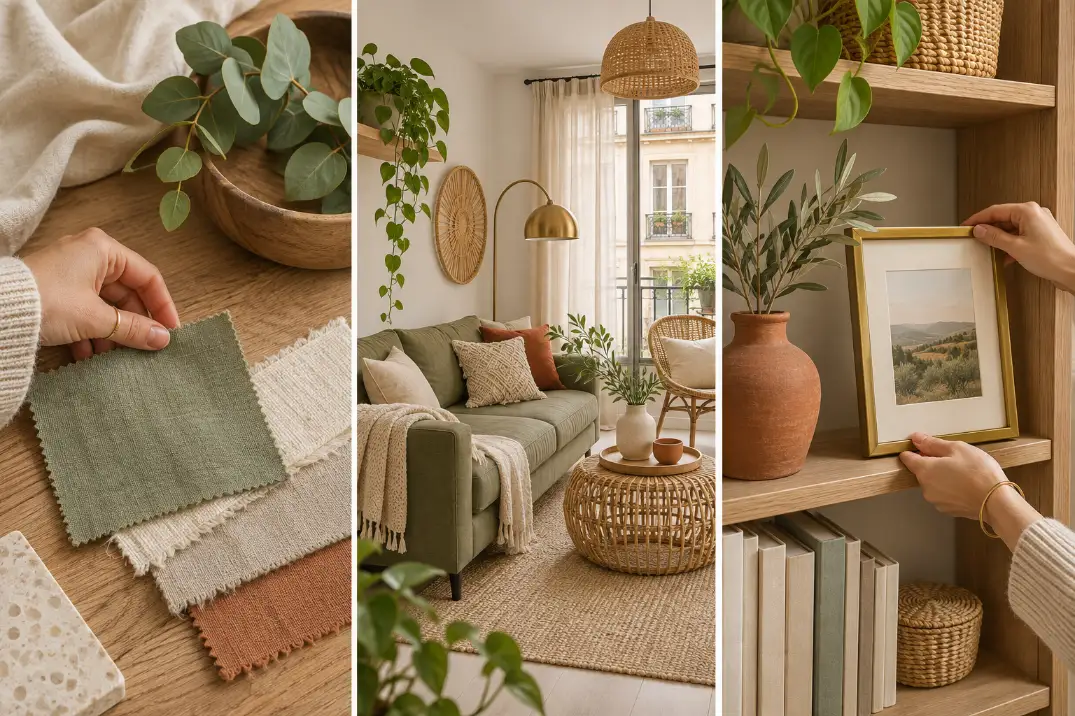
You love the clean lines of modern decor. You also love boho baskets, plants, and woven textures. So you bought a little of both, and now your small apartment looks like two roommates who never talked to each other. I have been there. My first apartment had a sleek black coffee table sitting under a macramé wall hanging, and the whole room felt confused.
Learning how to mix decor styles fixed that room for me, and it can fix yours too. By the end of this guide, you will have one living space that blends two styles into a look that feels planned, not random. You will pick a lead style, find what your two styles have in common, and tie them together with color, materials, and fabric.
This method works because it gives your eye a pattern to follow. When the same colors and finishes show up around the room, different pieces start to look like they belong together. Small spaces need this even more than big ones, because you see the whole room at once.
Plan on one weekend. Most of the work is moving things around and editing, not buying new furniture. Grab your phone and a notebook, and let’s get started.
- Phone with a camera
- Tape measure
- Notebook and pen
- Paint chips or color swatches (free at hardware stores)
- Painter’s tape
- A Pinterest board for each style
- Your current furniture and decor
- A box or bag for pieces you remove
- Optional: 1 rug, 2 to 4 pillow covers, 1 throw blanket
- Name each style in three words
- Split the room 70/30 between styles
- List what your styles share
- Choose a neutral base color
- Pick two shared accent colors
- Anchor the room with one big lead piece
- Repeat one wood tone or metal finish
- Add accent pieces in groups of three
- Bridge styles with rug, pillows, and throws
- Clear out what fits neither style
- Photograph the room and adjust
1. Name each style in three describing words
Labels like “boho” or “modern” are too loose to decorate with. Two people can picture two very different rooms. Open your Pinterest board for each style and look at what repeats in the pins you saved. Write down three words for each style that describe things you can see or touch. For modern, that might be black metal, flat fronts, and open space. For boho, it could be rattan, plants, and mixed patterns. Keep this list close. Every step after this one checks back against these six words.
2. Decide how to mix decor styles with a 70/30 split
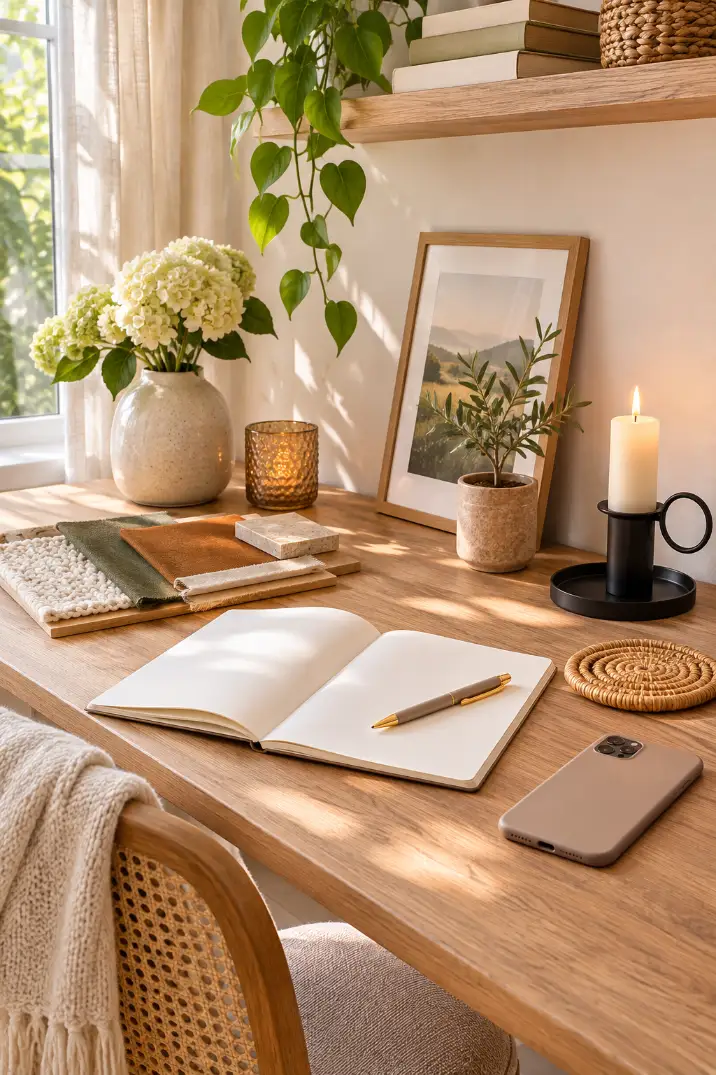
One style needs to lead. Give it about 70 percent of the room and the other style about 30 percent. When both styles get equal space, the room looks like it can’t make up its mind. Choose the style that matches your biggest furniture, like your sofa or bed, as the lead. Those pieces cost the most to replace.
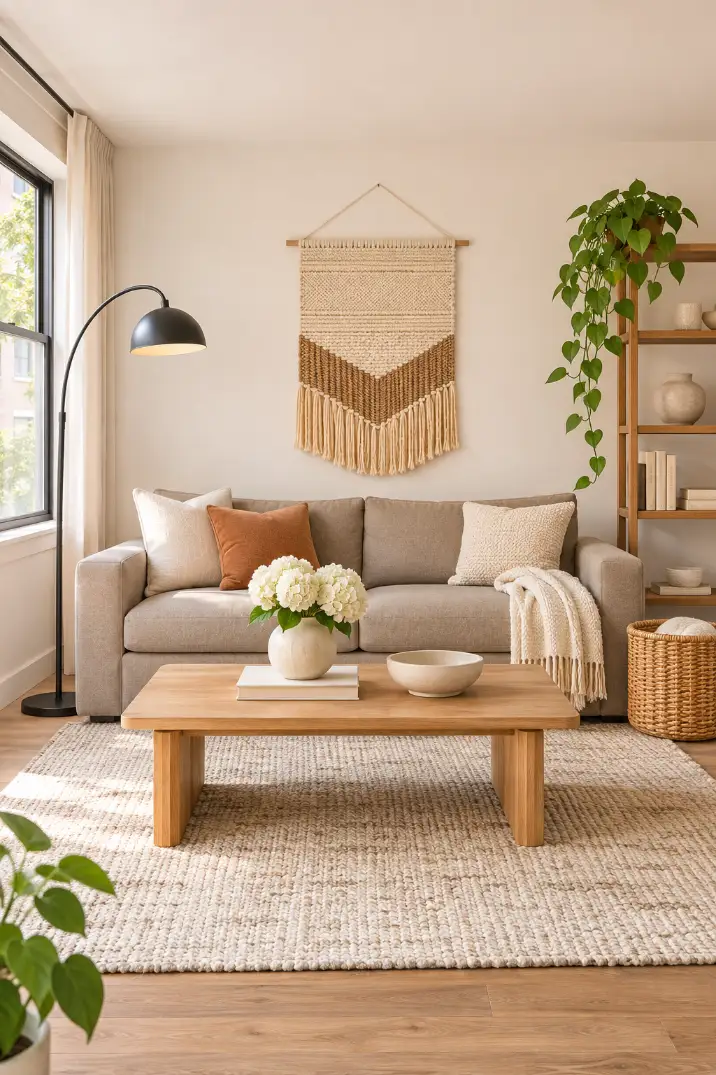
Count your decor pieces. In a room with 10 items, about 7 should come from your lead style and 3 from your accent style. It does not need to be exact, but counting keeps the balance from drifting.
3. List the features your two styles share
Even styles that seem like opposites usually share two or three things. Those shared features are the glue that holds the room together. Set your two word lists side by side and look for overlap in:
- Color (white, black, beige, or wood tones)
- Material (wood, linen, cotton, metal)
- Shape (rounded edges, straight lines, low furniture)
- Mood (calm, cozy, bright)
Circle every match. Modern and boho, for example, both love neutral walls and natural light. If you find zero matches, look again at wood. Almost every style uses some.
4. Choose a neutral base color for walls and big pieces
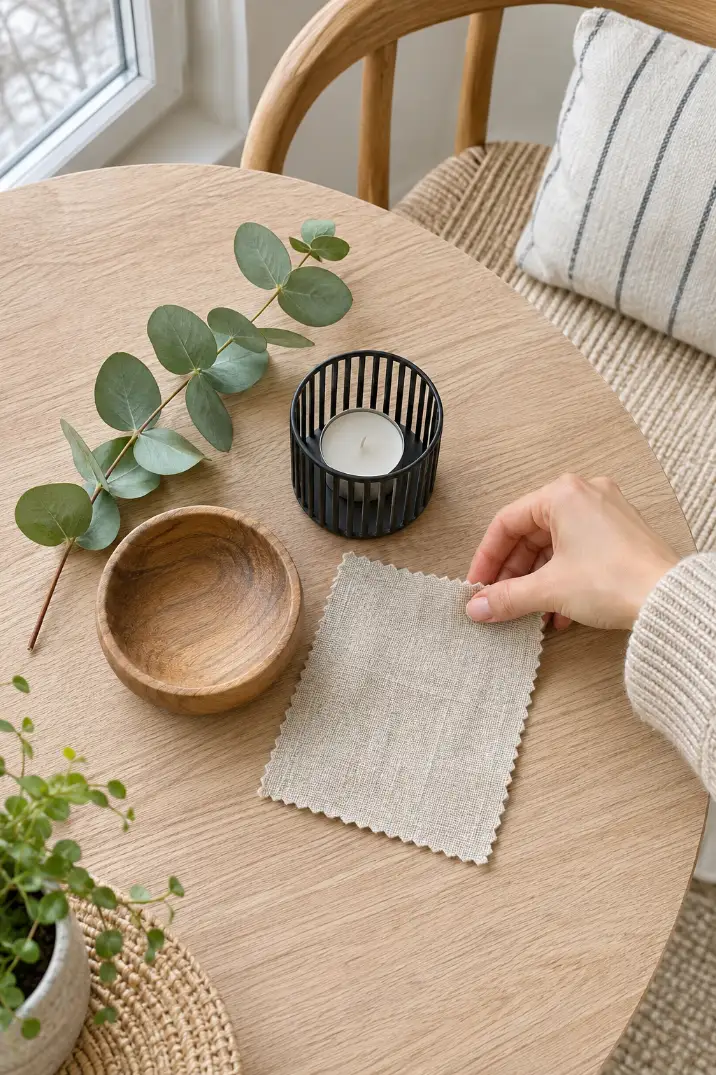
If your walls are rental white, you might already have your base. The base is the color you see most: walls, sofa, curtains, and large rug. Pick one neutral from your overlap list, like warm white, soft beige, or light greige. Tape 3 or 4 paint chips to the wall with painter’s tape and look at them in morning light and again at night. A calm base lets both styles stand out without fighting each other. Can’t paint? Use curtains, a sofa slipcover, or a large rug in your chosen neutral instead.
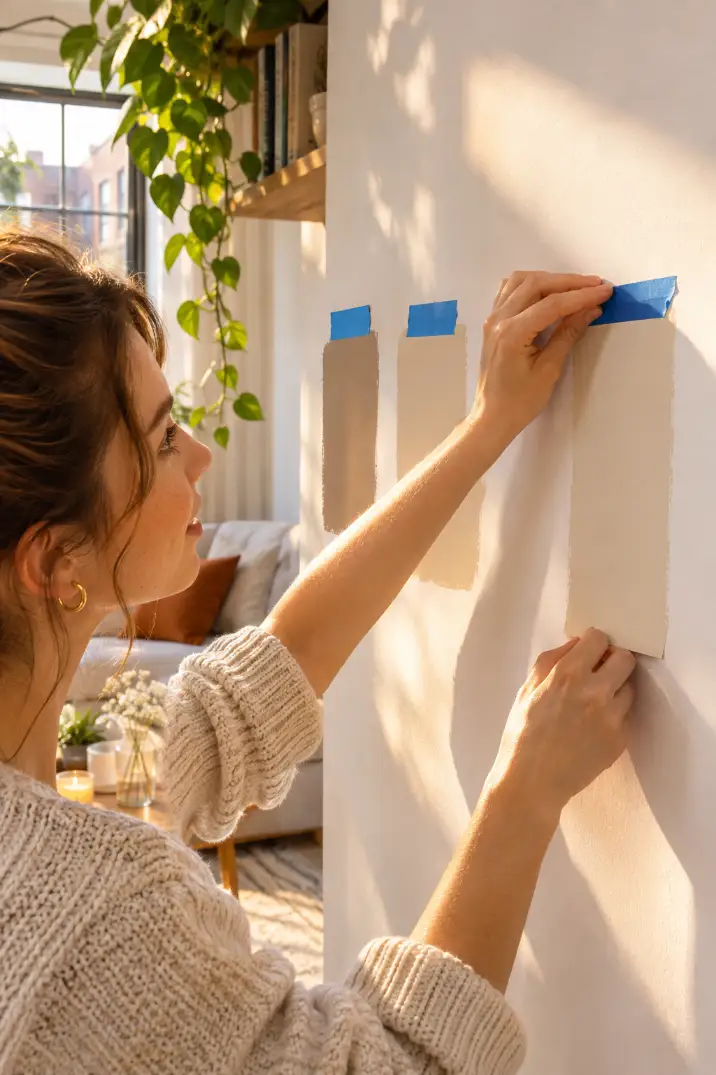
5. Pick two accent colors that work in both styles
Two accent colors are plenty for a small room. More than that and the space starts to feel busy. Choose colors that show up in both of your Pinterest boards. Modern and boho often share terracotta and black. Scandinavian and farmhouse both work with sage green and matte black. These colors will repeat around the room later, which is what links your two styles together.
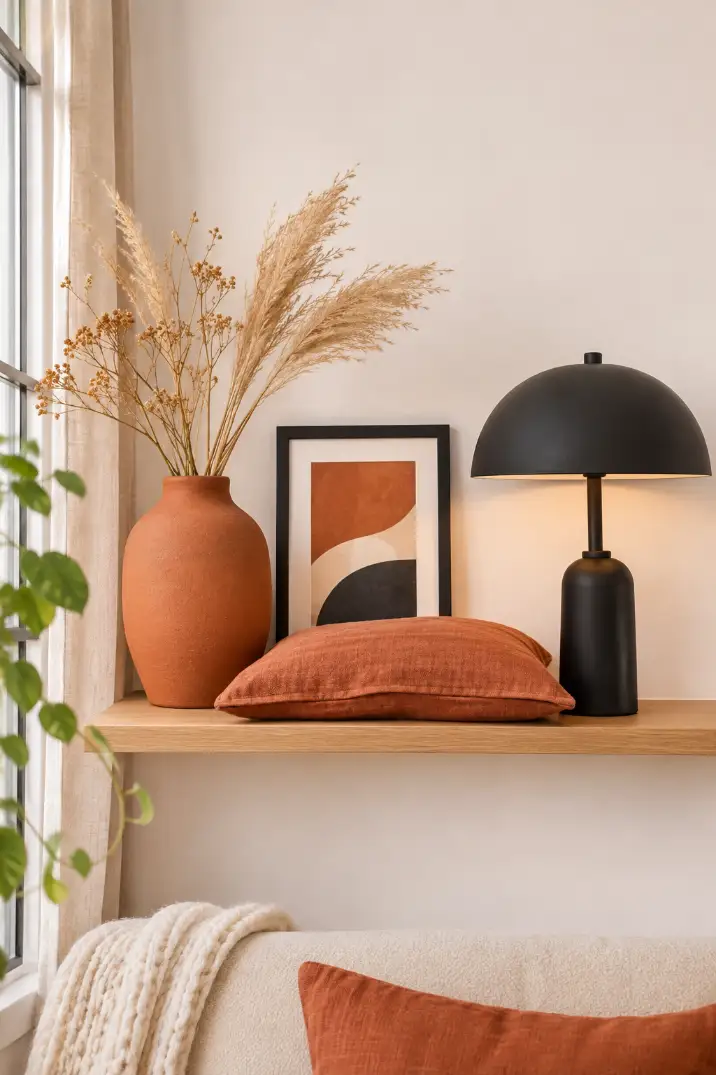
6. Anchor the room with one large piece from your lead style
Your eye lands on the biggest thing in a room first. That piece tells everyone which style is in charge. In a living room, it is usually the sofa. In a studio, it might be the bed or a 5×7 rug. Make sure your anchor clearly belongs to your lead style. A low, clean-lined sofa says modern. A wood dining table with turned legs says farmhouse. Everything else in the room builds around this one piece.
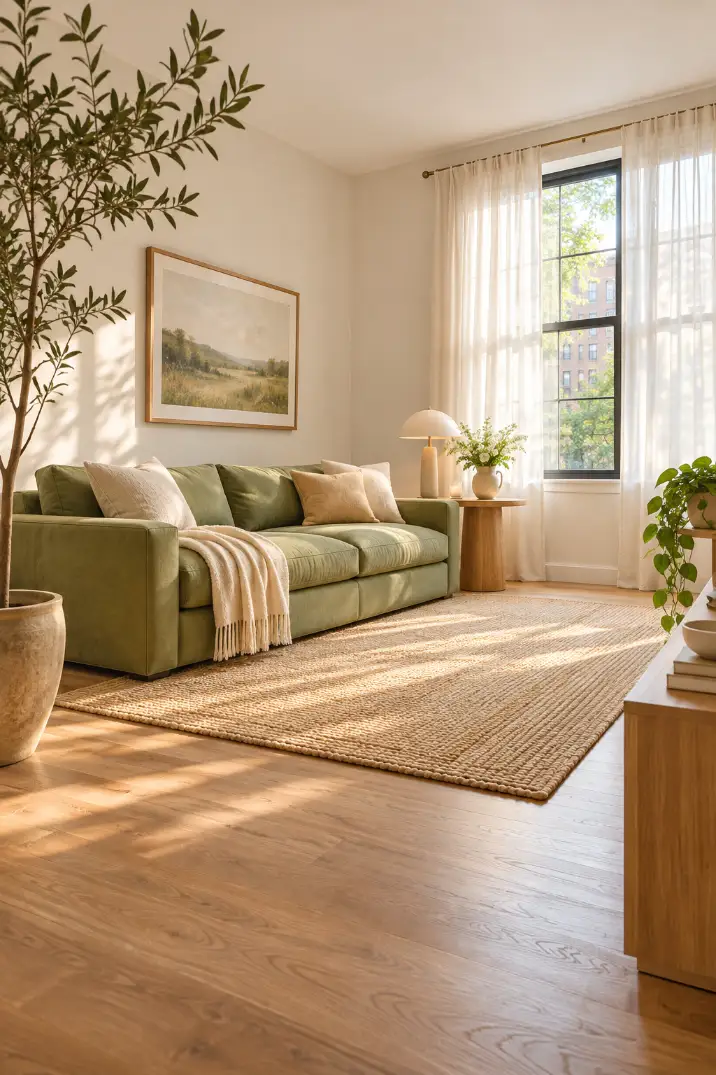
Measure before you buy a new anchor piece. Leave at least 30 inches of walking space around it. An oversized sofa can make a small apartment feel cramped, no matter how good the style mix looks.
7. Repeat one wood tone or metal finish across the room
A brass lamp, brass frames, and brass drawer pulls can link a modern shelf to a boho side table without anyone noticing why. That is the job of a repeated finish. Pick one, like light oak, walnut, black metal, or brass. Place it in at least 3 spots around the room, spread out so your eye travels in a triangle. Renting? Swap cabinet knobs for ones in your finish, and keep the originals in a labeled bag for move-out day.
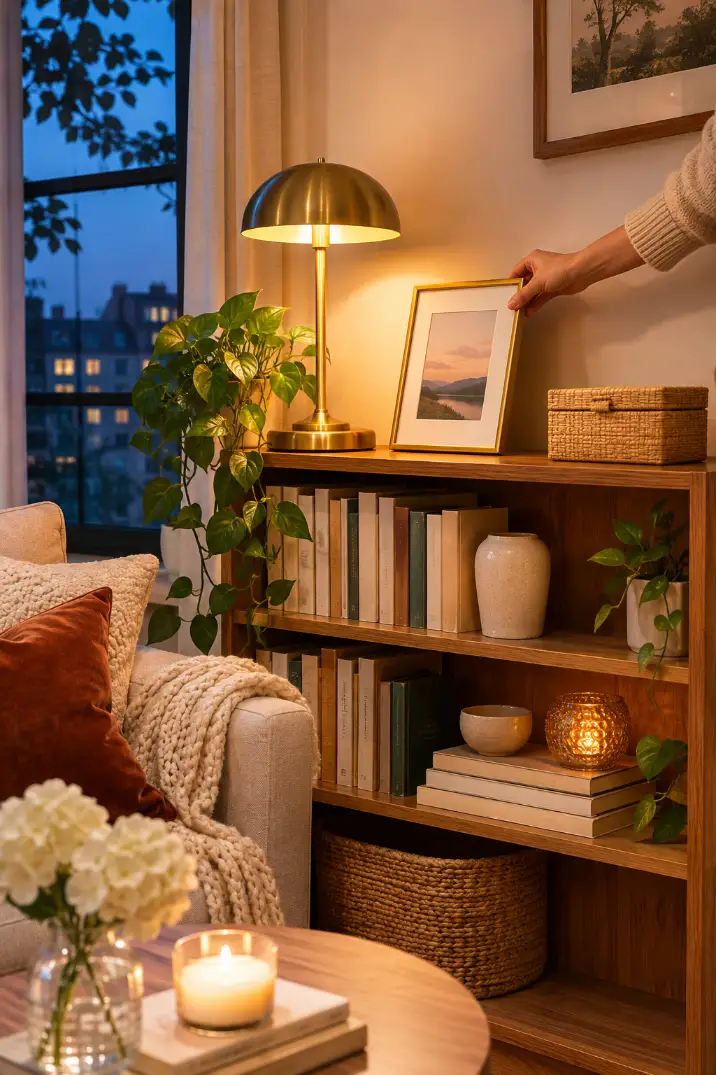
8. Add accent-style pieces in groups of three
One rattan basket in a modern room looks like an accident. Three rattan pieces look like a choice. Pick 3 items from your accent style and place them at different heights so they spread across the room:
- One high, like wall art or a hanging plant
- One middle, like a table lamp or vase
- One low, like a floor basket or pouf
Keep them in different parts of the room, not grouped on one shelf. Spreading them out makes your accent style feel woven in, not stuck in a corner.
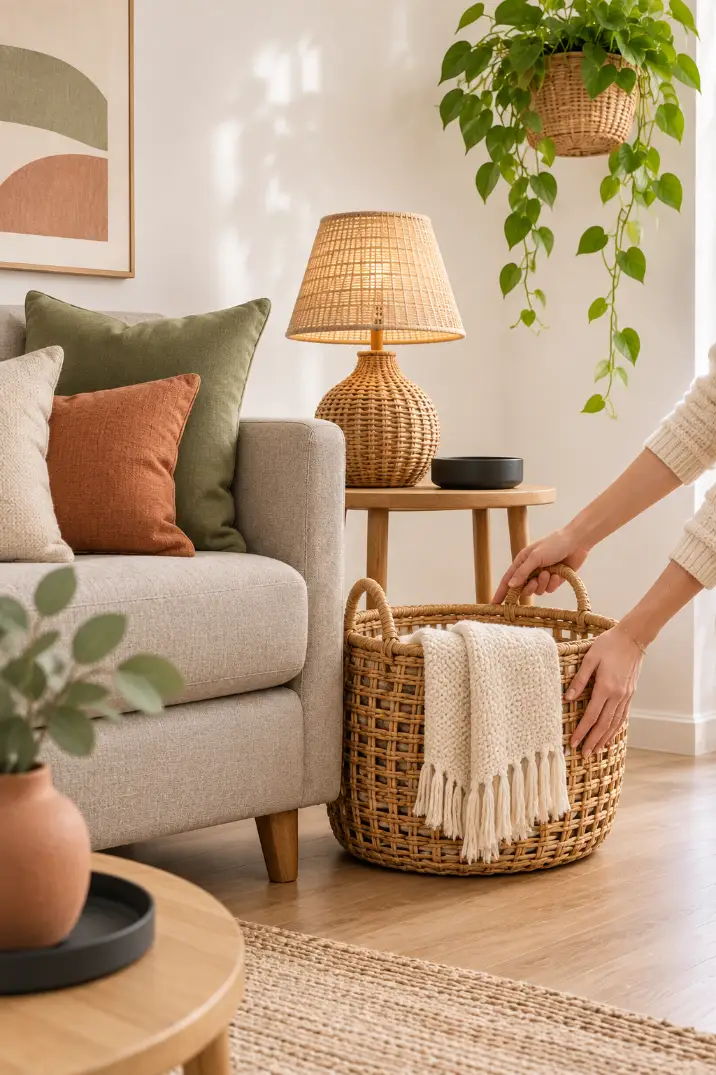
9. Bridge the two styles with a rug, pillows, and throws
Fabric is the cheapest place to blend two styles. Look for textiles that carry a little of each: a jute rug with a clean border, or pillow covers in your accent colors with a woven texture. Mix 2 to 4 pillows with one throw on the sofa.
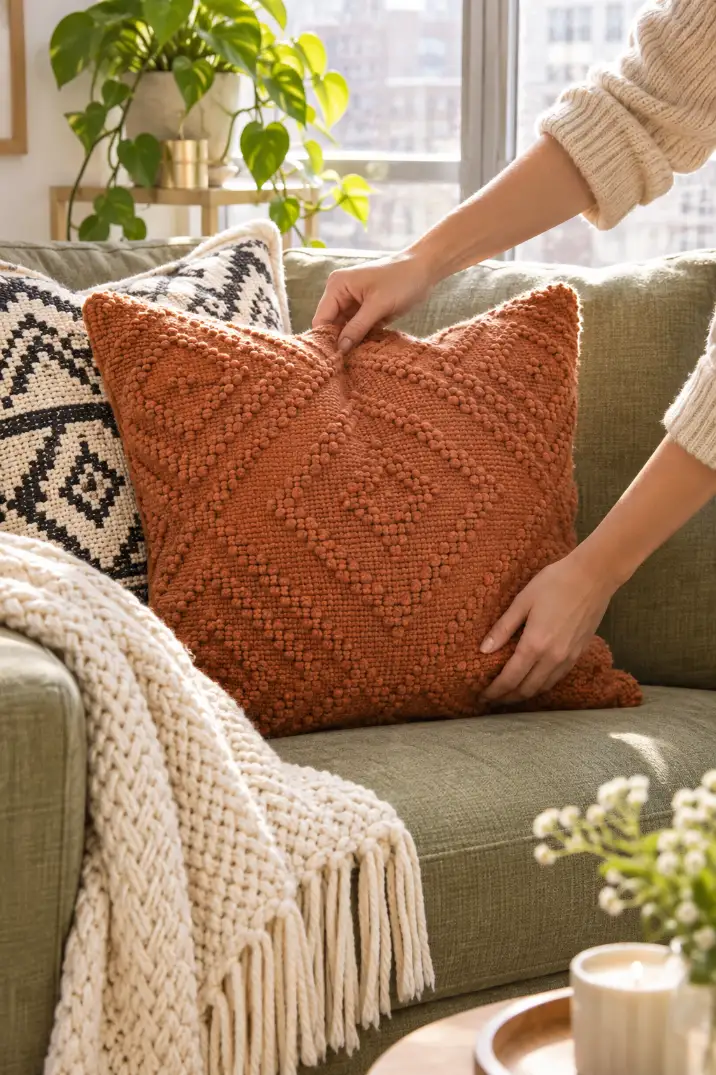
Buy pillow covers instead of full pillows. Keep the same inserts and swap the covers each season. You can test a new color mix for a fraction of the cost, and the old covers fold flat for storage.
10. Clear out anything that fits neither style
Walk the room with your six-word list from Step 1 in hand. Pick up each decor item one at a time. If it matches none of your six words, your accent colors, or your repeated finish, it goes in the box. Small spaces have nowhere to hide off-theme pieces, and every extra item makes your style mix look more like clutter. Expect to remove 5 to 10 items from an average living room.
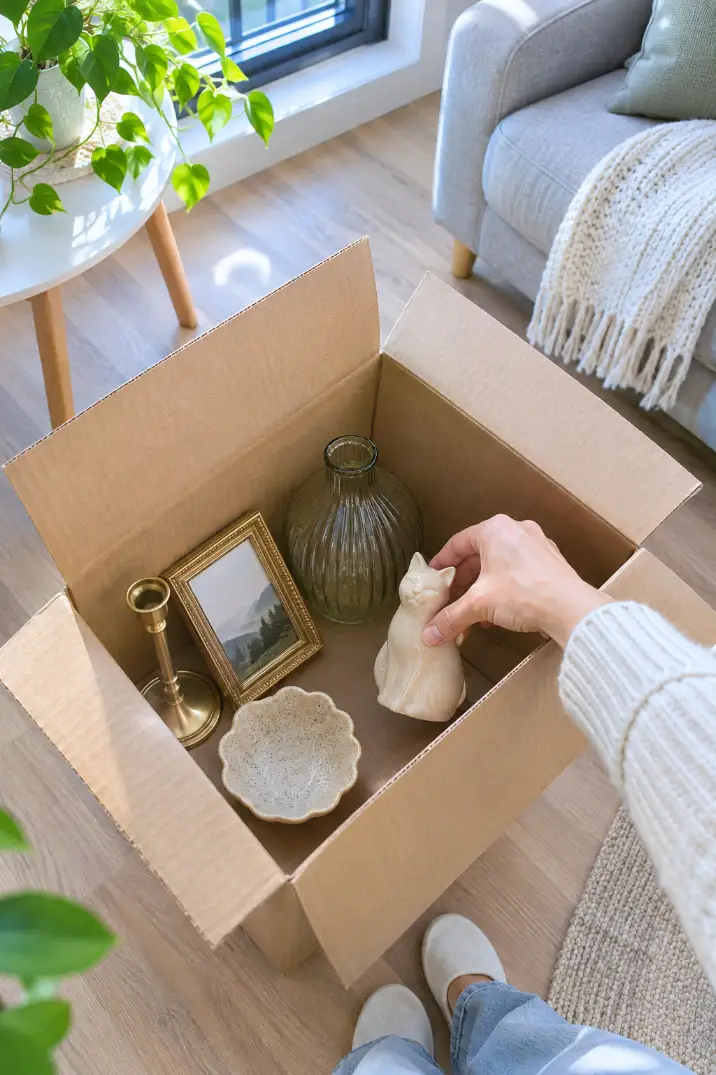
Don’t donate the box right away. Keep it in a closet for 1 week. If you miss something, bring it back. Sentimental pieces can stay too, but move them to a bedroom shelf or a drawer where they don’t compete with the main room.
11. Photograph the room and fix what looks off
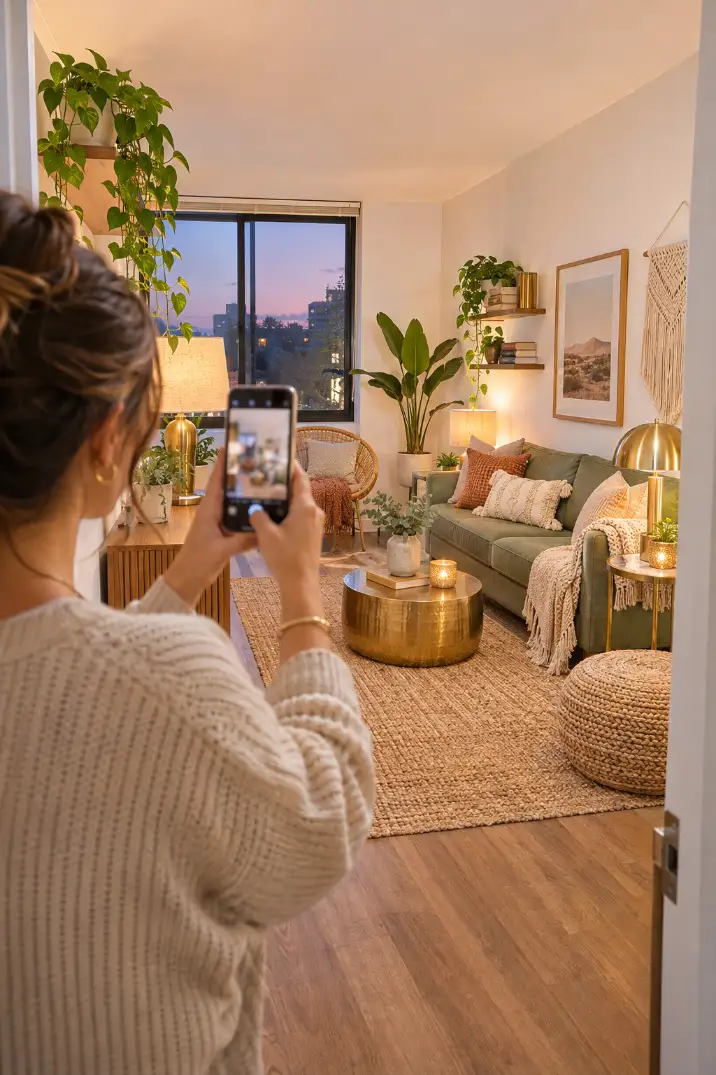
Stand in the doorway, where guests first see the room, and take a photo. A phone camera shows problems your eyes skip over in person. Check three things: Does your lead style win at a glance? Are your accent pieces spread out? Does any color appear only once? Fix one thing, then take another photo. For a quick balance check, switch the photo to black and white. If all the dark pieces sit on one side, move one across the room.
You can, but it is much harder in a small space. If you love a third style, limit it to one category, like wall art, so it adds interest without crowding the room.
Pairs that already share colors or materials blend the fastest. Modern and boho, Scandinavian and farmhouse, and mid-century and industrial are all good places to start.
Usually not. Most of this method uses what you already own. If you buy anything, start with pillow covers, a throw, or a rug before replacing furniture.
Focus on things you can take with you: textiles, lamps, art, plants, and swapped cabinet knobs. Leave walls and fixtures as they are.
Use this same method together. Each person writes their three words, then you agree on which style leads. Some couples let one style lead the living room and the other lead the bedroom.
- Two styles fighting for attention
- Colors that show up at random
- Accent pieces stuck in one corner
- Too many small items on every surface
- A room that feels like two apartments
- One style clearly leads at about 70%
- A neutral base with 2 repeating accent colors
- One finish repeated in 3 or more spots
- Accent pieces spread at different heights
- Clear surfaces and room to breathe
- Phone camera
- Tape measure
- Notebook and pen
- Paint chips
- Painter’s tape
- A Pinterest board per style
- A box for removed items
- Describe each style in 3 words
- Split the room 70/30
- Circle what both styles share
- Pick one neutral base color
- Pick 2 shared accent colors
- Anchor with 1 big lead piece
- Repeat 1 finish in 3+ spots
- Add accent pieces in threes
- Blend with rug, pillows, throw
- Box anything that fits neither
- Photograph, check, adjust
Bring It All Together
You did it. Your apartment now has one clear lead style, a calm base, and small repeats that tie every piece together.
Now that you know how to mix decor styles, try the same steps in your bedroom or entryway next. It goes faster the second time.
Save this pin to your apartment decor board so the steps are ready for your next room.