
Most people can’t name their decorating style, and that’s fine. The trouble starts when you go shopping.
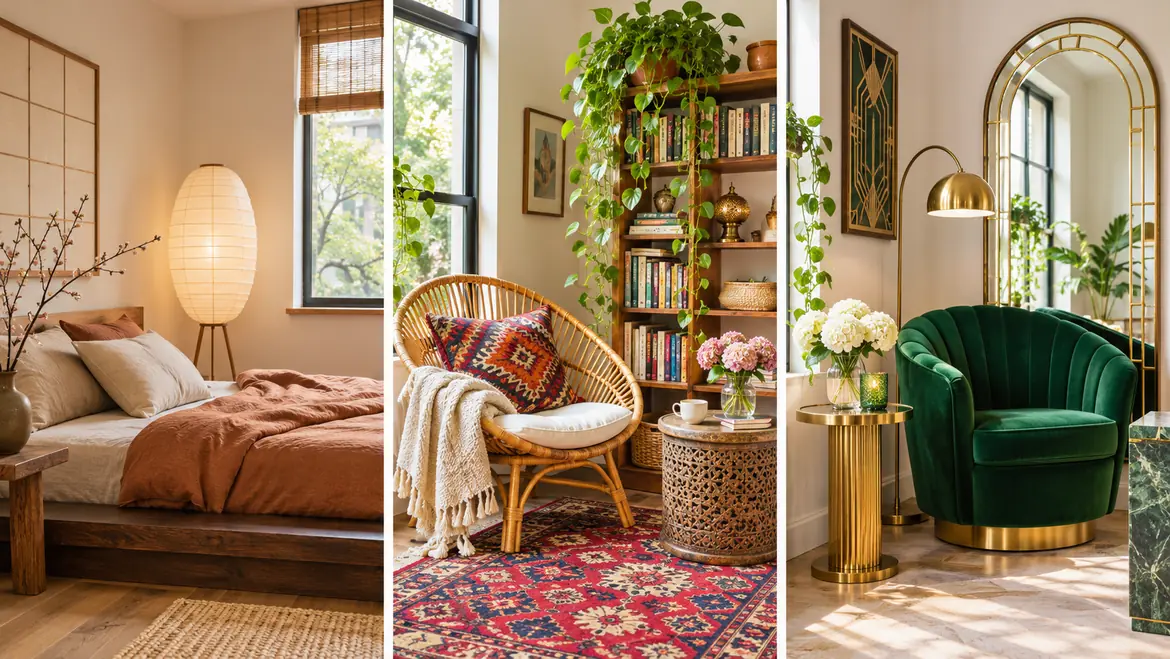
You have a Pinterest board full of rooms you love. One has a low wood bed and a paper lantern. Another has a green velvet sofa and a gold mirror. A third is all white walls and woven baskets. You buy a piece from each, bring them home to a one bedroom, and the room feels like three people decorated it without ever talking to each other.
Knowing the names helps more than you’d think. Once you can look at a photo and say “that’s Japandi” or “that’s mid century,” you know what to search for, what to skip, and which pieces will actually get along.
This is decorating styles explained the simple way. For each of the 10 styles below, you’ll get the details that give it away, plus a few ways to pull it off in a rental. No new floors, no paint you’ll regret, and no big budget needed.
1. Scandinavian: Light Wood, White Walls, and Furniture That Lets the Floor Show
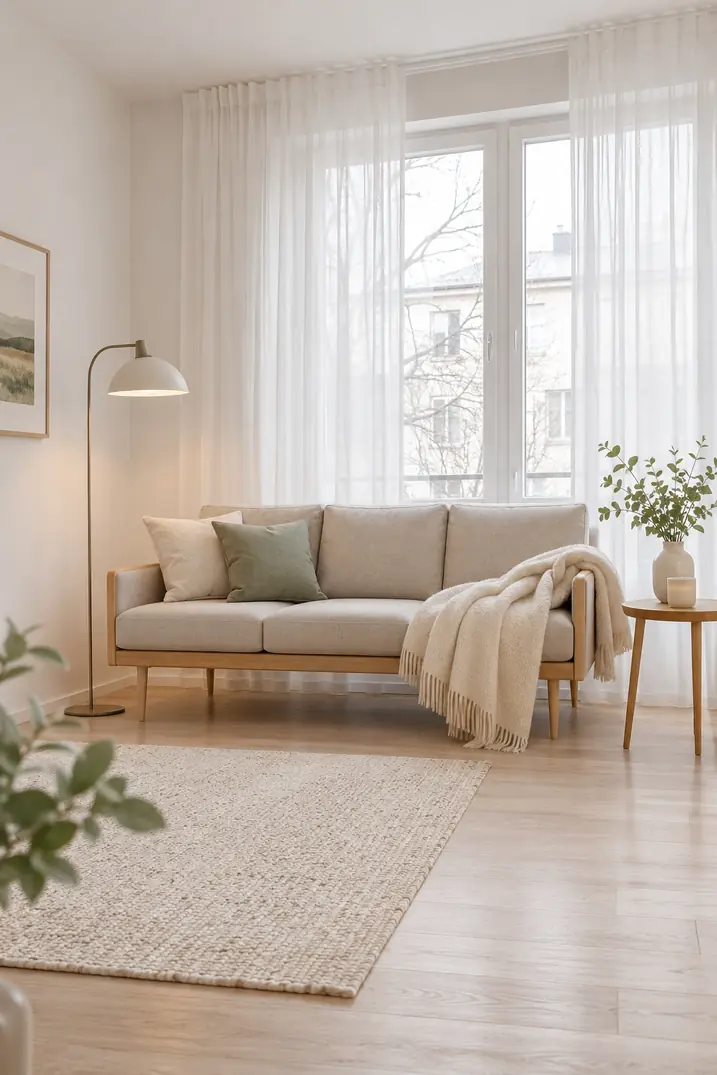
Pale floors, white walls, a light wood chair, and a lot of open floor. That’s the look.
Scandinavian style grew up in places with long, dark winters, so everything is meant to bounce light around. Rooms feel clean but never cold, because the warmth comes from wood grain and soft wool instead of strong color.
In a small apartment, a few moves do most of the work:
- Pick furniture on legs so you can see the floor under it.
- Swap heavy curtains for sheer white ones.
- Give each seat one cozy texture, like a wool throw or a sheepskin.
The style can’t handle clutter on every surface, so give your mail and keys a home before you buy a single new piece.
Scandinavian at a glance
2. Japandi: Where Scandinavian Calm Meets Low, Grounded Japanese Pieces
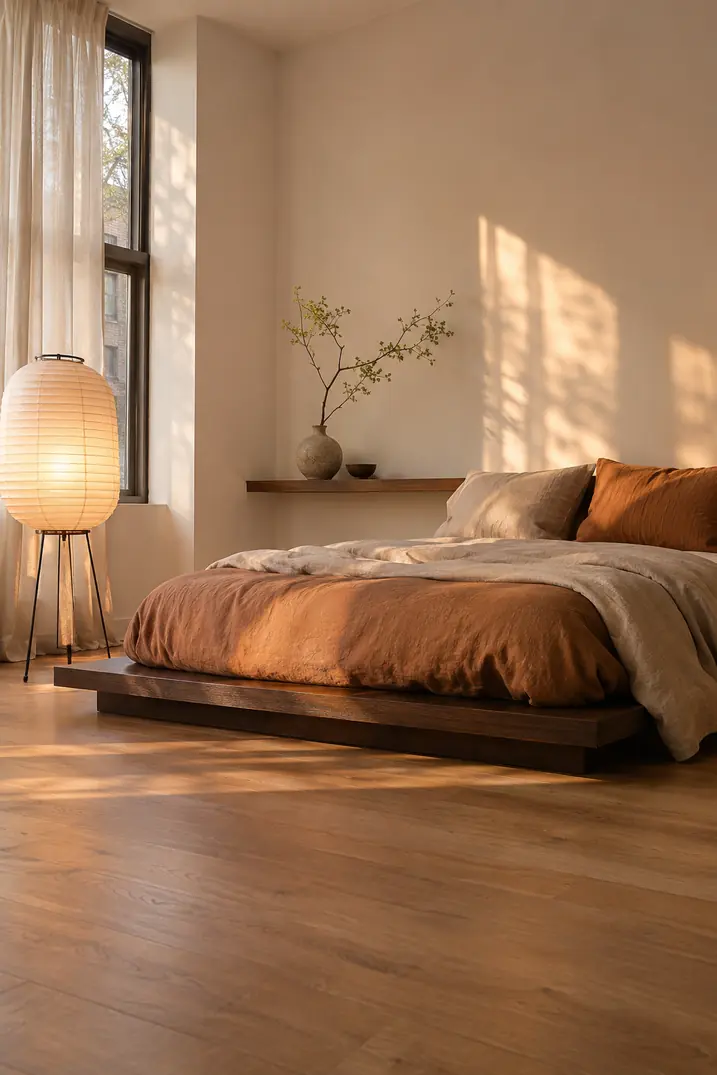
Japandi and Scandinavian get mixed up all the time, and the difference mostly comes down to height and tone.
Japandi blends Scandinavian comfort with Japanese restraint. Furniture sits lower, wood runs darker, and colors lean toward clay, stone, and charcoal. Empty space is part of the design. A shelf might hold one ceramic bowl and a single branch in a vase, and that’s the whole display.
In a small room, a low platform bed or floor level sofa makes the ceiling feel higher, which helps a lot in a cramped rental.
Watch the cushions, though. Low seating with thin cushions looks great in photos and starts to hurt after an hour.
| Detail | Japandi | Scandinavian |
|---|---|---|
| Wood | Darker oak and walnut | Pale birch and ash |
| Height | Low to the floor | Standard height |
| Colors | Clay, stone, charcoal | White, light grey, soft pastels |
| Decor | Very few pieces | Cozy layers and candles |
| Feels | Quiet and grounded | Bright and snug |
3. Mid Century Modern: Tapered Legs, Warm Walnut, and Curves You Can Spot Across a Room
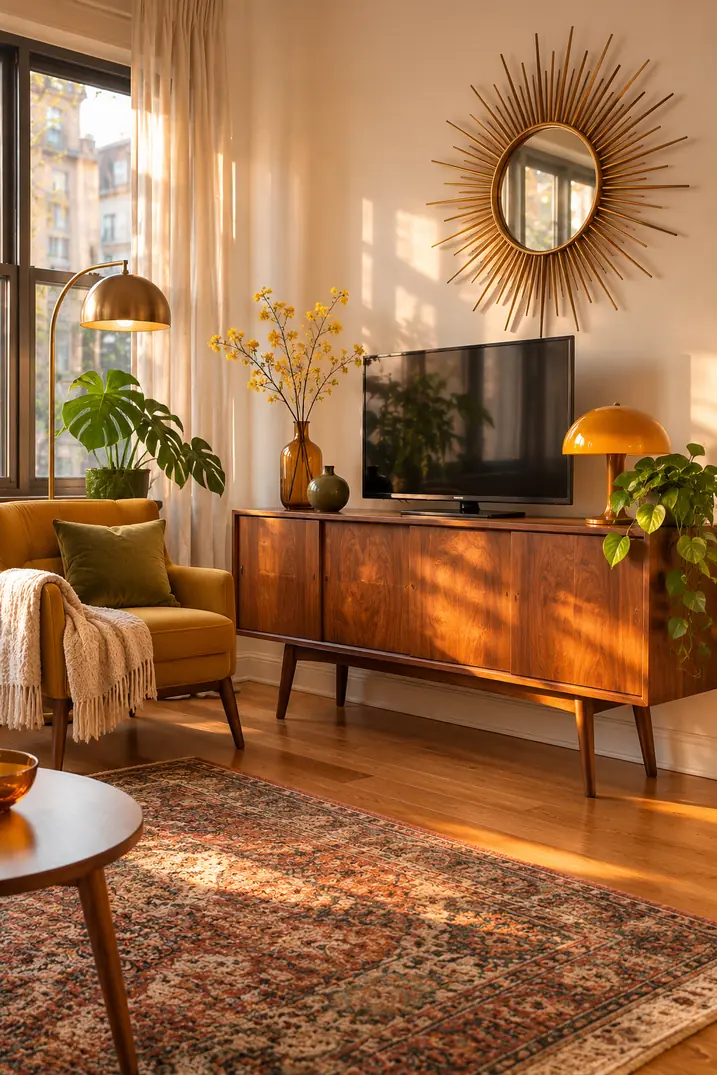
If the legs are skinny, angled, and wooden, you’re probably looking at mid century modern.
The style comes from roughly the 1940s through the 1960s. It pairs warm walnut or teak with clean shapes and a few bold colors like mustard, olive, and burnt orange. Picture a low credenza, a rounded lounge chair, and a sunburst mirror.
A few ways to bring it home:
- Use a credenza as your TV stand and storage in one piece.
- Screw replacement tapered legs onto a plain dresser or sofa.
- Keep pattern to one rug or one set of pillows.
Thrift stores and resale apps are full of real pieces from that era. Before you pay, check that the drawers slide smoothly and look at the back for solid wood.
4. Bohemian: Layered Textiles and Plants Without the Cluttered Dorm Look
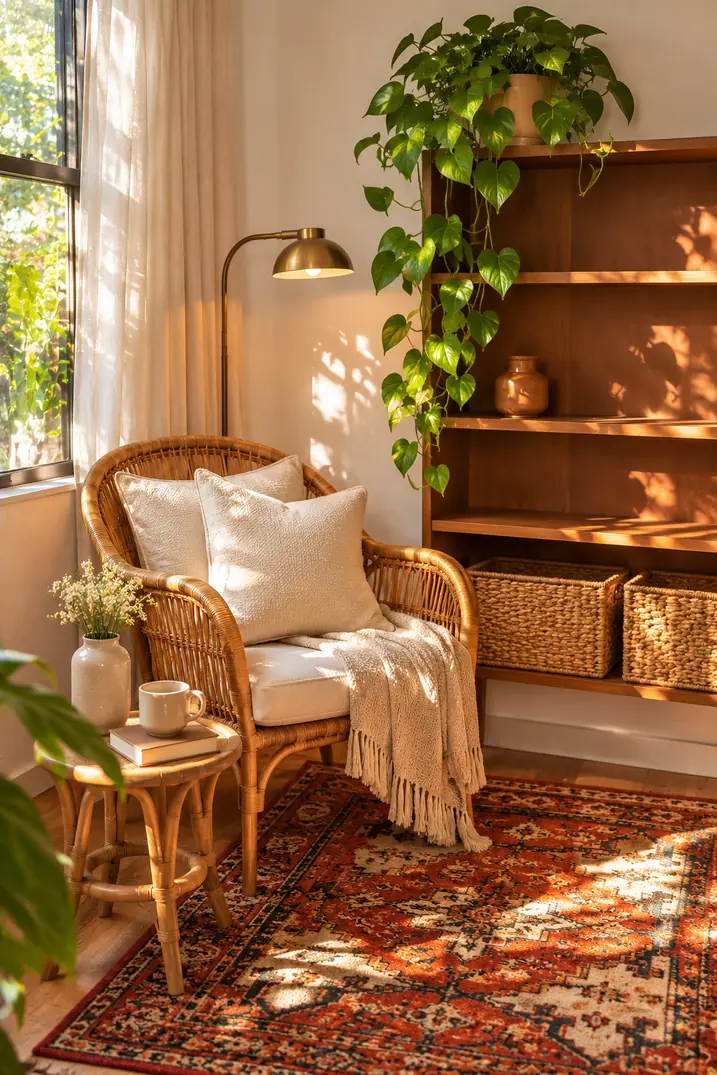
The usual boho mistake is buying everything with fringe at once.
Bohemian style is relaxed and well traveled. It layers patterned rugs, woven baskets, rattan, macramé, and lots of plants, in colors like rust, mustard, and deep green. In a big loft with high ceilings, all that layering has room to breathe. In a studio, it turns into visual noise fast.
The fix is deciding where the pattern lives before you shop.
Plants carry a lot of this look, and they don’t take up floor space if you go vertical. A trailing pothos on top of a bookcase gives you the same loose, lived in feeling as three more throw pillows.
💡 The One Loud Layer Rule
Give each zone of the room one busy layer. If the rug has a bold pattern, keep the pillows solid. If a large textile hangs on the wall, leave the shelf below it nearly bare. Your eye gets one place to land, and the room still reads as boho.
5. Industrial: Black Metal, Exposed Bulbs, and Brick You Can Fake in a Rental
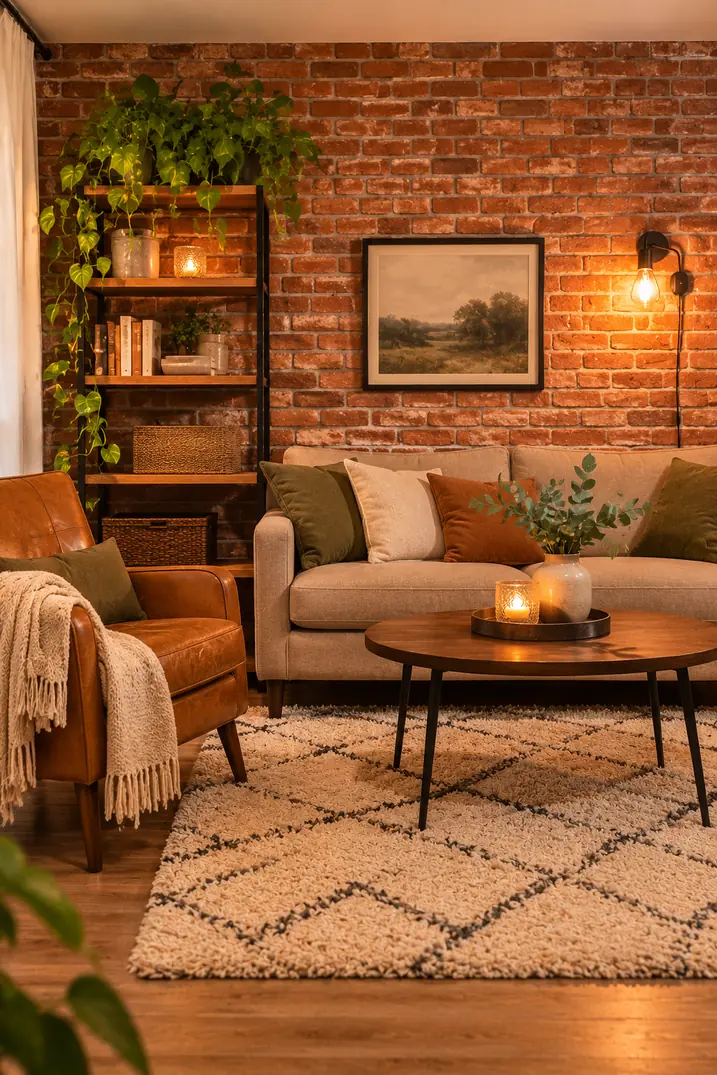
Industrial style started in converted factory lofts with brick walls and giant windows, and most apartments have neither.
The look is easy to recognize: black metal, raw or reclaimed wood, leather, concrete, and bare bulb lighting. The trick in a regular rental is getting that edge without the room feeling like a parking garage.
Renter friendly ways in:
- Peel and stick brick, or a removable brick panel, behind the sofa.
- A black metal frame shelf with wood boards.
- A plug in wall sconce with an exposed bulb, so there’s no wiring to deal with.
Warm it up with one soft thing in every corner. A wool rug or a cognac leather chair keeps the metal from taking over.
Grey walls, all metal furniture, cool white bulbs, and bare floors. It looks edgy in a photo but feels like a storage room after dark.
The same black metal, balanced with warm wood, a worn leather chair, a thick jute or wool rug, and warm white bulbs. Still industrial, but you want to sit down.
6. Coastal: Washed Blues and Natural Fibers, Minus the Seashell Signs
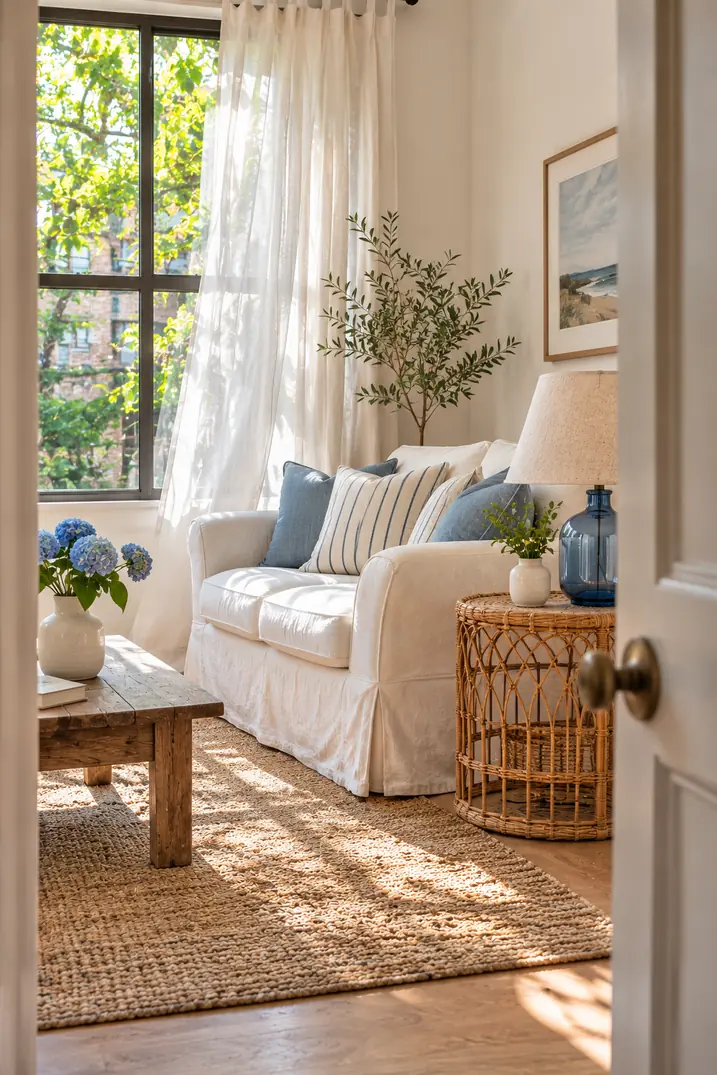
Coastal decor has nothing to do with anchors, rope knots, or signs pointing to the beach.
The real style borrows the feel of a beach house in late summer. Washed blues, sandy beiges, white slipcovers, and natural fibers like jute, rattan, and linen do most of the work. Light matters as much as color, so windows stay bare or lightly covered.
It suits small apartments because the palette is so soft. A room in pale blue and sand still reads as open, even with a full sofa and a desk squeezed in.
Strict lease about paint? Keep the blue on fabric and glass. Pillows, a striped rug, and a tinted glass lamp carry the look without a single brushstroke.
Five coastal starter pieces
7. Modern Farmhouse: Clean Lines With Rustic Wood, Done Before It Turns Into a Theme
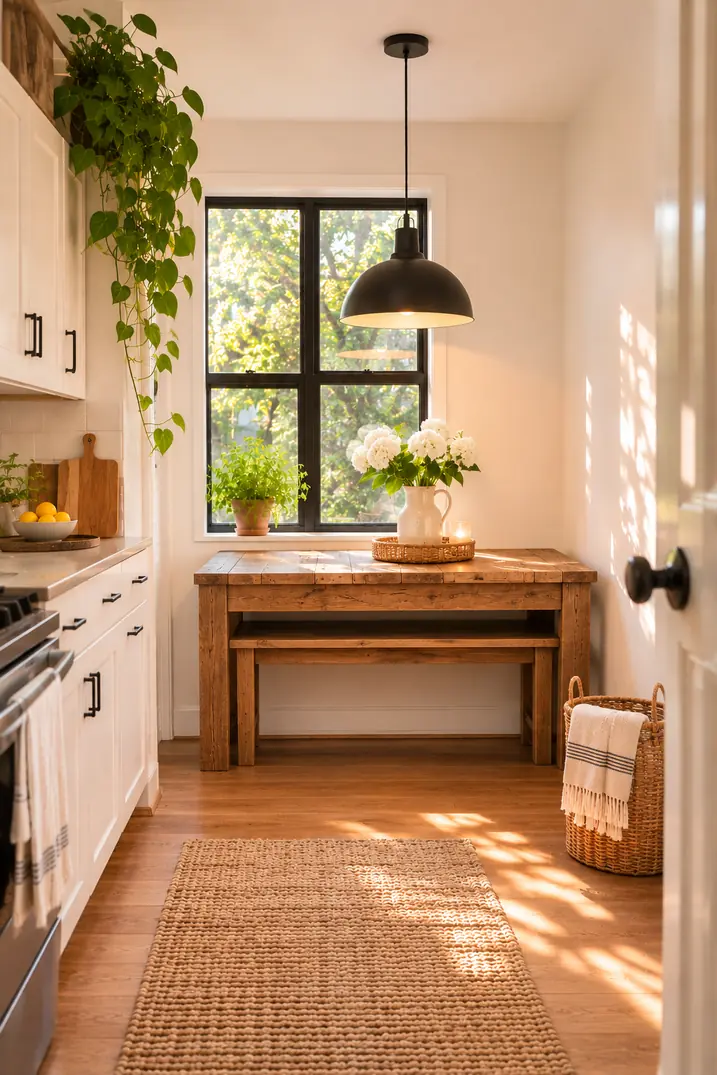
Modern farmhouse has a bit of a reputation problem, and most of it comes from going overboard.
At its best, the style is calm and practical. White walls and simple black hardware sit next to rustic touches like reclaimed wood, woven baskets, and vintage looking light fixtures. The modern half keeps lines straight and colors quiet.
It goes wrong when every surface gets a galvanized bucket, a wood sign, and a bundle of faux wheat. Then the room starts to look like a store display instead of a home.
Small space note: a farmhouse table with a bench saves real room, since the bench slides all the way under when nobody’s eating.
Pair one rustic piece with mostly simple, clean furniture.
Repeat black or matte iron hardware to tie the room together.
Stick to whites, creams, and natural wood tones.
Word art signs in every room.
Covering every wall in shiplap or wood planks.
Heavy distressing on every single piece.
8. Art Deco: Brass, Arches, and Bold Geometry in Small Doses
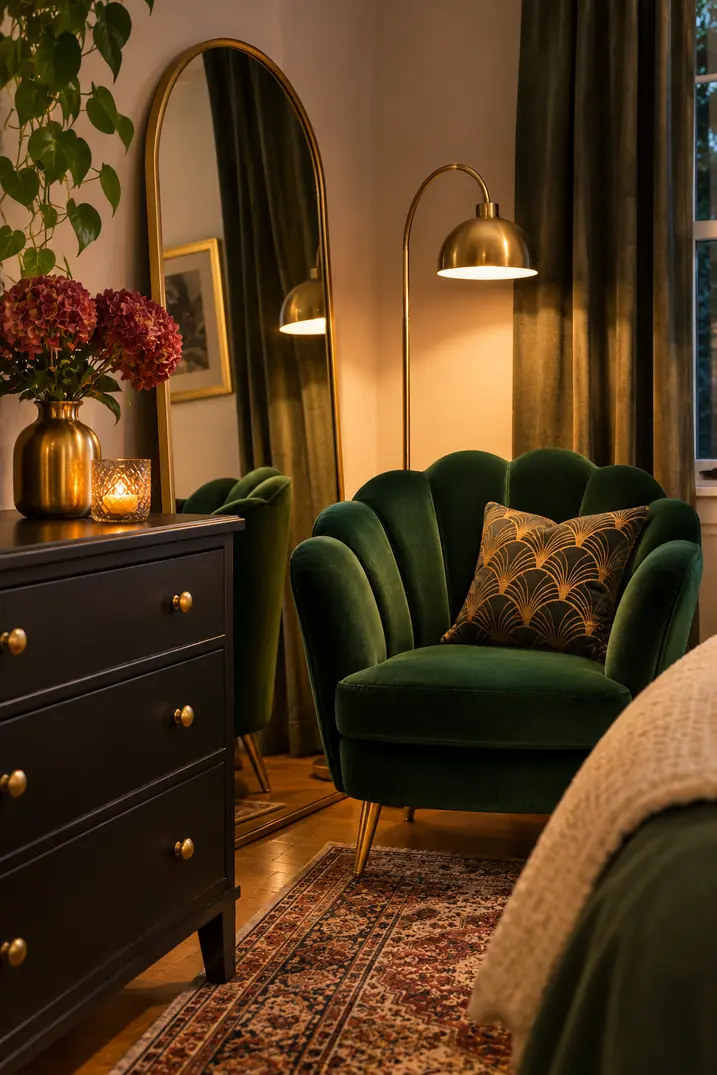
Start with one metal finish and one geometric shape, then stop there.
Art Deco comes from the 1920s and 1930s, and it’s glamorous and graphic. Brass and gold, black lacquer, mirrored surfaces, jewel tones like emerald and navy, and shapes like fans, arches, and sunbursts all belong to it. In full force, it looks like a hotel lobby. In a small apartment, a few well chosen pieces give you the feeling without the weight.
Velvet helps a lot here. One emerald velvet chair says more about this style than a dozen tiny brass objects on a shelf.
Three renter friendly Deco moves
Lean or hang an arched mirror. It bounces light around and gives you the signature curve with no construction.
Swap dresser or cabinet knobs for brass ones. Keep the originals in a labeled bag so you can switch back on move out day.
Bring in one fan or sunburst pattern, like a scalloped headboard, a fan print pillow, or a geometric rug.
9. Maximalist: More Color and Pattern, Held Together by Repetition
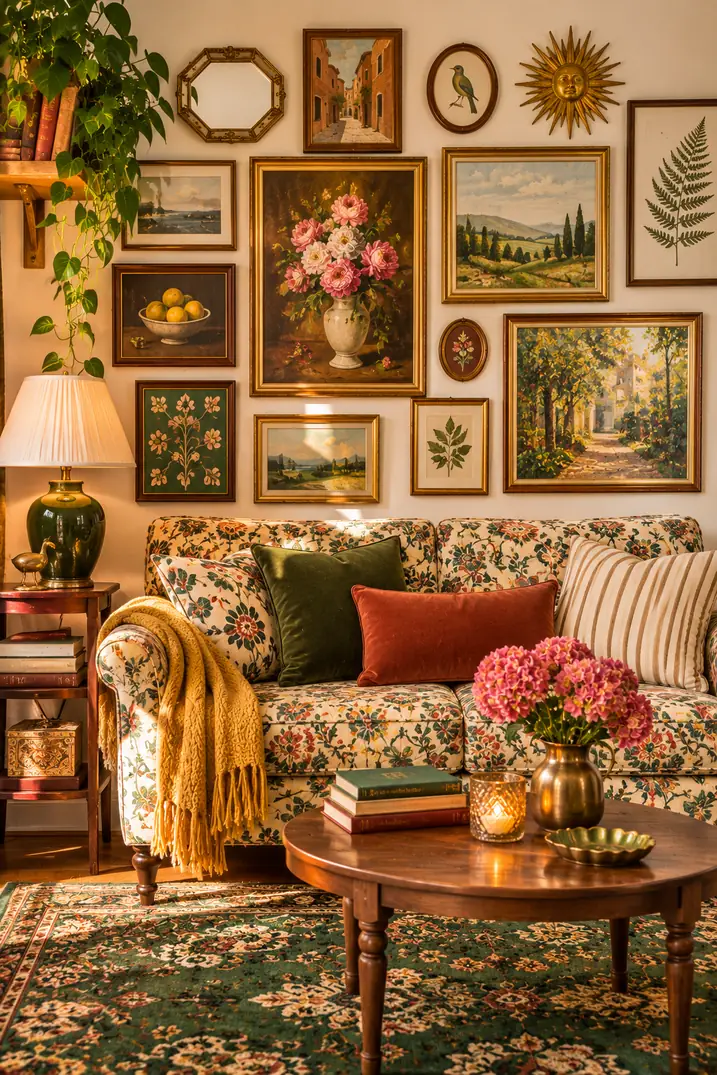
Maximalism lets you keep the things you love out on display instead of hiding them in a closet.
The style is bold on purpose. Saturated color, mixed patterns, gallery walls, stacked books, collected objects, and furniture from different eras all share one room. It isn’t about owning more stuff. It’s about filling a space with things that clearly belong to you.
Small apartments can actually suit it. A tiny room wrapped in color feels cozy and intentional, a bit like a jewel box. The same pieces spread across a big open room can look scattered.
Start with one wall. A packed gallery wall over the sofa tells you quickly whether you love living with the look or just like it on Pinterest.
Pick two or three colors and repeat them in every corner. When the same deep green shows up in the rug, a print, and a lamp, a room full of pattern looks collected instead of chaotic.
10. Transitional: The Middle Ground Most Mixed Apartments Already Live In
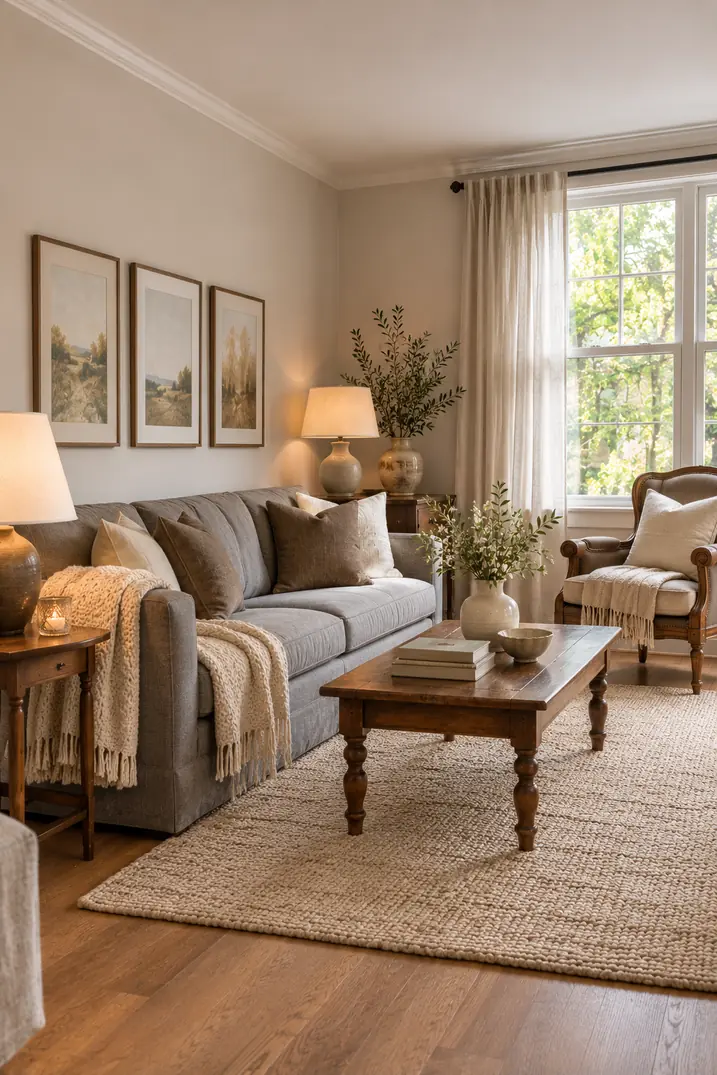
Your sofa is a plain grey one from a big box store, the coffee table is a hand me down with turned legs, and the lamps are simple and modern. Without trying, you might already be transitional.
The style sits between traditional and modern. It keeps the comfort and soft curves of classic furniture, like rolled arms and wingback chairs, but drops the fuss. Colors stay neutral, with warm greys, taupes, and creams, and texture does most of the heavy lifting.
To push a room clearly into this style:
- Match your wood tones so old and new pieces look related.
- Keep to three neutrals plus one muted accent color.
- Choose simple shapes for anything new you buy.
📌 Good To Know
Transitional is the name for rooms that mix old and new without clashing. If your Pinterest board has a little of everything but it all leans calm and neutral, this is the style name to search for when you shop.
Finding Your Style
You don’t need to pick one style and stick with it forever. Most good apartments borrow from two, maybe three, and the names just make the borrowing easier.
Go back to your saved pins with this list open. Look for the clues: the leg shape on the chairs, the wood tone, how much is sitting on the shelves. Once you see the same two styles popping up again and again, you know what to shop for, and what to leave in the store.
Quick style finder
| If your pins keep showing… | You’re probably drawn to |
|---|---|
| Pale wood and white walls | Scandinavian |
| Low furniture and lots of empty space | Japandi |
| Tapered legs and warm walnut | Mid Century Modern |
| Layered rugs, rattan, and plants | Bohemian |
| Black metal, brick, and bare bulbs | Industrial |
| Soft blues, linen, and jute | Coastal |
| Black hardware and reclaimed wood | Modern Farmhouse |
| Brass, arches, and velvet | Art Deco |
| Color and pattern on every surface | Maximalist |
| Calm neutrals with classic curves | Transitional |
Once decorating styles are explained in plain terms, a messy board turns into a shopping list. Save this list for the next time a room on Pinterest stops your scroll and you want to know what it’s called.