
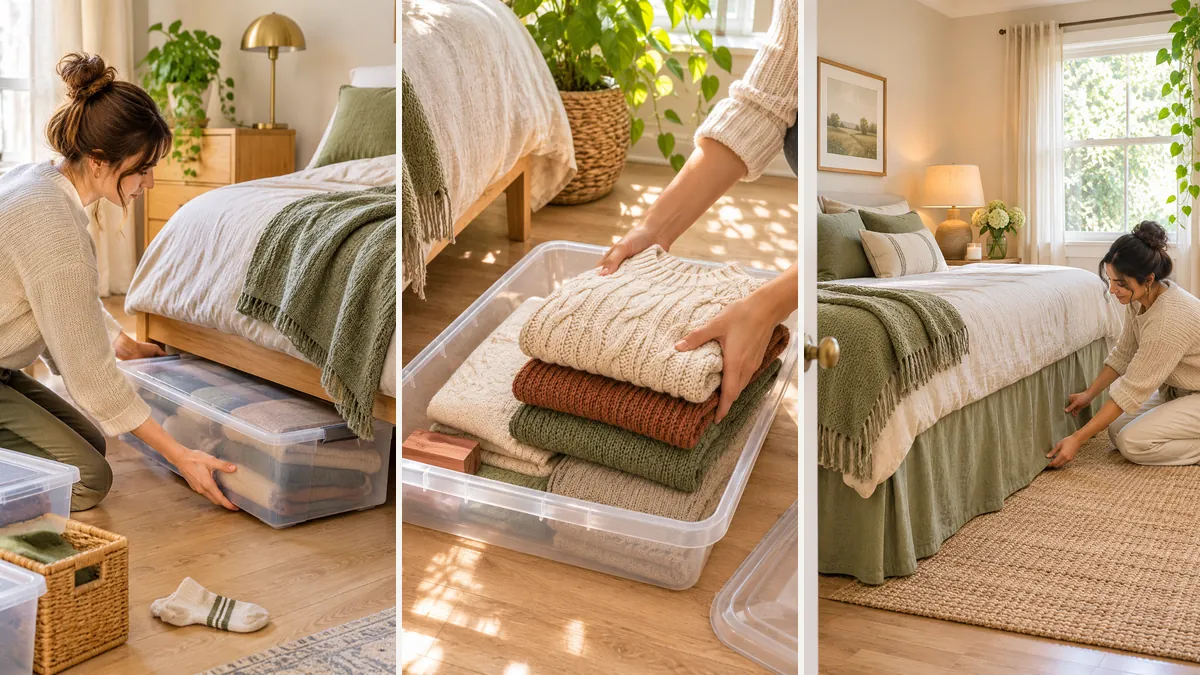
The space under your bed is probably full of things you forgot you owned. There’s an old phone charger, a shoebox of papers, and the winter scarf you looked for all last January. Everything gets pushed under there, and then the dust moves in. Most under bed storage ideas fail for one reason: people buy cute bins before they measure the space.
This guide fixes that. By the end, the area under your bed will hold things you actually use, like spare sheets, winter sweaters, and extra shoes. They’ll be packed in bins that fit, slide out without a fight, and stay clean. You’ll also hide it all, so your small bedroom looks calm instead of crammed.
The method works because it goes in the right order. You clear the space, clean it, measure it, and only then decide what goes back. That order saves you from returning bins that are half an inch too tall.
Plan on about two hours of hands-on work, plus a trip to the store. You won’t need any tools beyond a tape measure and a vacuum. Grab a trash bag, put on a podcast, and pull out that first box.
Total Time
2.5–3 hours
not counting shopping
Active Time
About 2 hours
hands-on sorting & packing
Difficulty
Beginner
no power tools needed
What You Need
Buy the bins after Step 3, once you have your measurements.
- ✓Tape measure
- ✓Vacuum with a crevice tool
- ✓Microfiber cloth
- ✓Phone flashlight
- ✓3 bags or boxes (keep, donate, toss)
- ✓Low-profile bins with lids
- ✓2–4 vacuum storage bags
- ✓Labels, or masking tape + marker
- ✓Bed skirt or fabric panel
- ✓Bed risers (optional)
- ✓Cedar blocks or lavender sachets (optional)
- ✓Old clothes you can get dusty
At a Glance
- 1Pull everything out
- 2Vacuum and wipe the bare floor
- 3Measure height, length, and depth
- 4Add risers if clearance is under 6″
- 5Sort into keep, donate, toss
- 6Pick what belongs under the bed
- 7Choose bins that fit your numbers
- 8Vacuum-seal bulky bedding
- 9Pack one category per bin
- 10Label the outward-facing side
- 11Everyday items at the edge
- 12Hide it all with a bed skirt
Pull everything out from under the bed
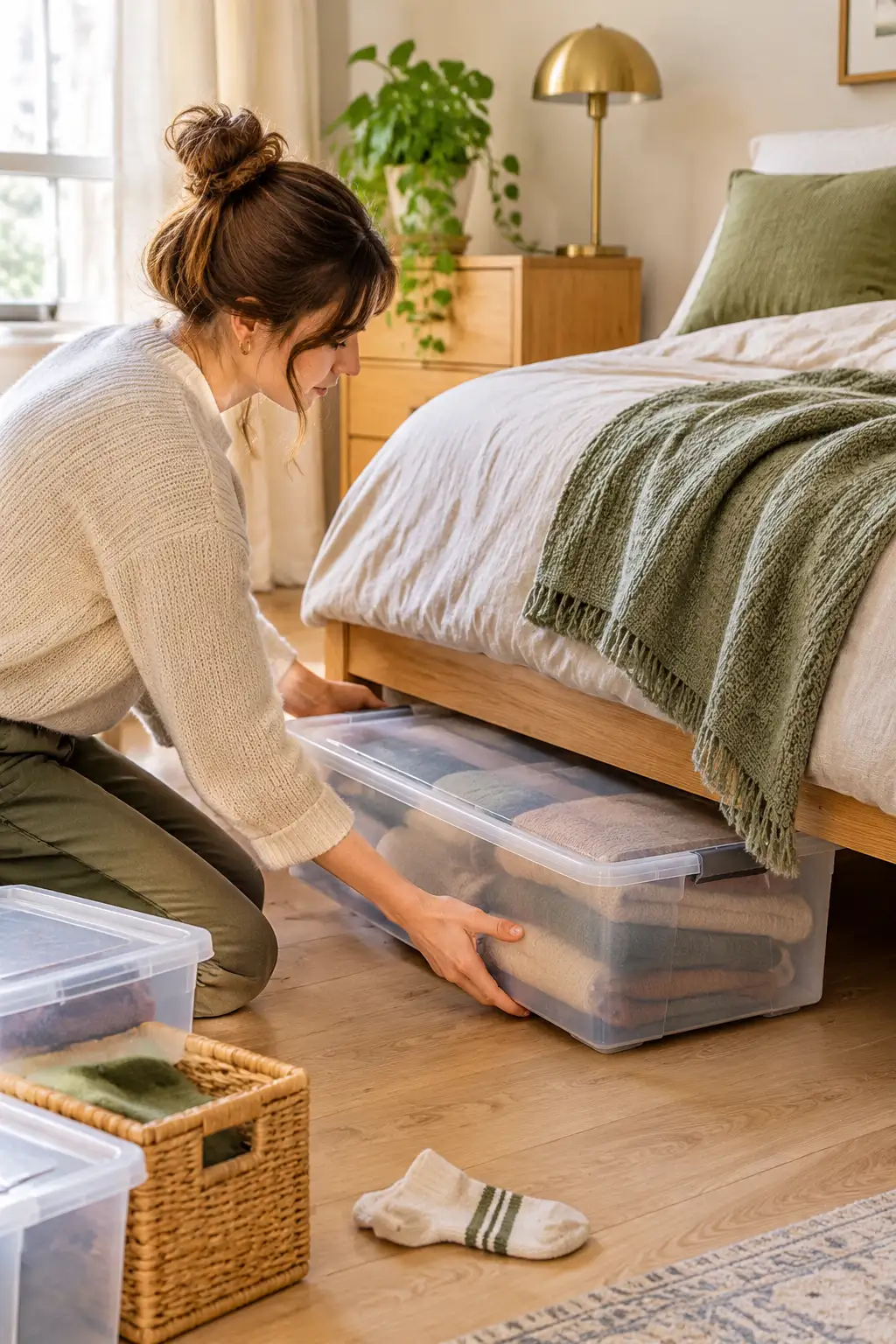
All of it comes out, even the boxes you already plan to keep. If a few stay behind, you’ll measure around them and guess wrong later. Wear something you don’t mind getting dusty, and keep a trash bag close for the obvious junk. Pile everything in one spot on the bed or the floor. Then turn on your phone’s flashlight and check the far corners by the wall. That’s where the lost earbuds and single socks end up.
Vacuum and wipe the floor while it’s bare
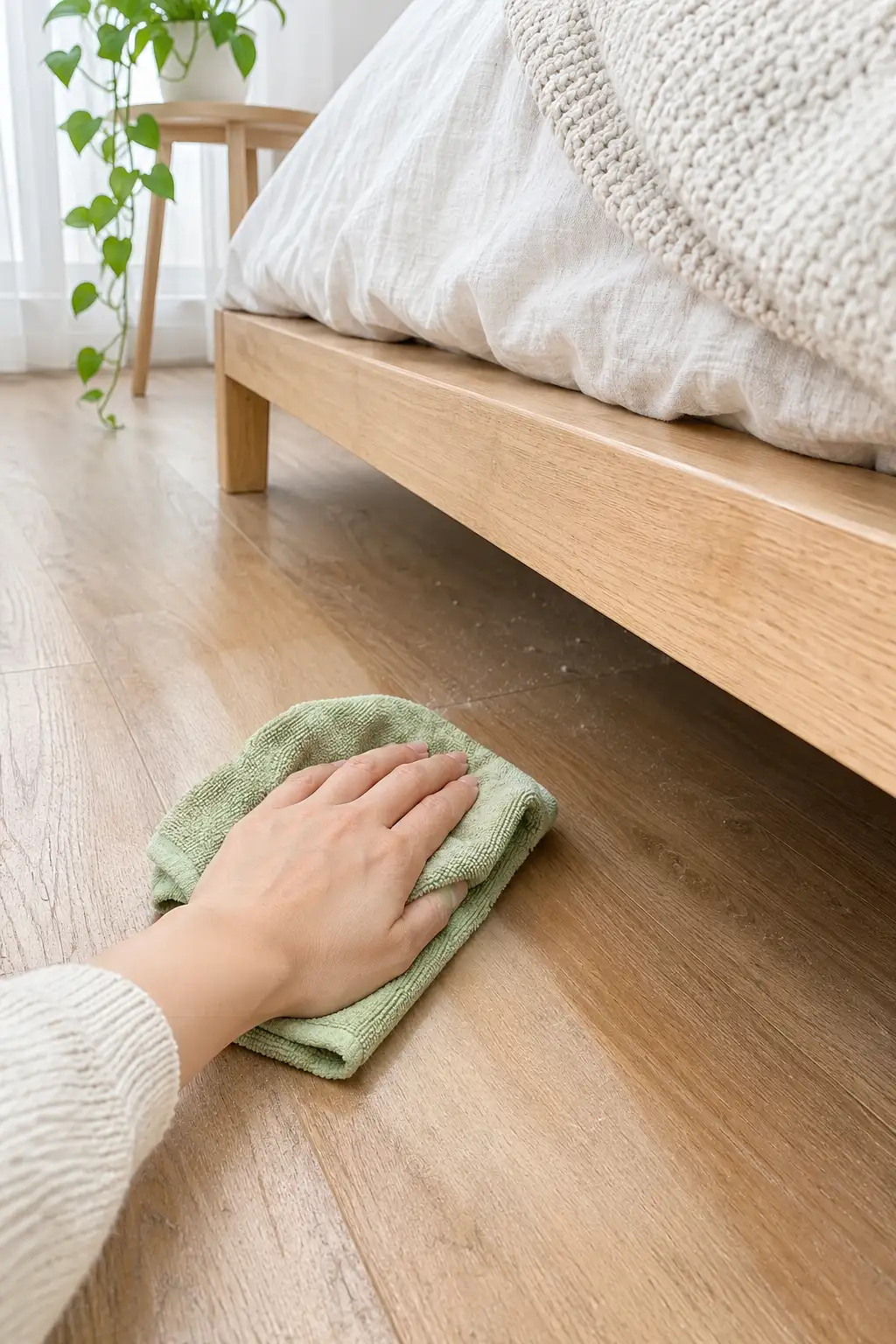
Nobody sees this floor, so dust can sit here for years. Run the crevice tool along the edges, then wipe the area with a damp microfiber cloth. Wait 15 minutes for it to dry, because bins set on a damp floor trap moisture and start to smell musty. No crevice tool? Wrap the cloth around a broom head to reach the back.
Measure the height, length, and depth of the open space
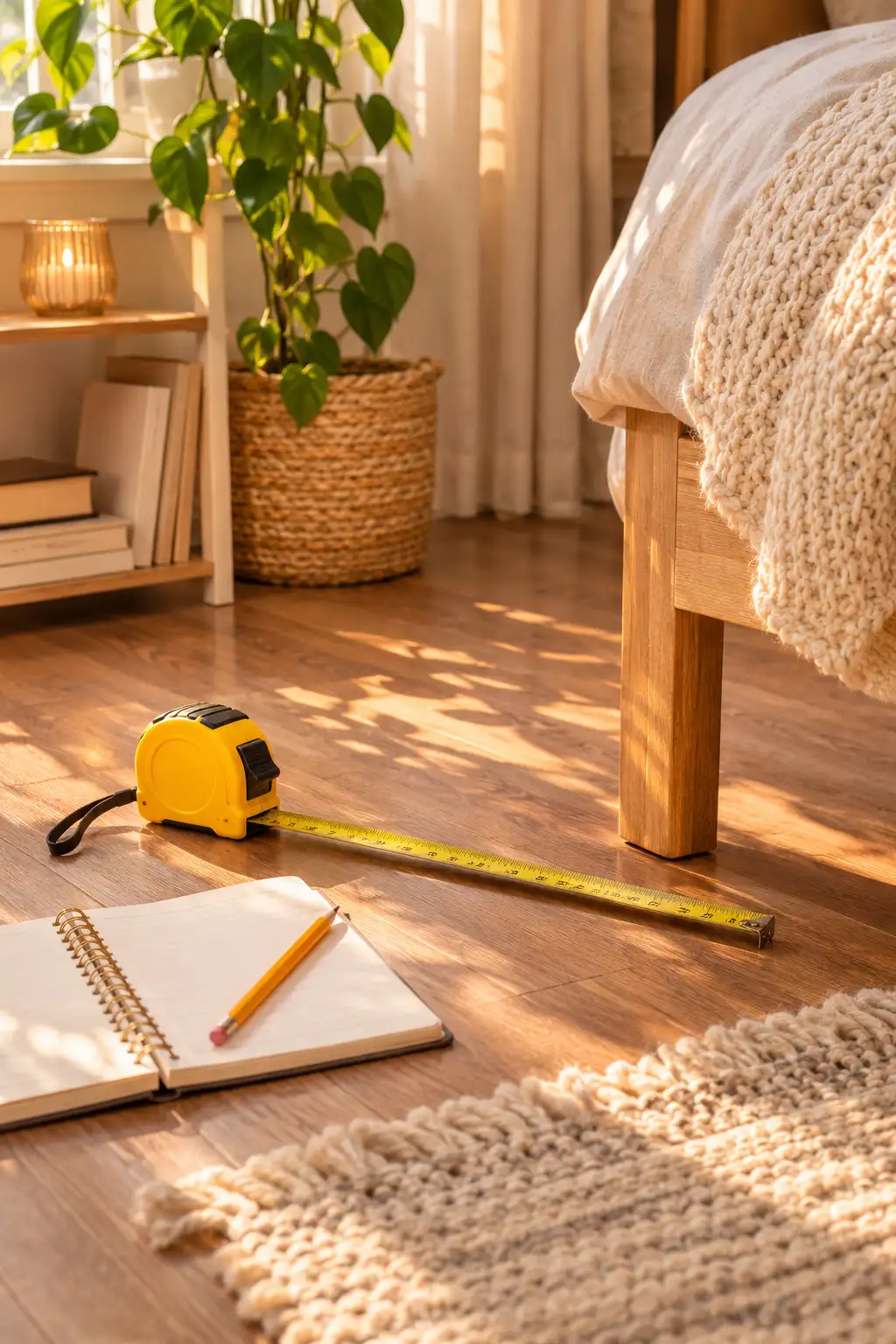
Three numbers decide which bins will fit:
- Height: from the floor to the lowest point under the bed, which is often a center support bar
- Length: the open space along one side of the bed
- Depth: from the bed’s edge to its center, on each side
Write all three in your phone’s notes. Then take 1 inch off the height. That small gap lets a bin slide in and out without scraping the slats or snagging the carpet.
Pro Tip
Measure with the mattress and bedding on. A heavy mattress can sag the slats by half an inch, and that half inch is the difference between a bin that glides and one that sticks.
Raise the bed with risers if you have less than 6 inches of clearance
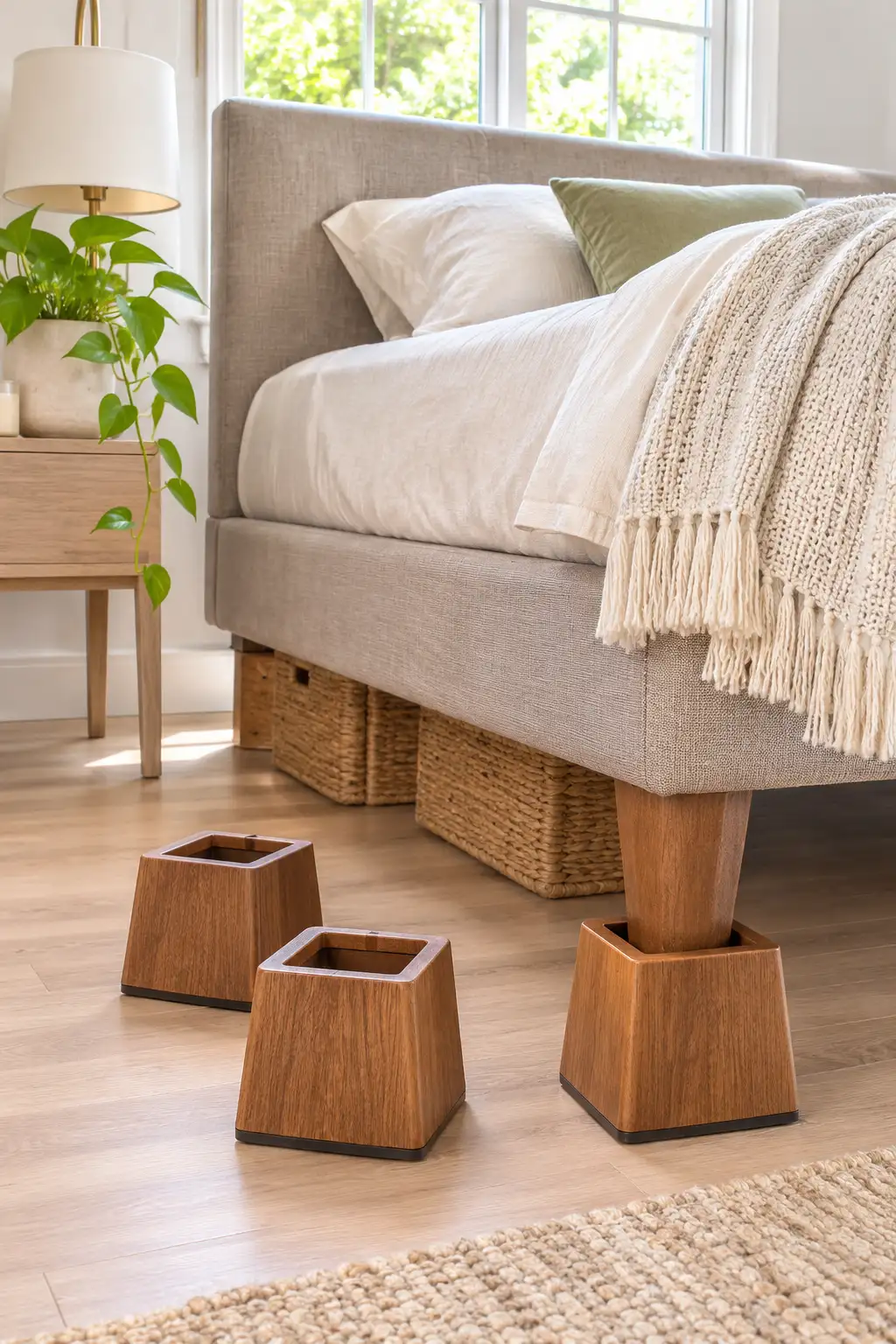
If the height you wrote down is under 6 inches, most bins won’t fit. Bed risers solve that, and they come in 3-inch, 5-inch, and 8-inch heights. Pick the size that gets you to at least 7 inches total. Have someone lift one corner while you slide a riser under that leg, then work your way around until every leg sits in one. Add the riser height to your Step 3 number. Can’t use risers? Flat zip-up storage bags around 5 inches tall still fit under low frames.
⚠ Heads Up
Put a riser under every leg, including any center support legs. If you skip one, the frame can bow or crack. Check the weight rating on the box too. It needs to cover the bed, the mattress, and everyone who sleeps on it.
Sort everything into keep, donate, and toss piles
Speed beats perfection here. Pick up each item and decide in about 10 seconds. If you haven’t touched it in 12 months and it isn’t seasonal, it goes in the donate pile. Tie the donate bag shut and carry it to your car or front door right away, so nothing drifts back under the bed.
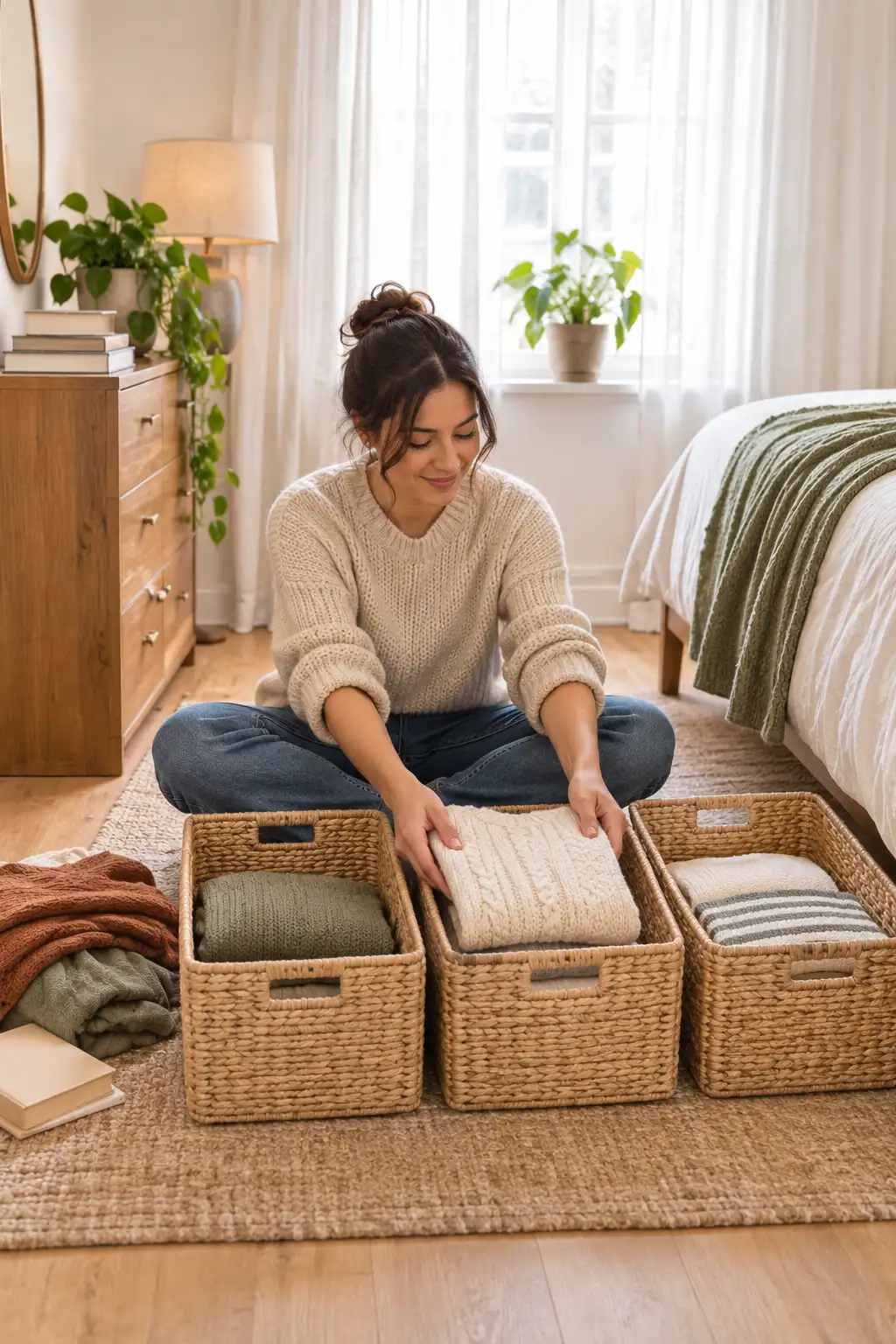
Pick the items that actually belong under the bed
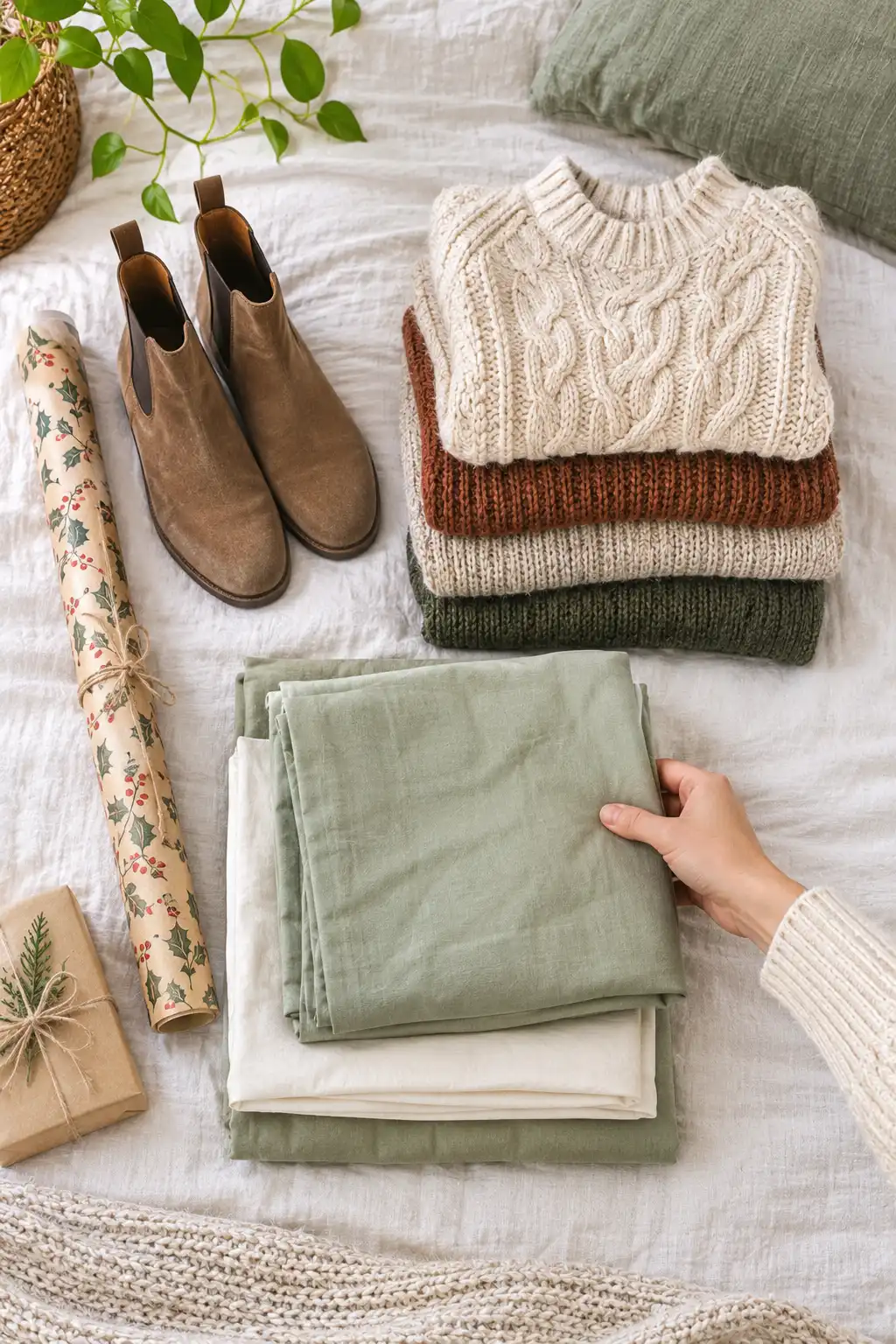
Space under a bed is limited, so not everything earns a spot. The best fits are things you need a few times a year:
- Out-of-season clothes and coats
- Spare sheets, pillowcases, and blankets
- Extra shoes and boots
- Gift wrap and holiday supplies
- Keepsakes in sealed containers
Leave out food, important papers, and anything in a cardboard box. Cardboard soaks up moisture and attracts bugs. Papers you might need in a hurry belong somewhere you can grab them in seconds.
Choose under bed storage bins sized to your exact measurements
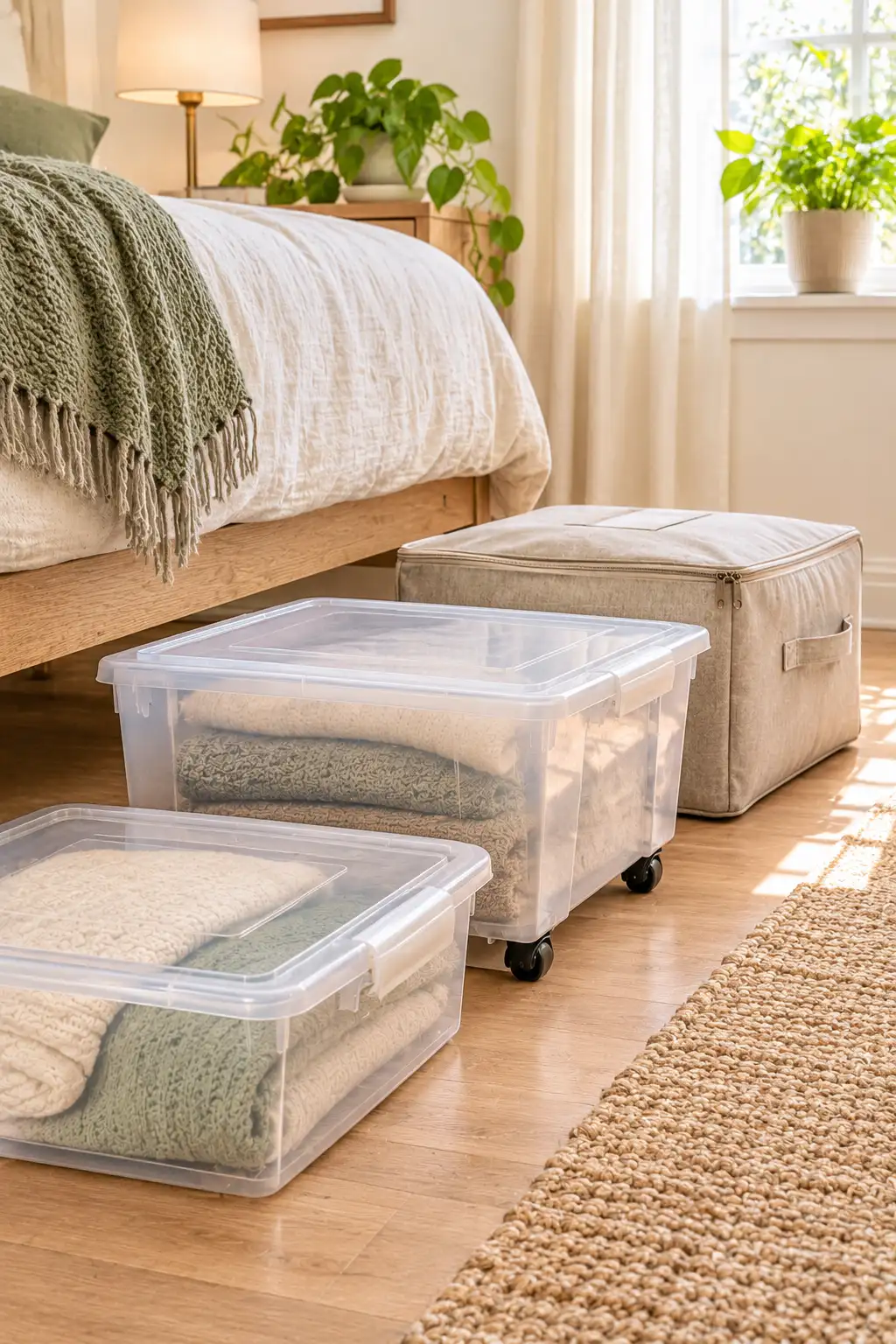
Two numbers from Step 3 do the shopping for you. Look for bins that are at least 1 inch shorter than your height and no deeper than your depth. On hard floors, clear plastic with snap-on lids works best because you can see inside without opening anything. On carpet, pick bins with wheels so they roll out instead of dragging. For sweaters and bedding, zip-up fabric bags are lighter and bend to fit tight spots. Make sure the height on the label includes the lid and the wheels.
Pro Tip
Bring your tape measure to the store. Some labels list the inside size of a bin, not the outside, and that gap can cost you a full inch.
Compress bulky bedding into vacuum bags
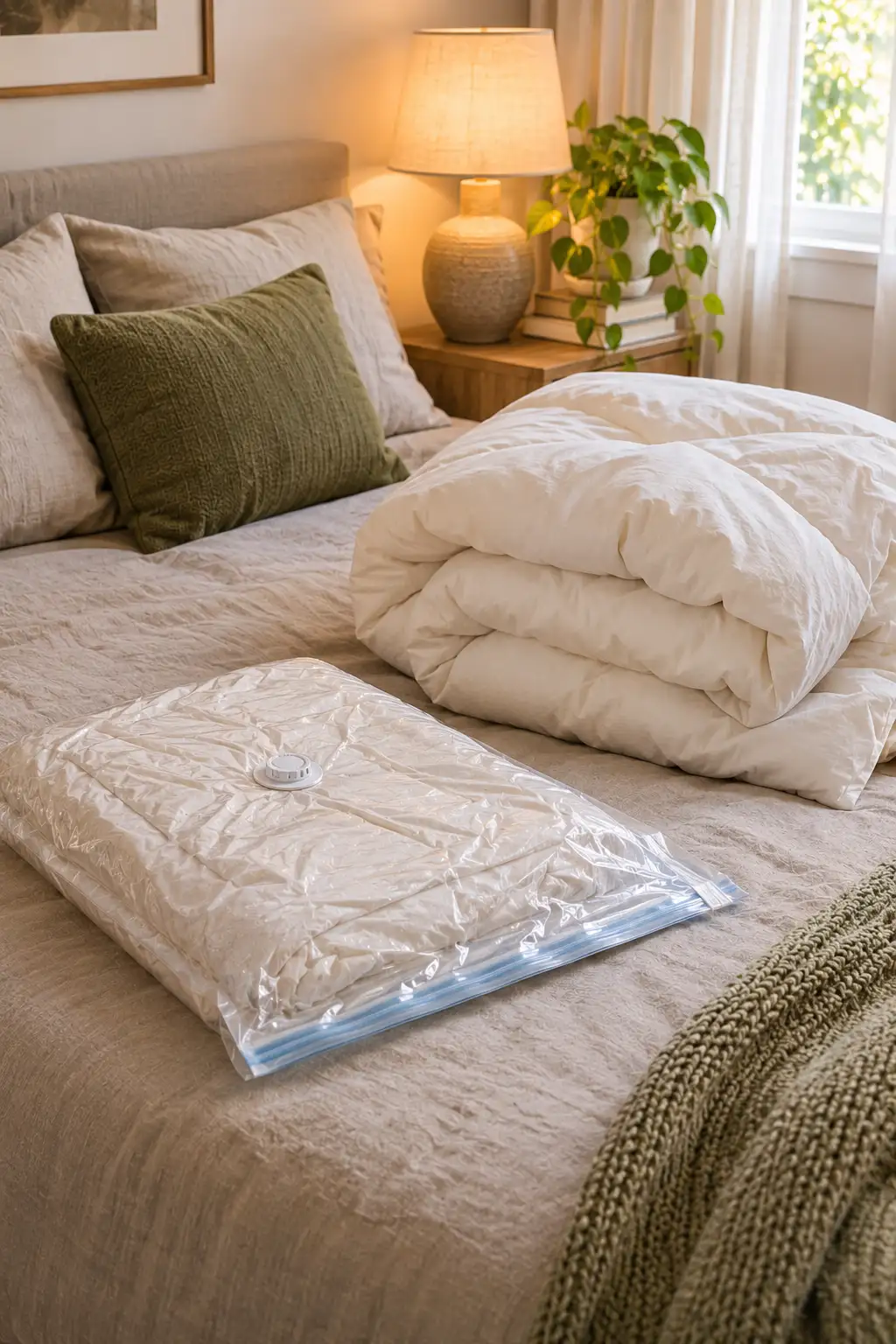
A queen comforter can fill a whole bin by itself. Fold it to fit the bag, leaving about 2 inches of room at the top, and zip it closed. Attach your vacuum hose to the valve and pull the air out until the bag lies flat, which usually takes about 1 minute. Then twist the cap shut tight. If your vacuum hose doesn’t fit the valve, roll the bag firmly from the closed end toward the valve to push the air out by hand.
⚠ Heads Up
Don’t keep down, feather, or wool items vacuum-sealed for longer than a few months. Long-term squeezing crushes their fluff, and they may never puff back up. Store them in a breathable cotton bag instead.
Pack each container with one category only
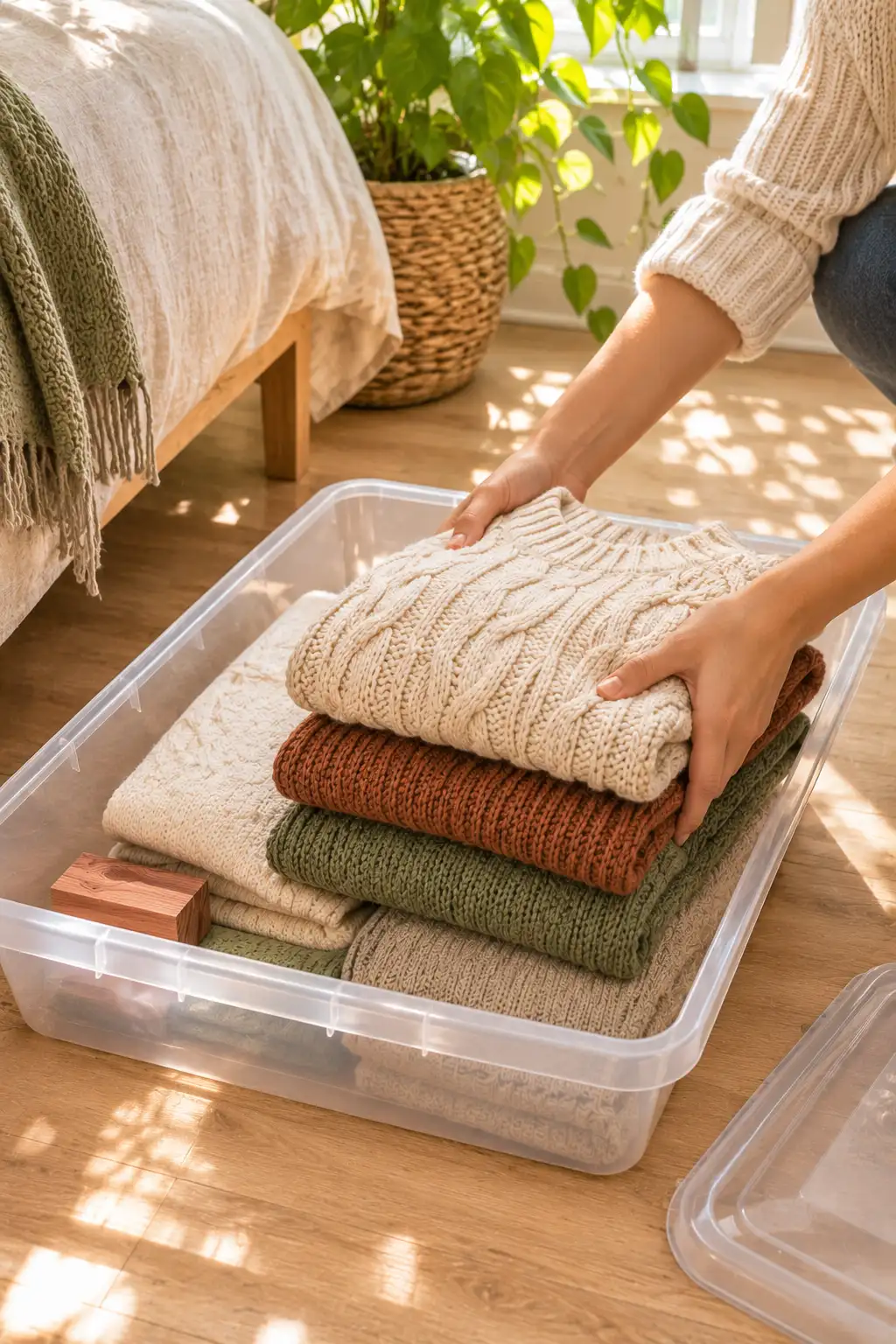
Mixed bins are why people stop using under-bed storage. Give each bin a single job, like sheets, sweaters, or shoes. Put heavy things on the bottom, and fill each bin to about 80 percent so the lid closes flat. Tuck a cedar block into any bin with clothes to keep moths out.
Label the side of every bin that faces out
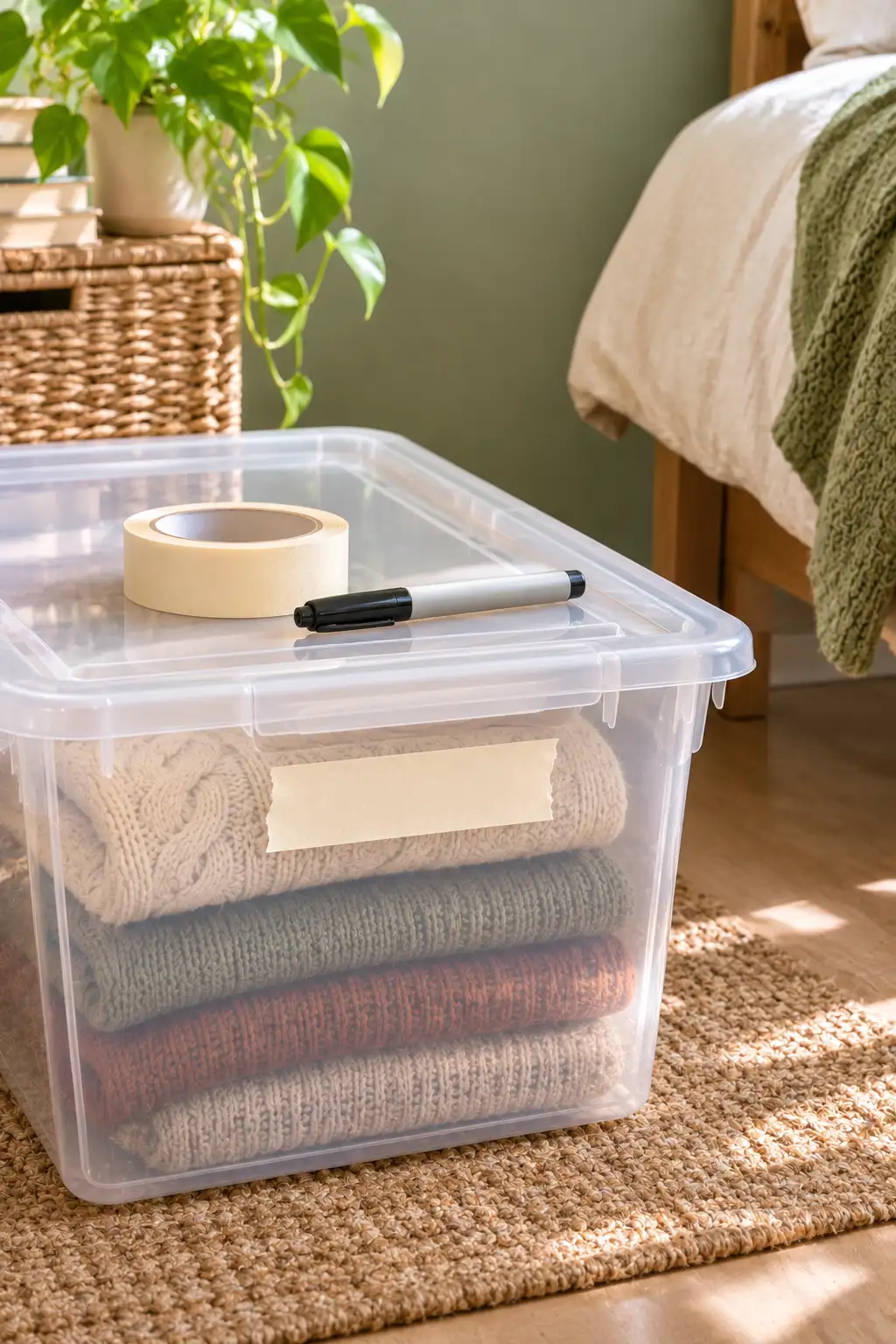
Labels on lids disappear as soon as a bin slides under the bed. Stick yours on the short end that faces the room instead. Write in big letters, at least 1 inch tall, so you can read them while standing up. Masking tape and a thick marker work fine, and they peel off when the contents change.
Place everyday items at the edge and rarely used ones in the middle
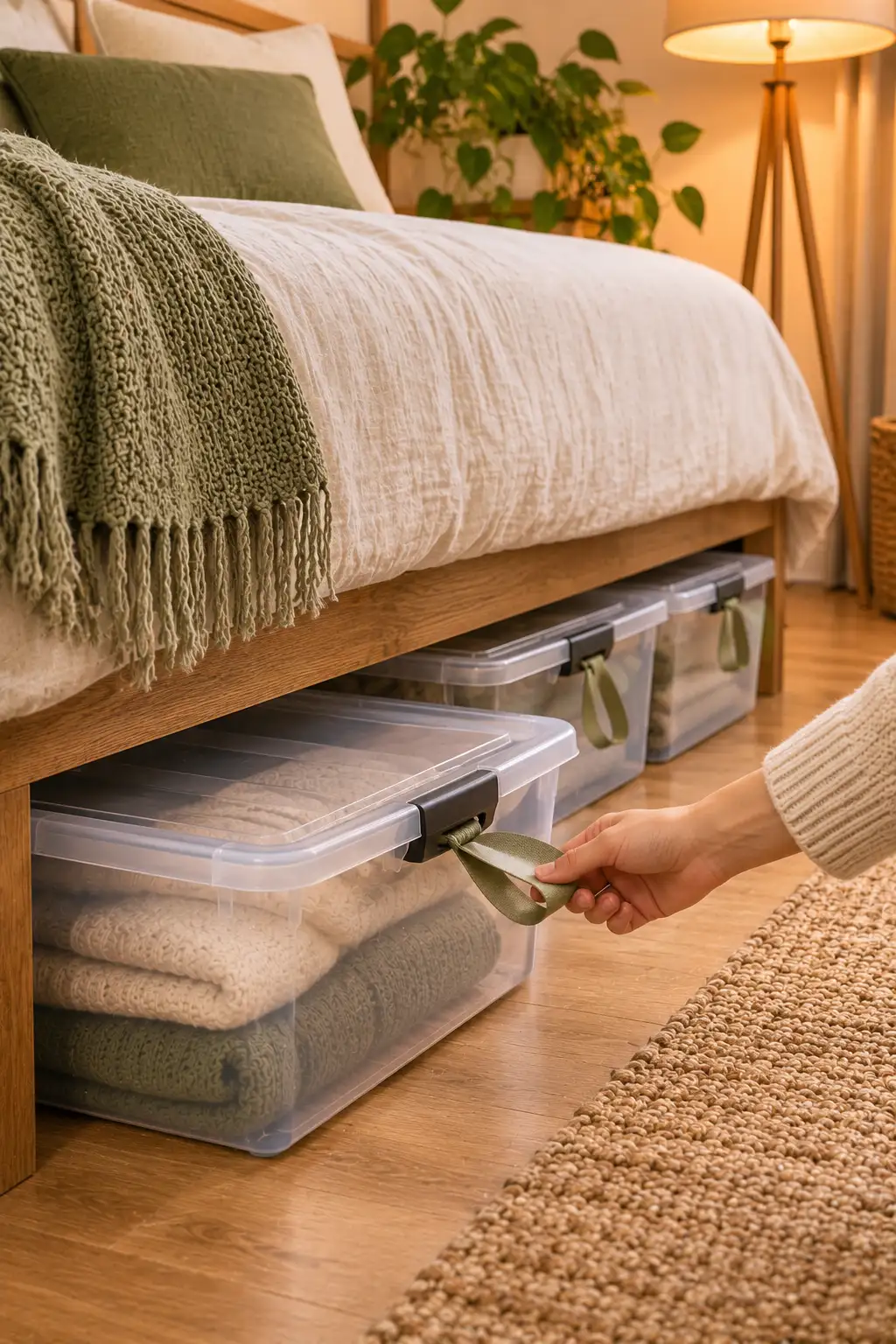
Which bin will you reach for this month? That one goes at the edge, on the side where you climb out of bed. Holiday decor, keepsakes, and next season’s coats slide toward the middle, where they take more effort to reach. Load the middle bins first and the edge bins last, so you never have to push a full bin past another one. Leave about 2 inches between bins. That gap keeps them from rubbing and makes each one easier to grab.
Pro Tip
Tie a loop of ribbon or a fabric strap to the handle of each middle bin and let it hang near the edge of the bed. Then you can pull the bin out without crawling underneath.
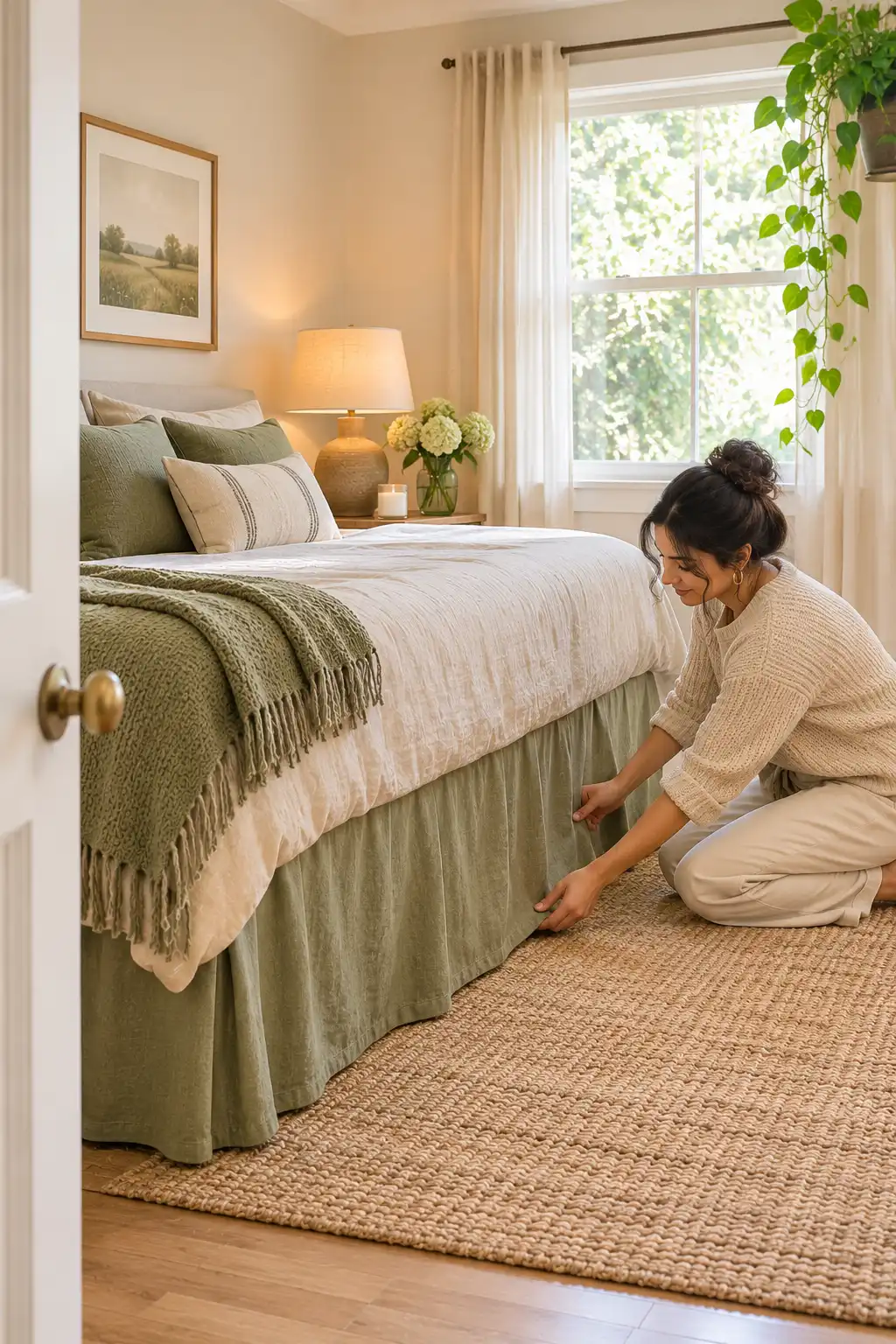
Finish your under bed storage ideas with a bed skirt or fabric panel
Visible bins make a small bedroom feel busy. Measure from the floor to the top of the box spring or frame to find your drop length. Most bed skirts come in 14, 16, and 18 inches, and risers usually push you into the longer sizes. No box spring? Stick a fabric panel to the frame with adhesive hook-and-loop strips.
Troubleshooting
Frequently Asked Questions
Q.What height should under-bed bins be?
Aim for 1 inch shorter than your clearance. Many standard frames sit about 7 to 12 inches off the floor, but measure yours, because frames vary a lot.
Q.My bed has no gap at all. What can I do?
If it has legs, risers can create the space. If it sits on a solid base, use a storage bench at the foot of the bed, or look for a frame with built-in drawers when you replace it.
Q.Is it okay to store shoes under the bed?
Yes. Wipe the soles first and keep them in a lidded bin or zip-up shoe bag. Lay tall boots flat on their sides.
Q.Will storing things under my bed attract bugs?
Not if you skip cardboard and food. Lidded plastic bins and a quick vacuum every month or two keep the space unappealing to pests.
Q.How often should I clean under the bed now?
Pull out the edge bins and vacuum every 1 to 2 months. Once a season, take everything out, wipe the floor, and swap in the next season’s clothes.
Save This Cheat Sheet
Under-Bed Storage Quick Reference
What You Need
- Tape measure
- Vacuum + microfiber cloth
- Keep / donate / toss bags
- Low-profile lidded bins
- Vacuum storage bags
- Labels or masking tape
- Bed skirt or fabric panel
- Risers (if under 6″)
Steps
- Pull everything out
- Vacuum, wipe, dry 15 min
- Measure height, length, depth
- Add risers if under 6″
- Sort: keep, donate, toss
- Keep only few-times-a-year items
- Buy bins 1″ shorter than clearance
- Vacuum-seal bulky bedding
- One category per bin, 80% full
- Label the outward-facing end
- Everyday at edge, rare in middle
- Hide it all with a bed skirt
Conclusion
The space under your bed now holds real things in bins that fit, slide out clean, and stay dust-free.
No more digging around, and no more forgotten boxes.
These under bed storage ideas work best when you keep them moving, so set a reminder to swap in next season’s clothes when the weather turns.
Save this pin to your small space board so it’s ready the next time you reorganize.