
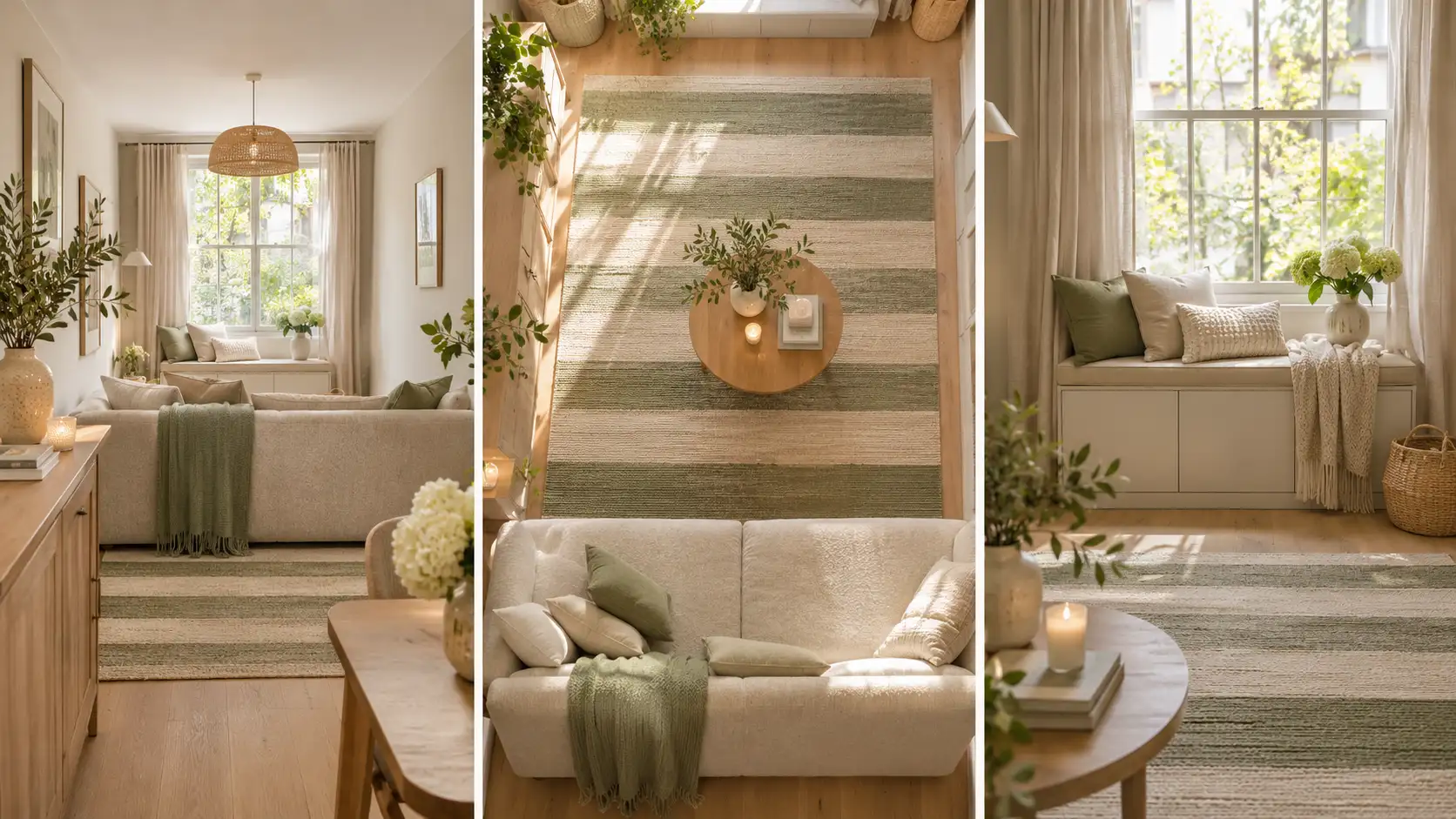
Most narrow living rooms aren’t too small. They’re just set up as if the room were a different shape.
The usual move is to push the sofa against the long wall, park the TV across from it, and drop a coffee table in the gap. That leaves a strip of floor you shuffle down sideways, an empty end nobody uses, and a room that feels more like a train car than a place to sit. Adding more furniture to fill the space only makes the squeeze worse.
A good narrow living room layout works with the length instead of fighting it. You break the room into smaller spots, keep one clear path, and choose pieces that let light and floor show through.
These 10 ideas come from that thinking. Most use furniture you already own, moved to a better place. A few need a small buy. All of them are built for the long, skinny room that has you wondering where the sofa is even supposed to go.
1. Split the Room Into Two Zones Instead of One Long Lounge
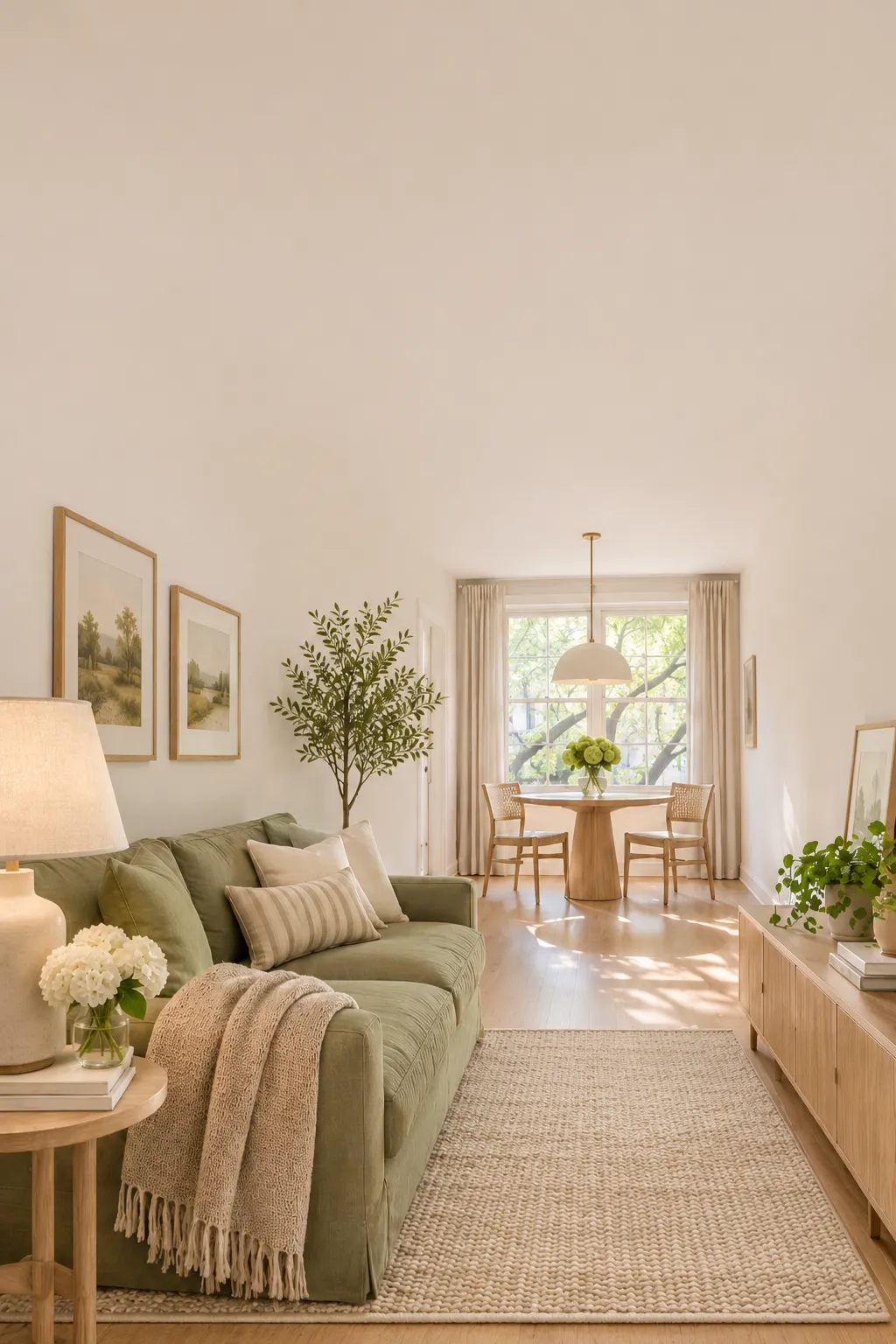
A long room with one seating group in the middle leaves both ends feeling unused. The sofa sits in the center, and the far corner turns into the place where the laundry basket and vacuum live.
Give each half its own job instead. A few pairings that work:
- Sofa and TV at one end, a small dining table at the other
- Main seating by the window, a desk or reading chair near the door
- Conversation area in front, a play corner for kids or pets in back
A zone doesn’t need much. One good chair, a lamp, and a small side table already count.
One sofa on the long wall, a coffee table in front of it, and two empty ends that slowly fill up with clutter.
Seating at the window end, a small table with two chairs near the door, and one clear path joining the two spots.
2. Keep the Walkway Along One Wall, Not Down the Middle
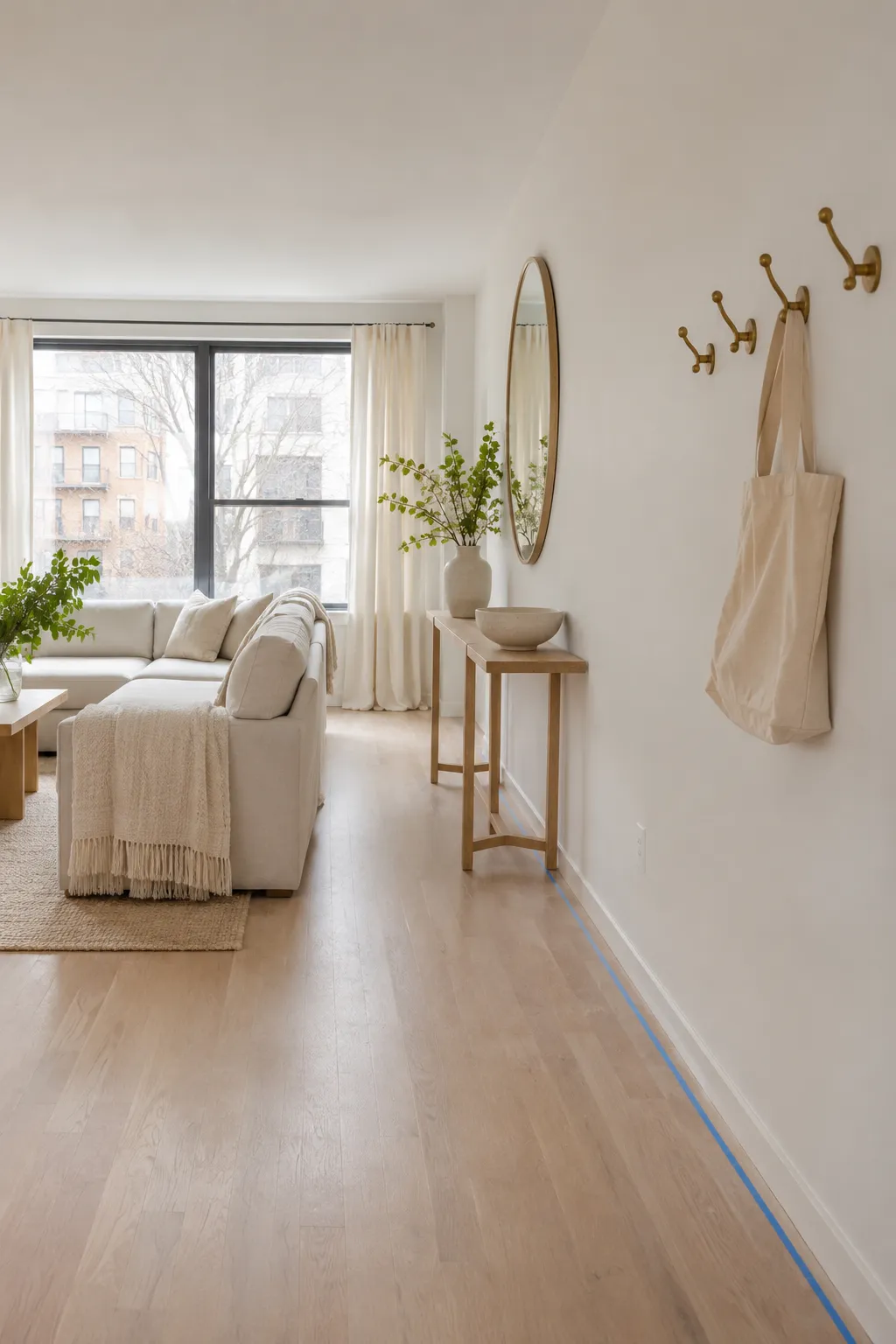
Traffic goes down one side of the room. Never through the middle.
When the path runs through the center, everything gets pushed to the walls, and you end up stepping around the coffee table every time you head to the kitchen. Move the path to one long wall instead, usually the one with the doorways, and let the furniture gather on the other side.
Keep that wall mostly bare. A slim console or a row of hooks is fine. Anything deeper than a shelf will start eating into the path.
Stand in each doorway and notice which way you naturally walk. That line is your path.
Run painter’s tape along the floor about 30 to 36 inches out from that wall.
Live with the tape for a day, then move anything that crosses the line.
3. Turn the Sofa Sideways to Build a Square Seating Spot
The sofa does not have to touch a wall at all.
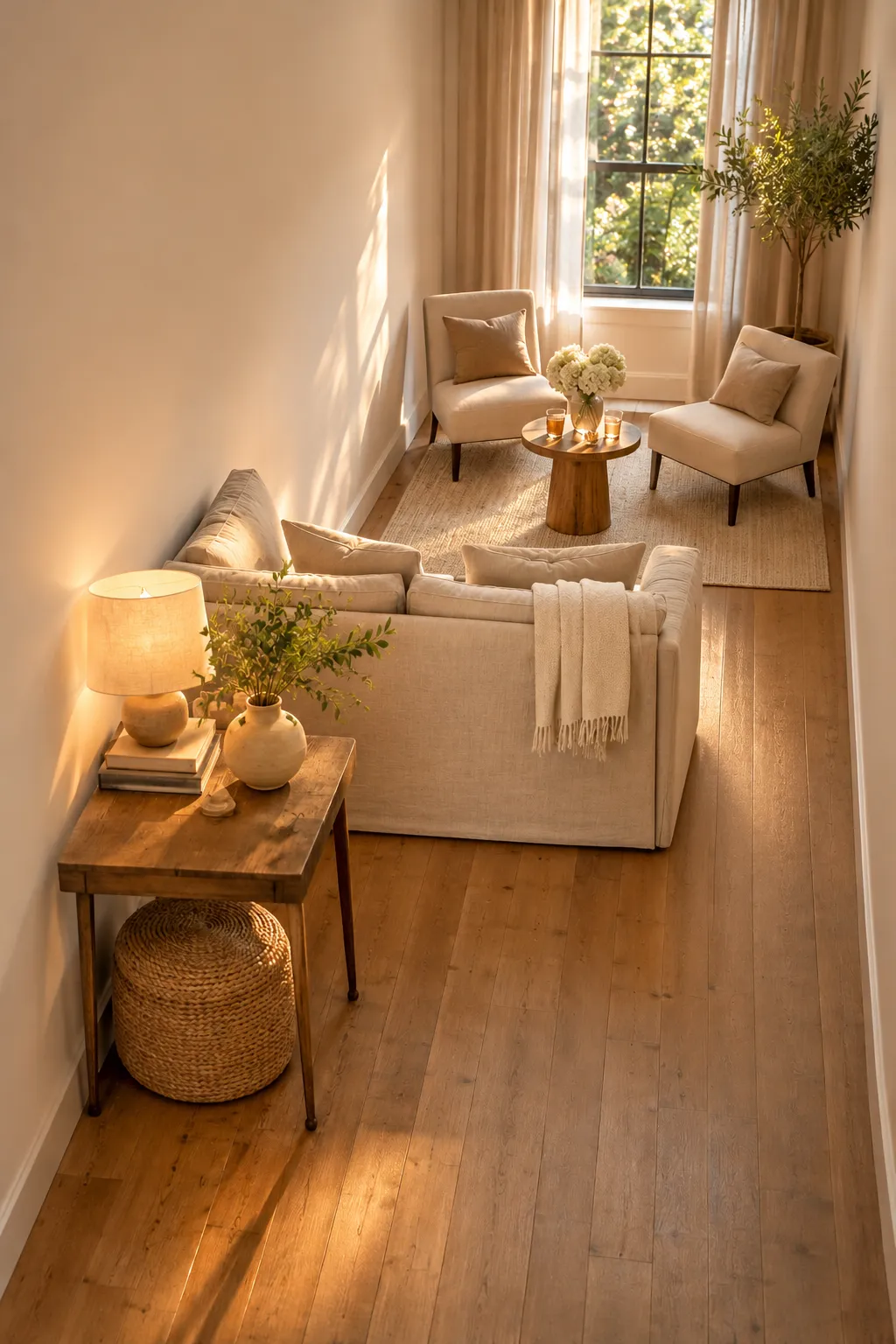
Turn it so it runs across the width of the room, with its back facing your second zone and one end stopping short of the walkway. Put two chairs on the other side, facing it, and the long room suddenly has a square seating area inside it. People can talk without craning their necks, and the back of the sofa marks where the living space ends.
A low back helps here. A tall one can feel like a wall dropped into the middle of the room, and it blocks light from the window too.
Run the sofa across the width, ending just short of the walkway.
Face two chairs toward it to close the square.
Set a slim console behind it for a lamp and keys.
Lining every seat up on one wall like a waiting room.
Choosing a high back sofa that hides the window light.
4. Swap the Big Coffee Table for Two Nesting Tables
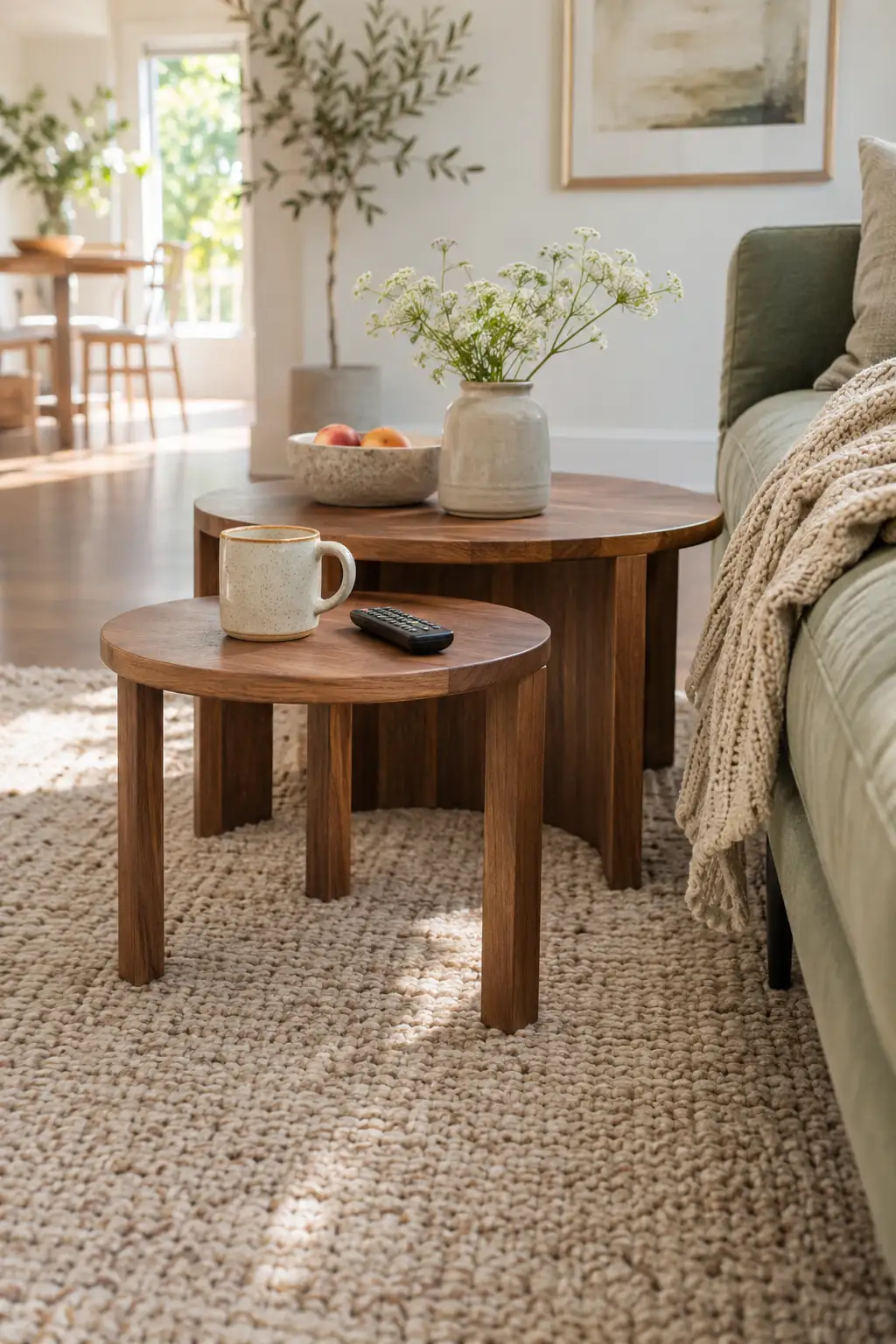
A big rectangle coffee table and a pair of nesting tables can hold the same mug and remote. Only one of them catches your shins on the way to the sofa.
In a narrow room, the coffee table sits right in the tightest spot, so its size matters more here than anywhere else. Nesting tables let you keep one out day to day and pull the smaller one free when friends come over. Round tops are easier to slip past than sharp corners.
Not ready to give up a single table? Look for a narrow oval instead.
| Big coffee table | Nesting tables | |
|---|---|---|
| Floor space | Fixed, always takes the middle | Shrinks to one small table most days |
| Walking past | Corners catch knees | Easy to step around |
| Guests over | Everyone reaches across | Split them, one per side |
| Moving it | Heavy, stays put | Light enough for one hand |
5. Pick Armless Chairs and Leggy Pieces That Show the Floor
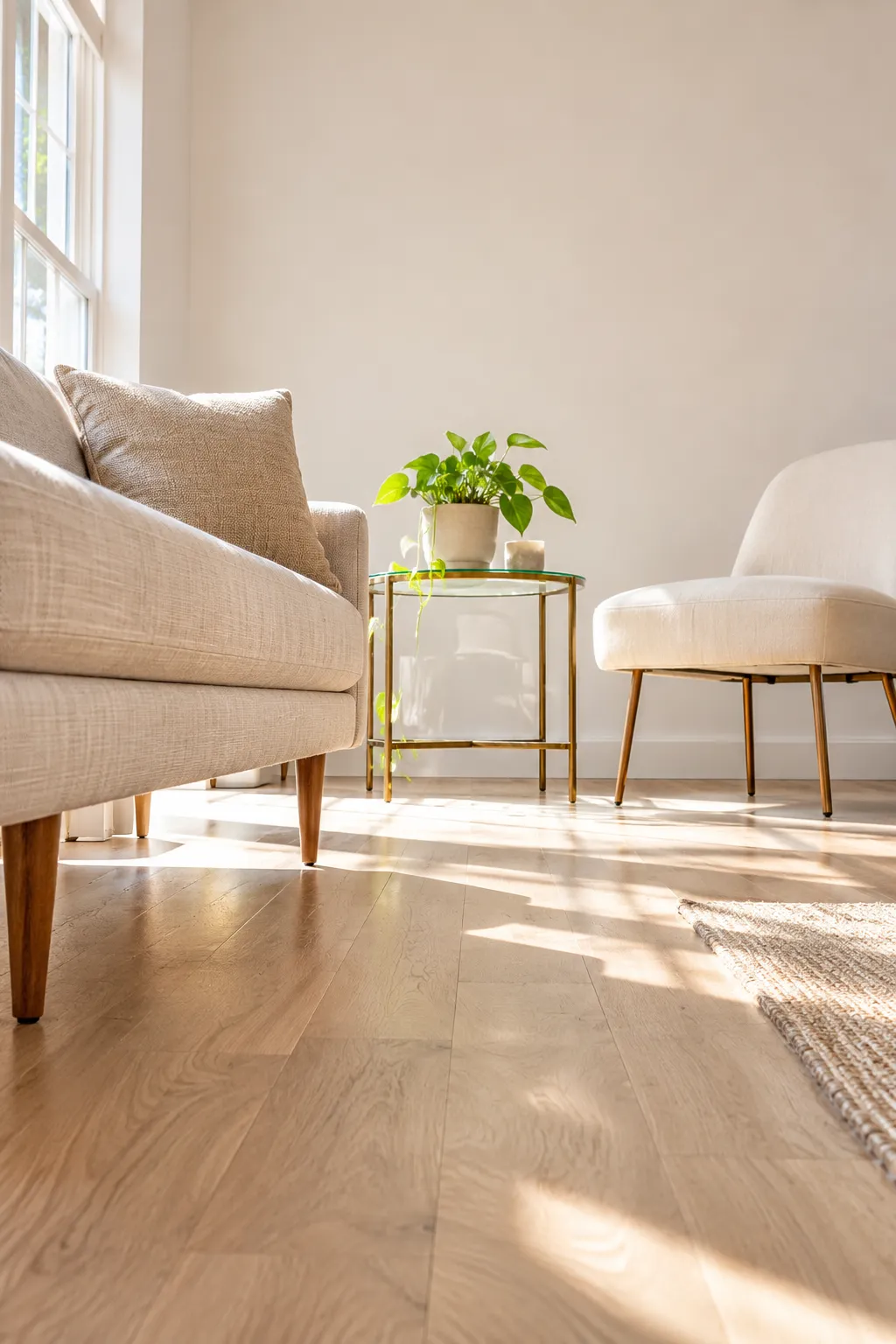
Look at how much floor you can see under your furniture. In a narrow room, that bare floor does a lot of quiet work.
Pieces that sit flat on the ground, like skirted sofas and solid storage cubes, read as heavy blocks. The room looks shorter even though nothing has changed size. Raised legs let light pass underneath, so the floor seems to keep going.
Arms matter too. A chunky rolled arm can add several inches to each side of a chair. Going armless, or choosing thin track arms, hands that width back to the walkway.
Start with the piece closest to the path. That’s the one you’ll notice first.
6. Mount the TV and Use a Floating Console
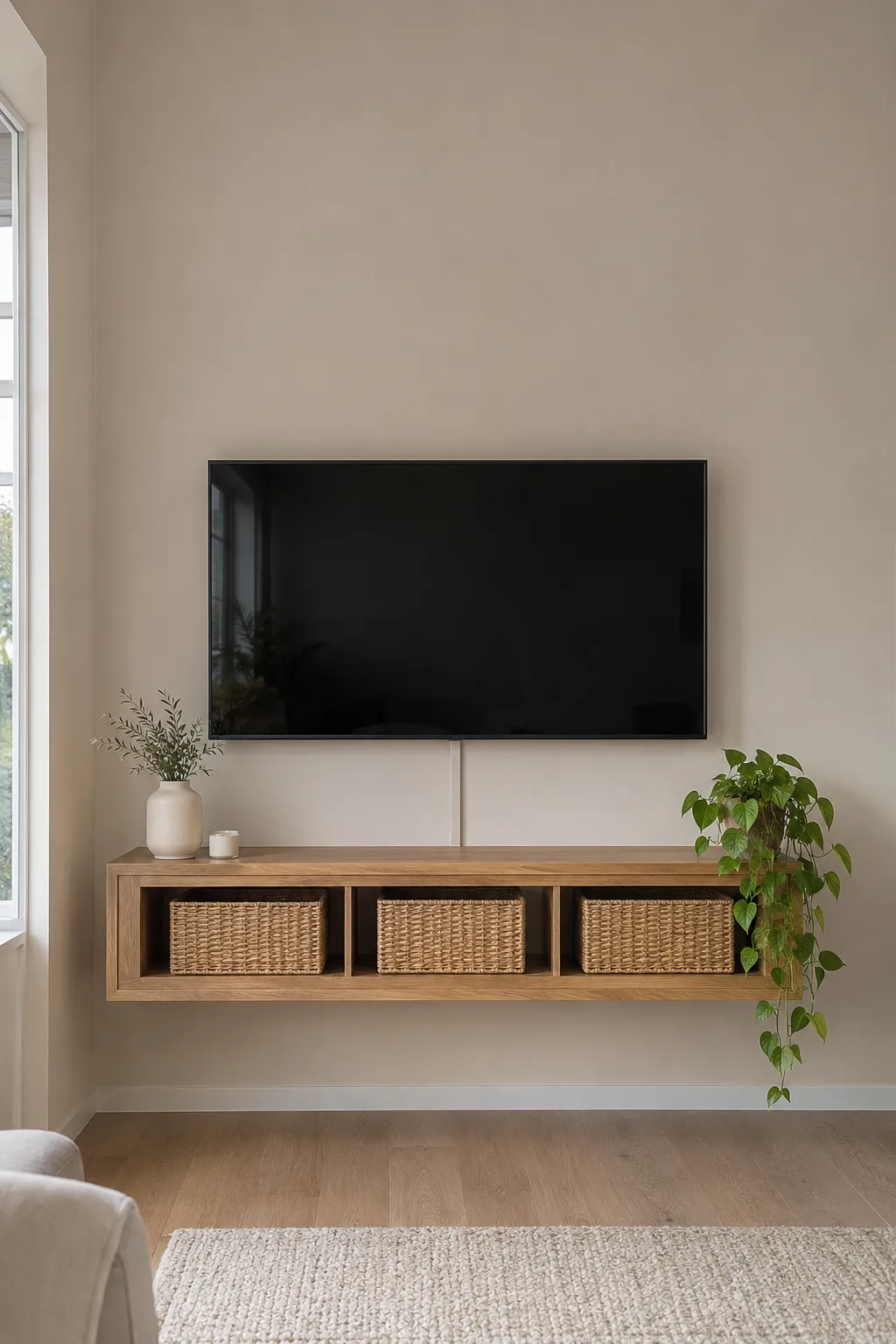
Get the TV off the stand and onto the wall. Media cabinets tend to be deep, and in a narrow room they push straight into the floor you need for walking or for the chairs across from the sofa.
Once the TV is up, add a floating console underneath for the router, remotes, and a couple of baskets. With a gap under the console, that strip of floor stays visible, which pairs well with the leggy furniture from the last idea.
Renting? Ask your landlord before you drill, and patch the holes when you move out. A slim, tall TV stand makes a fair backup.
Grab these before you mount
7. Lay a Wide Rug Across the Room, Not Along It
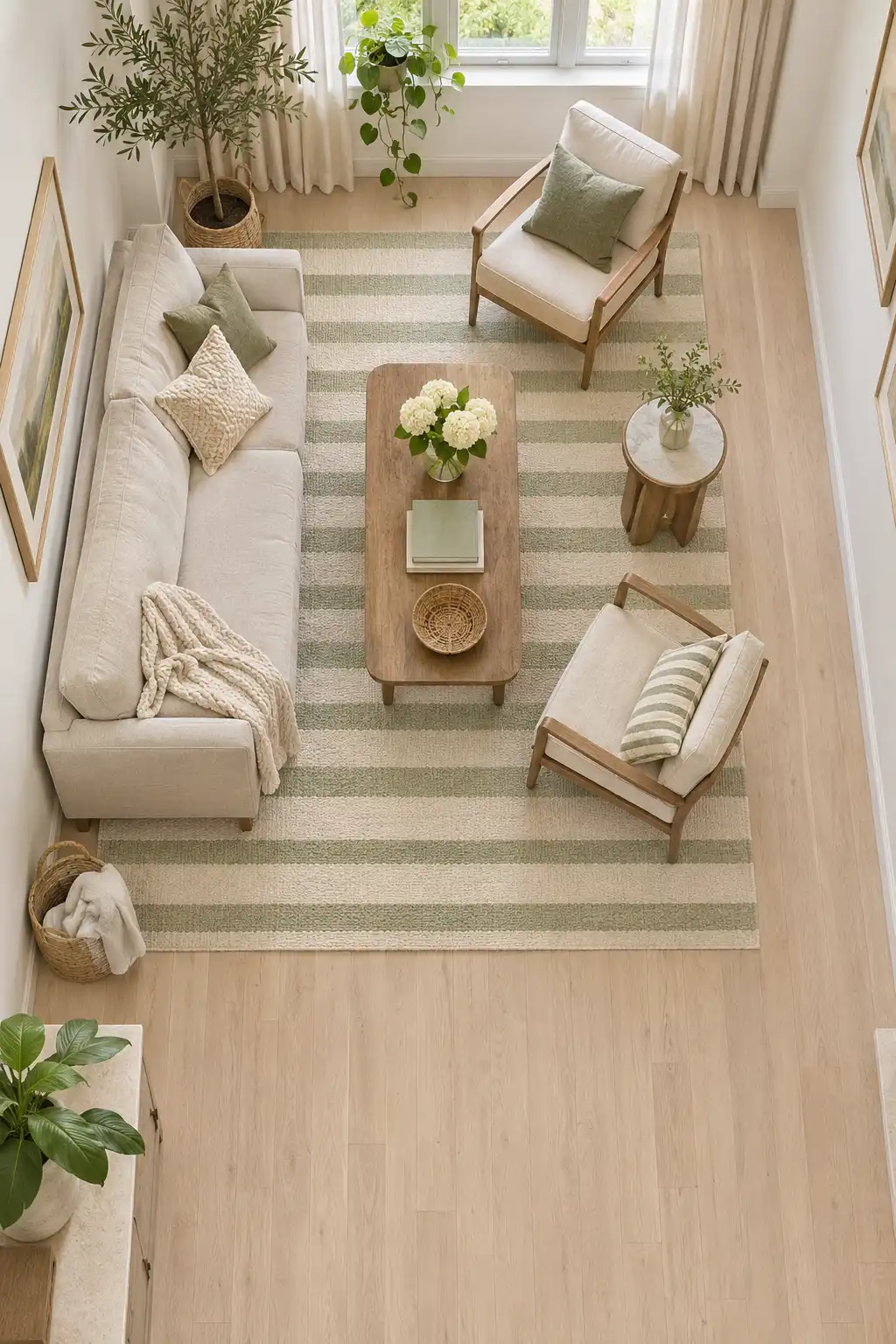
The most common rug mistake in a long room is a long rug. Laid down the length, it pulls your eye straight to the far wall, and the room looks even more like a hallway.
Turn it the other way. A rug laid across the width stretches the room sideways and gives the seating spot a clear outline. Size it so at least the front legs of the sofa and chairs rest on it.
In a two zone room, use two rugs instead of one long one. They don’t have to match. Sharing one color is enough to tie them together.
8. Tuck a Window Bench or Reading Chair at the Far End
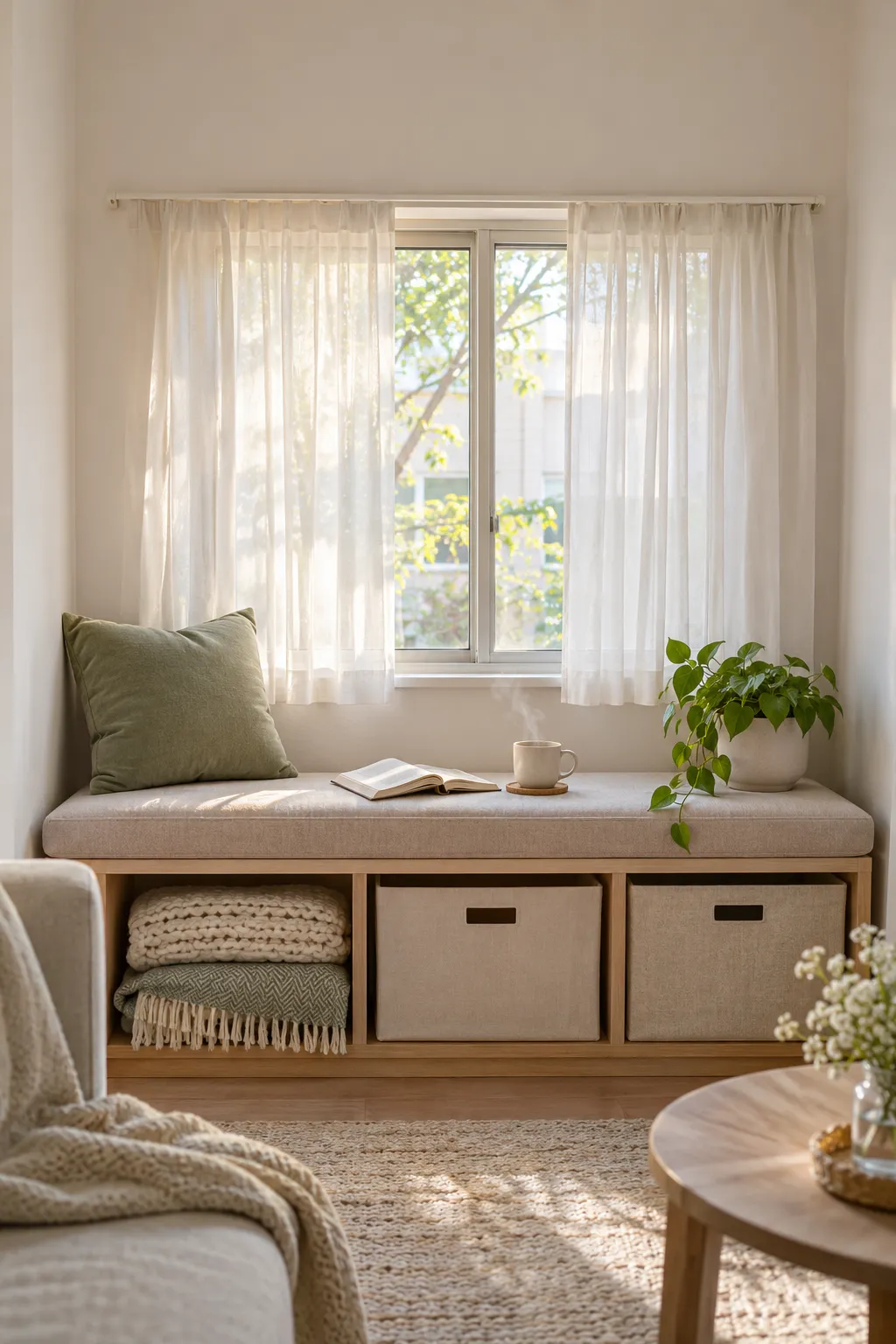
Most mornings, the far end of the room gets a glance and nothing else. It holds a plant, maybe a stack of magazines nobody reads, and that’s it.
Give people a reason to walk down there. A low bench under the window, or one comfy chair with a lamp beside it, turns that dead end into the best seat in the house. Morning coffee happens there. So does the book you keep meaning to finish.
Keep it small. One seat, one little table, one light. A second chair usually crowds the corner and blocks the window you were trying to enjoy.
💡 Quick Tip
Pick a bench with a lift top or open cubbies underneath. You get a seat and a home for throws and board games in the same footprint. A firm cushion on top is what makes people actually sit there.
9. Use Shallow Shelves on the Long Wall Instead of Deep Cabinets
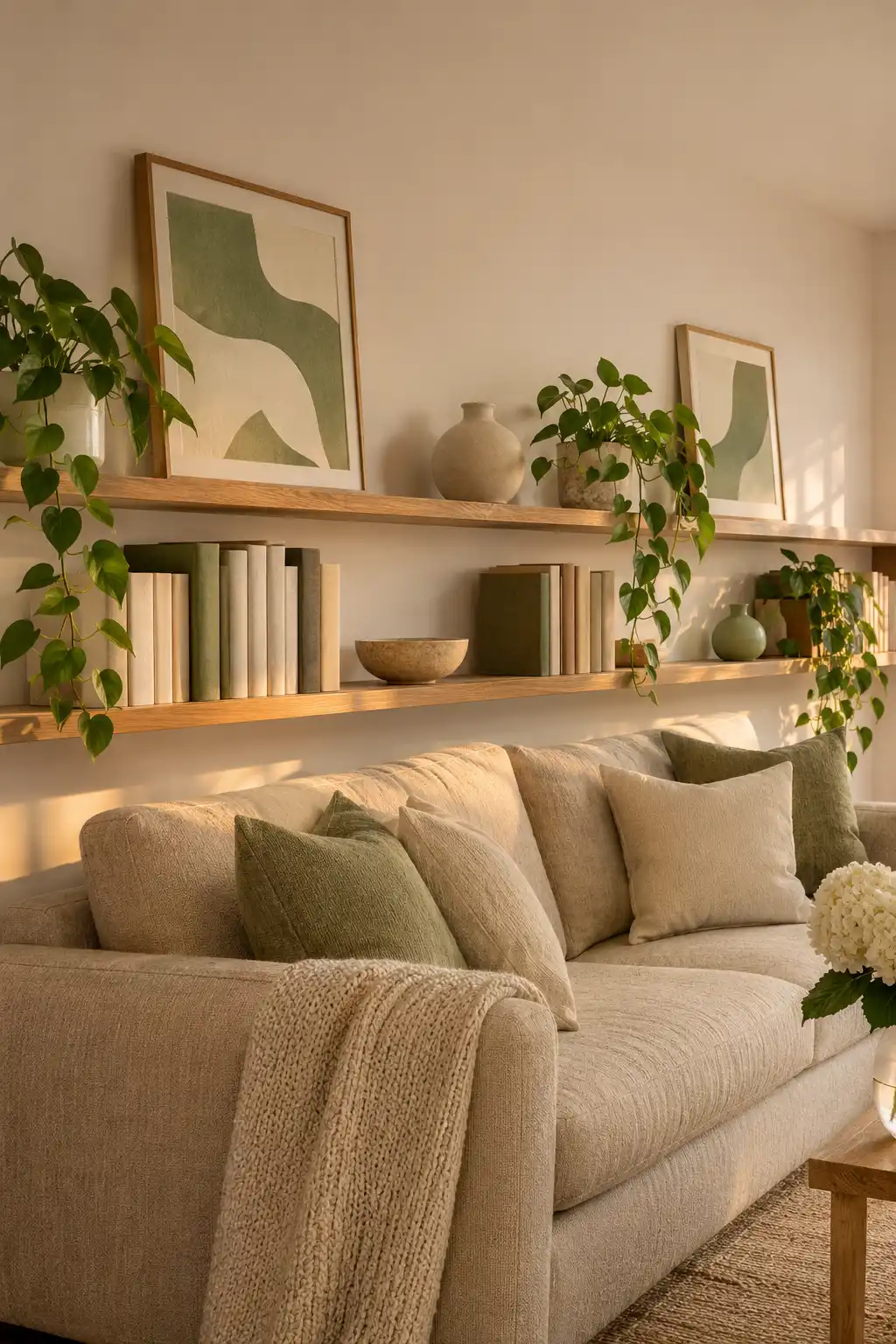
Shallow shelves give you storage without stealing width from the room.
Deep bookcases and cabinets look sensible in the store. On the long wall behind your seating, though, they jut out into space you need. A shelf just deep enough for paperbacks, small plants, and framed photos holds most of what a living room really stores. Run it across the whole wall and it starts to look built in.
Bulky things like spare blankets and games can go in the window bench instead. Keep the shelves for the pieces you like looking at.
In a narrow room, depth costs more than height. Build storage up the wall, not out into the room.
10. Light the Far End So the Room Stops Feeling Like a Tunnel
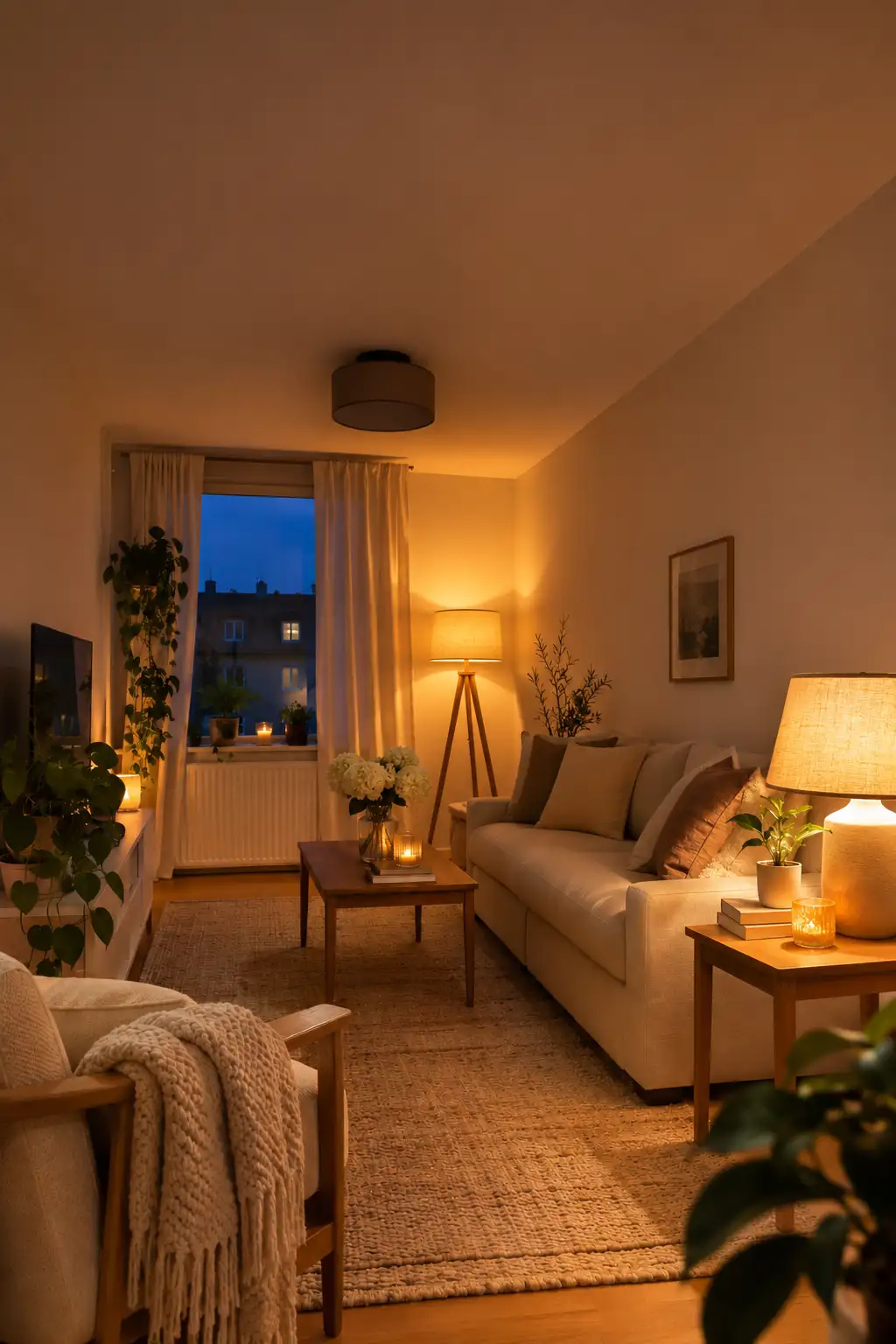
Most narrow rooms come with one ceiling light in the middle and a window at one end. After dark, that setup lights the center and leaves both ends dim, and the room seems to stretch on forever.
Start with the far end. A lamp in the darkest corner gives your eye somewhere to land, so the room no longer trails off into shadow. Then add a lower lamp near the seating so each zone has its own warm glow.
Plug in lamps do all of this. No electrician needed.
Put a floor or table lamp in the darkest far corner first.
Add a lamp beside the main seating, low enough to light faces instead of the ceiling.
Save the ceiling light for cleaning and hunting for lost keys.
Make the Length Work for You
A long, skinny room doesn’t need more furniture or a bigger budget. It needs a plan. Once the path runs along one wall and each end has a job, the whole space feels calmer and easier to live in.
You don’t have to tackle all ten at once. Start with the walkway tape and the sofa turn, since those two cost nothing and change the room the fastest. The rest can follow as you find the right pieces.
A smart narrow living room layout is mostly about moving things to where they make sense. Save this list for the next time your living room starts feeling like a hallway.
Start here this weekend