
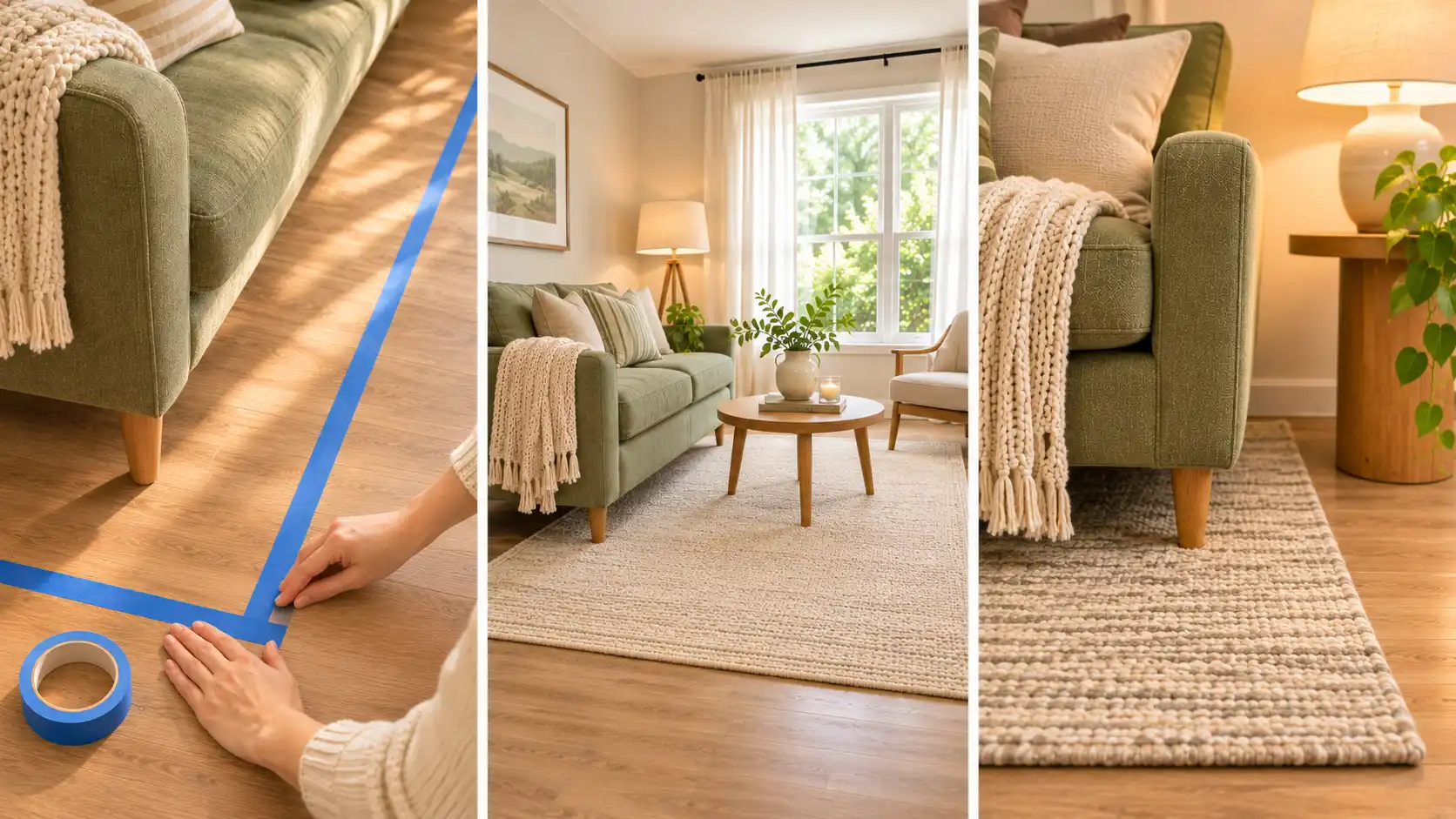
You found a rug you love, rolled it out, and something felt off. The couch looks like it’s floating. The coffee table sits on a tiny island. Somehow the whole room looks smaller than before. That is the most common problem with rug size for small living room spaces, and it almost always comes from a rug that is too small, not too big.
You don’t need a designer’s eye to fix this. You need a tape measure, a roll of painter’s tape, and about 45 minutes.
In this guide, you’ll measure your room and your sofa, pick a furniture layout, and work out the exact rug size that fits. Then you’ll tape that size onto your floor and live with it for two days before you buy anything. Most people skip that tape test, and it’s the step that saves you from a costly return.
This method works because it starts with your furniture, not the rug. A rug’s job is to hold your seating area together. Once you know where your sofa and chairs sit, the right size becomes clear.
By the end, you’ll have one number to shop for. Grab your tape measure, and let’s start with the walls.
What You Need
- 25-foot metal tape measure
- Painter’s tape, 1 inch wide or wider
- Notepad and pencil
- Phone calculator
- Phone camera
- Sofa, chairs and coffee table in place
- Graph paper (optional)
- A helper for long walls (optional)
At a Glance
All 10 steps in one place. Come back here any time you lose your spot.
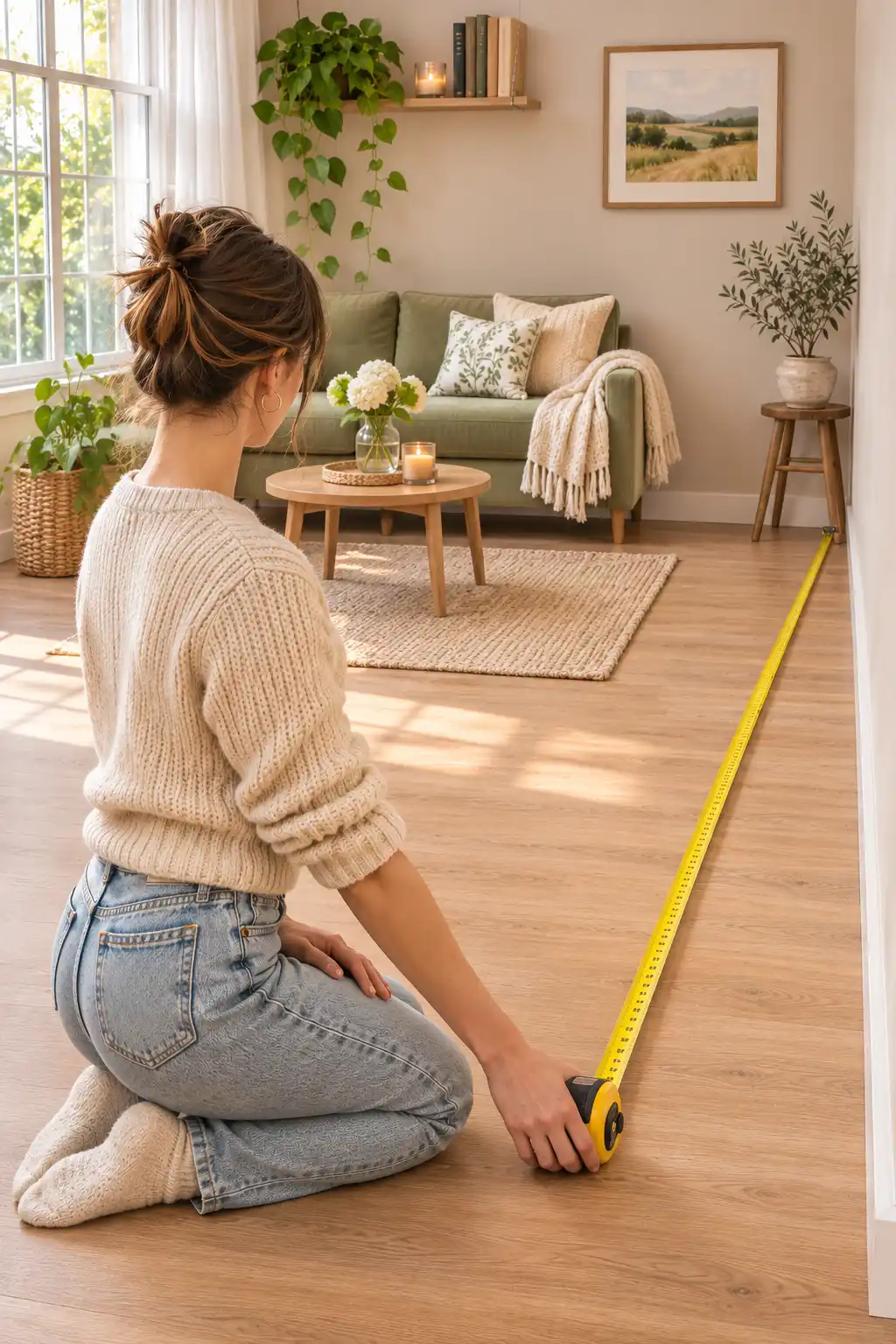
1. Measure your living room from wall to wall
Hold the end of the tape against one baseboard and run it to the opposite baseboard along your longest wall. Write that number down, then measure the shorter wall. These two numbers set the biggest rug your room can hold. If your living room opens into a kitchen or dining area, measure only the space where you sit. Use a doorway edge or a change in flooring as the boundary. Round to the nearest inch. A helper holding the far end keeps the tape from sagging, and a sag can add 2 to 3 inches of error.
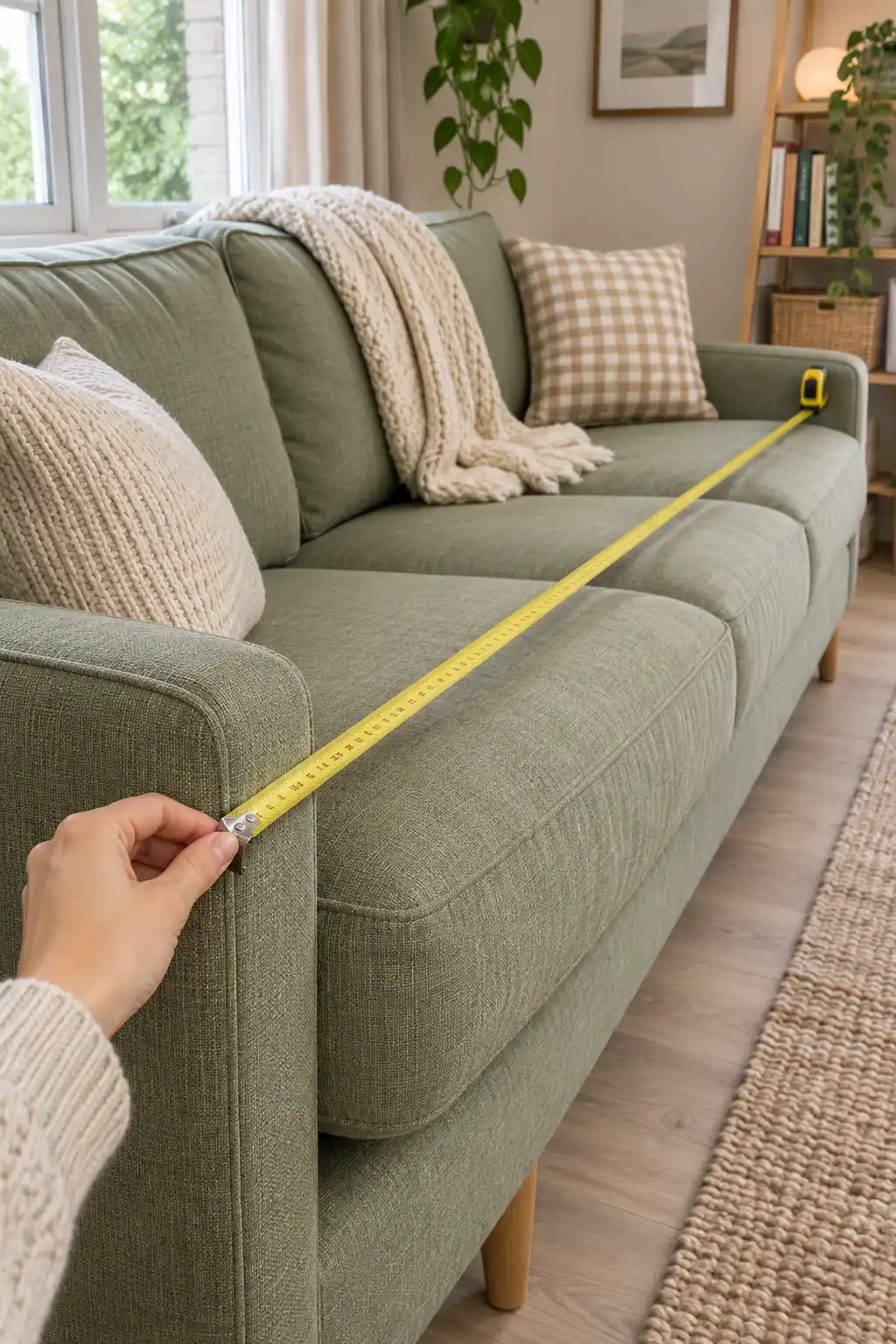
2. Measure the full length of your sofa
Go from the outside of one arm to the outside of the other. The seat cushions don’t count here. Write this number under your room size. Still shopping for a sofa? Use the width listed on the product page. Most apartment sofas measure between 72 and 84 inches.
3. Pick one of three furniture layouts
Your layout decides how big the rug has to be, so choose it before you do any math. You have three options:
- All legs on: every piece of furniture sits fully on the rug. This needs the biggest rug and works best in rooms at least 11 feet wide.
- Front legs on: the front legs of the sofa and chairs rest on the rug, and the back legs sit on the floor. This works in most small rooms.
- Floating: the rug sits in front of the sofa without touching it. This is good for very tight spaces, but it can make the room look choppy.
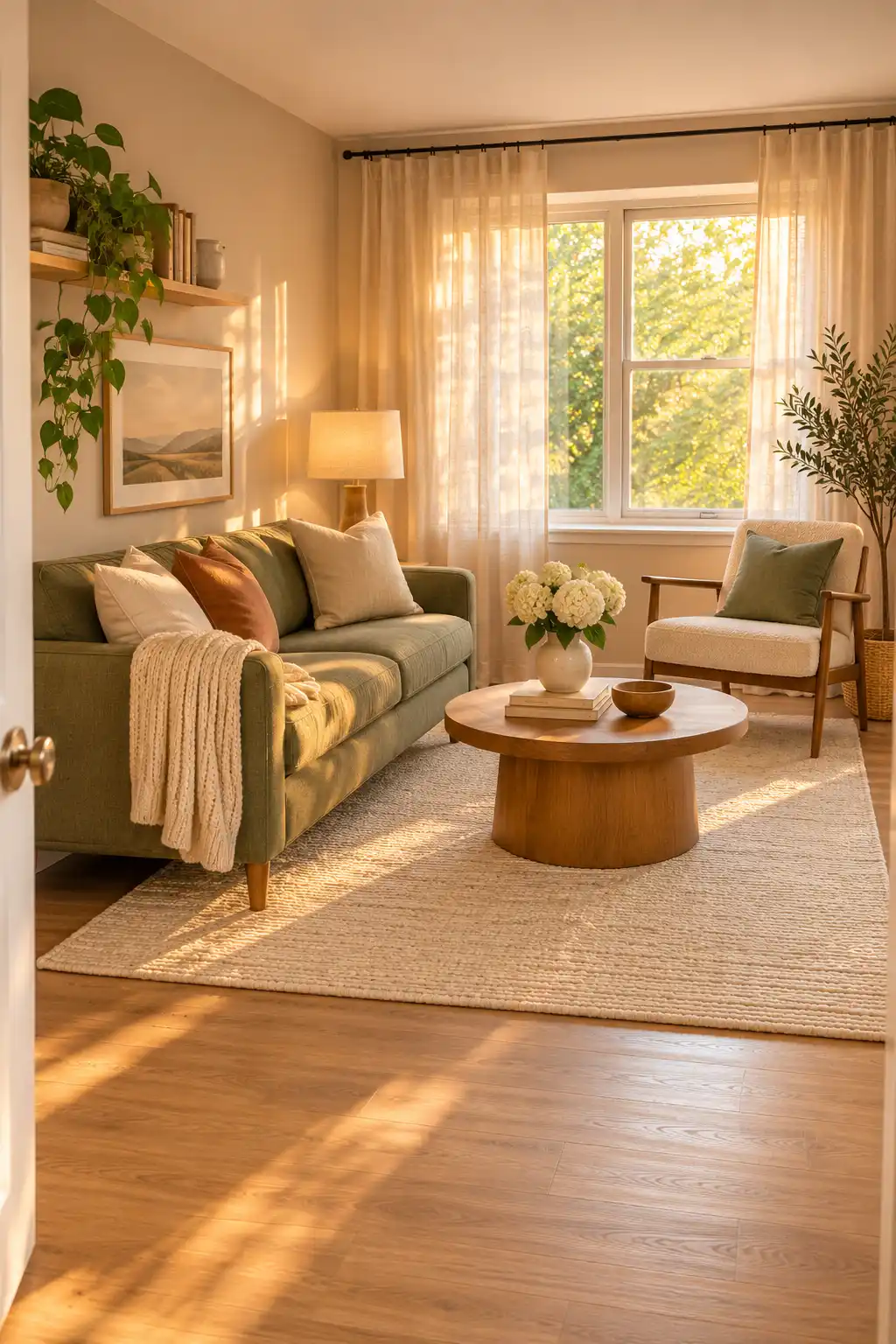
Not sure which layout to pick? Choose front legs on. It gives you a rug big enough to connect your furniture, and it costs less than a rug for the all legs on layout.
4. Leave 8 to 18 inches of bare floor along each wall
Eight inches is the smallest border that still looks planned in a tight room. In rooms wider than 10 feet, aim for 12 to 18 inches. That strip of bare floor frames the rug and makes the walls feel farther away. Subtract the border twice from each room measurement, once for each wall. A 10 x 12 foot room with a 12-inch border leaves space for a rug up to 8 x 10 feet. Write this down as your maximum.
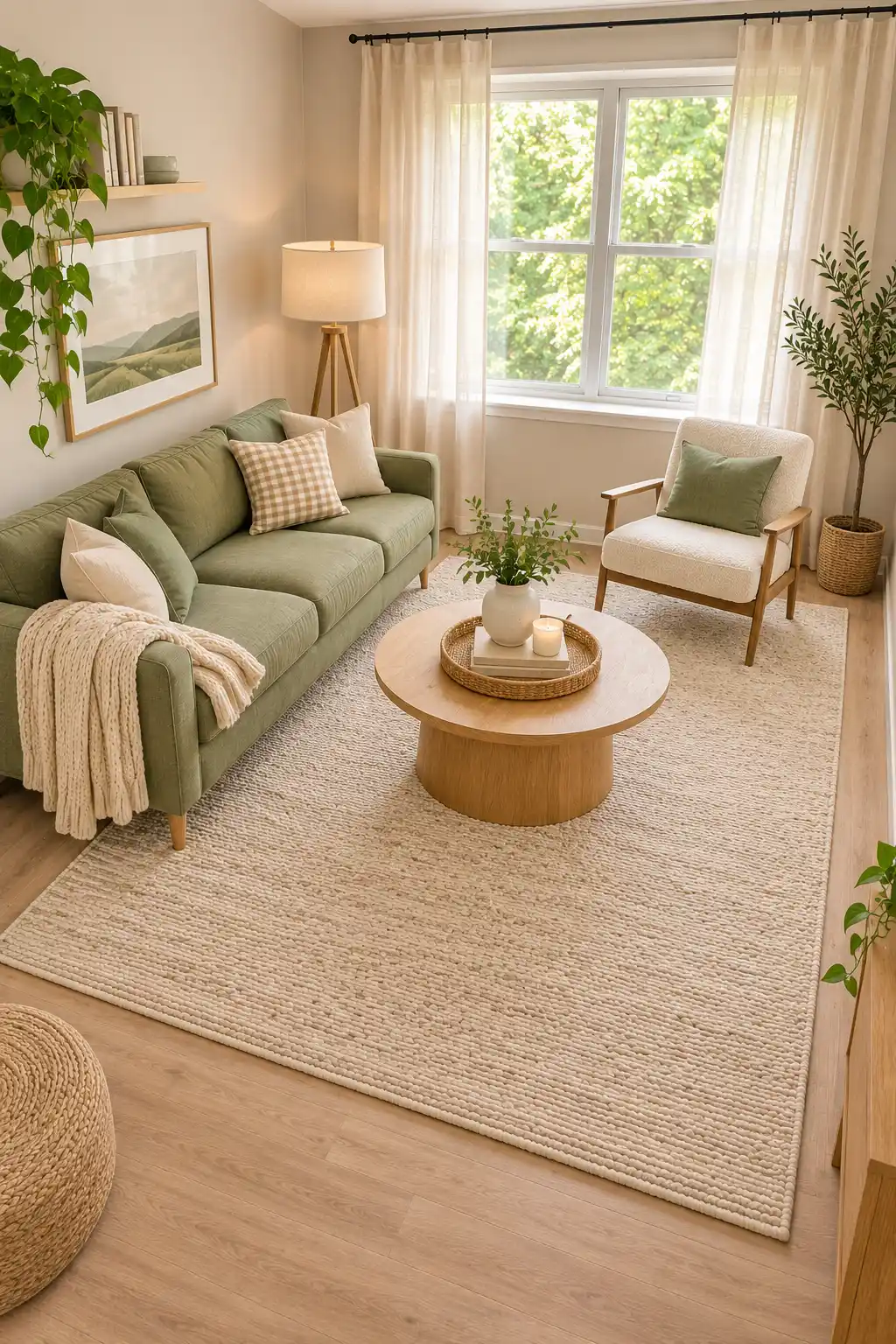
5. Make the rug wider than your sofa on both sides
A sofa that hangs past the rug edges makes the whole seating area look shrunken. The rug should reach 6 to 8 inches past each arm, so it looks like a base the furniture sits on. To get your minimum rug width, add 12 to 16 inches to your sofa length. An 80-inch sofa needs a rug at least 92 inches wide, which is close to 8 feet. For a sectional, measure the longest side and use that number. Write this down as your minimum.
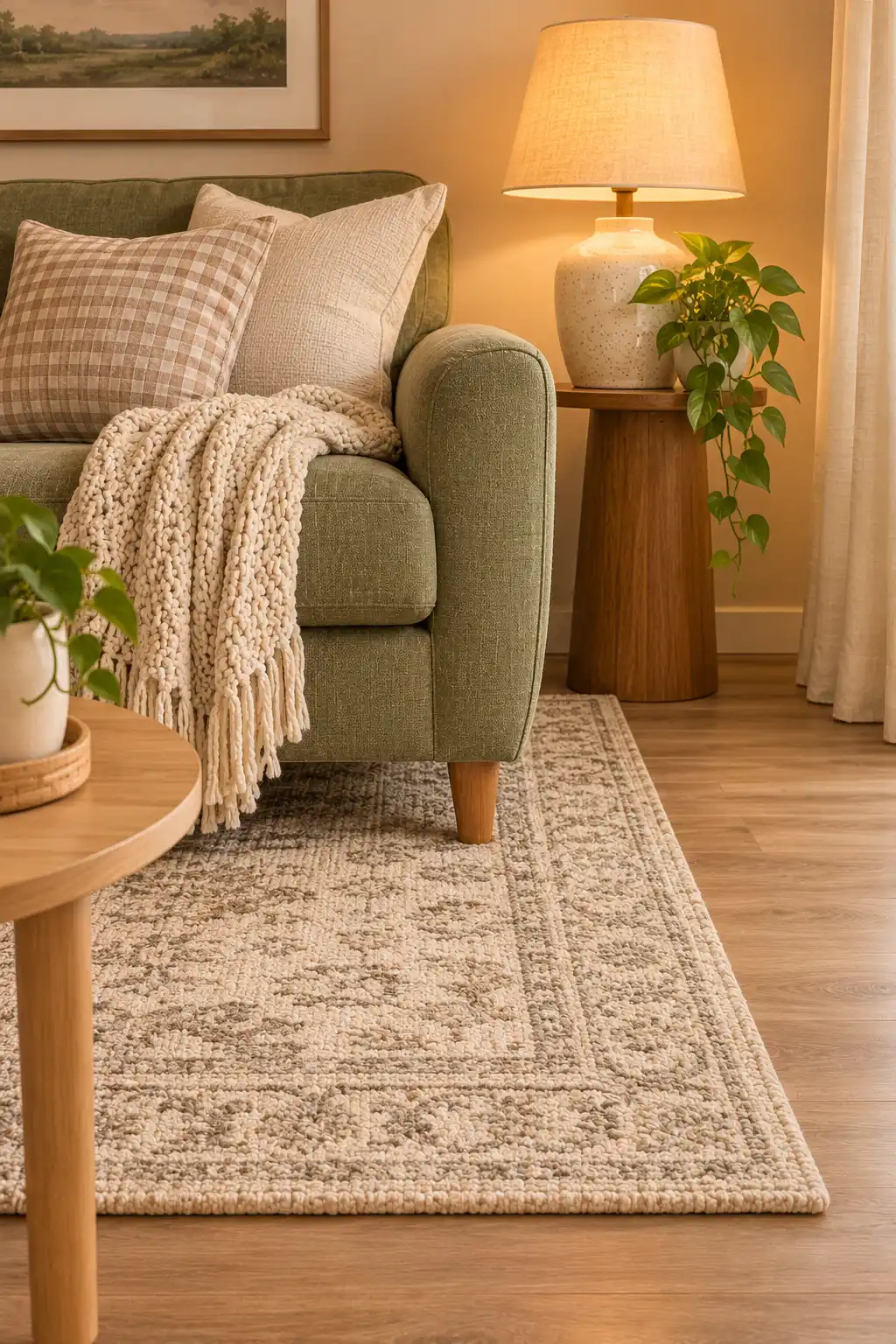
6. Round up to the closest standard rug size for small living room spaces
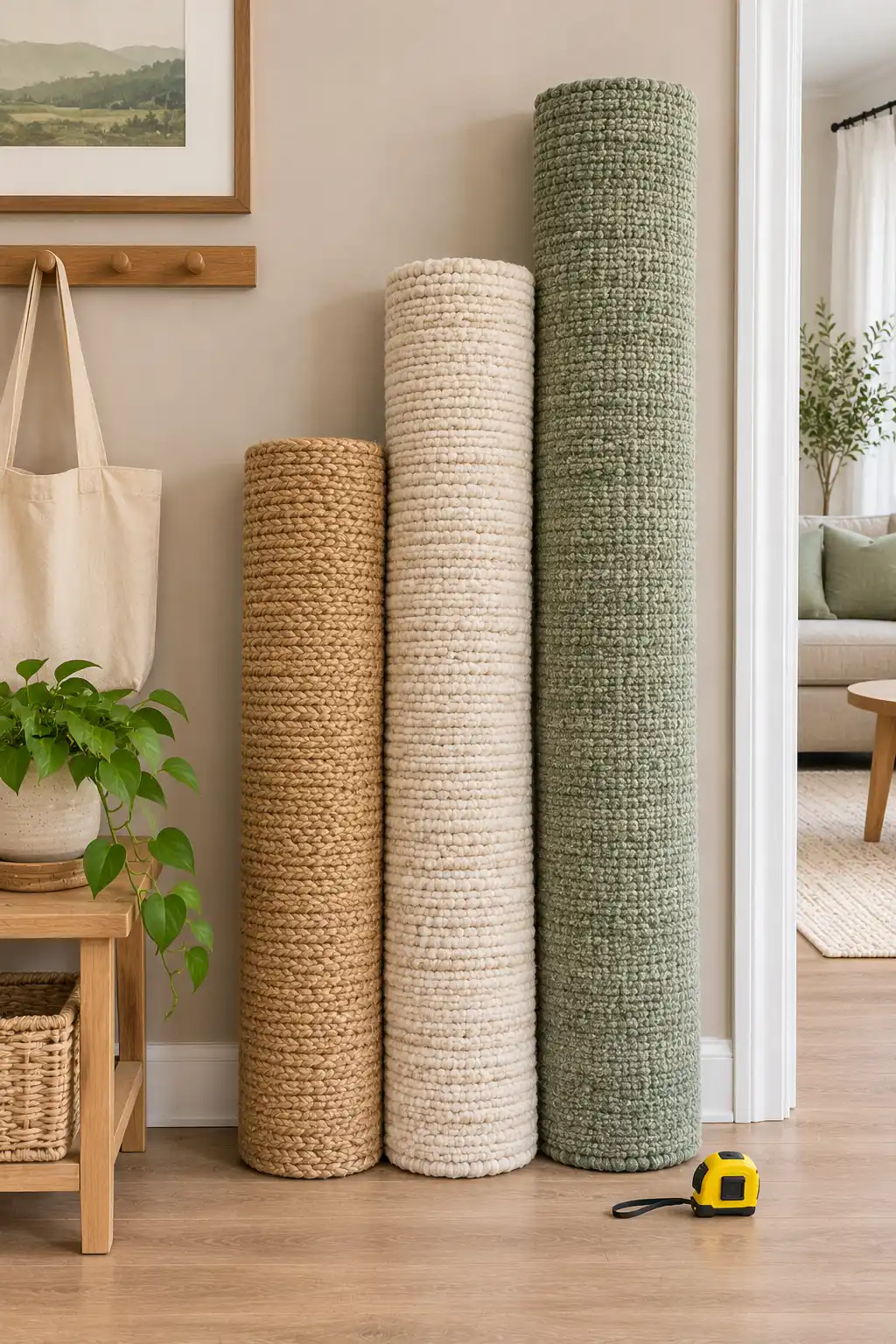
Your exact numbers won’t match a real rug, because rugs come in a small set of sizes. Pick the standard size that falls between your minimum and maximum:
- 5 x 8 feet: loveseats or floating layouts
- 6 x 9 feet: front legs on, with a sofa up to 84 inches
- 8 x 10 feet: front legs on, with most full-size sofas
- 9 x 12 feet: all legs on, in rooms at least 11 x 14 feet
If you’re caught between two sizes, go bigger. A rug that is a little too large looks planned, and one that is a little too small looks like a mistake. Lay the long side of the rug parallel to your sofa.
Is your minimum bigger than your maximum? Then your room can’t hold the layout you picked. Go back to Step 3 and switch to front legs on or floating before you shop.
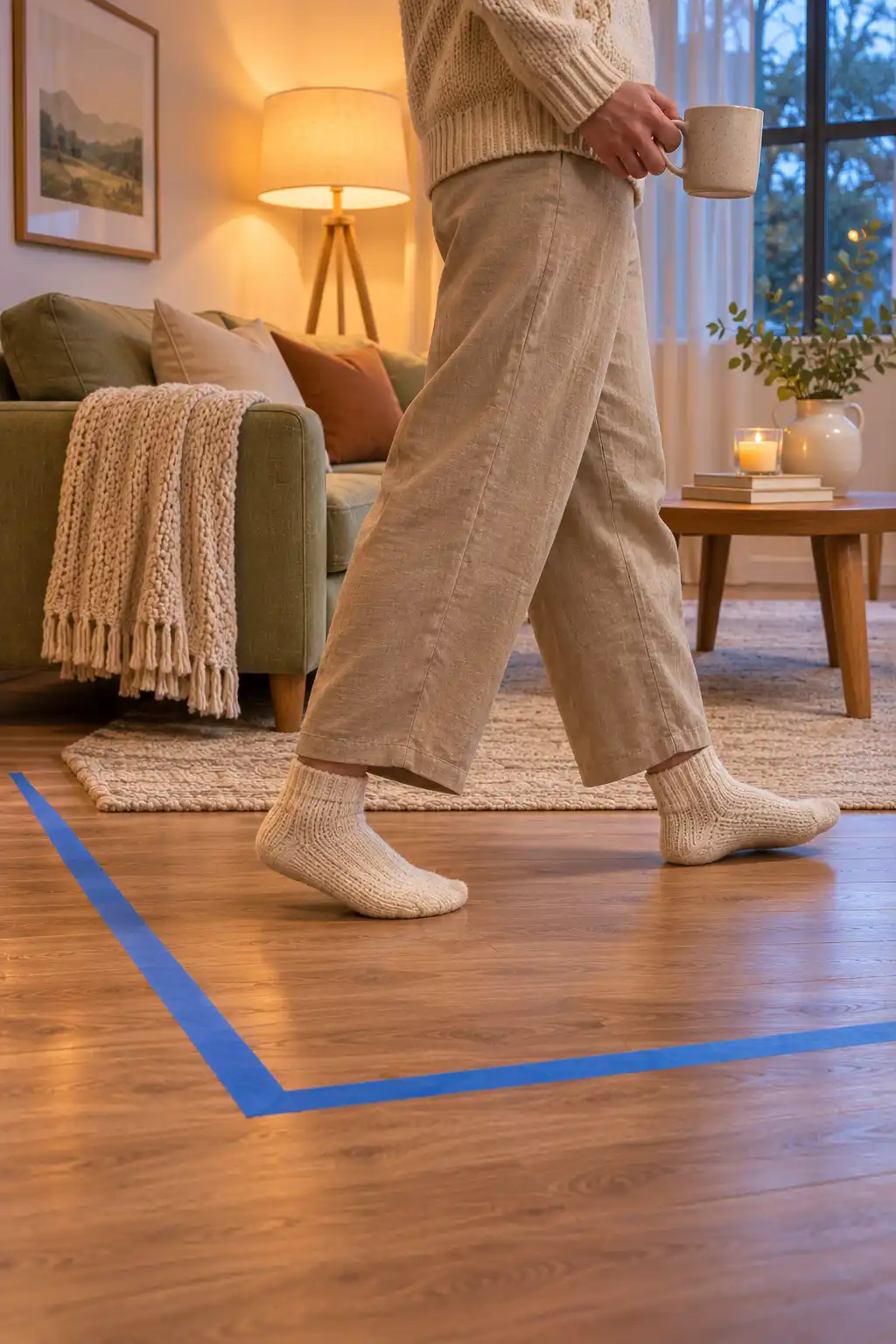
7. Tape the rug outline onto your floor
Start at the spot where your sofa’s front legs will sit, since that is the edge the rest of the rug lines up with. Run painter’s tape across the floor to make a rectangle the exact size of the rug you picked. Center it on your seating area, not on the room. A taped outline shows real size in a way a product photo never can. Painter’s tape peels off wood and tile without leaving sticky marks. If you don’t have tape, lay out flattened cardboard boxes or newspaper cut to size.
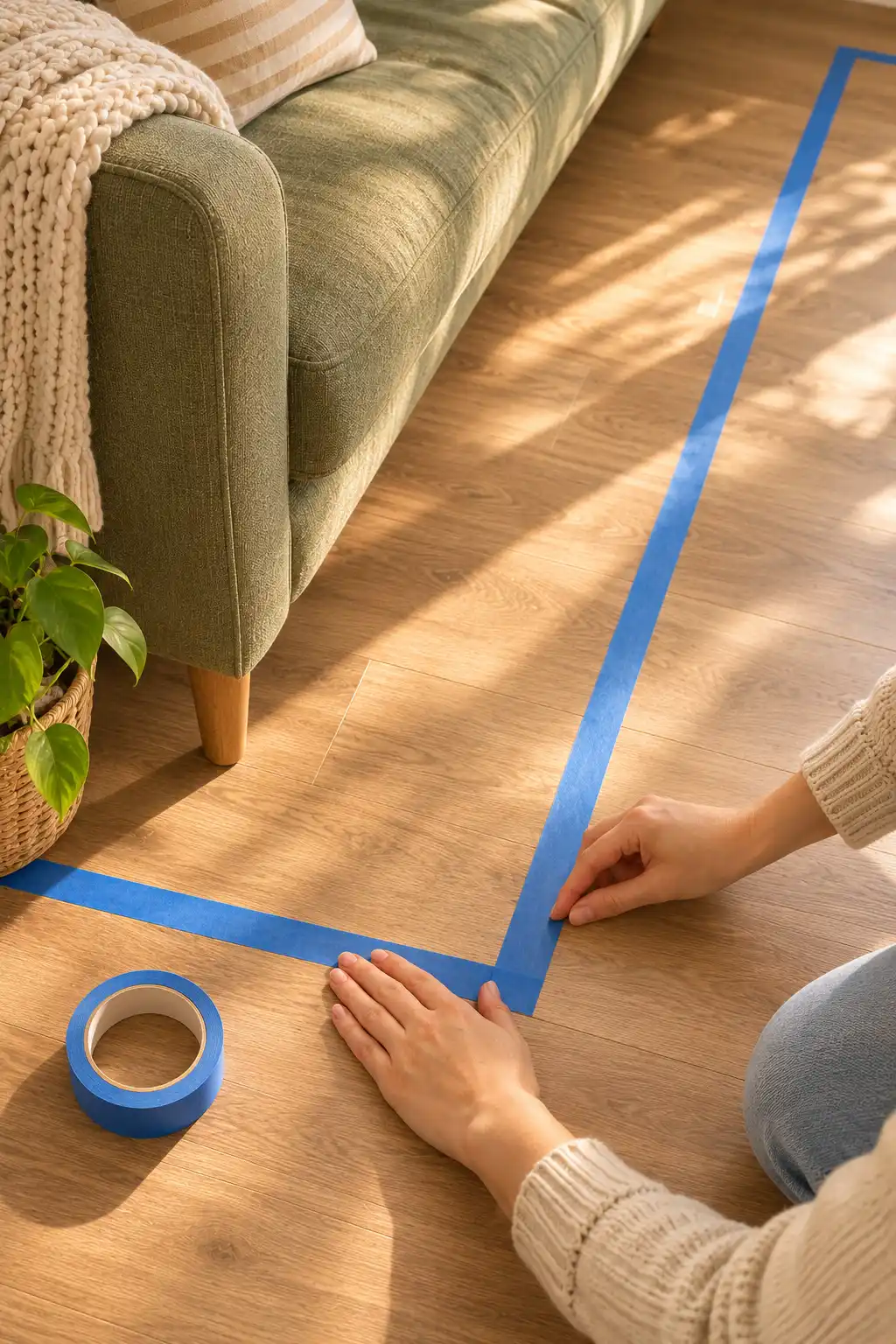
8. Walk around the taped outline for two days
Two days of normal living will tell you more than an hour of staring at the tape. As you go about your day, notice these three things:
- whether you step around the edges or catch your feet on them
- whether chair legs land where you planned
- how the room looks from the doorway (take a photo, because photos make proportions easier to judge)
If the outline feels cramped, drop down one size. If the furniture still looks scattered, go up one.
9. Check that every door clears the rug
Some doors sit only 1/2 inch above the floor. Open each door that swings over the tape and measure the gap underneath it. Your rug and pad stacked together must be thinner than that gap. Low-pile and flatweave rugs usually stay under 1/2 inch, so they are the safest choice near doors.
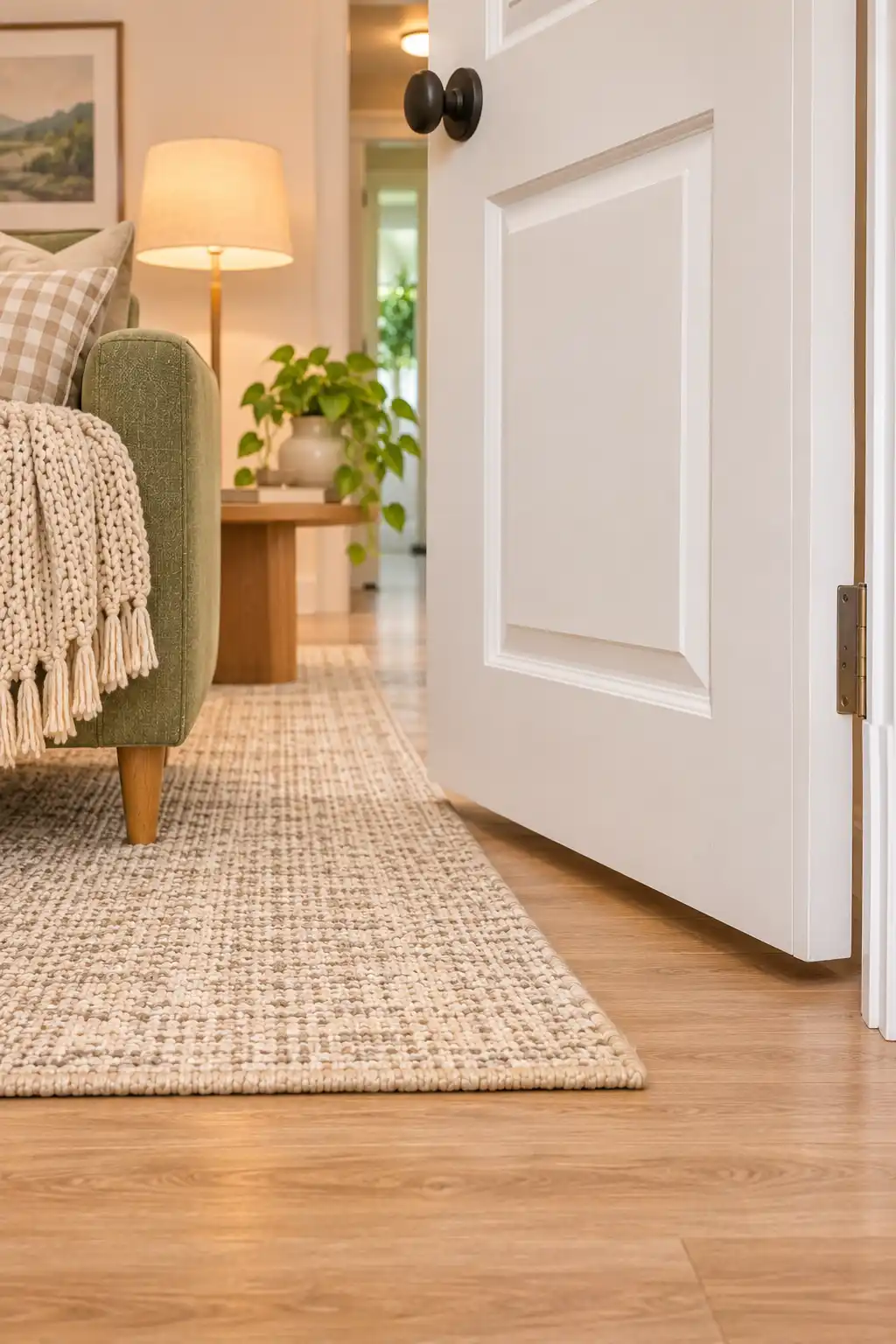
A door that drags over a rug will push it out of place every day. That creates a ripple people trip on. If the gap is too tight, slide the rug a few inches away from the door’s swing path instead of forcing it.
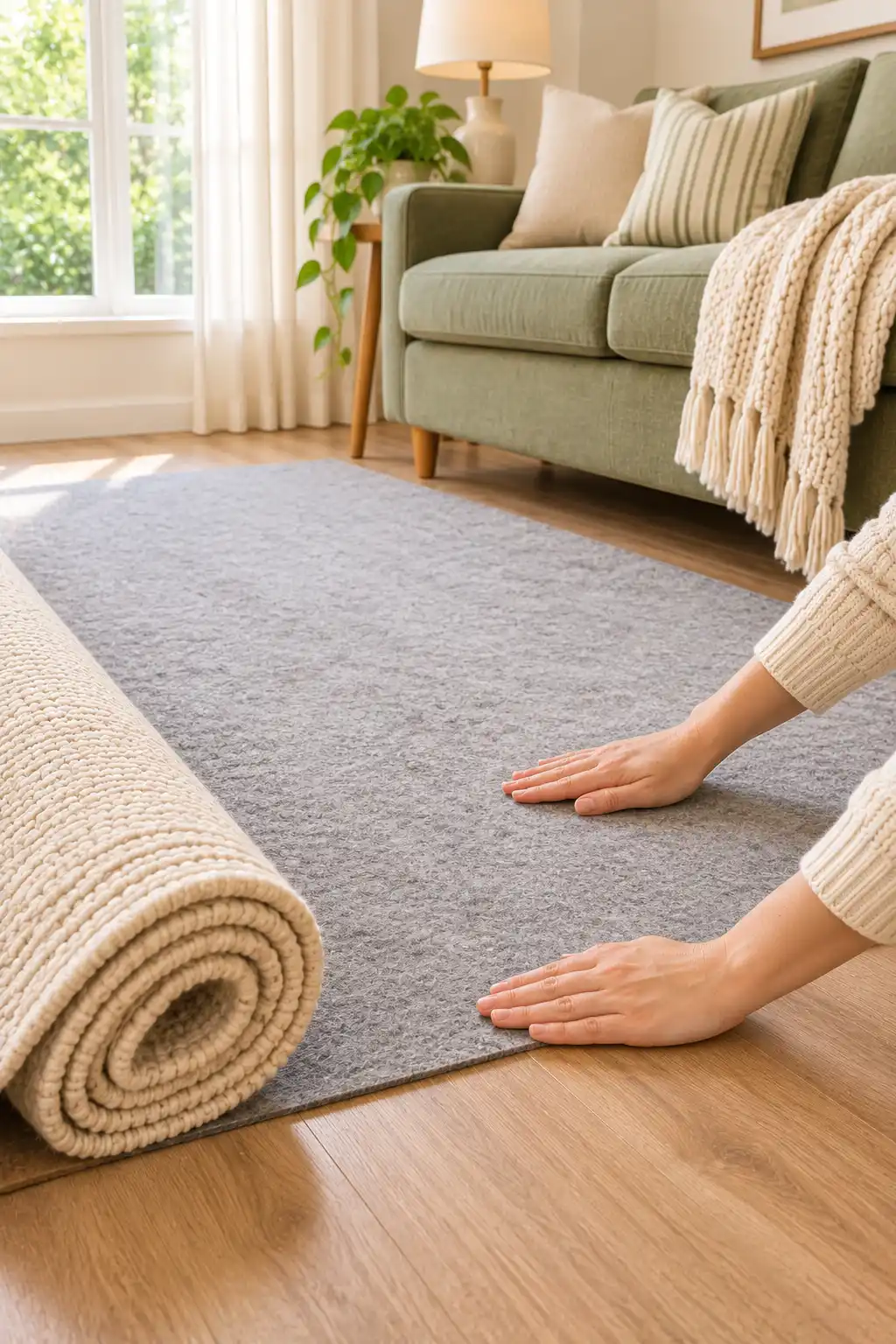
10. Choose a rug pad 1 inch smaller on every side
Once your rug size is set, the pad should measure 2 inches less in each direction. An 8 x 10 foot rug needs a pad about 7 feet 10 inches by 9 feet 10 inches. The gap lets the rug edges taper down to the floor, so the pad stays hidden and nobody trips on a lumpy border. Most pads can be trimmed with regular scissors. Pick one about 1/4 inch thick to keep the door clearance from Step 9. On vinyl plank floors, choose a felt pad or one labeled vinyl safe, since some rubber pads can stain vinyl over time.
Common Rug Size Mistakes
A small rug floating in the middle of the floor makes every piece of furniture look cut off from the others. Your rug should touch your seating, not only the table.
A rug that runs almost wall to wall looks like old carpet and hides the floor border that makes a room feel bigger. Start with your sofa, then check the room.
When the short side faces the sofa, the sofa hangs past both ends. The long side of the rug should always run parallel to the longest piece of furniture.
Numbers on paper feel different from a rug on the floor. Two days with a taped outline costs nothing. A rug return can cost you shipping fees and a week of waiting.
A rug that clears the door on its own can catch once the pad goes under it. Add both thicknesses together before you buy.
Rug Size Questions, Answered
The questions beginners ask most before they buy.
Yes, as long as it sits under a round coffee table or a group of chairs. With a straight sofa, a rectangle usually holds the seating together better. If you go round, choose one at least 6 feet across.
No, but the room looks more connected when at least the front legs sit on it. A floating rug works in very tight rooms if it is still wider than the sofa.
Most loveseats measure about 60 inches, so a 5 x 8 foot rug gives you plenty of overhang on both sides.
Size the rug for the seating area only, not the whole length of the room. Keep the bare floor border along the two long walls, and let the rest of the room stay open as a walkway.
Yes. Use a large, plain jute or flatweave rug as the base and set a smaller patterned rug on top. The bottom rug should follow every sizing rule in this guide.
What Changes With the Right Size
The rug floats under the coffee table like an island.
The sofa and chairs look like they belong to different rooms.
The room feels choppy and smaller than it really is.
Front legs rest on the rug, so the seating reads as one group.
A strip of bare floor frames the rug and makes the walls feel wider.
Walkways stay clear, and doors swing without catching.
Rug Size Cheat Sheet
Tape measure
Painter’s tape
Notepad and pencil
Phone calculator and camera
Wall border: 8 to 18 in
Past each sofa arm: 6 to 8 in
Pad: 1 in smaller per side
1. Measure the room wall to wall
2. Measure the sofa arm to arm
3. Pick a layout
4. Subtract the wall border (your max)
5. Add 12 to 16 in to sofa length (your min)
6. Round up to a standard size
7. Tape the outline on the floor
8. Live with it for 2 days
9. Check door clearance
10. Buy a pad 1 in smaller per side
You now have one clear number to shop for, and you’ve already tested it on your own floor. That’s more than most people do before they buy a rug.
Getting the rug size for small living room spaces right helps everything else in the room fit together.
Once your rug is down, try pulling your sofa a few inches away from the wall and see how much more open the room feels.
Save this guide to your small space Pinterest board so it’s ready the next time you shop for a rug.