
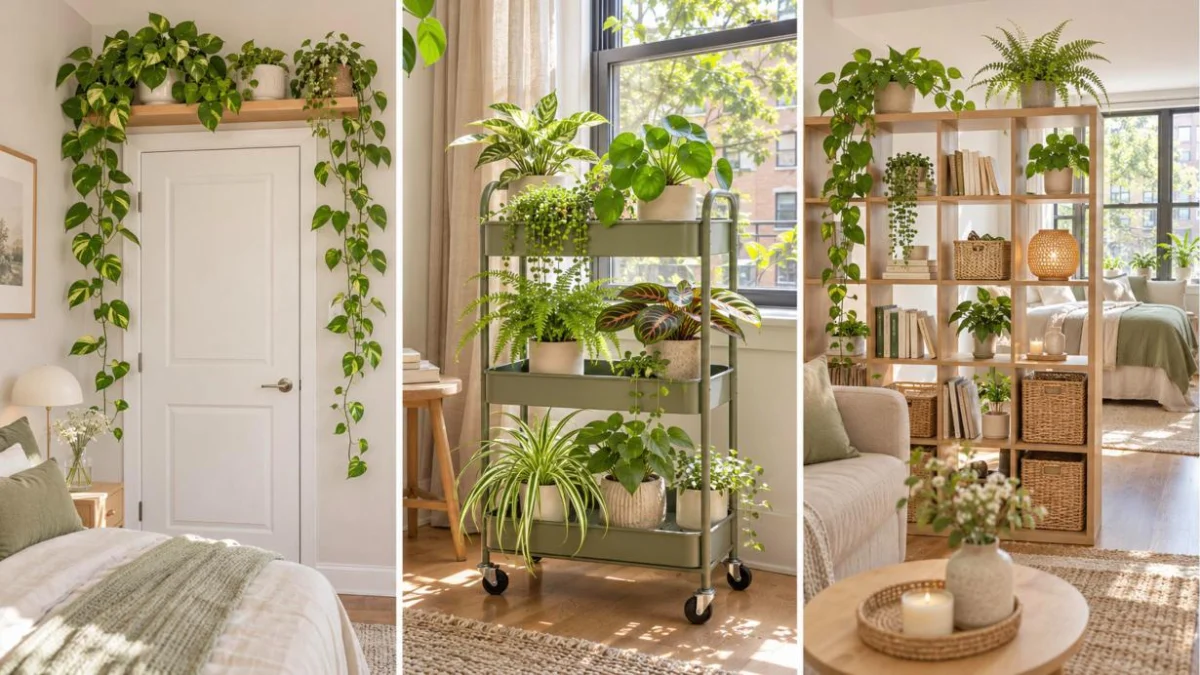
Most small apartments don’t have a plant problem. They have a floor problem. You buy one pothos, then a snake plant, then a little fern that was on sale by the checkout. Soon the windowsill is full, two pots sit on the floor next to the heater, and one lives on top of the fridge where you forget to water it.
The usual fix is a big plant stand. In a studio, that just moves the clutter to a new corner and eats floor space you didn’t have to begin with. What works better is going up. Walls, door frames, window frames, the space over the toilet, even the ceiling. Most of it is empty right now, and a lot of it gets better light than the floor does.
These plant shelf ideas for a small space are sorted by where they go and what kind of light each spot gets. A few need a drill. Plenty don’t, and those are flagged for renters. Pick the spots you actually have and start there.
1. Put a Plant Shelf Above the Couch Instead of Another Framed Print
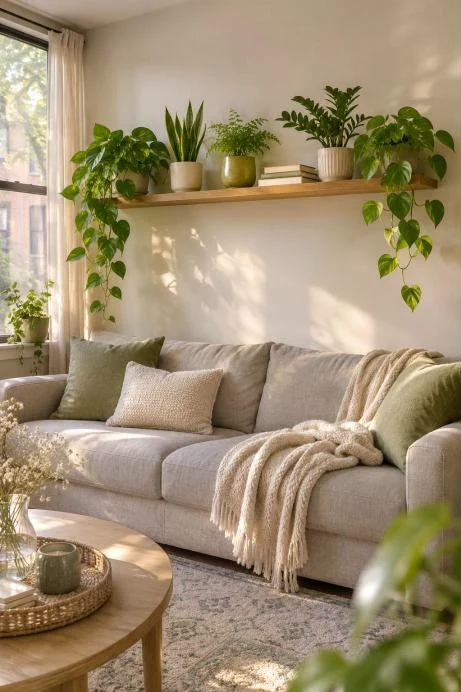
The wall above most couches holds one lonely print and a lot of blank paint.
A single long shelf there changes the whole wall. Hang it high enough that nobody’s head brushes the leaves when they lean back, and center it over the couch, not the wall.
What to put on it:
- One trailing plant at each end, like pothos or heartleaf philodendron, so the vines frame the couch
- Two or three small upright plants in the middle
- One thing that isn’t a plant, like a short stack of books, so it doesn’t look like a garden center shelf
Carry these to the sink to water them. A wet couch cushion takes forever to dry.
2. Lean a Narrow Ladder Shelf Into the Corner Nobody Uses
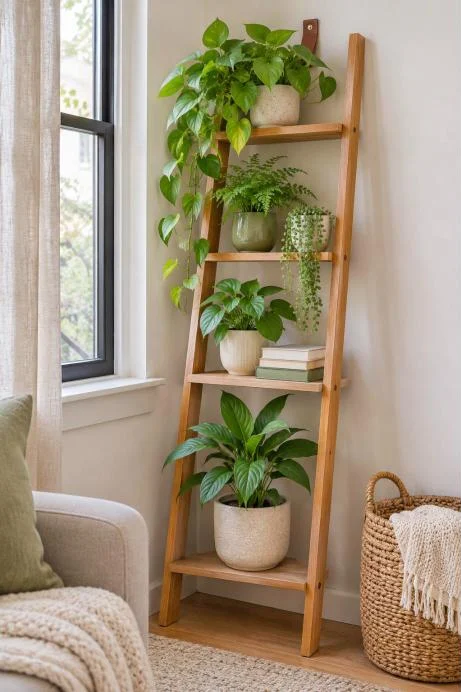
Every small apartment has that one corner. It’s too narrow for a chair and too awkward for a lamp, so it ends up holding a folded drying rack or nothing at all.
A narrow ladder shelf slides right in, and it needs no drilling. The rungs get deeper toward the floor, so sort your plants by size:
- Big, heavy pots on the bottom rung
- Medium plants in the middle
- Small or trailing plants up top, where vines can spill over the sides
Because it leans, it takes up less floor than a regular bookcase. Use the little wall strap that comes in the box, especially if a cat lives with you.
💡 Quick Tip
The bottom rungs get the least light. Every few weeks, swap one low plant with one from the top so nothing sits in the shade for months and starts stretching toward the window.
3. Turn the Space Over the Toilet Into a Humid Shelf for Ferns and Pothos
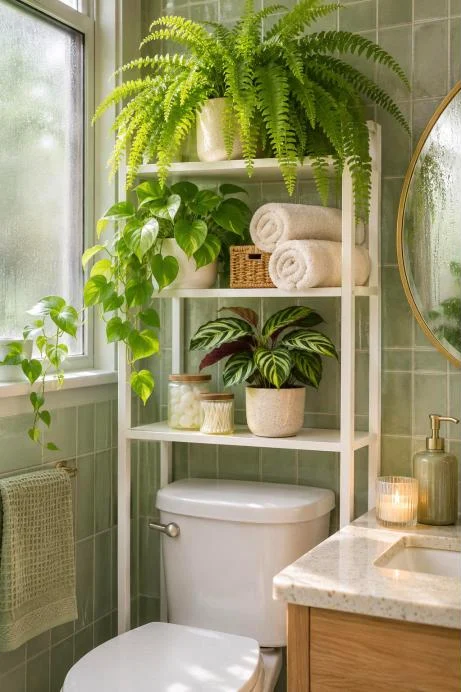
Your bathroom fogs up every morning after a hot shower, and a lot of houseplants would happily live in that steam.
An over the toilet shelf stands on the floor around the tank, so this one is renter friendly too. Before you fill it, check two things:
- Is there a window? If not, choose plants that cope with low light, and give them a week by a brighter window now and then.
- Can you still lift the tank lid? Leave enough room above the tank for that, in case the toilet starts running at 2 a.m.
Skip anything spiky. You’ll be reaching past it half asleep.
4. Use Tension Rod Shelves Inside the Window Frame When You Can’t Drill
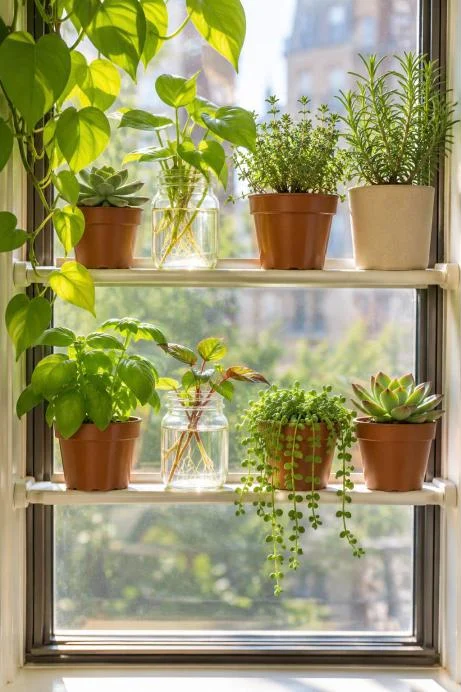
Measure the inside of your window frame first, then buy tension rod shelves made for that width.
They hold themselves in place by pressing against both sides of the frame, so there are no holes for your landlord to find. They work best when everything on them is light:
- Small pots, about the size of a coffee mug
- Plastic nursery pots instead of heavy ceramic ones
- Succulents, herbs, or cuttings rooting in jars of water
Keep the bottom half of the window clear if you like to open it on warm days.
Measure the frame at the top and the bottom. Old windows are often a little crooked, so use the smaller number.
Twist each rod until it feels snug, then press down on the shelf with your hand before any plant goes on it.
Load the bottom shelf first and work up. Check the grip again the next day, since rods can settle overnight.
5. Run One Floating Shelf Above the Door Frame for Trailing Plants
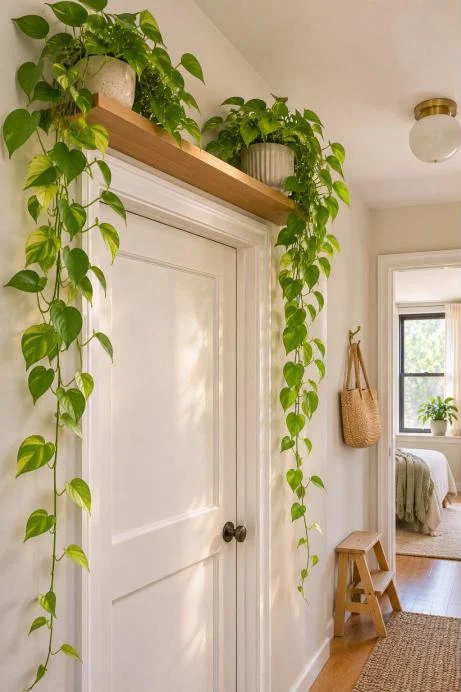
People assume trailing plants need a sunny shelf. Plenty of pothos and heartleaf philodendrons do fine in medium light, and the top of a door frame is a spot almost nobody uses.
A slim floating shelf, about as wide as the door trim, gives you a strip of green that slowly frames the whole doorway as the vines grow.
A few things make it easier to live with:
- Keep a step stool nearby. If watering is a hassle, it won’t happen.
- Pick pots with a built in saucer.
- Trim any vine that starts brushing the top of your head.
A door across from a window, even one down the hall, is the best spot for this.
A blank strip of wall over the bedroom door. Three plants crowd the dresser top, fighting the hairbrush and the jewelry dish for space.
Two trailing plants sit on a slim shelf over the door, with vines hanging down both sides of the frame. The dresser is clear again.
6. Put a Shallow Herb Ledge Right Above the Kitchen Sink
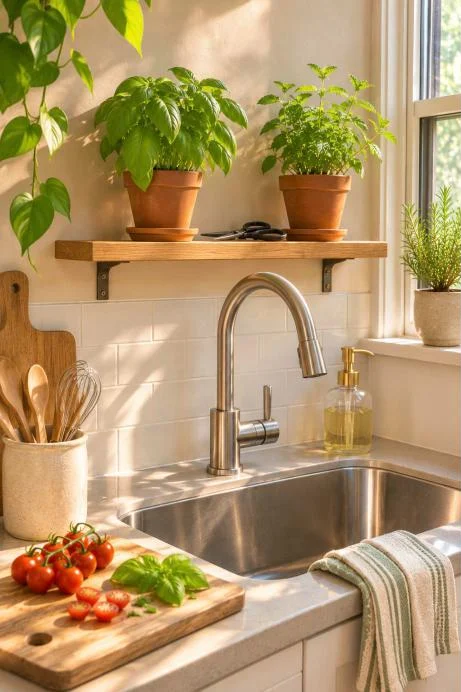
Herbs you can snip while the pasta water boils actually get used. Herbs stuck on a sunny sill in another room usually don’t.
A narrow ledge above the sink, just deep enough for a small pot, keeps basil and mint where you cook. Watering is easy too, since the tap is right below.
Two things to know first:
- Herbs need more light than anything else on this list. A sink with no window nearby is a hard spot for them.
- Mint spreads fast, so give it a pot of its own.
No window over your sink? Put a pothos cutting in a glass jar there instead and save the herbs for a brighter spot.
What to grab first
7. Park Your Plants on a Rolling Cart That Follows the Sun
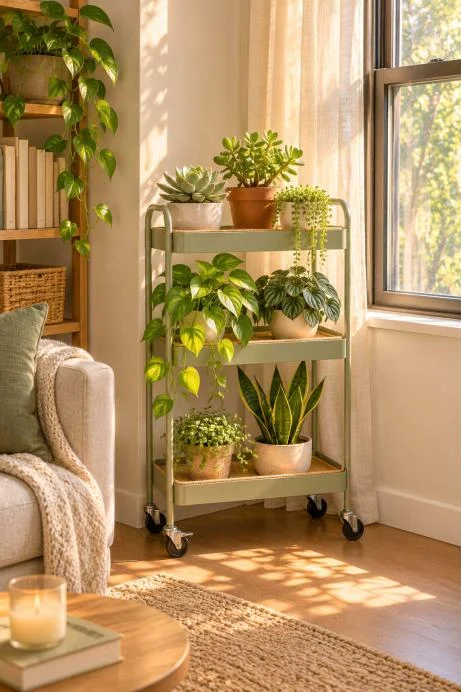
Light in a small apartment moves around more than most people notice. The spot that glows at 8 a.m. can be in full shade by lunch.
A three tier rolling cart lets your plants move with it. Park it by the window in the morning, then roll it back against the wall when you need the floor for a workout or a guest’s suitcase.
Keep the setup simple:
- Get a cart with locking wheels.
- Put a tray or liner on each tier so water doesn’t drip down onto the plants below.
- Skip tall plants. The tiers are closer together than they look.
On watering day, the whole cart rolls to the sink in one trip instead of six.
8. Use a Cube Shelf as a Plant Wall That Splits Up a Studio
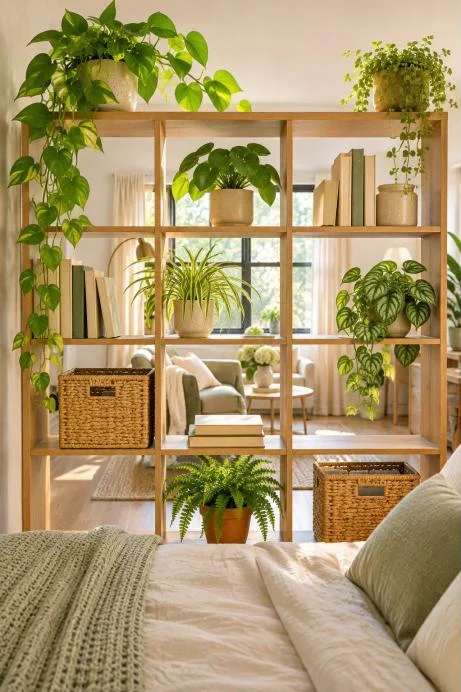
A curtain divides a studio, but it blocks the light. A solid bookcase does the same, and it makes the room feel even smaller.
An open back cube shelf sits right in between. Set it sideways to the window so light passes through the cubes, then fill some with plants and some with books or baskets.
A few setup rules:
- Leave a cube or two empty in each row so it still feels see through.
- Keep the heaviest pots in the bottom row.
- If it’s taller than you, anchor the end that touches the wall.
The two sides of the shelf get different light, so they need different plants.
| 🪟 Window Side | 🛋️ Room Side | |
|---|---|---|
| Light | Brighter, changes through the day | Softer and steadier |
| Good picks | Herbs, succulents, string of pearls | Pothos, snake plant, ZZ plant |
| Watch for | Soil drying out faster | Plants leaning toward the window |
9. Stick a Grow Light Strip Under a Wall Shelf to Rescue a Dark Corner
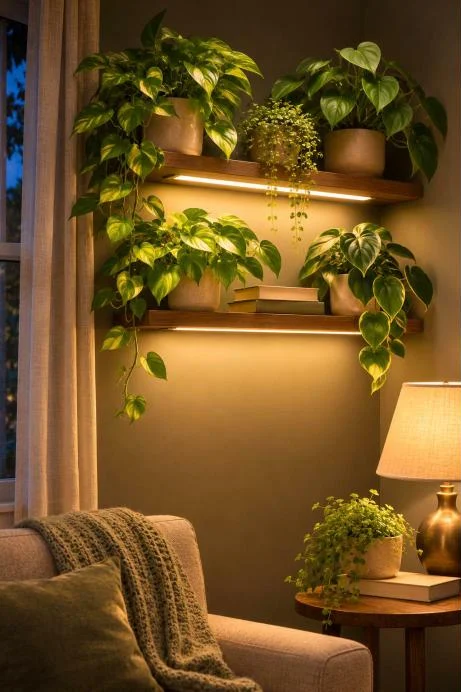
The usual mistake is buying a low light plant for a dark corner and hoping for the best. Low light still means some light, and a corner with no window in sight usually doesn’t get enough.
A grow light strip on the underside of a wall shelf fixes that. Each shelf becomes the lamp for the one below it.
Getting it right:
- Stick the strip near the front edge so the light hits the leaves, not the wall.
- Choose a full spectrum strip that glows white, not purple, so it looks like a normal shelf light.
- Start with forgiving plants like pothos or philodendron.
The corner you used to ignore can end up as the greenest spot in the room.
Plug it into a simple outlet timer so it turns on and off at the same time every day.
Check the box for how far the plants should sit from the light.
Leaving it on all night. Plants need dark hours too.
Running the plug where water drips when you water the shelf.
10. Hang a Rope Shelf From a Ceiling Hook When Every Surface Is Taken
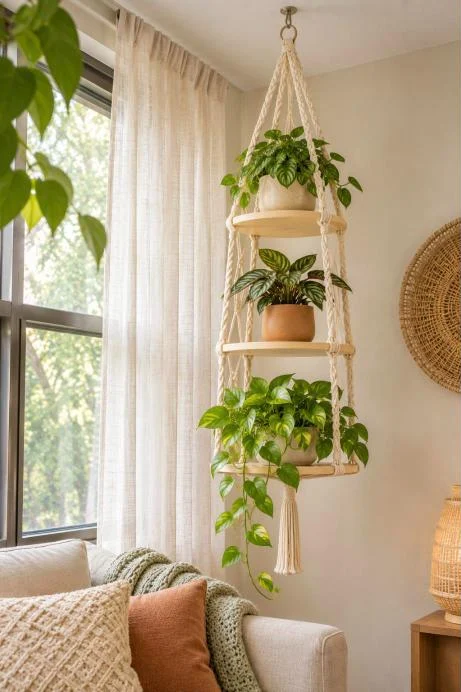
Hang it where you can water it without moving furniture. That one rule saves a lot of regret.
A rope or macrame hanging shelf turns empty air into two or three small plant ledges. It doesn’t touch the floor or a single wall, which helps when both are already full.
Good spots for one:
- In front of a window, a little in from the glass
- Above the end of a kitchen counter
- In the corner beside the couch, away from where people walk
The hook leaves one small hole that is usually easy to patch, but check your lease if your landlord is strict about the ceiling.
⚠️ Watch Out
Wet soil weighs a lot more than dry soil. Screw the hook into a ceiling joist, or use a toggle bolt rated for more than the full weight of the shelf with freshly watered pots. A plain screw in drywall can pull loose.
11. Build a Pegboard Plant Wall You Can Rearrange Every Season
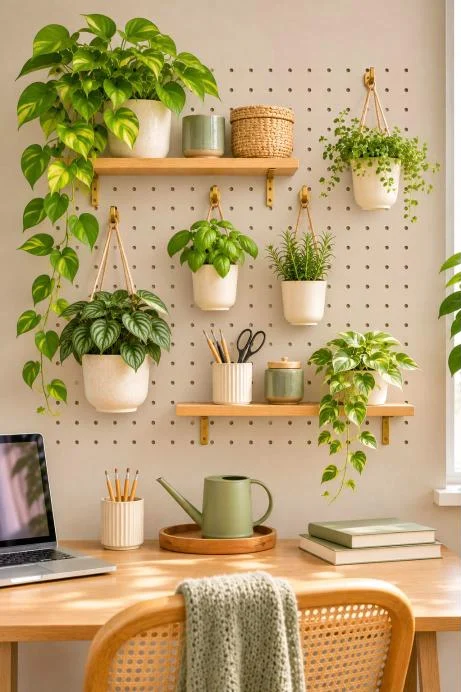
Plants grow, but fixed shelves stay where you put them. The pothos that fit nicely in spring is brushing the shelf above it by fall.
A pegboard wall gets around that. Once the board is up, small shelves, hooks and cups slot into the holes, so you can move a plant up, down or sideways without putting a new hole in the wall.
How to set it up:
- Mount the board on spacers so there’s a gap behind it for the hooks.
- Start with two shelves and a couple of hooks for hanging pots.
- Add more pieces as your collection grows.
Paint a wooden pegboard the same color as your wall and it looks built in.
12. Swap the Bedside Table for a Wall Shelf With One Low Light Plant
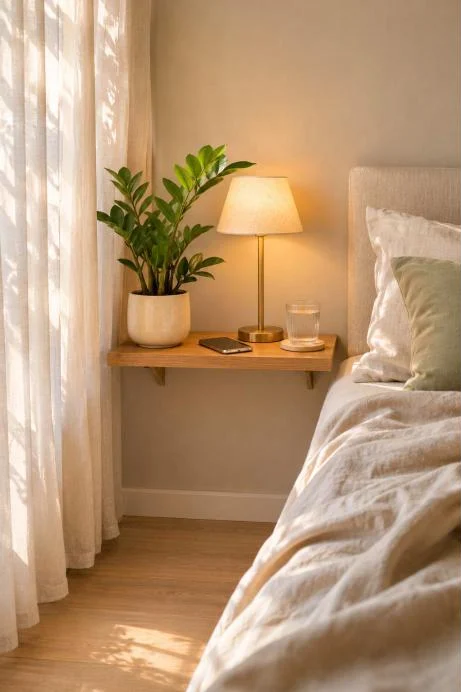
In a small bedroom, the bedside table holds a lamp, a charger and a water glass, and it still catches your knee when you get out of bed.
A wall shelf at mattress height does the same job without legs. The floor under it stays clear, and the room feels a little less tight.
One plant is the rule here.
The shelf is small, and you still need room for your phone. Pick a plant that’s fine with low light and doesn’t mind being ignored for a week, since bedrooms often stay dim with the curtains shut.
Low light picks for a bedside shelf
- ▸ZZ plant: glossy, slow growing, and rarely needs a bigger pot.
- ▸Small snake plant: grows straight up, so it takes very little shelf width.
- ▸Pothos in a small pot: easy to trim if it creeps toward your lamp.
- ▸If a pet sleeps in your room, check the ASPCA plant list first. Many common houseplants, these three included, aren’t safe for pets to chew.
13. Stagger Small Floating Shelves in a Zigzag Instead of a Straight Line
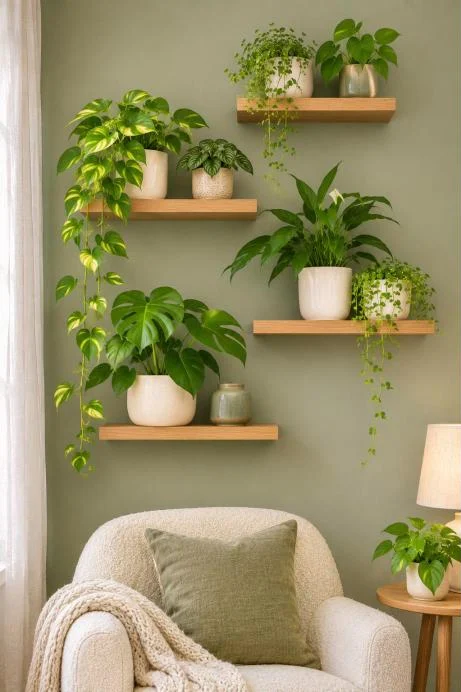
A row of matching shelves in one straight line looks tidy in photos, but on a small wall it often looks like a store display.
Staggering three or four short floating shelves in a loose zigzag gives every plant its own patch of wall. Trailing vines hang into open space instead of landing on the plant below.
How to place them:
- Put the lowest shelf about where your eyes land when you’re sitting down.
- Shift each shelf above it to the side by about half its length.
- Keep the gaps between shelves similar so the layout looks planned.
Tape paper cutouts to the wall first. A day of looking at them tells you more than a tape measure will.
Bigger pots go low and smaller pots go high. The wall looks balanced, and the heaviest pots stay closest to the floor.
14. Hook a Rail Shelf Over the Balcony Railing to Free Up Floor Space
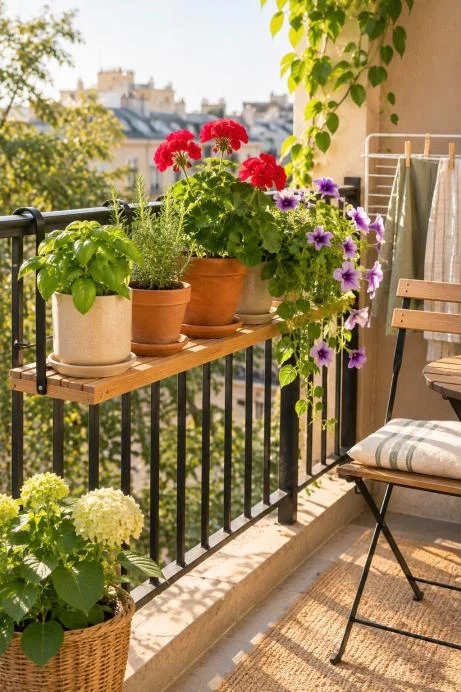
Measure your railing before you shop. Rail shelves hook over the top bar, and one that doesn’t fit will wobble every time the wind picks up.
This is one of the most renter friendly ideas on the list. Nothing gets screwed in, and the whole shelf lifts off on moving day. It also keeps pots off the balcony floor, which you probably need for a chair and a drying rack.
If your balcony gets several hours of sun, start with herbs, geraniums or trailing petunias.
Face the shelf inward toward the balcony, never out over the street.
Check before you buy
15. The Small Space Plant Shelf Rule: One Deep Shelf Beats Five Scattered Pots
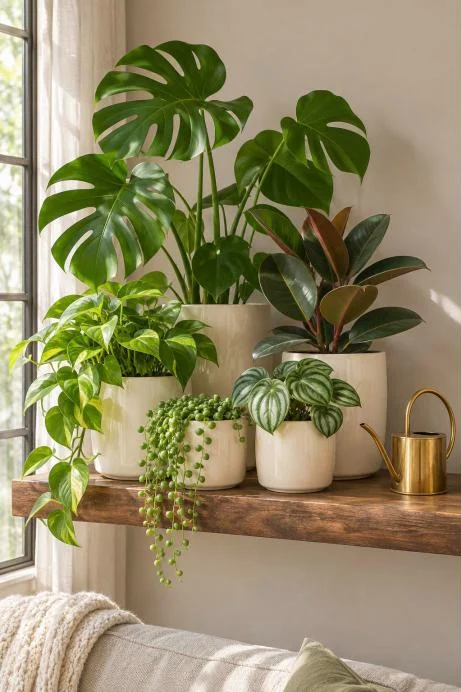
Five pots on five surfaces look like clutter. Put the same five pots together on one deep shelf and they look like a plant corner.
Grouping helps you, too. Watering takes one stop instead of a lap around the apartment, and you notice a yellow leaf faster when every plant is in one place.
How to group them well:
- Put the tallest plant at the back or at one end.
- Repeat one pot color or material so the group looks put together.
- Leave a small gap between pots so air can move around the leaves.
The rule bends for light. If one plant needs a sunnier spot, let it go and keep the rest together.
Group plants that want the same light and the same watering schedule.
Choose a shelf deeper than a standard bookshelf so pots can sit in two staggered rows.
Putting a cactus next to a fern. One wants dry soil, the other wants it damp.
Spreading one plant per shelf across a whole wall unit.
You don’t need a bigger apartment to keep more plants. You just need to stop treating the floor as the only place they can live.
Start with one spot you already walk past every day, like the wall over the couch, the top of a door or the space over the toilet. Match the plant to the light that spot actually gets, and give it a week before you add the next shelf. Small wins add up faster than one big weekend project.
The best plant shelf ideas for a small space are the ones you’ll actually water.
Save this list for the next time a new plant comes home with you and needs somewhere to go.