

The first cold night always shows you what’s wrong with a small bedroom. The floor is icy under your feet. A chill slips in from the window. The overhead light makes everything look blue and flat, so you pull up the covers and scroll on your phone instead of relaxing. Most cozy bedroom ideas for winter tell you to buy more pillows, but pillows don’t fix a cold room.
This guide works in a different order. First you’ll clear the space and find where the cold gets in. Then you’ll seal those spots, warm up the floor and windows, and layer your bed so it holds heat. Last, you’ll change the light and add a few small touches that make the room feel calm at night.
Every step is renter-friendly. There’s no drilling and no paint, and you can undo all of it in spring. It works in a room as small as 9 by 10 feet, because each step adds warmth without adding clutter.
Plan on about 3 hours from start to finish. None of it is hard. You can do it on a Saturday afternoon and sleep in a warmer room that same night.
- Laundry basket or storage bin
- Painter’s tape
- Tissue paper (optional, for the draft test)
- Rubbing alcohol and a clean cloth
- Removable foam weatherstrip tape, 1/4 inch thick
- Scissors
- Door draft stopper or a rolled bath towel
- Measuring tape
- 1 pair of thermal curtains
- Curtain rod (no-drill brackets if you rent)
- Rug, 3 x 5 or 4 x 6 feet, plus a rug pad
- Flannel or jersey sheet set
- Quilt or duvet
- Chunky knit throw blanket
- Warm white LED bulbs, 2700K
- Small bedside lamp
- Small tray, a mug or carafe, and a book
- Reed diffuser or flameless candle
1. Clear summer items off every surface
In a small room, every extra object makes the space feel busier and colder. Cozy starts with less. Carry a laundry basket around the room once and pick up:
- Bright summer throw pillows
- The box fan or desk fan
- Loose papers, receipts, and mail
- Anything on the floor that has no home
Slide the full basket under the bed or into a closet. With clear surfaces, you can see what the room needs before you add warm layers.

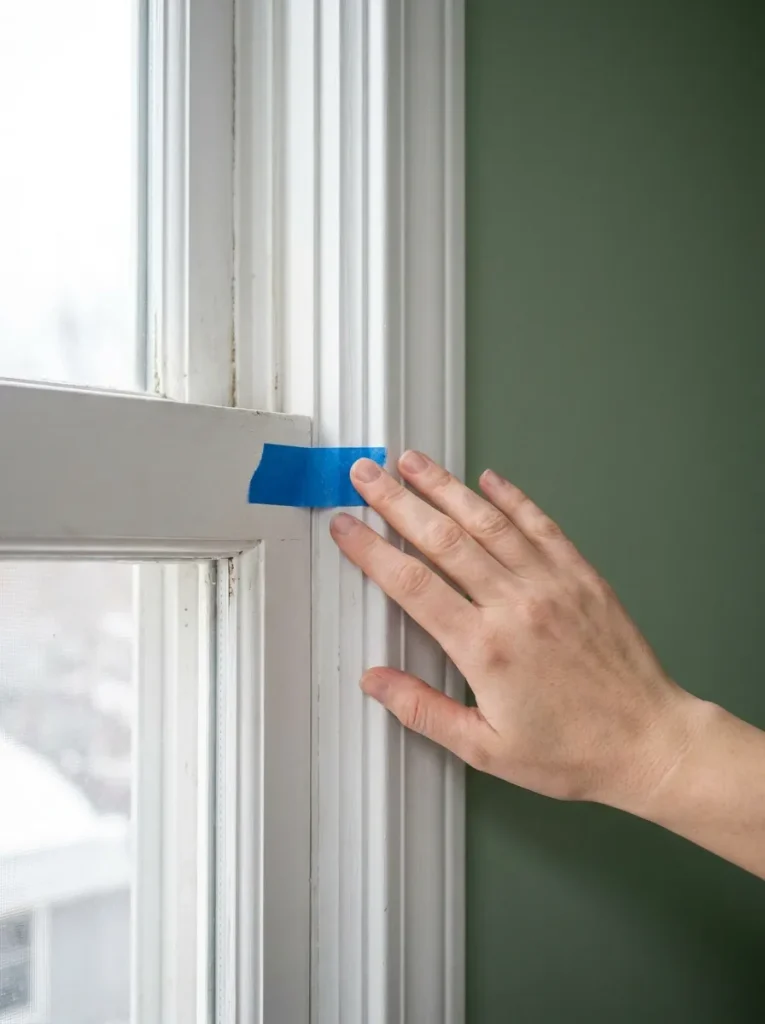
2. Find cold drafts with the back of your hand
That side of your hand feels moving air better than your palm does. On a cool, windy day, move your hand slowly around the window frame, about 1 inch from the edges. Check along the bottom of the door too. Each time you feel a chill, mark the spot with a small piece of painter’s tape.
Can’t feel much? Hold up a strip of tissue paper instead. If it flutters, air is getting in.
3. Seal window gaps with removable weatherstripping
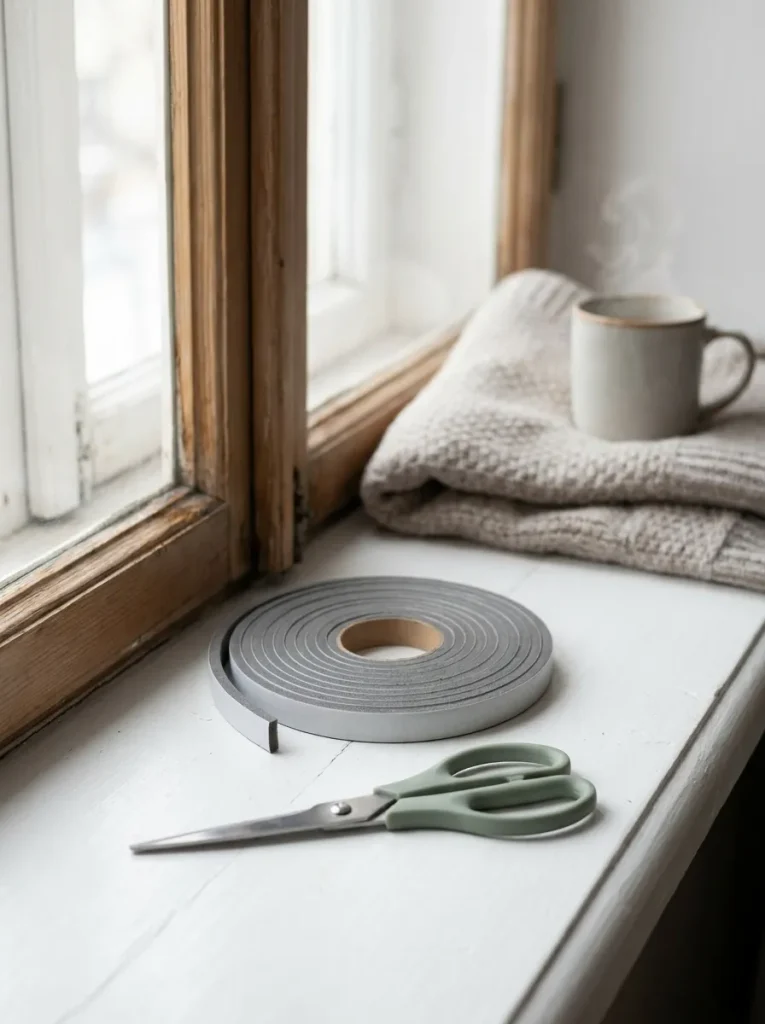
If you rent, buy foam tape marked “removable” or “no residue.” Choose 1/4 inch thickness, since thicker foam can stop the window from closing. Peel off your painter’s tape markers. Wipe each marked spot with rubbing alcohol and let it dry for 5 minutes, so the adhesive has a clean surface to grip. Cut a strip to length, press it into the gap, and hold it firm for 30 seconds.
For a drafty door, lay a draft stopper along the bottom. A rolled bath towel works the same way.
4. Hang thermal curtains high and wide
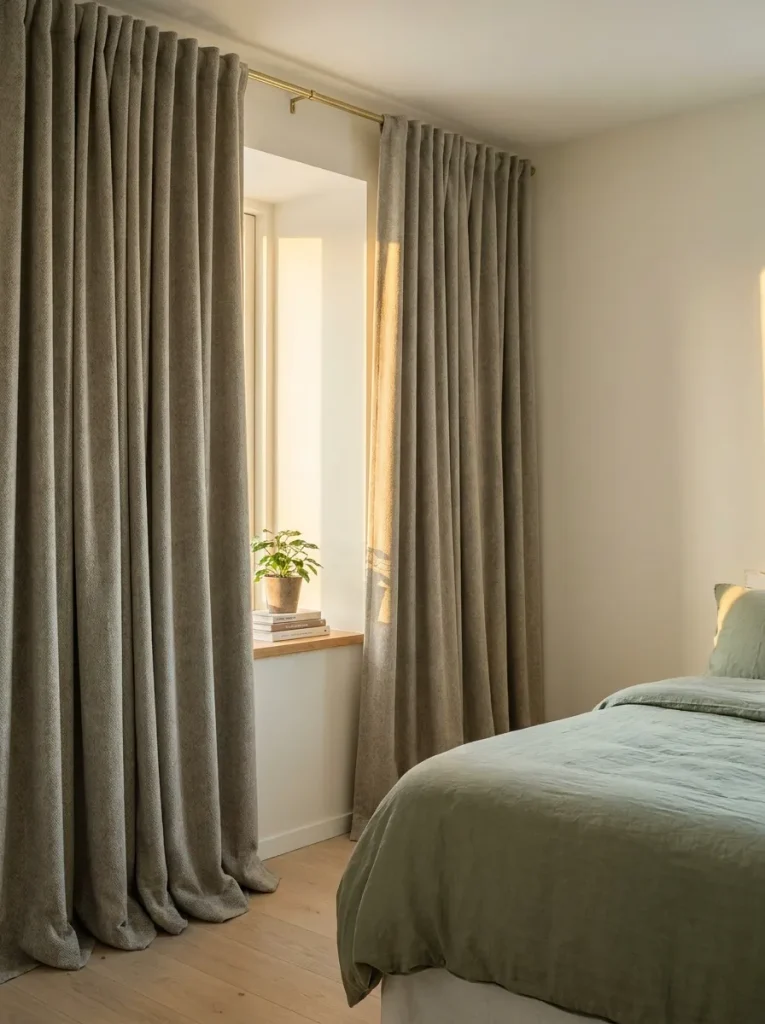
4 to 6 inches above the top of the window frame is where the rod belongs. A higher rod makes a small window look taller. Stretch the rod 8 to 10 inches past each side, so the fabric covers the frame edges where cold air leaks in. Let the panels reach the floor, since cold air sinks and pools there.
Can’t drill? No-drill brackets that sit on the window trim still give you the extra width, and the width matters most for warmth. If your curtains run long, fold up the hem and pin it with safety pins.
Thermal panels are heavy, so check my no-drill curtain guide to match your hardware to the weight before you hang them.
5. Lay a rug where your feet land first
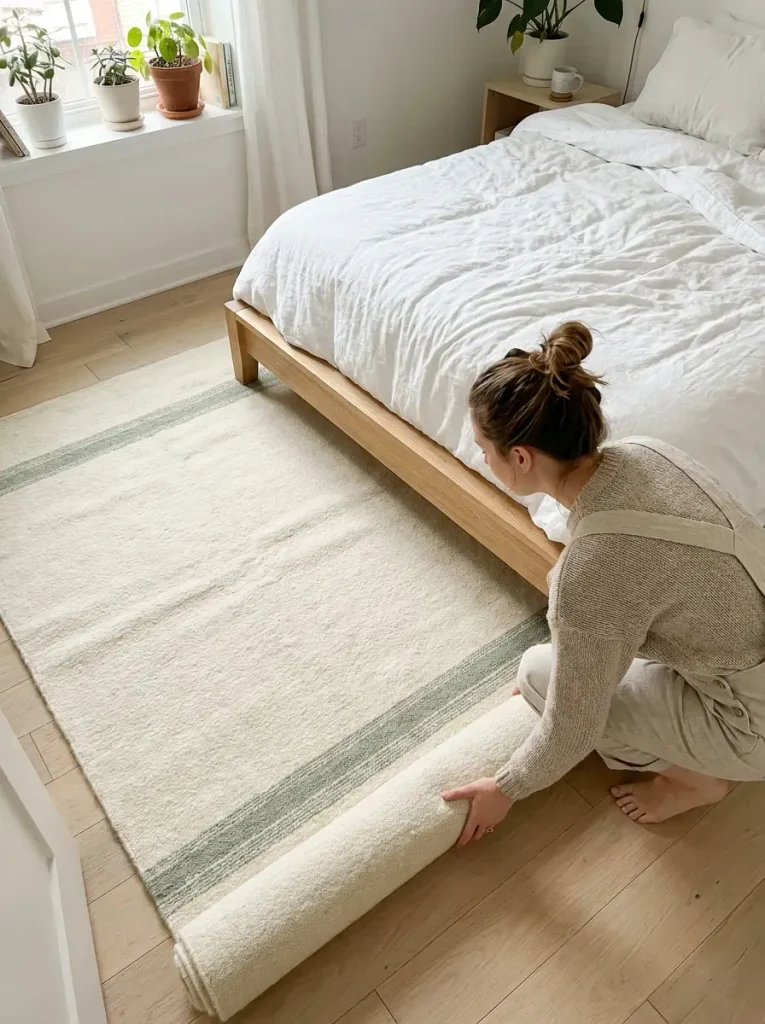
Bare floors pull heat from your feet every morning. Put the rug pad down first, then place the rug on the side of the bed you get out of, with the top third tucked under the bed frame. The pad adds a soft layer of warmth and keeps the rug from sliding. A 3 x 5 foot rug fits most small rooms without crowding.
No rug pad? Non-slip shelf liner cut to size works too. Open the bedroom door once to make sure it clears the rug.
If the problem is a floor you can’t replace, these renter-friendly fixes cover rugs, tiles, and runners.
6. Switch to flannel or jersey sheets
If you wake up cold at 3 a.m., your sheets may be the reason. Cotton percale stays cool, which feels great in July and not so great in January. Pick the fabric that fits how you sleep:
- Flannel if you run cold. Look for a weight of 5 oz or higher.
- Jersey if you get too warm under heavy covers.
Wash them in cold water and dry them on low heat, or flannel starts to pill within a few washes.

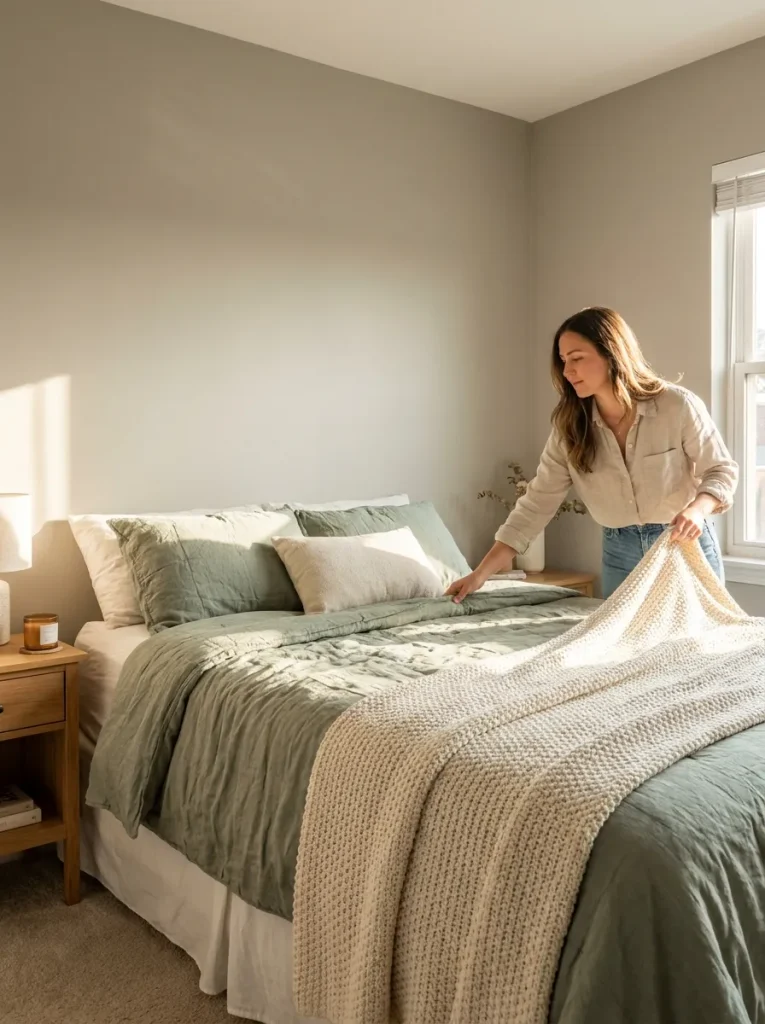
7. Layer a quilt and a chunky knit throw on the bed
Two thin layers hold more heat than one thick one. The air trapped between them works like insulation. Spread the quilt flat over your sheets first. Then fold the knit throw in thirds lengthwise and lay it across the bottom third of the bed, where you can pull it up on cold nights.
No knit throw? A fleece or wool blanket folded the same way works too.
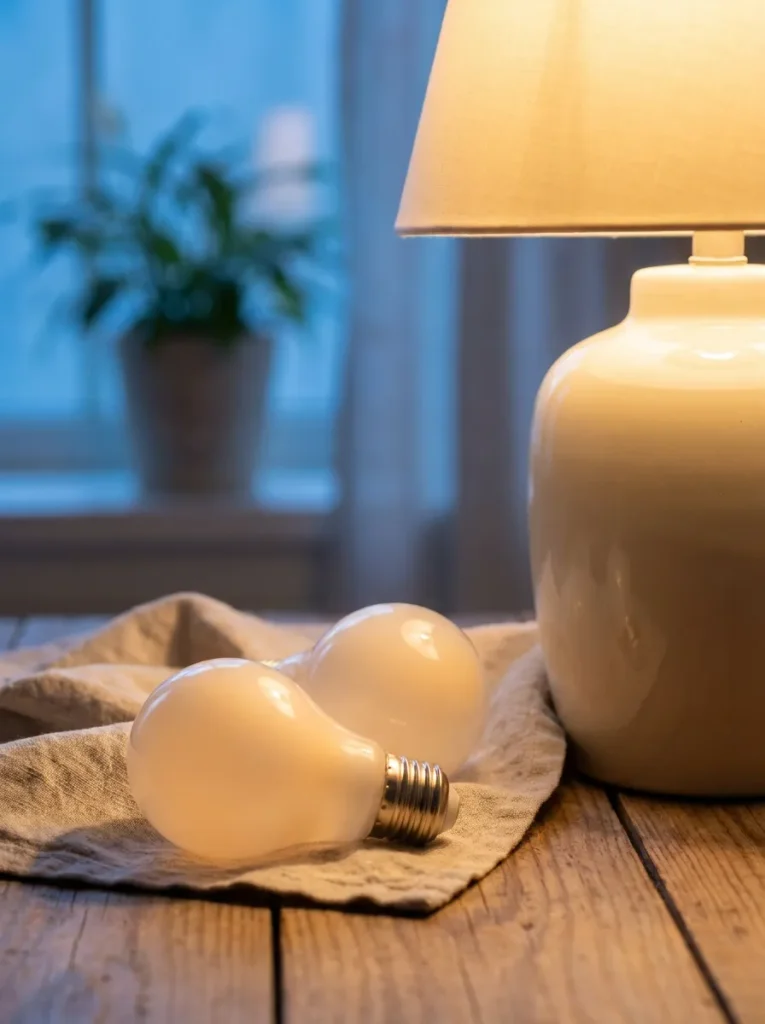
8. Swap bright bulbs for warm 2700K bulbs
2700K on the box means warm white light, the soft yellow glow of evening. Most ceiling fixtures come with 4000K to 5000K “daylight” bulbs, which look cold and blue after dark. Check every light in the room:
- The ceiling fixture
- The closet light
- Any lamps you already own
Take one old bulb to the store so you can match the base size. Before you unscrew anything, turn off the switch and let the bulb cool for 5 minutes. Hot glass can burn your fingers.
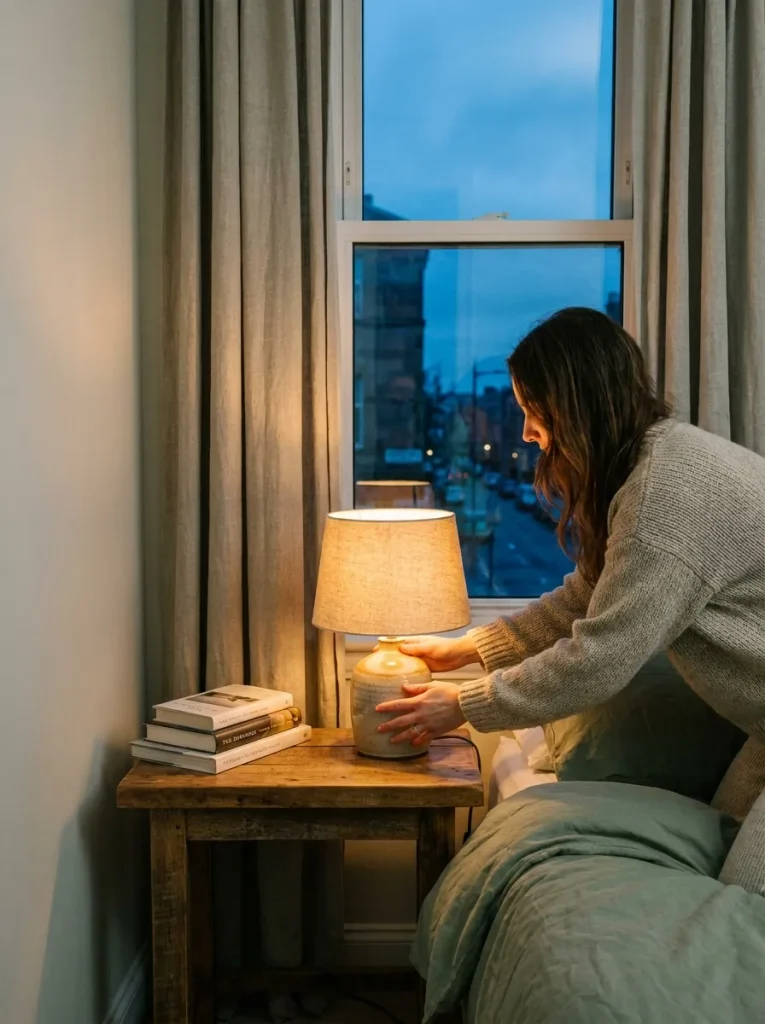
9. Place a small lamp at bed level
When all your light comes from above, a bedroom feels like an office. Light at bed level feels like evening. Set the lamp on your nightstand so the bottom of the shade sits near your chin when you sit up in bed. For most nightstands, that means a lamp 20 to 26 inches tall.
Lamps matter as much as blankets, so see these bedroom lighting ideas that make a small apartment feel cozy.
Is your nightstand tiny? Clip a small lamp to the headboard instead.
For more ways to keep things glowing when it’s dark by 5pm, see my cozy winter lighting ideas for small apartments.
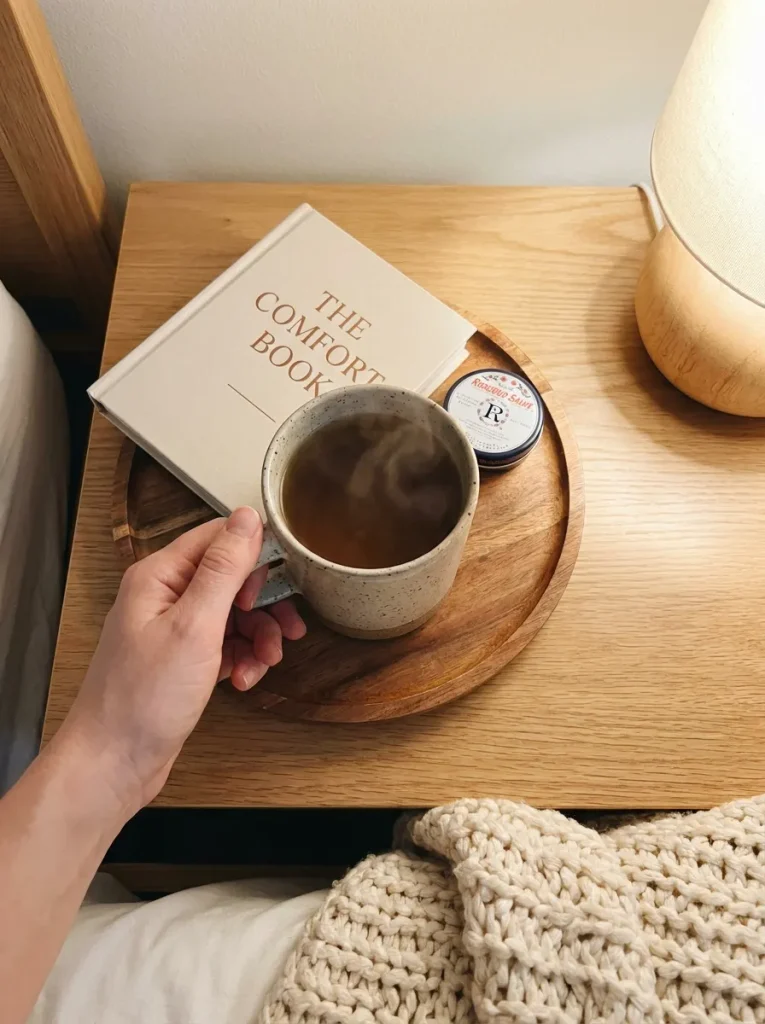
10. Set up your nightstand with three winter essentials
Is your nightstand crowded? Clear it off and start with a small tray, which makes a few items look planned instead of scattered. Keep three things on it:
- A mug or small water carafe, since heated air dries you out
- One book you want to read
- Lip balm or hand cream
Everything else goes in a drawer.
11. Finish with a scent, the last of these cozy bedroom ideas for winter
One scent is plenty in a small room. Two or three compete with each other and make the air feel stuffy. Choose something warm, like cedar, vanilla, or pine. Set the reed diffuser on a dresser or shelf instead of your nightstand, so the smell is soft by the time it reaches your pillow. Start with 3 reeds and add more after 2 days if you barely notice it.
Using a real candle? Keep it 12 inches from curtains and bedding, and blow it out before you get into bed.

Conclusion
Your small bedroom is now sealed, layered, and glowing, and it’s ready for the coldest nights of the year.
If you want it to feel like a hotel, see how to create a hotel style bedroom on a budget.
These cozy bedroom ideas for winter work because each one does a real job: it keeps heat in, warms your feet, or softens the light.
For a next step, try the same warm bulb swap in your living room, so the whole apartment feels like evening after dark.
Save this pin to your winter home board, so the steps are ready when the first frost hits.
Ready to carry this beyond the bedroom? Here are 17 easy ways to make a small rental feel warm all winter.