
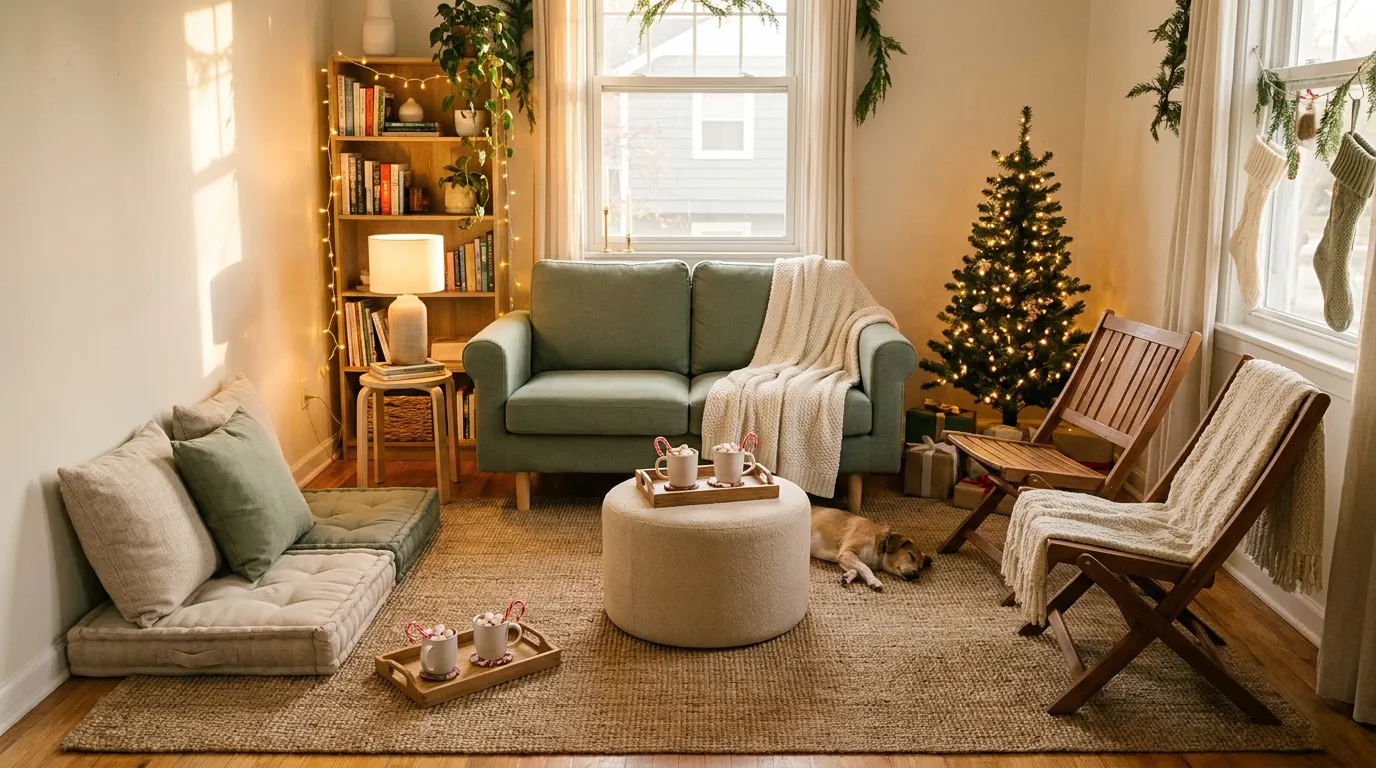
Eight people said yes to your holiday dinner. You own four chairs and a loveseat. That math has been bugging you all week, and your apartment is not getting any bigger.
Here’s the good news: finding extra seating in a small apartment is less about buying furniture and more about spotting the seats you already have.
This guide walks you through it in order. You’ll count what you need, measure your space, and pull seats from rooms you forgot about. Then you’ll fill the last gap with folding or borrowed chairs and arrange everything so guests can sit, talk, and still reach the snacks.
I’ve hosted a lot of crowded holidays in a small one-bedroom. The method that works every time is planning around your walkways first, not around how many chairs you can squeeze in. A room packed wall to wall with chairs feels smaller and more stressful than a room with fewer seats and clear paths.
Plan on about 60 to 90 minutes of hands-on work, done a day or two before the party. No tools, no drilling, and nothing that breaks a lease. Grab a tape measure and a notepad, and let’s find everyone a seat.
Living in one room? My guide to hosting guests in a studio apartment covers zones, food, and where everyone’s coats go.
What You Need
Most of this is already in your home.
- Tape measure
- Notepad or phone notes
- Painter’s tape (optional)
- Felt pads for chair feet
- Chairs and stools from other rooms
- 2 to 4 folding chairs (borrowed or bought)
- 4 to 6 floor cushions or firm bed pillows
- A rug or thick folded blanket
- 2 to 3 small trays or stools for drinks
- Throw blankets to soften folding chairs
At a Glance
- Count how many seats you need
- Measure your floor and walkway
- Gather hidden seats from other rooms
- Fill the gap with folding or borrowed chairs
- Move one bulky piece out
- Build a floor seating corner
- Group seats into conversation clusters
- Keep paths clear to kitchen, bathroom, and door
- Put a drink surface near every seat
- Test every seat yourself
1. Count how much extra seating your small apartment needs
Hosts forget to count themselves. Write down every guest, then add yourself and anyone who lives with you. After that, count the seats you already own:
- Sofa seats (2 adults on a loveseat, 3 on a standard sofa)
- Dining and kitchen chairs
- Armchairs and accent chairs
Subtract your seats from your people. That number is your seating gap. Add 1 more seat for the surprise plus-one, because someone always brings one.

2. Measure your open floor and main walkway
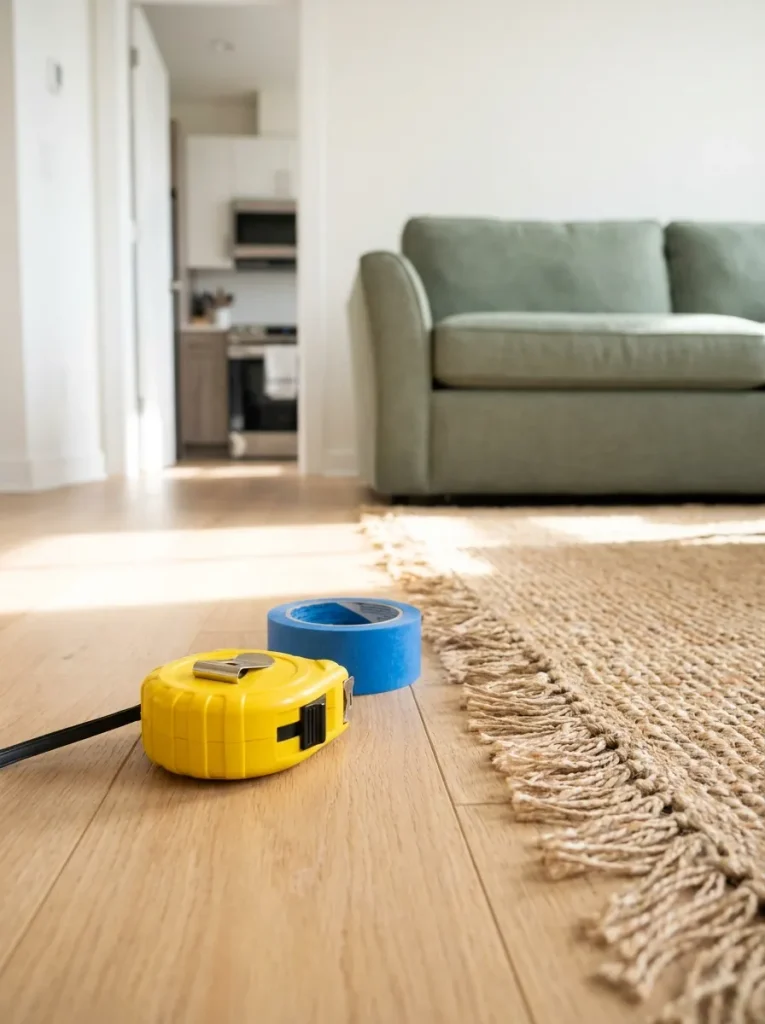
Thirty-six inches is the width to protect. That’s about how much room one adult needs to walk past a seated guest while holding a plate. Measure your main walkway from the front door to the kitchen and the bathroom. Keep it at least 30 inches wide, even when the room is full. Then measure the open floor where extra seats could go, and write both numbers down. No tape measure? A sheet of printer paper is 11 inches long, so three sheets laid end to end come to about 33 inches.
If you also need to make room for a Christmas tree, tape its footprint down now so you can plan seating around it.
3. Gather hidden seats from every room
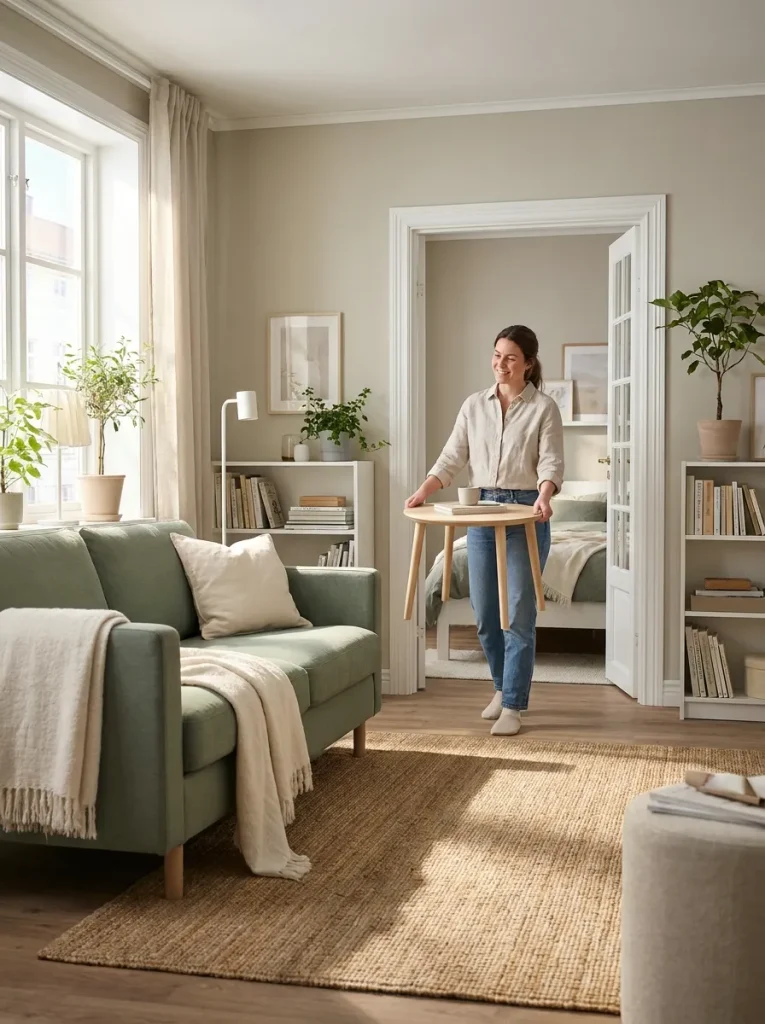
Most small apartments hide 2 to 4 seats in other rooms. Walk through your bedroom, office, bathroom, and entry with fresh eyes. A desk chair, vanity stool, storage ottoman, sturdy step stool, or hard-top trunk can all hold a guest. Carry each one into the living room so you can see your real total. Press down hard on one corner of every stool. If it rocks, leave it out.
Tucking poufs under a console is one of my favorite small living room ideas for exactly this reason: they’re there when you need them and gone when you don’t.
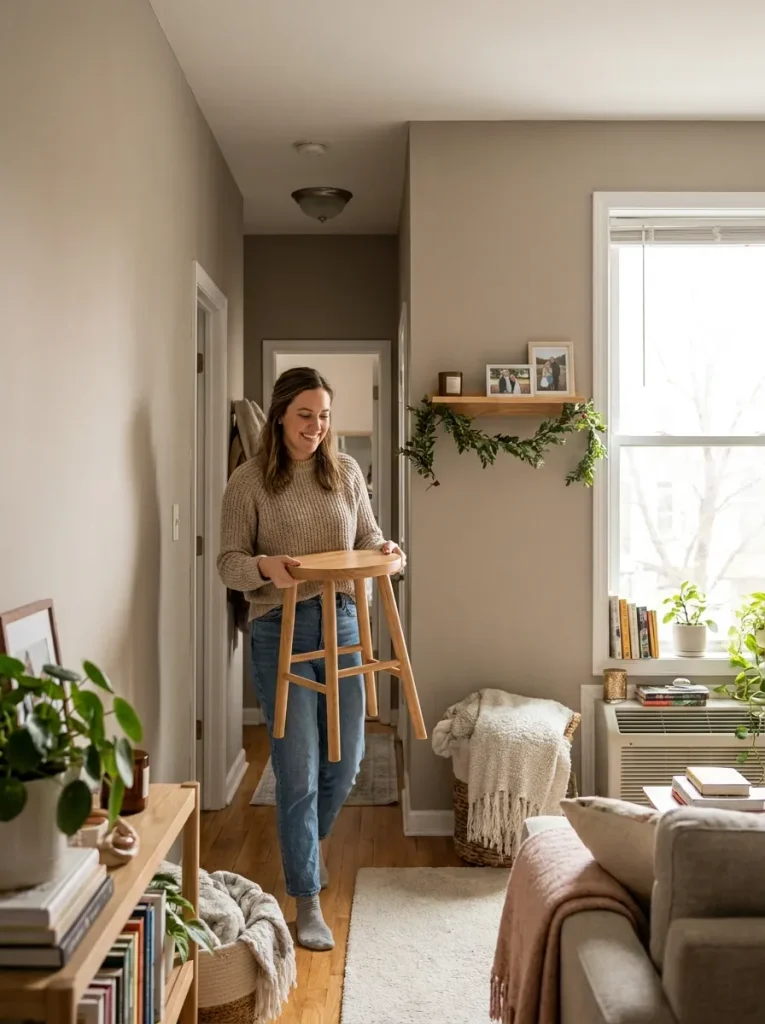
Park rolling desk chairs on a rug or a folded blanket. Wheels slide on hard floors, and a chair that rolls back when a guest sits down fast is how drinks end up on the floor.
4. Fill the remaining gap with folding or borrowed chairs
If you still need 2 or more seats, ask before you buy. Friends, family, and neighbors often have folding chairs sitting in a closet, and some apartment buildings lend them out from a community room. Ask at least 1 week ahead so you’re not scrambling the day before. Put a strip of painter’s tape with the owner’s name under each borrowed seat. That way every chair goes home to the right person. If you do buy, folding chairs close to about 2 inches thin and slide under a bed or behind a door for the rest of the year.

Open every folding chair all the way and press the seat down until it sits flat and firm. A chair that is only half open can fold shut when someone sits, and it can pinch fingers. Test each one yourself before a guest does.
5. Move one bulky piece out of the main room
Which piece do you walk around the most? That’s the one to move. It’s usually the coffee table, a big plant, or a floor lamp. Carry it into the bedroom until the party is over. One piece gone frees up more usable floor than rearranging five. If it’s too heavy to move, push it against a wall and turn the top into a snack station.
6. Build a floor seating corner with cushions and a rug
Pick a corner with walls on two sides. Those walls work as backrests, and sitting on the floor with nothing to lean on gets sore after about 20 minutes. Set it up in this order:
- Lay down a rug or a thick folded blanket
- Stand 2 firm pillows against each wall
- Add 1 cushion per person to sit on
- Keep a throw blanket nearby for cold floors
Firm bed pillows folded in half make a thicker seat than small throw pillows. Offer this corner to kids and younger guests first, since getting up off the floor is harder for some people.

7.Group the seats into small conversation clusters
People talk to whoever is closest to them. Arrange seats in groups of 3 to 4 that face each other, with no more than about 6 feet between any two people in a group. Any farther and guests have to raise their voices. Avoid lining every chair along the walls. That setup feels like a waiting room, and nobody talks. Angle folding chairs slightly toward the sofa, and place the floor corner close enough that floor sitters are part of the conversation instead of below it.
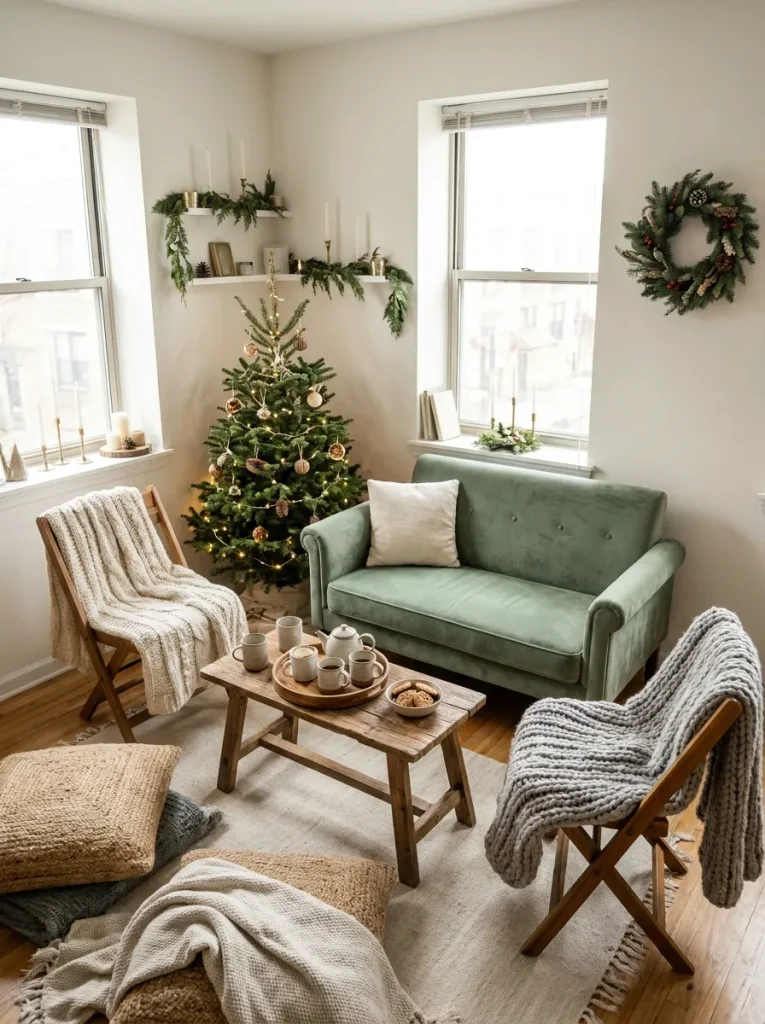
8.Keep a clear path to the kitchen, bathroom, and door
Walk the route with a plate in your hand. Go from the sofa to the kitchen, then to the bathroom, then to the front door. If you bump into anything, move it. Your tape marks from earlier show exactly where the walkway edges are. Check that the bathroom door opens all the way, too.
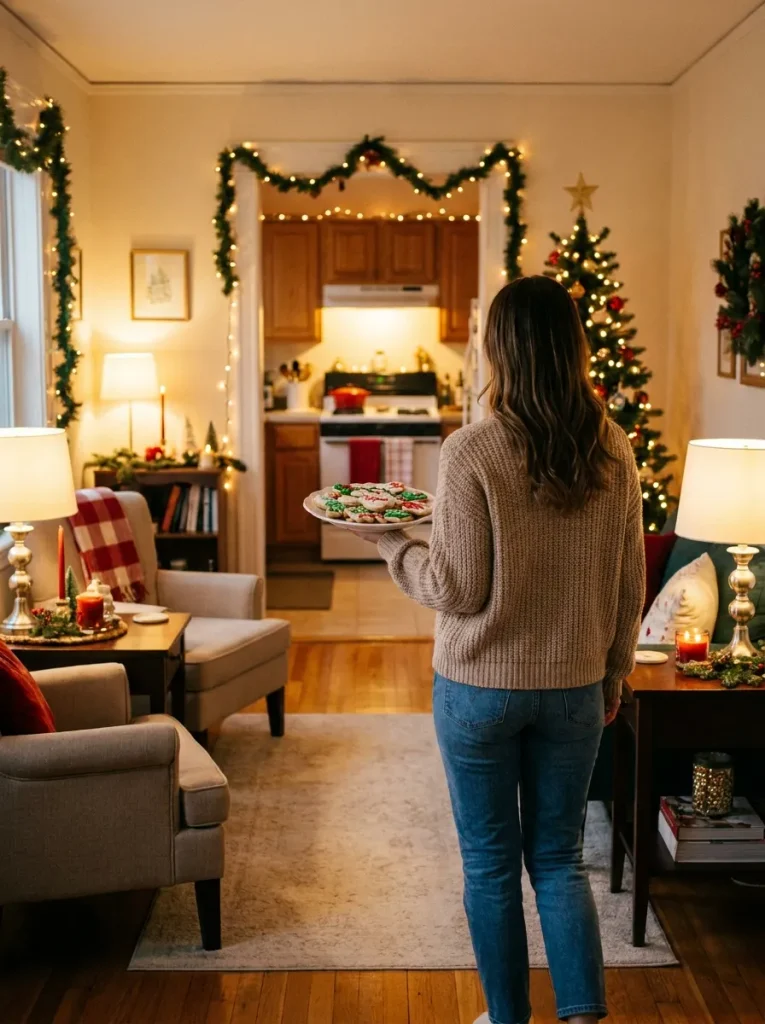
Guests carrying food and drinks are not looking at the floor. Tuck lamp cords behind furniture, and flatten any curled rug corners with double-sided rug tape before people arrive.
9. Place a drink surface within reach of every seat
Two feet is about as far as a seated guest will reach for a glass. Without a spot nearby, people either hold their drink all night or set it on the floor, where someone kicks it over. Give every cluster at least one flat surface. A spare stool works as a side table. So does a tray set on top of an ottoman, a stack of sturdy hardcover books, or a wide windowsill. For the floor corner, put a flat tray right on the rug so cups have a steady base. Set out coasters on anything wooden.
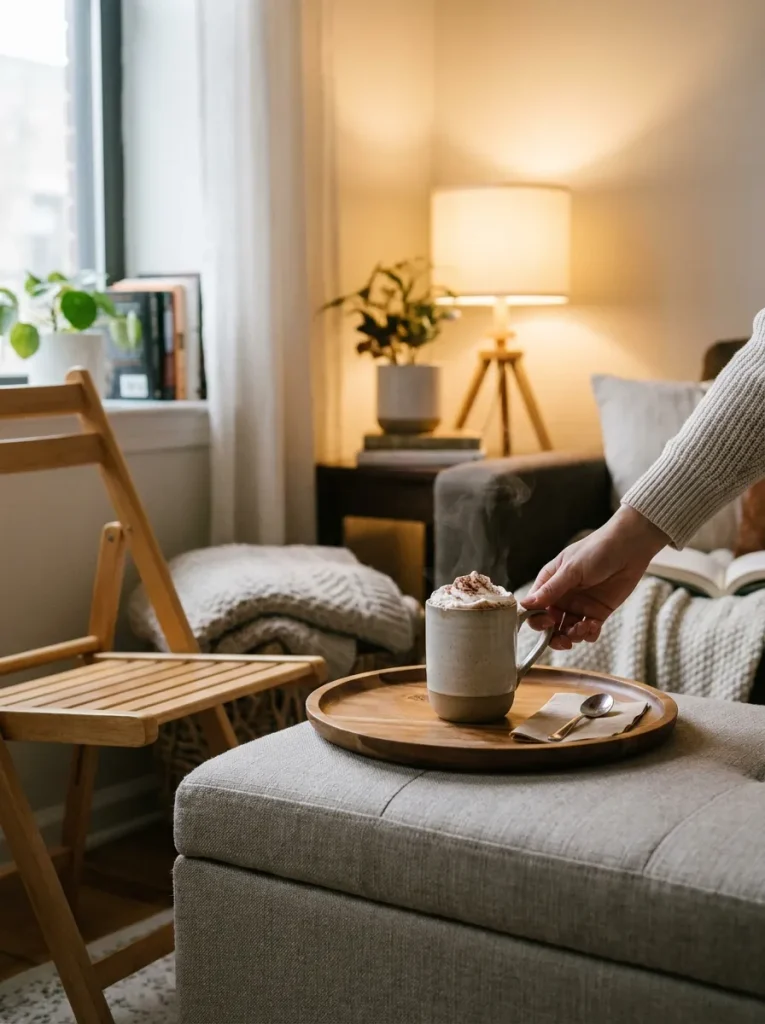
10. Sit in every seat to test the setup
The day before the party, sit in every single seat for about 1 minute each. From each spot, ask three things. Can you reach a drink surface? Can you see the people in your group? Can you get up without bumping anyone? Fix anything that fails. Folding chairs start to feel hard after about 30 minutes, so fold a throw blanket over each seat for padding. Tighten or swap out anything that creaks or shifts under you.
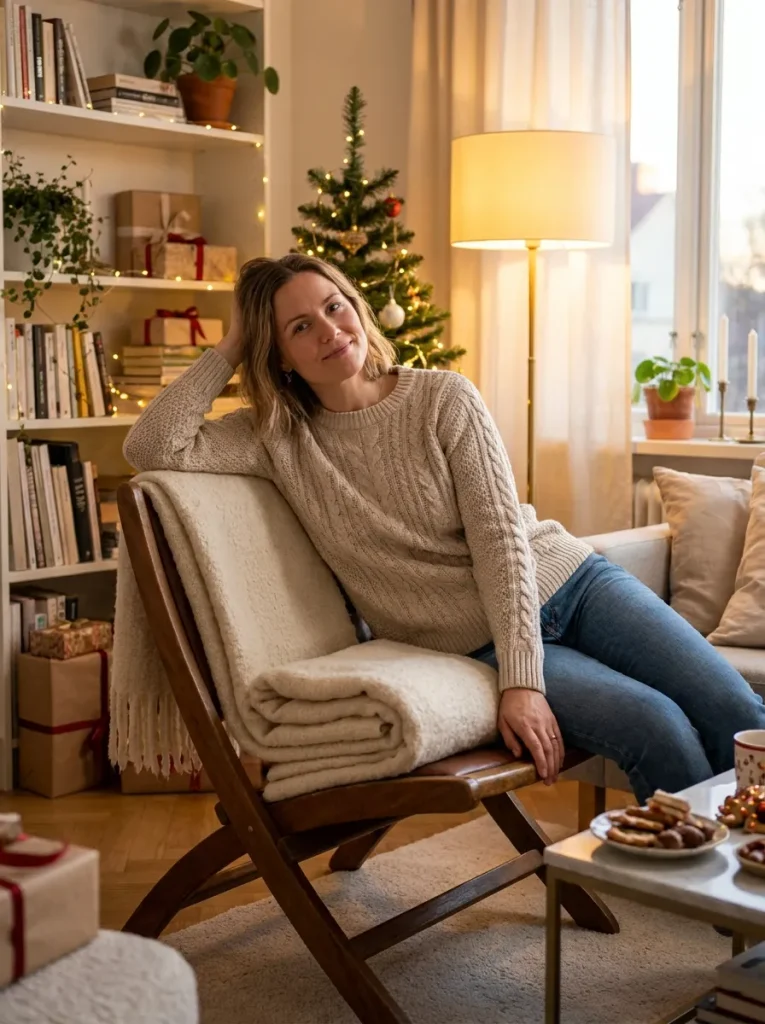
Decide ahead of time who gets the softest seats. Save the sofa and armchairs for older guests or anyone with bad knees, and offer the stools and floor corner to people who won’t mind.
Troubleshooting
| If This Happens | Try This |
|---|---|
| Everyone crowds into the kitchen | Move the snacks and drinks to the living room. People follow the food, so the seats fill up on their own. |
| A chair wobbles on the floor | Stick a felt pad under the short leg, or move the chair onto a rug. If it still rocks, swap it out. |
| Floor sitters look uncomfortable | Add another pillow behind their back, then offer to trade seats. Take a floor spot yourself so guests feel fine switching. |
| More guests show up than planned | Grab a sturdy storage trunk, a folded duvet, or extra bed pillows. Clear a spot at the counter where people can lean and chat. |
| The room feels packed once everyone sits | Pull one chair out of your biggest group. Open the bedroom door so a few guests can drift in and use it as a quiet lounge. |
Frequently Asked Questions
Can I use my bed as extra seating?
Yes, and it works well in a studio. Push the bed against the wall, line the wall side with pillows as backrests, and cover it with a clean throw so it reads as a daybed.
Are folding chairs worth buying if I only host once a year?
If you can borrow them, borrow. If you host two or more times a year, a set of two to four pays off fast and stores flat under a bed.
Is it rude to seat guests on the floor?
Not at a casual holiday get-together. Give people a choice, make the floor corner comfortable, and sit there yourself first so it feels like a fun spot instead of a leftover one.
How far ahead should I set up?
Ask to borrow chairs about a week ahead. Set up and test the room the day before, so party day is free for cooking and getting ready.
Where do I put the extra chairs after the party?
Folding chairs slide under a bed, behind a door, or into the back of a closet. Return borrowed ones within the week while you still remember whose they are.
What Changes
- Four seats for eight guests
- Chairs lined up along the walls
- Coffee table blocking every path
- Guests perched on sofa arms or standing in the kitchen
- Drinks sitting on the floor
- A seat for every guest, plus one spare
- Small groups facing each other
- Clear paths to the kitchen, bathroom, and door
- A cozy floor corner with real backrests
- A drink surface within reach of every seat
Extra Holiday Seating in a Small Apartment
- Tape measure and notepad
- Painter’s tape and felt pads
- Seats from other rooms
- 2 to 4 folding chairs
- 4 to 6 floor cushions or pillows
- Rug or thick blanket
- Trays or stools for drinks
- Throw blankets
- Count guests minus seats, add 1
- Measure walkway, keep 30+ inches
- Gather seats from other rooms
- Borrow or buy chairs for the gap
- Move one bulky piece out
- Build a floor corner against two walls
- Group seats in clusters of 3 to 4
- Walk the path with a plate in hand
- Drink surface within 2 feet of each seat
- Sit in every seat the day before
hearthdiaries.com
Conclusion
You now have a seat for every guest, and your apartment still has room to breathe. That’s the heart of extra seating in a small apartment: use what you own, borrow the rest, and protect your walkways. Next, think about where the food goes, since a snack table in the right spot keeps guests happily settled in those seats. Save this pin to your holiday hosting board so it’s ready the next time your guest list grows.
If it’s a bigger event, see these housewarming party ideas for a small apartment.
Hosting the big meal too? Pair this seating plan with my small-apartment Thanksgiving schedule for six guests and one oven.