
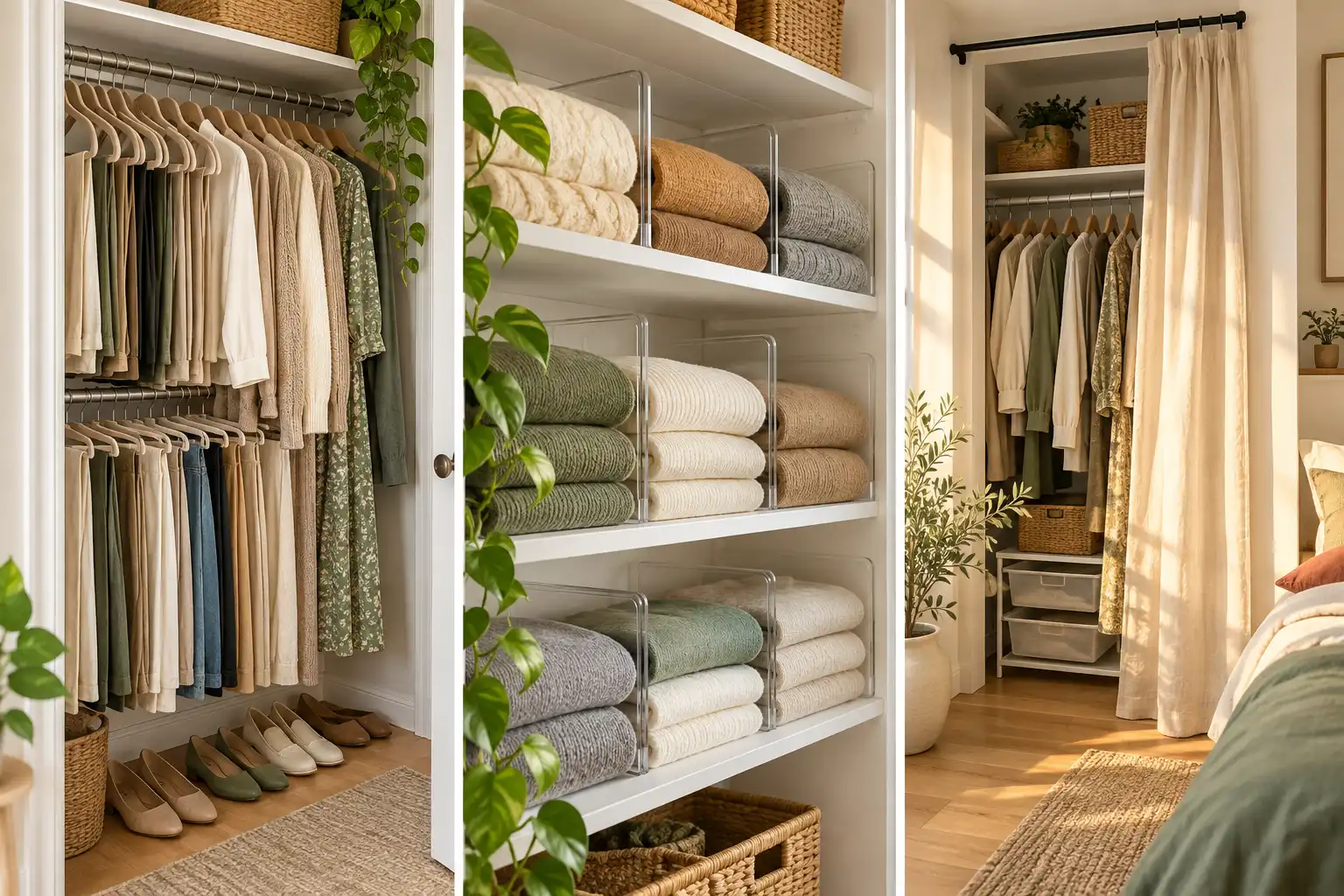
A tiny apartment closet fills up fast. One new sweater, a pair of boots, and suddenly the door won’t close and your favorite top is somewhere on the floor.
The good news is that most small closets have more room than they seem to. It’s just hiding in spots we forget to use, like the back of the door, the side walls, the space under short hanging clothes, and the shelf up near the ceiling.
These small closet organization ideas come from real closets plus a few fresh ones to fill the gaps. You’ll find slim hangers and shelf dividers, drawers that slide under the rod, hooks and door organizers, and a couple of easy upgrades like stick-on lights and a curtain in place of clunky doors.
Almost everything here is renter friendly. No drilling, no built-ins, and nothing you can’t take with you when you move.
Pick one or two ideas to start. Even a single change can make getting dressed a lot calmer.
1. Give Every Pair Its Own Shelf With a Slim Shoe Tower
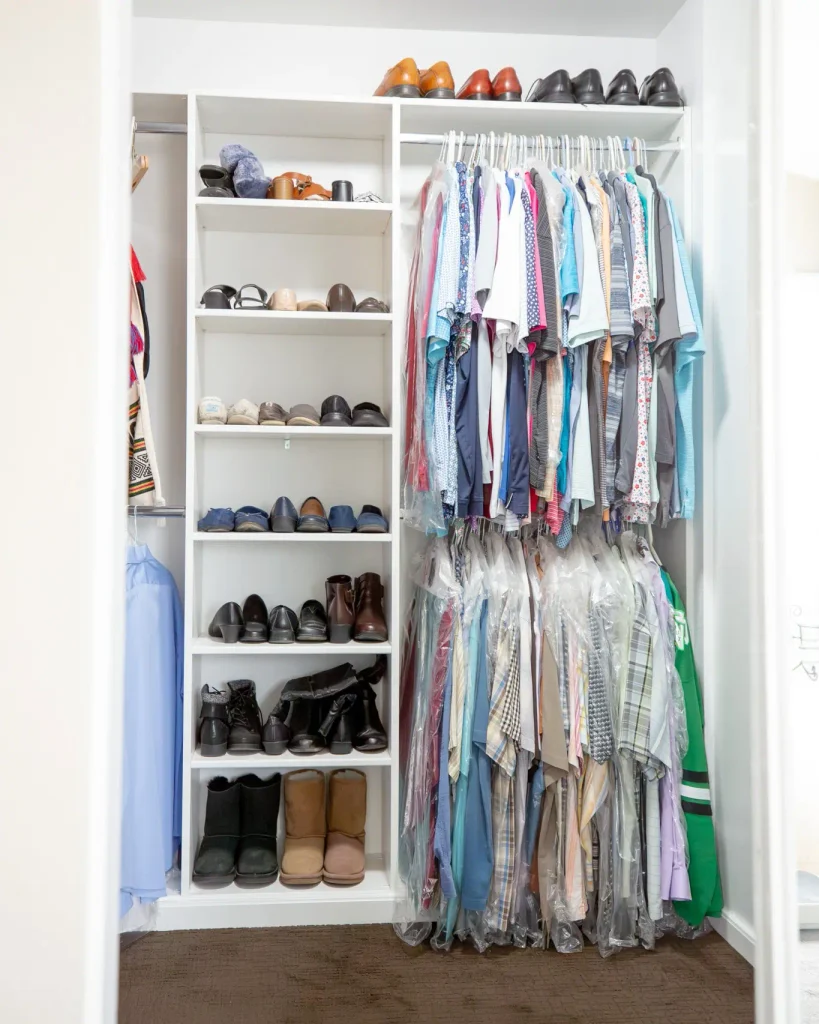
Shoes on the closet floor turn into a pile fast. A tall, narrow shoe tower fixes that and splits the closet into tidy zones at the same time.
Look at how the pairs are sorted here:
- Sandals and small slip-ons up top
- Flats and sneakers in the middle
- Ankle boots and tall boots on the roomier bottom shelves
To the right, two hanging rods stack shirts above shirts, so short pieces use the whole wall height. The shelf above holds dress shoes that don’t get worn every day.
Renting? A freestanding shoe tower plus a hang-on second rod gets you close to this layout without drilling a single hole.
Small catch: those dry cleaning bags eat up rod space. Pull them off and the same rod fits a few more shirts.
Map Your Closet Into Zones
2. Swap Mixed Hangers for One Set of Slim Velvet Hangers
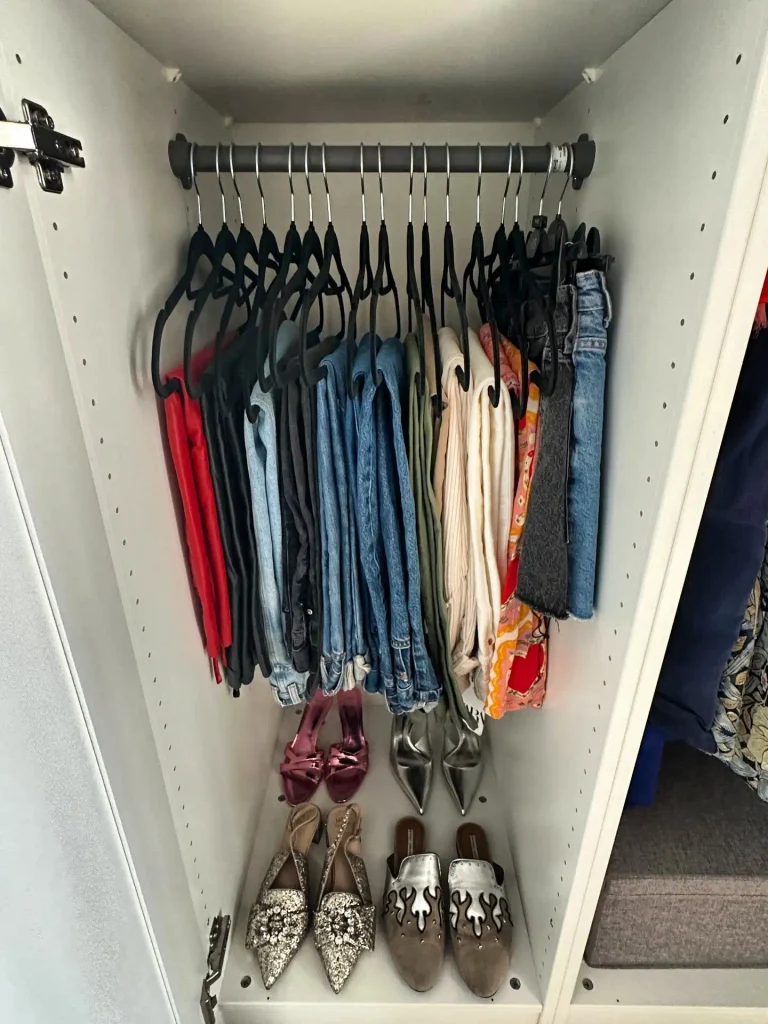
Bulky hangers quietly steal rod space. Every hanger in this narrow cabinet is the same thin black velvet style, so a whole row of pants fits without crushing together.
Here’s what makes this small section work:
- Pants fold once over each hanger bar, so they hang short and leave the floor open for shoes.
- Colors are grouped: reds, blacks, denim, then soft neutrals. Finding the right pair takes one glance.
- Shorter pieces hang from clip hangers at the far end, kept apart from the long pants.
Below the rod, four pairs of dressy shoes sit in two tidy rows instead of a heap.
Bonus: the soft coating grips slippery tops that slide right off plastic hangers.
Bulky Hangers vs Slim Velvet Hangers
| 🪵 Bulky Hangers | ✨ Slim Velvet Hangers |
|---|---|
| Chunky, each one hogs rod width | Thin, so more pieces fit on one rod |
| Smooth, silky tops slide off | Soft coating holds tops in place |
| Mixed colors and heights look messy | One color makes an even, calm row |
| Best kept for heavy coats and suits | Best for shirts, pants, and dresses |
3. Keep Sweater Stacks Upright With Clear Shelf Dividers
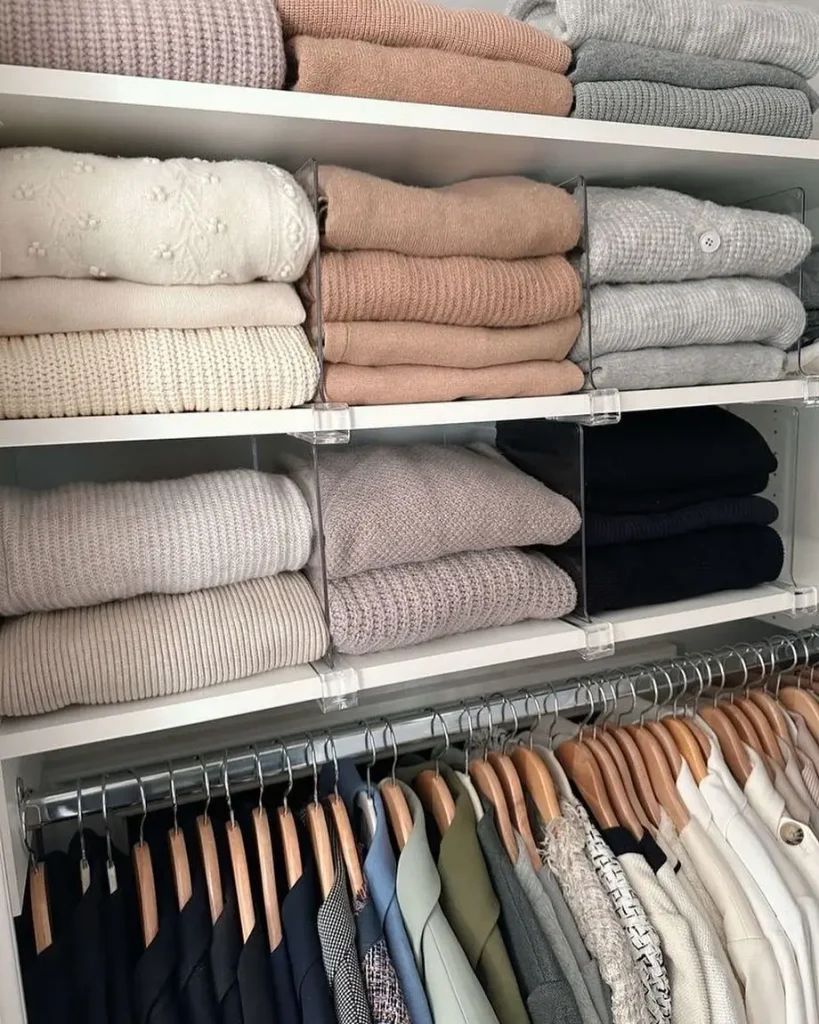
Sweater stacks love to lean. Pull one from the middle and the whole pile slumps into its neighbor. Clear shelf dividers stop that.
They clip right onto the shelf, so there’s no drilling. Since they’re see-through, the shelves still look open instead of boxed in. Each shelf here holds three short stacks:
Top row: creams, camels, and greys
Lower row: oatmeal, taupe, and navy
Notice the split, too. Knits stay folded on the shelves while blazers hang on the rod below. Heavy sweaters can stretch out at the shoulders on hangers, so folding keeps them in shape.
Short stacks are easier to pull from, which means they stay tidy all week.
Put the heaviest knit at the bottom of each stack.
Fold every sweater to the same width so stacks line up.
Leave a little gap above each stack so you can slide one out.
Stacking higher than the top of the divider.
Mixing thin tees into sweater stacks, where they get lost.
Cramming a fourth stack onto a shelf built for three.
4. Line the Closet Floor With Pull-Out Mesh Drawers
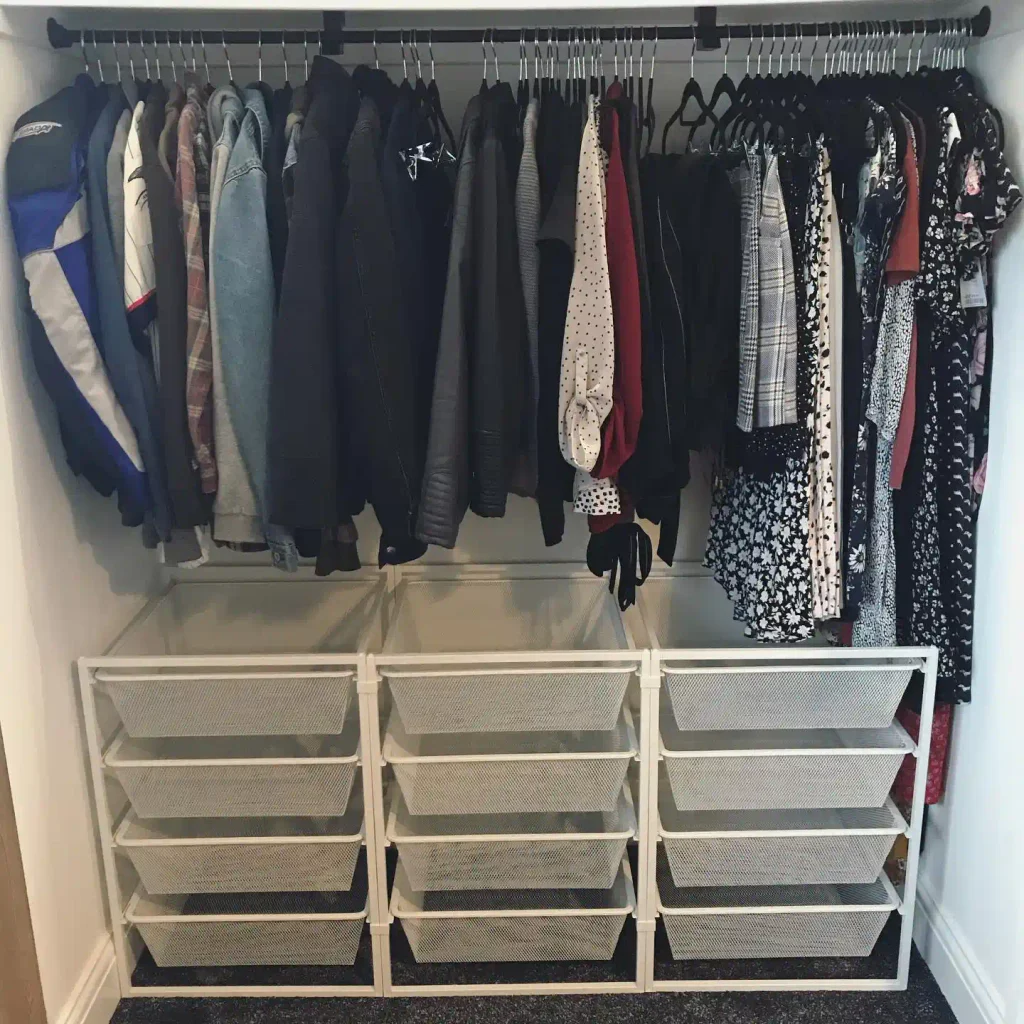
No room for a dresser? Slide one under your clothes instead.
This reach-in closet keeps one long rod up top and three freestanding drawer frames lined up along the floor below. That’s twelve pull-out baskets in the spot that usually collects a shoe pile and a laundry bag.
The rod is split by type, too. Jackets and hoodies hang on the left, blouses and dresses on the right. That same split works nicely when two people share one closet.
Mesh or solid drawers?
Mesh lets you see what’s inside, and air moves through.
Solid hides clutter better, but you’ll want labels.
No dresser, no drilling, and every basket has a job.
Set It Up in Your Own Closet
Measure from the floor up to the hem of your shortest hanging clothes. Your drawers need to fit under that line.
Measure the closet width, then pick two or three slim frames that fill it side by side.
Hang long dresses and coats above the shortest frame so their hems don’t drag on the baskets.
Give each basket one job: socks, tees, workout clothes, or bags. Mixed baskets turn messy fast.
5. Fit More Pairs on a Slim Stackable Shoe Rack
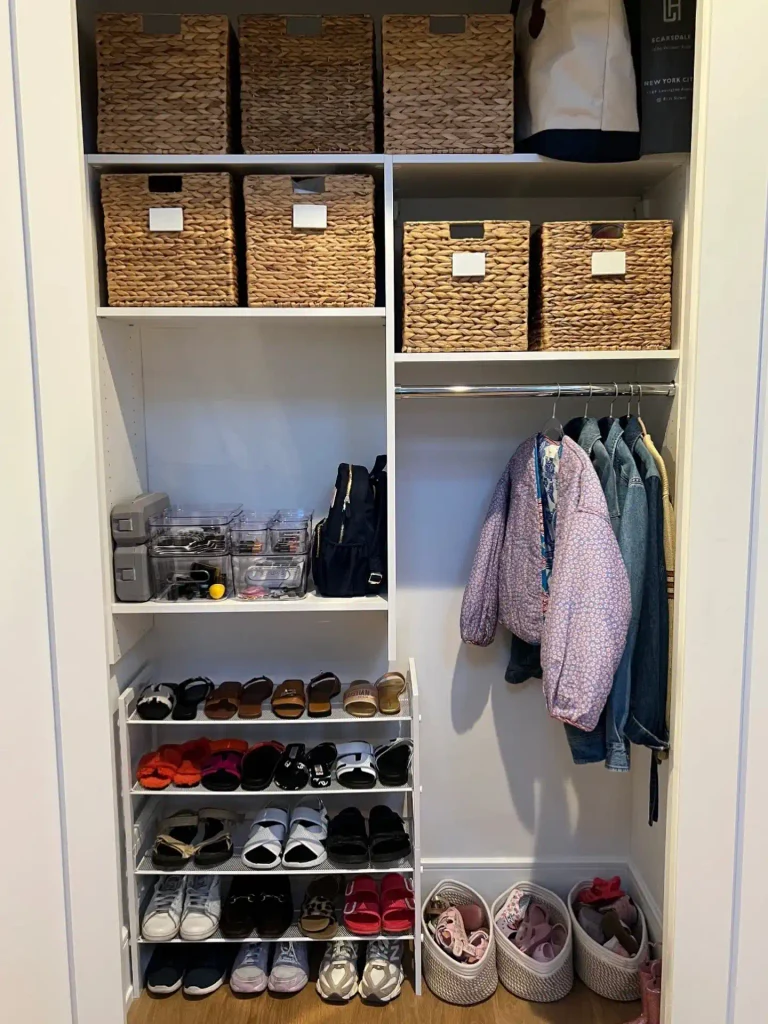
Flat sandals and slides barely need any height. Give them a tall shelf and half the space sits empty.
A slim, stackable mesh rack fixes that. Here, four low tiers hold sandals and slides lined up side by side, and sneakers sit on the floor right under the bottom tier. Since the rack stands on its own, it slips into any reach-in closet and leaves with you when you move.
The space beside it works hard too. Under the short jacket rod, three soft rope baskets catch small kids’ shoes that would slide right off a rack.
Tiers for grown-up pairs, toss-in baskets for tiny ones. Both are easy enough for a kid to put away.
6. Label Clear Bins So Every Accessory Has a Home
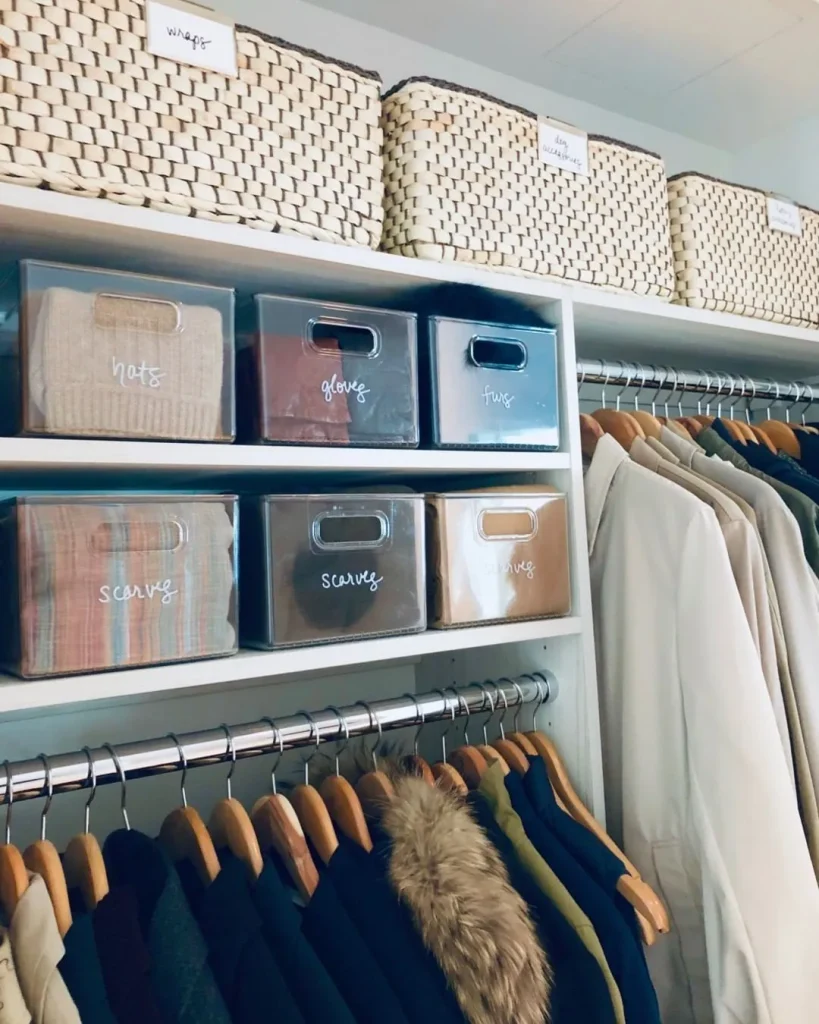
Hats, gloves, and scarves are small, soft, and impossible to stack. Toss them all in one big bin and they turn into a knot by January.
Here, each type gets its own clear bin with a cutout handle, labeled right on the front in white handwriting. Three bins hold scarves alone, which makes sense for anyone with more scarves than shelf space.
A few tricks worth copying:
- Clear bins sit at eye level for things you grab every cold morning.
- Woven baskets go up high for stuff you rarely need, with paper tags so you still know what’s inside.
- Coats hang right below the bins, so getting ready to head out happens in one spot.
Keep label names broad, like “scarves” or “gloves.” Super specific labels stop fitting after one season.
🏷️ Bin labels worth stealing
7. Turn the Back of the Closet Door Into Storage
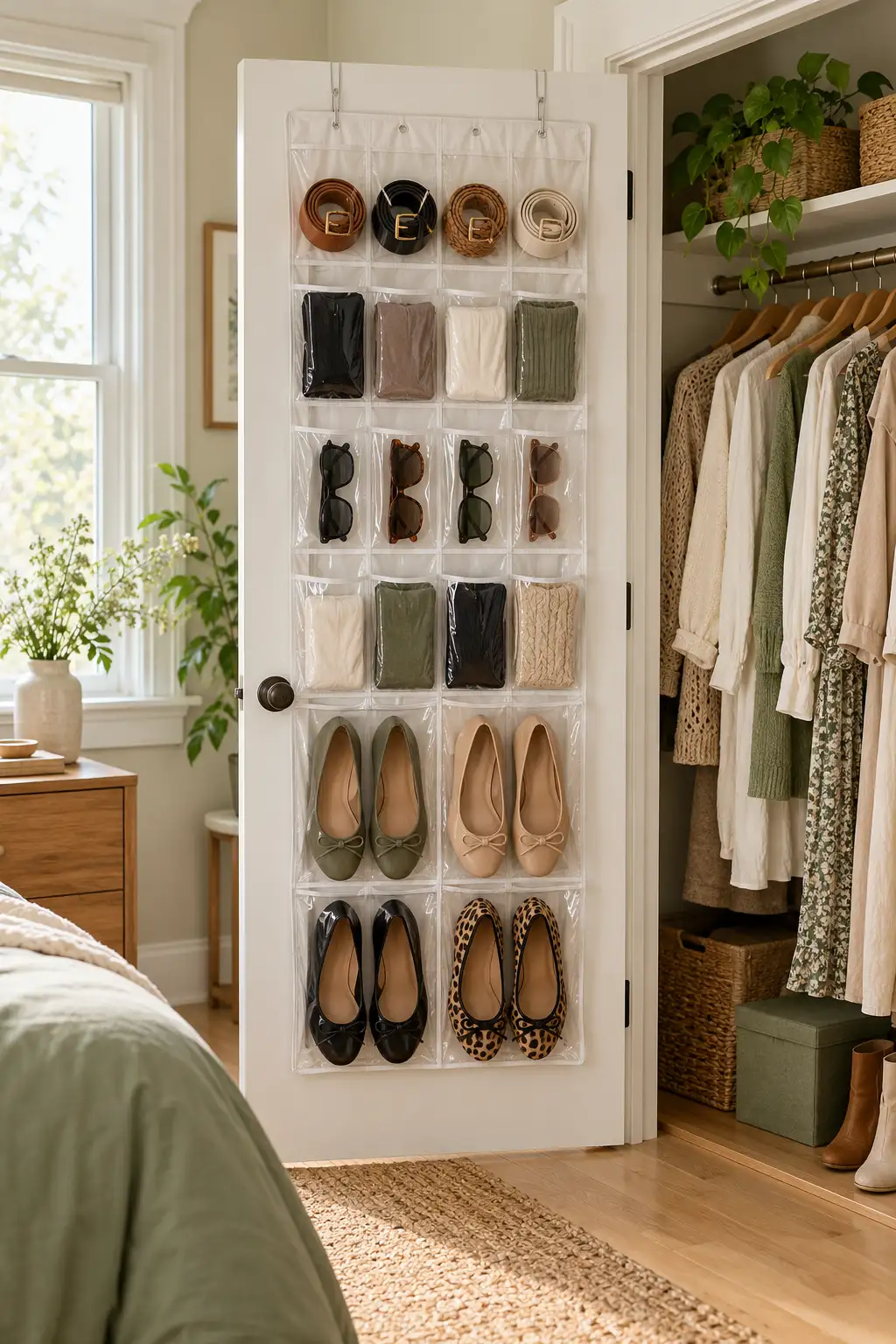
Most closet doors just swing open and shut. Yet the back of that door is one of the biggest flat surfaces in a tiny closet, and it usually sits empty.
An over-the-door organizer hooks right over the top, so there’s nothing to screw in. Shoe pockets are the classic pick, but they hold way more than shoes. Rolled belts, tights, sunglasses, a hair straightener, and a stash of tote bags all fit.
Got bifold or sliding doors? Hooks won’t sit right on those. Hang a slim pocket organizer on the side wall with removable adhesive hooks instead.
Quick check before you buy: close the door with the hooks on. Thick metal hooks can rub on a tight frame and chip the paint.
Bare door, doing nothing.
Belts tangled in a drawer.
Flats piled on the closet floor.
Door holds a full row of pockets.
Belts rolled, one per pocket.
Floor space freed up for bins or a rack.
8. Light Up a Dark Closet With Stick-On Lights
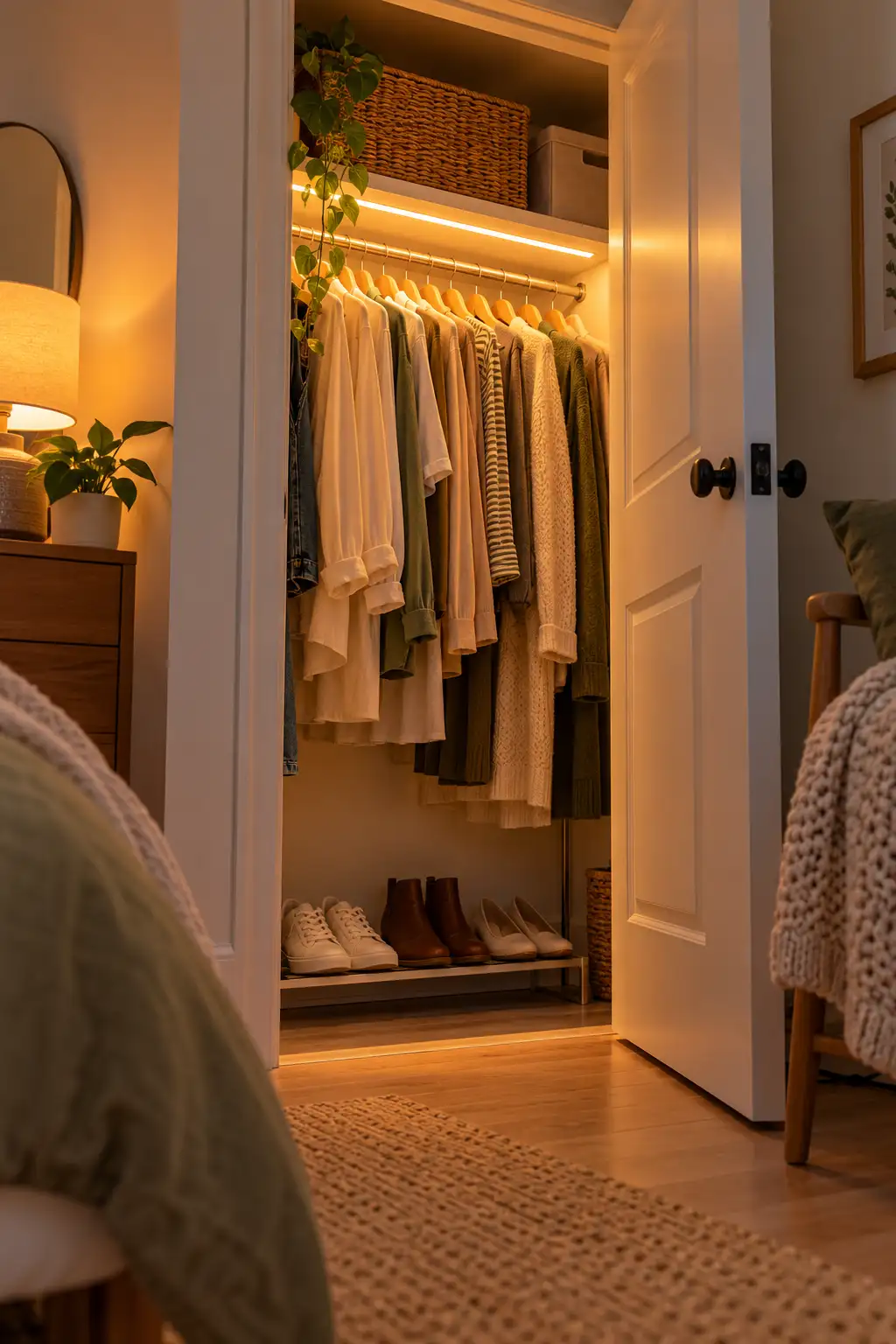
Ever grabbed navy pants thinking they were black? Most tiny closets have no light inside, and the bedroom ceiling light barely reaches past the front edge.
Stick-on lights fix that with no wiring at all. Where you put them matters more than which kind you buy:
- Under the top shelf, pointing down at the hanging clothes.
- Low on a side wall, so shoes don’t hide in shadow.
- Near the door opening, where a motion sensor can see you reach in.
Peel them off slowly when you move out. Most leave the paint alone if you pull gently along the wall instead of straight out.
Pick Your Closet Light
9. Hang Outfits Down, Not Across, With Cascading Hangers
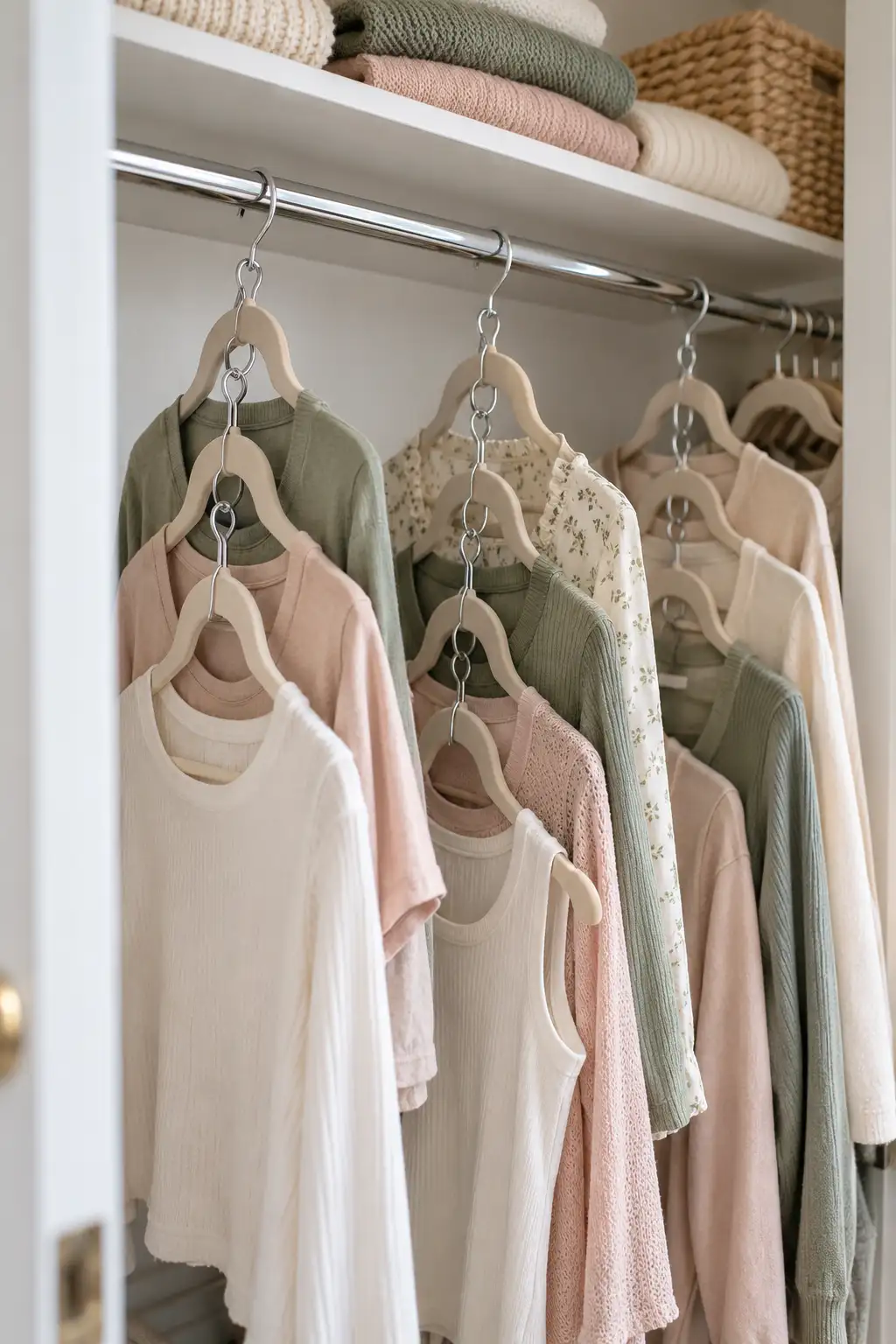
Rod space runs out long before wall height does.
Cascading hangers use that leftover height. Hook one hanger on the rod, then link more hangers into the slots below it. A whole stack of tops ends up taking the width of a single hanger.
They work best for:
- Matching sets and outfits you wear together
- Light tops, tees, and camisoles
- Kids’ clothes, which are short anyway
When the rod is full, go down.
⚠️ Watch Out
Heavy pieces like jeans or coats make the rod sag in the middle. Keep cascades for light clothes, and spread them out along the rod instead of bunching them in one spot.
10. Swap Clunky Closet Doors for a Soft Curtain
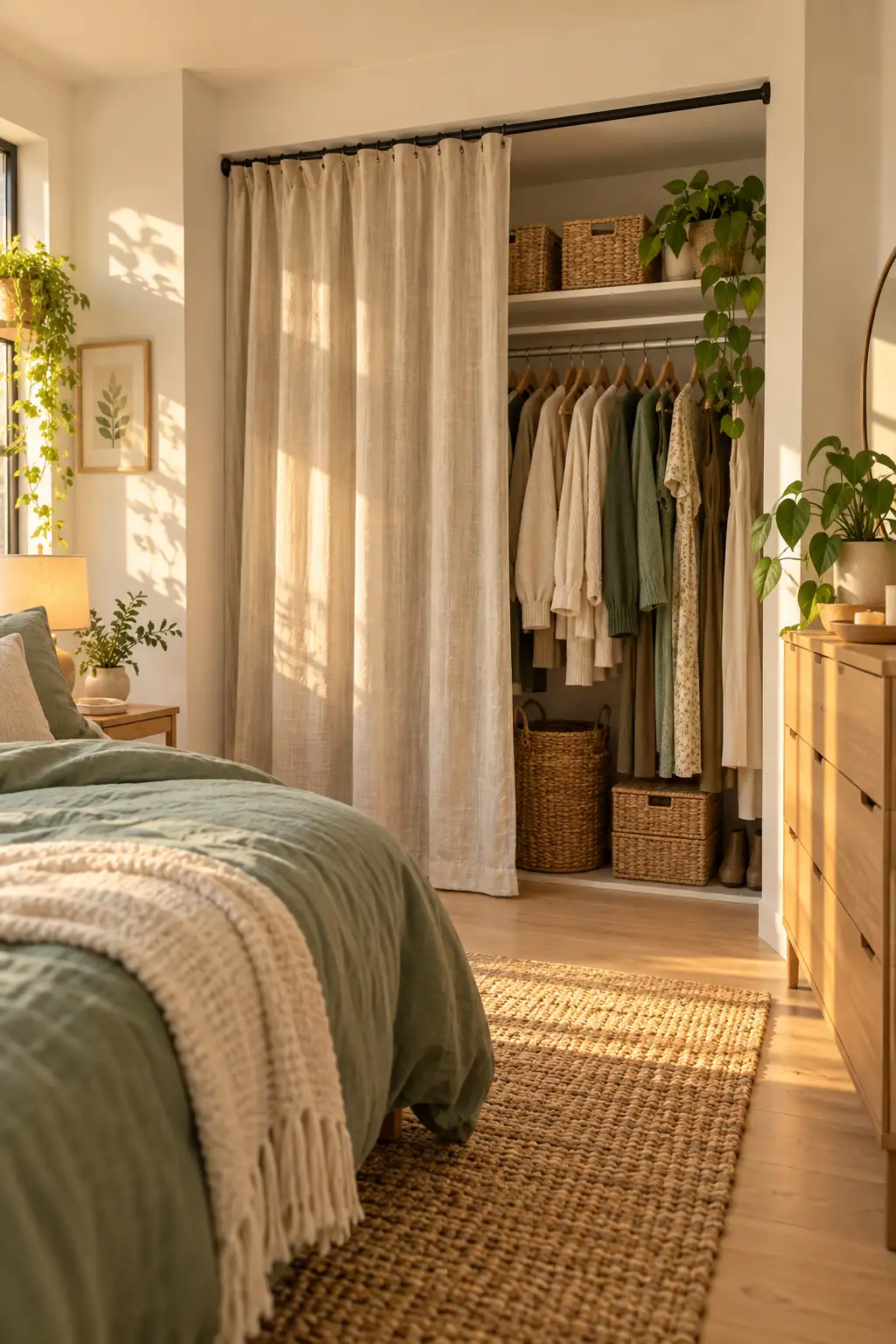
Bifold doors that jump their track. Sliding doors that only ever show half the closet. Both get old fast in a small bedroom.
A curtain opens up the whole closet at once. Here’s the renter-friendly way to do it:
- Check your lease, then lift the doors off and slide them under the bed. They go back on when you move out.
- Fit a tension rod inside the top of the door frame. No screws needed.
- Pick a curtain wider than the opening, so it gathers fully when closed and bunches neatly to one side when open.
Choose linen or cotton in a shade close to your wall color. That way the closet fades into the room instead of looking like a little stage.
Doors need swing room or a track. A curtain needs neither, so you can reach the whole closet at once and push furniture closer to it.
11. Hang a Fabric Shelf Organizer From the Rod
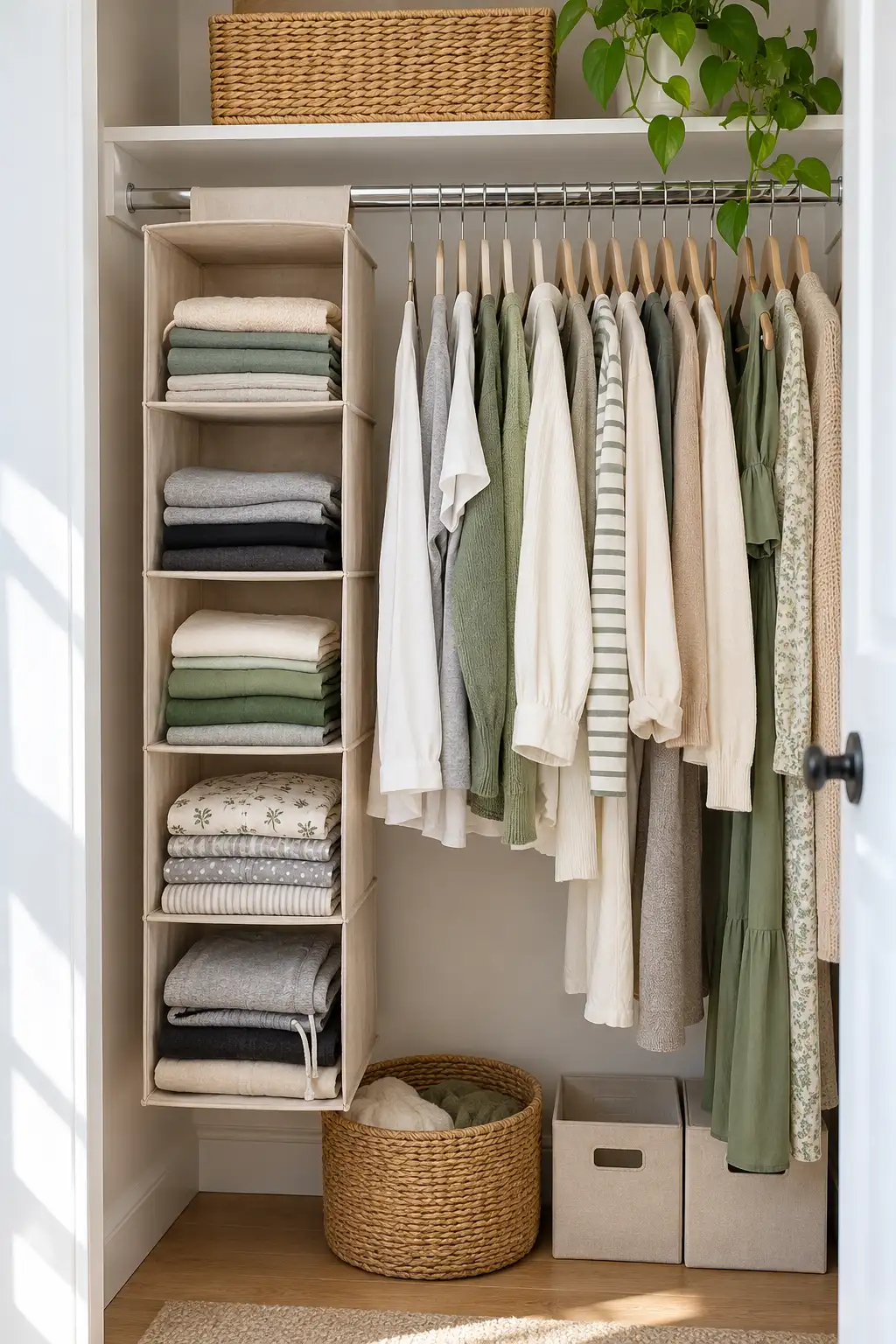
Plenty of apartment closets come with one rod and one high shelf. That’s it.
A hanging fabric organizer adds shelves without a single screw. It hooks around the rod and drops a column of soft cubbies right where you need them.
Hang it at one end of the rod so it doesn’t split your clothes in half. Folded tees, leggings, and pajamas stack neatly inside, and the top cubby makes a handy spot for a clutch or a folded scarf.
Keep heavy stacks like jeans out of the upper cubbies, though. Fabric sags under weight, and the whole column starts to lean.
What Goes in Each Cubby
12. Rotate Off-Season Clothes Out Twice a Year
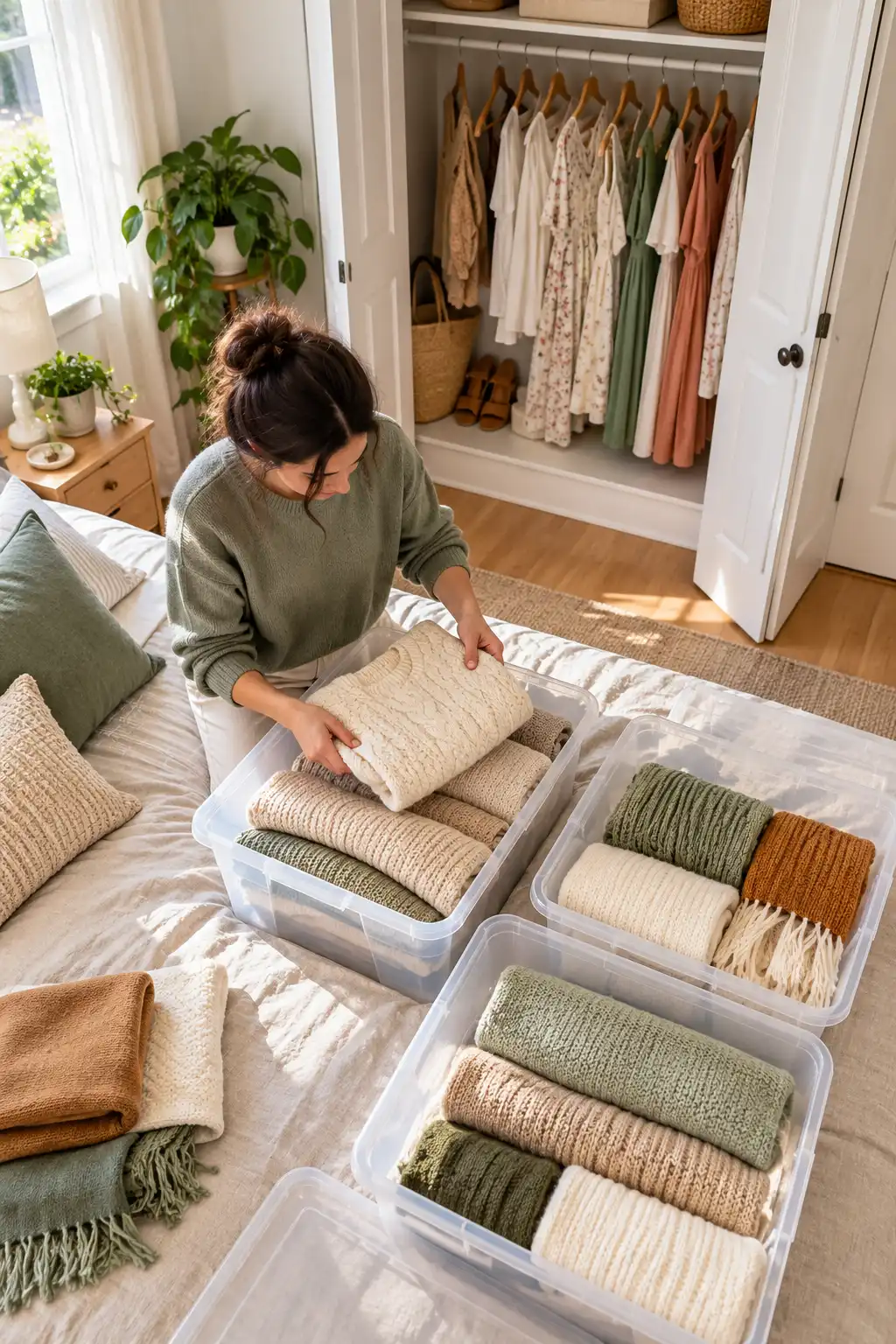
Your puffy coat doesn’t need prime closet space in July.
A tiny closet can’t hold a full year of clothes at once, and it doesn’t have to. Keep the current season within reach and pack the rest away somewhere else.
Good spots for the off-season stash:
- Lidded bins under the bed
- The highest closet shelf
- Inside a suitcase you’re not using
Swap day doubles as a quick clean-out, too. Anything you didn’t wear all season gets a hard second look.
Swap Day in Four Steps
Pick one weekend at the start of spring and one at the start of fall.
Wash everything before it goes into storage. Small stains are much harder to lift months later.
Pack by type and label each bin, like “winter knits” or “summer dresses.”
Leave one in-between layer out, like a light jacket, for those weird weather weeks.
13. Line the Side Walls With Removable Hooks
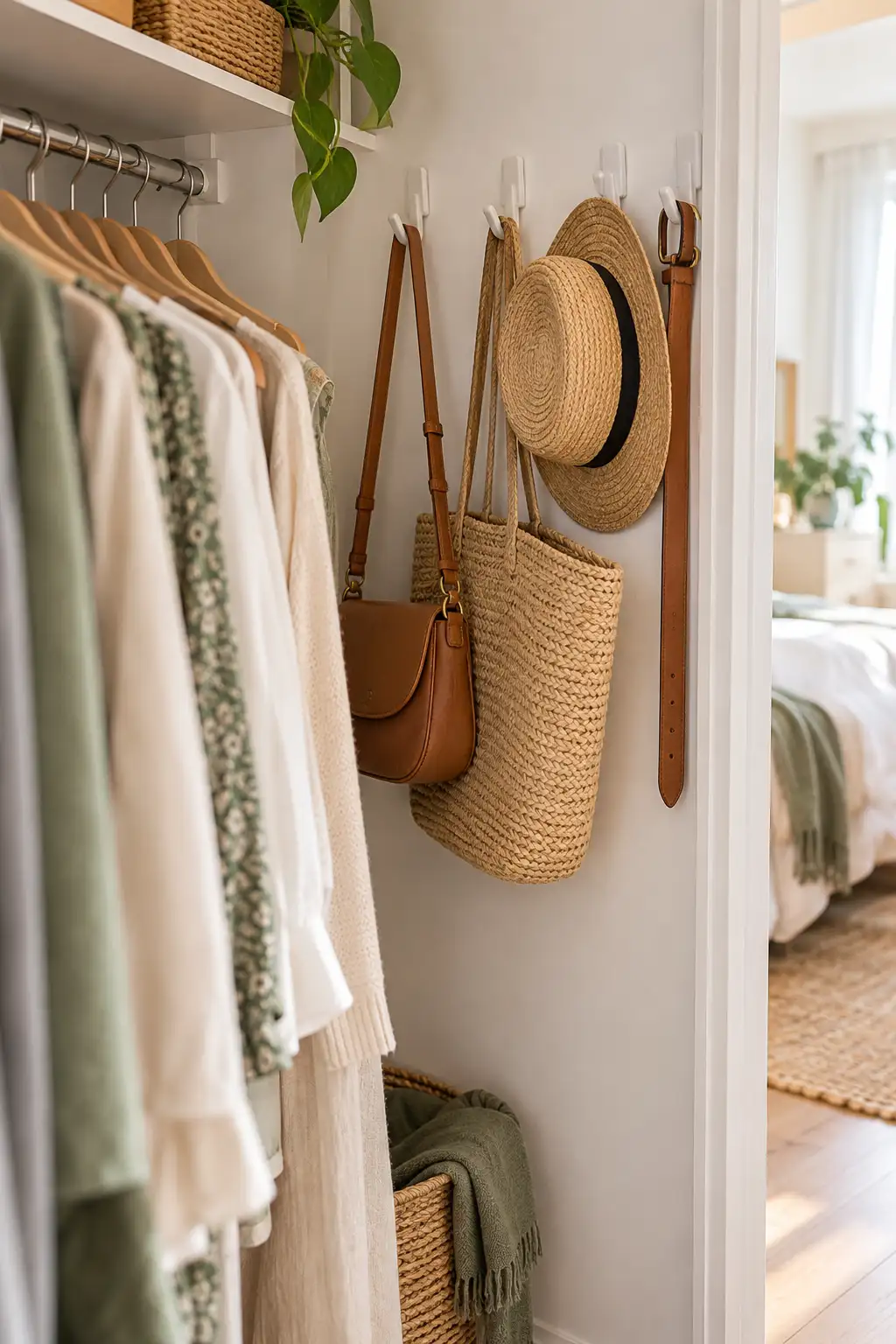
The narrow side walls of a reach-in closet usually hold nothing at all. Tucked behind the door frame, they’re easy to forget.
A short row of removable adhesive hooks changes that in about five minutes. Crossbody bags, a straw tote, belts, and a sun hat all hang flat against the wall, out of the way of your clothes. Keep one empty hook near the front for tomorrow’s outfit, already planned and ready to grab.
Check the weight limit on the package and stay well under it. A loaded tote is heavier than it looks.
Match the Hook to the Job
| 🪝 Hook Type | 👜 Holds Best |
|---|---|
| Small single hooks | Belts, necklaces, sunglasses |
| Large curved hooks | Crossbody bags and hats |
| Adhesive hook rail | A neat row of scarves or totes |
| One front hook | Tomorrow’s outfit on its hanger |
14. Give the Back Wall Some Personality With Peel-and-Stick Wallpaper
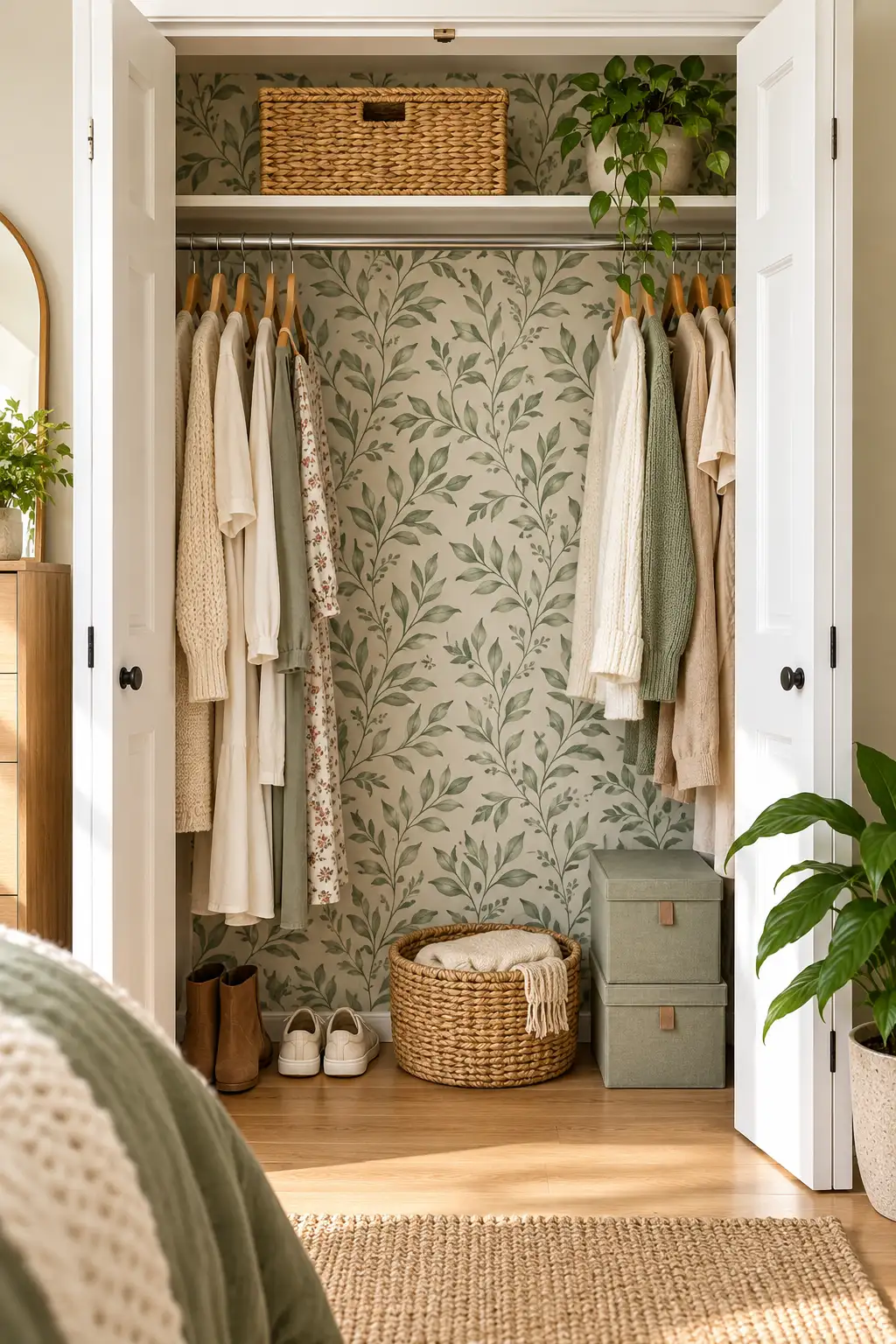
Open the closet and the back wall is the first thing you see. Most of the time, it’s plain white with scuff marks from hangers.
Peel-and-stick wallpaper fixes that without paint or paste, and a back wall takes far less than a full room. That makes it a low-risk spot to try a pattern you love.
A few pattern tips:
- Soft, light prints keep a small closet feeling bright.
- Bold prints look best when the clothes in front are mostly solid colors.
- Small florals and thin stripes hide hanger scuffs better than a flat color.
Test a scrap in a hidden corner first. Some paints peel off with the paper, and you want to know before moving out.
Final Thoughts
A small closet doesn’t need a renovation to work better. It needs a few smart swaps: thinner hangers, a rack or drawers on the floor, hooks on the walls, and a plan for the clothes you’re not wearing right now.
Start with whatever bugs you most. If shoes are piling up, try a rack. If the rod is packed, swap the hangers. Each fix frees up a little room, and in a tiny closet, a little goes a long way.
Hope these small closet organization ideas help you like your closet a bit more. Save this pin to your apartment or closet board so it’s handy on your next reset day.