

Small apartments have a way of making you feel like comfort is something you’ll get to later, once you have more room. That’s backwards.
A cozy apartment aesthetic has almost nothing to do with square footage and everything to do with where the light falls, what your hands touch, and whether the corner by the door is working for you or against you.
The twenty ideas below come from real apartments. Some are five-minute changes, like moving a mirror or swapping pillow covers. Others take an afternoon, like standing a ladder shelf in the one gap your bathroom has or turning a counter overhang into a dining table for two.
Most of them cost very little, and almost all of them work in a rental without drilling a single hole.
You’ll find ideas for the living room, the bedroom, the kitchen, the bathroom, the entryway, the balcony, and the awkward alcove nobody knows what to do with. Start with the one that fixes whatever annoys you most.
1. Trace a Warm Light Line Around Your Gallery Wall

The glow here comes from a strip tucked behind the frames, not from the ceiling.
That soft line follows the whole art wall and keeps the dark olive paint from feeling heavy. In a small apartment it does two jobs at once. It lights the art, and it softens the corner so the room reads wider once the sun goes down.
Stick-on strips run on a plug or batteries, so renters can do this without touching any wiring. Set the strip a few inches outside the frames in one loose curve rather than a tight rectangle. The curve is what keeps it from looking like office lighting.
Warm light does most of the work in a cozy room. Here are 20 renter-friendly lighting ideas to try next.
2. Wrap a Low Corduroy Sectional Into the Corner
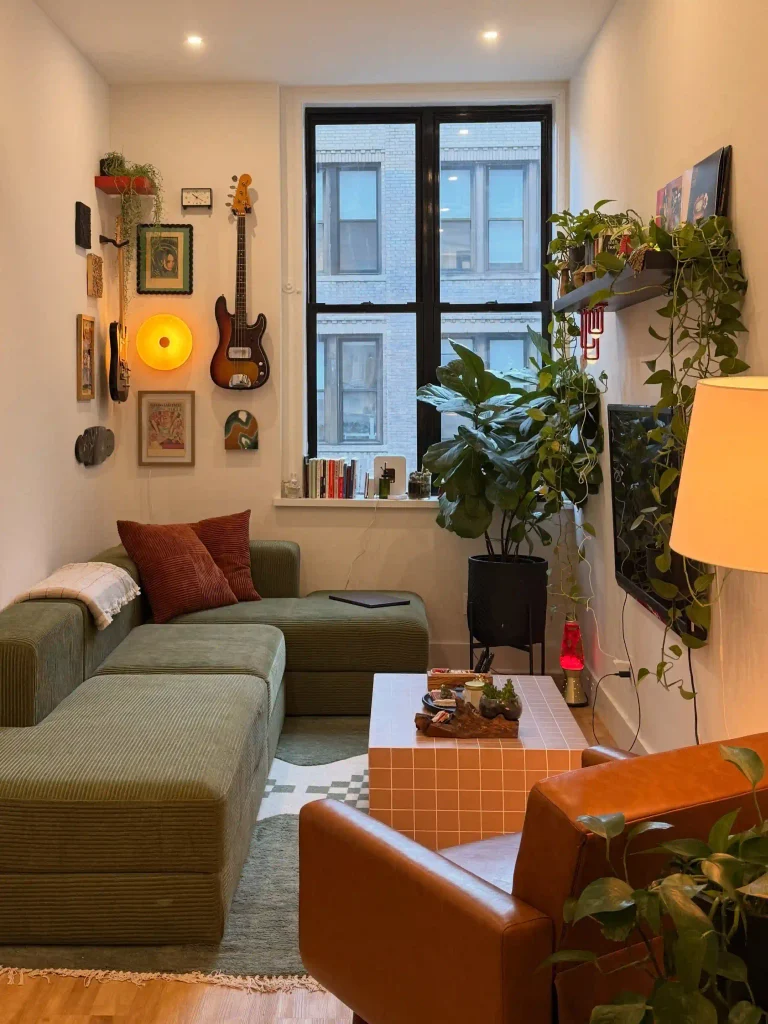
Deep olive corduroy runs along two walls here, and that choice is doing more work than the color alone suggests. A low back keeps sight lines open to the window, so the room still breathes even with a large piece of furniture in it. Because the sectional turns the corner instead of floating in the middle, the walkway to the window stays clear.
Modular pieces help too. You can break them apart when you move, and most small apartments have at least one corner nobody uses well.
| Corner sectional | Sofa plus two chairs |
|---|---|
| Uses dead corner space | Needs clearance on all sides |
| One visual block, calmer room | Three shapes competing |
| Doubles as a nap spot | Better for conversation groups |
| Low back keeps windows visible | Easier to rearrange on a whim |
One caution before you buy: measure your doorway and any stair turns. Modular sections are usually fine, but a one-piece L shape has ended many moving days early.
3. Push the Bed Into the Window Corner

Sleeping under the windows turns the view into part of the room, and it frees up the only wall long enough for storage.
Night traffic is the trade-off, so check which side you get in and out of before committing. Everything else here is easy to copy: rumpled linen bedding in one warm shade, two pillow sizes stacked instead of a matched set, a low shelf standing in as a nightstand.
The plants on the sill matter more than they look. They soften a hard window frame and give the eye something living at the exact spot where the room ends.
Build this corner
Cold glass in winter is the one real downside. A heavier blanket on that side handles it.
4. Keep Every Soft Thing in One Color Family
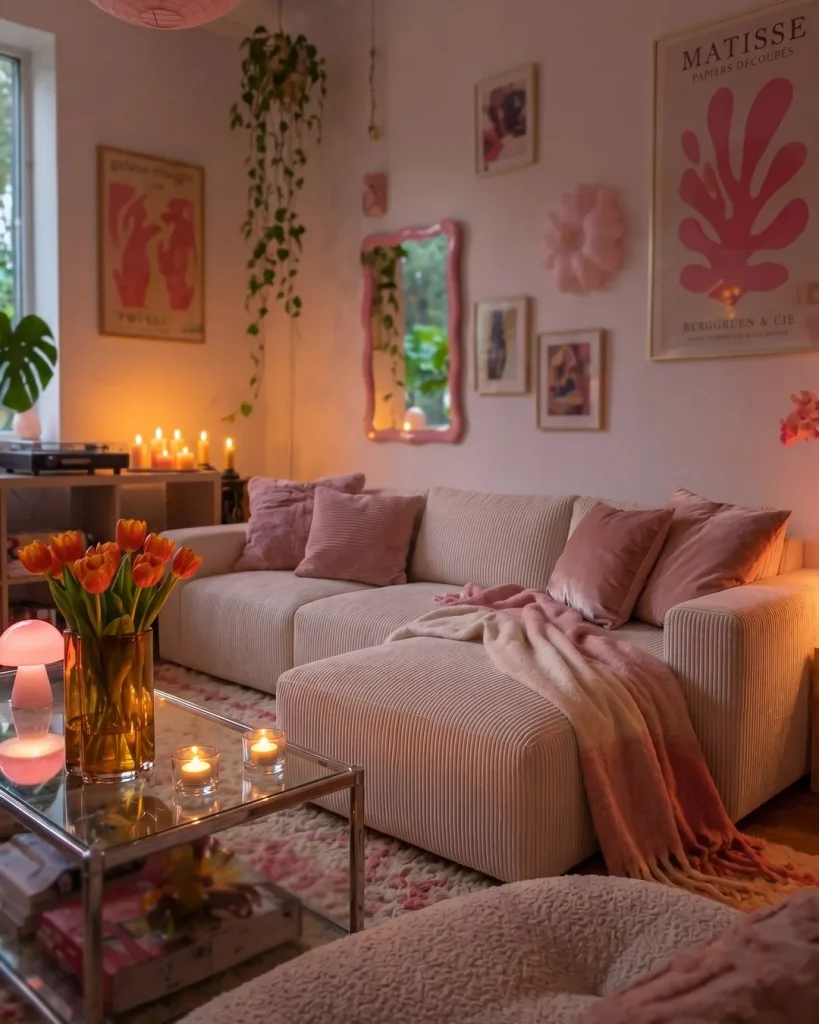
Dusty rose, blush, terracotta, warm cream. Nothing here fights anything else, and that is why a fairly busy room still feels restful.
The trick is sticking to one family and changing texture instead of hue. Velvet next to corduroy next to a brushed wool throw reads rich, not repetitive. A small hit of orange tulips keeps it from going flat.
Warm light pulls it all together at night. Candles, a small glowing lamp, and a paper shade overhead all sit in the same amber range, so the pinks stay soft instead of turning cold.
Pick your base from the largest thing in the room, usually the sofa or the rug.
Choose two neighbors of that color, one lighter and one deeper.
Repeat those three across pillows, throws, and art so they echo around the room.
Change the material every time, never the color, so the layers stay interesting.
Add one small contrast, like fresh flowers, and stop there.
Small rooms reward this more than large ones. Fewer colors means fewer visual stops, and fewer stops makes the space feel bigger than it is.
5. Turn the Counter Peninsula Into Your Dining Room
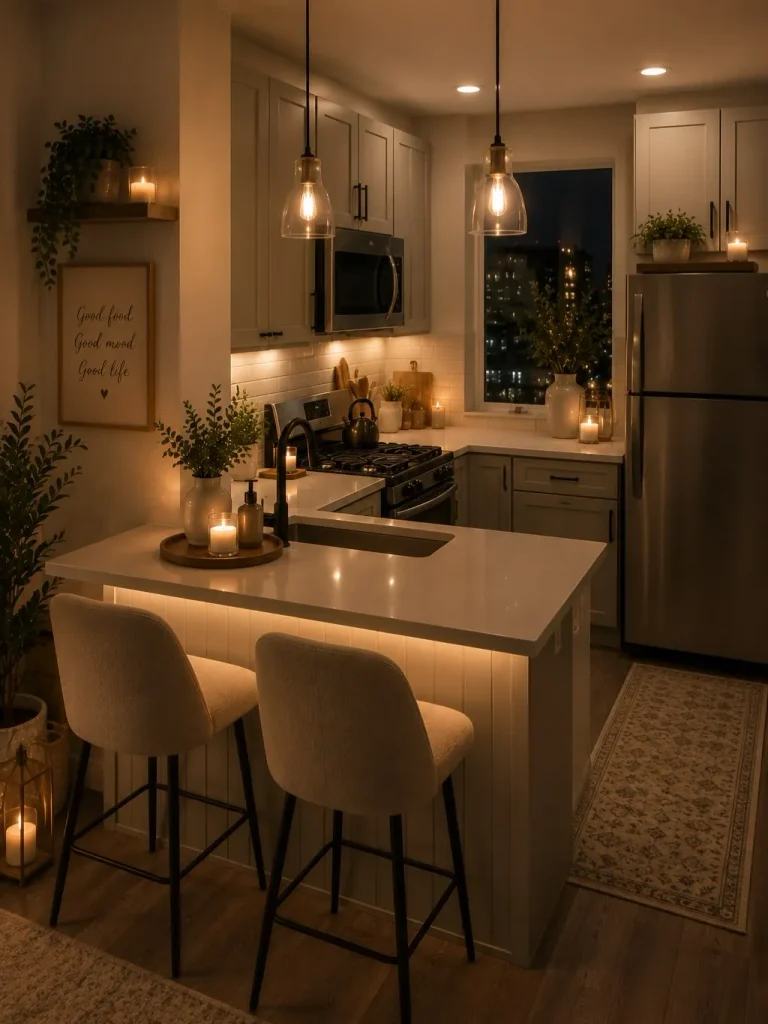
Two stools pulled up to a countertop overhang is often the only dining setup a small apartment needs, and it costs nothing to try.
What makes it work here: the counter runs long enough for two people without blocking the path to the fridge, and the stools tuck fully underneath when nobody is sitting. That second part matters more than people expect. A stool that sticks out turns a walkway into an obstacle course.
Cozy comes from the details. Upholstered seats instead of bare wood or metal. A small tray holding a candle so the surface never looks purely functional. Under-counter strip lighting that gives the whole base a soft glow after dark.
Measure from the floor to the underside of the counter before ordering, then subtract about ten inches for seat height. Getting that wrong is the most common reason stools end up back in the box.
6. Stack Two Floating Shelves Above a Desk and Let Plants Take Over
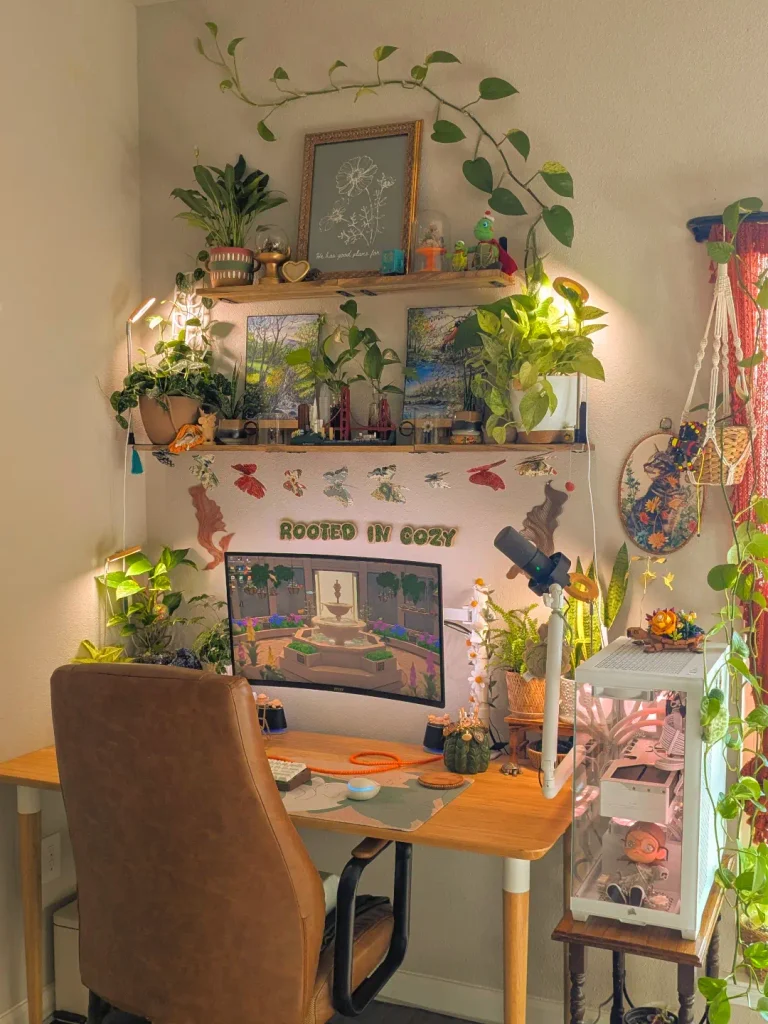
Vertical space above a desk usually goes to waste. Here it carries two narrow shelves, and the plants on them do the softening a small room needs.
A vine trained across the wall above the top shelf is the detail worth copying. Command hooks guide it wherever you want, and the line it draws makes a flat corner feel like it has depth. Trailing pothos hanging off the shelf edges does the same job going downward.
Keep the shelves shallow. Deep ones crowd the desk and block light. Six inches holds plants, small frames, and objects without stealing the room.
Mix trailing plants with upright ones so the shelf has movement.
Add a small clip lamp aimed at the plants, not the screen.
Leave the desk surface mostly clear so the wall gets the attention.
Heavy ceramic pots on shelves anchored only into drywall.
Plants that need direct sun in a corner that never gets any.
Shelves hung so low you knock your head reaching for the keyboard.
Water carefully up there. One overflow onto a keyboard is an expensive lesson.
7. Stand a Ladder Shelf in the Only Gap Your Bathroom Has
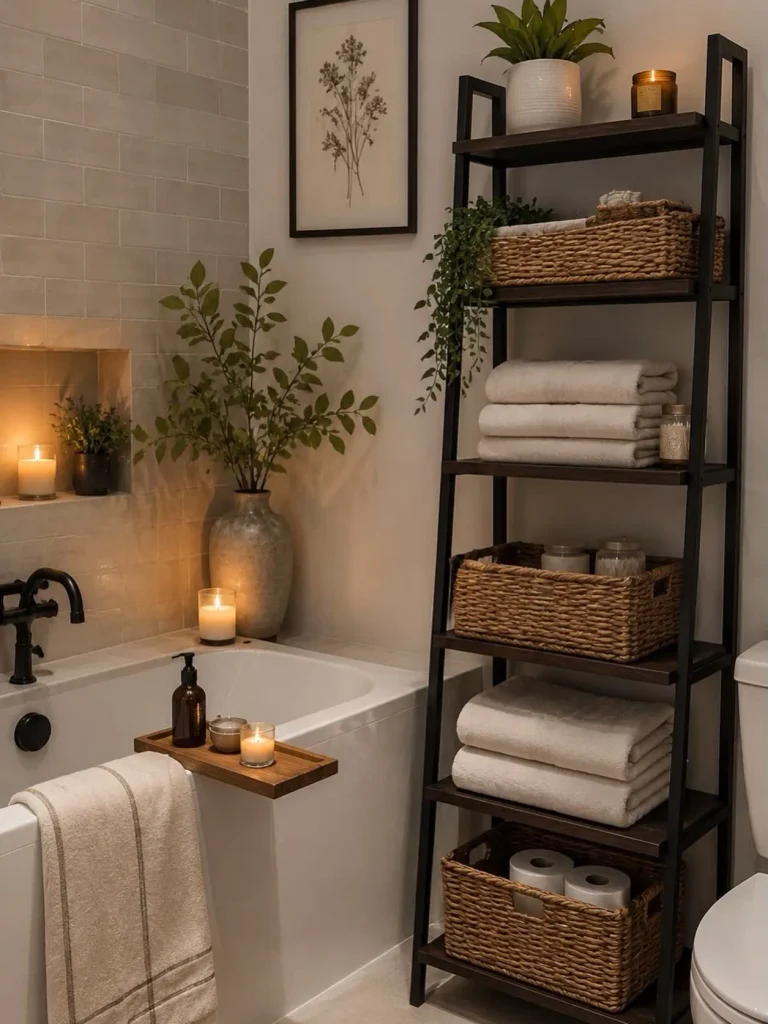
Small bathrooms almost always have one narrow strip of wall doing nothing, usually beside the toilet or at the end of the tub.
A leaning ladder shelf fits that strip because it needs floor space, not wall anchors. Nothing gets drilled, which matters in a rental. The angled shape also keeps it from feeling bulky in a tight room.
Baskets are what make it look calm instead of cluttered. Everything ugly goes inside them, spare rolls, cotton swabs, backup bottles. Folded towels and one plant get the open shelves. The rule is simple: hide the packaging, show the texture.
Bottles crowded on the tub edge, spare rolls stacked on the floor, towels on a single overloaded bar.
Four levels of storage in one narrow footprint, supplies tucked into baskets, towels folded and visible.
Check the depth before you order. Anything over fourteen inches will clip your knees every time you walk past.
8. Claim One Dead Alcove as a Reading Nook
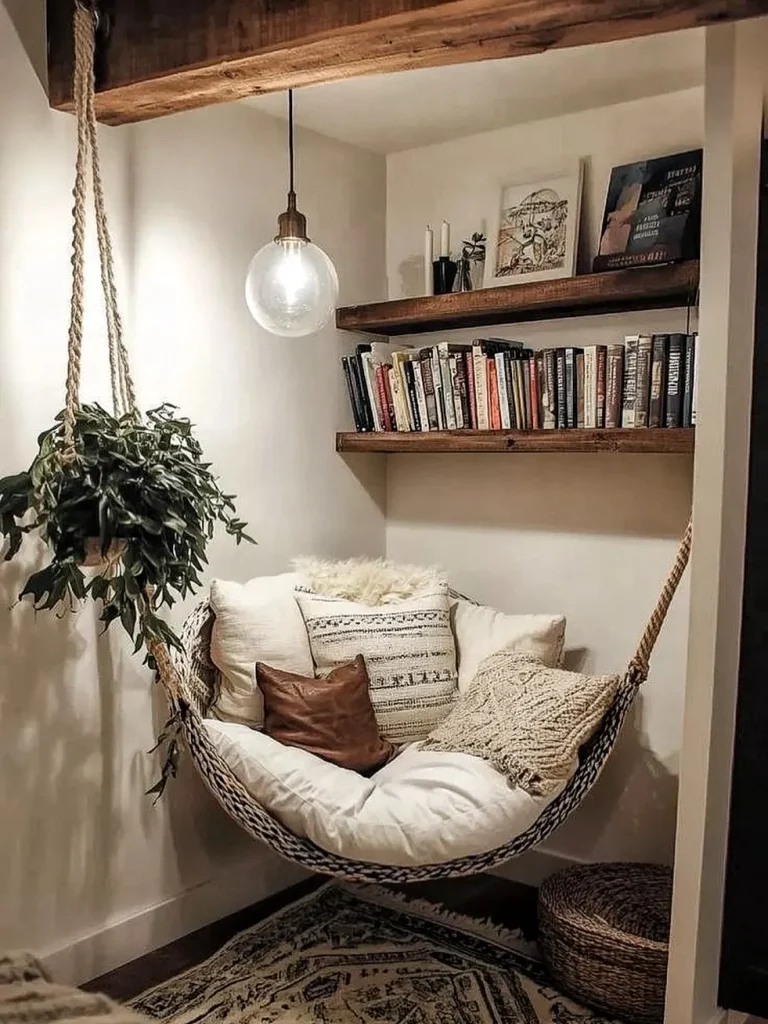
Awkward recesses show up in a lot of older apartments. The space beside a chimney breast, the gap at the end of a hallway, the stub of wall a previous renovation left behind.
A hanging chair fills one completely. Because it floats, the floor underneath stays open and the corner never reads as blocked. Two shelves above hold books and a couple of framed pieces, so the alcove earns its keep vertically as well.
The comfort comes from piling on more than seems necessary. A deep cushion, three or four pillows in different weaves, one chunky knit throw. Nothing matches here and it works better for it.
⚠️ Watch Out
Hanging seats need a ceiling joist or beam, never plain drywall. If you rent or can’t find solid framing, a freestanding hammock chair on its own frame gives you the same look without touching the ceiling.
Add a floor cushion or basket ottoman nearby. It catches the blanket when you get up and keeps the corner from looking half finished.
9. Give the Front Door a Bench That Hides Everything
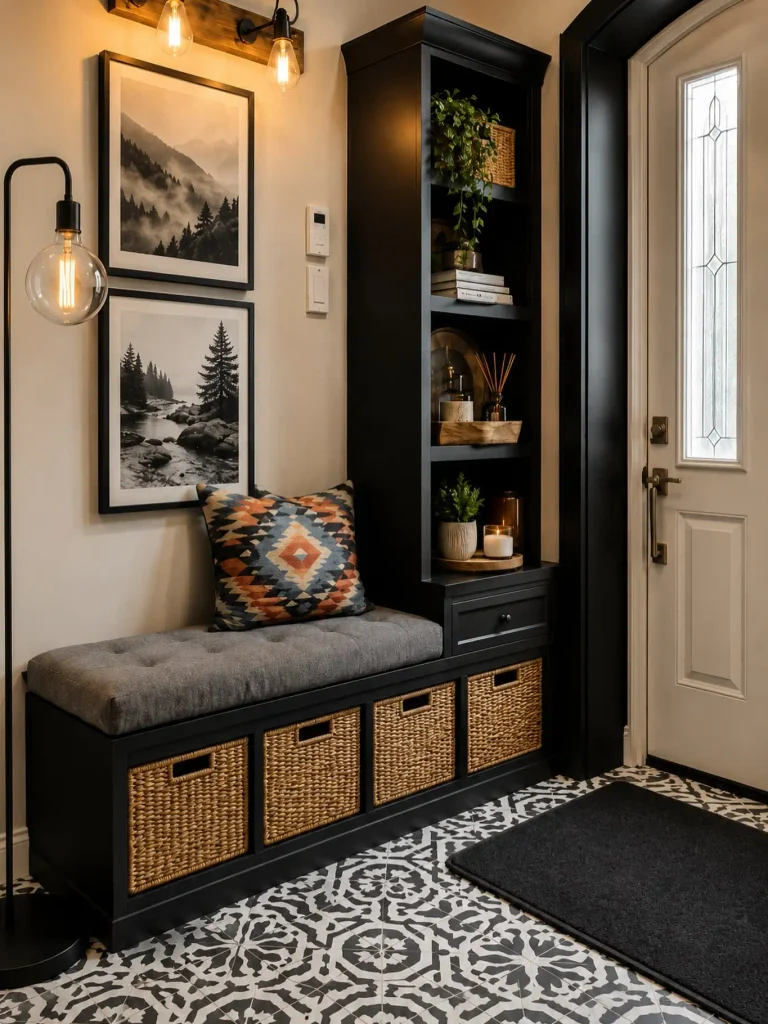
Most apartments open straight into the living room, and that first three feet decides whether the whole place feels put together.
A storage bench solves the pile-up. Shoes, bags, and gloves go into the baskets underneath. The cushioned top gives you somewhere to sit while you deal with boots, which is the single most useful thing you can add near a door.
Going dark on the woodwork is what makes this feel deliberate rather than practical. Black cabinetry against a pale wall frames the corner, and the warm bulbs stop it from turning cold.
- ▸Bench height around eighteen inches so it is comfortable to sit on.
- ▸Baskets sized to the openings, pulled out and checked before you buy.
- ▸One patterned pillow to break up the solid surfaces.
- ▸A candle or diffuser at nose height, so the entry smells like home.
- ▸A washable mat that handles wet shoes without looking like a doormat.
If you have no room for a bench, a narrow one under two feet deep still works. Anything deeper starts blocking the door swing.
10. Build a Corner Bench on the Balcony Instead of Two Chairs
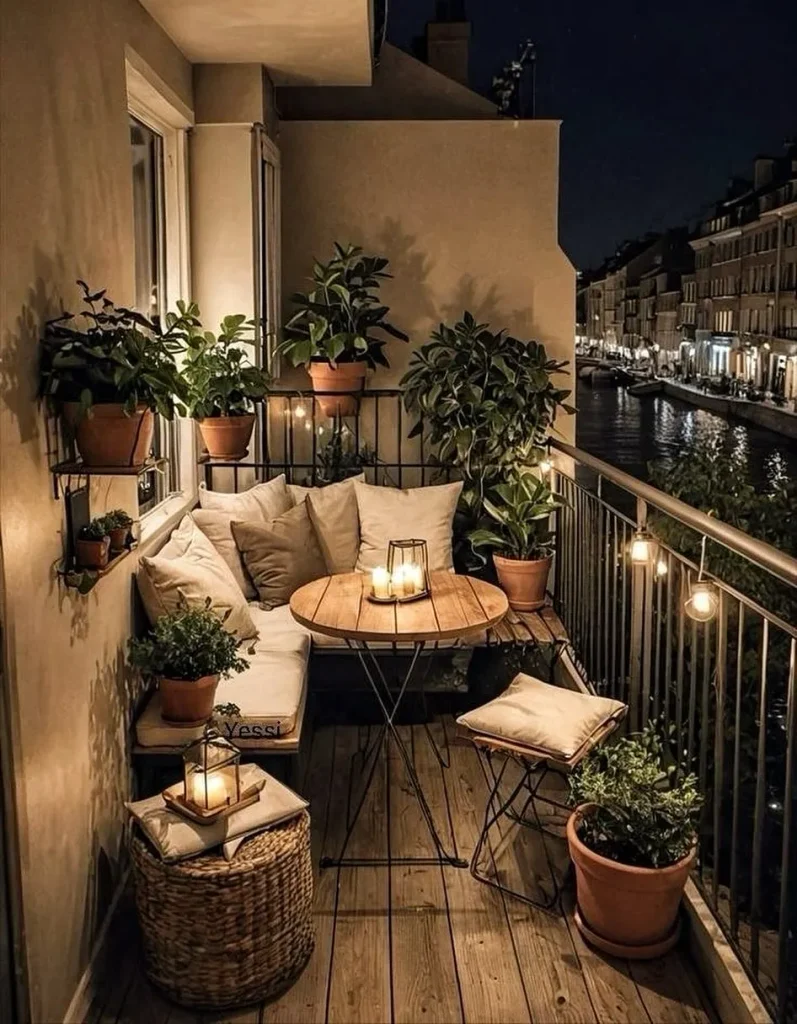
Balconies lose their space to furniture that floats in the middle. Pushing seating into the corner changes the math completely.
An L-shaped bench along two railings leaves the whole walkway open, seats three or four people, and gives you somewhere to stretch out alone. A round folding table pulls up to it and collapses flat when you want the floor back.
Plants climb the walls rather than sitting underfoot. Brackets and railing hooks hold terracotta pots at three different heights, which is what turns a concrete ledge into somewhere you actually want to sit at night.
Furniture against the edges keeps the middle clear, and a clear middle is what makes a narrow balcony feel like a room instead of a ledge.
Outdoor cushions only, even under cover. Regular ones soak up damp air and start smelling within a season.
11. Hang Curtains Wide and High, Not Where the Window Ends
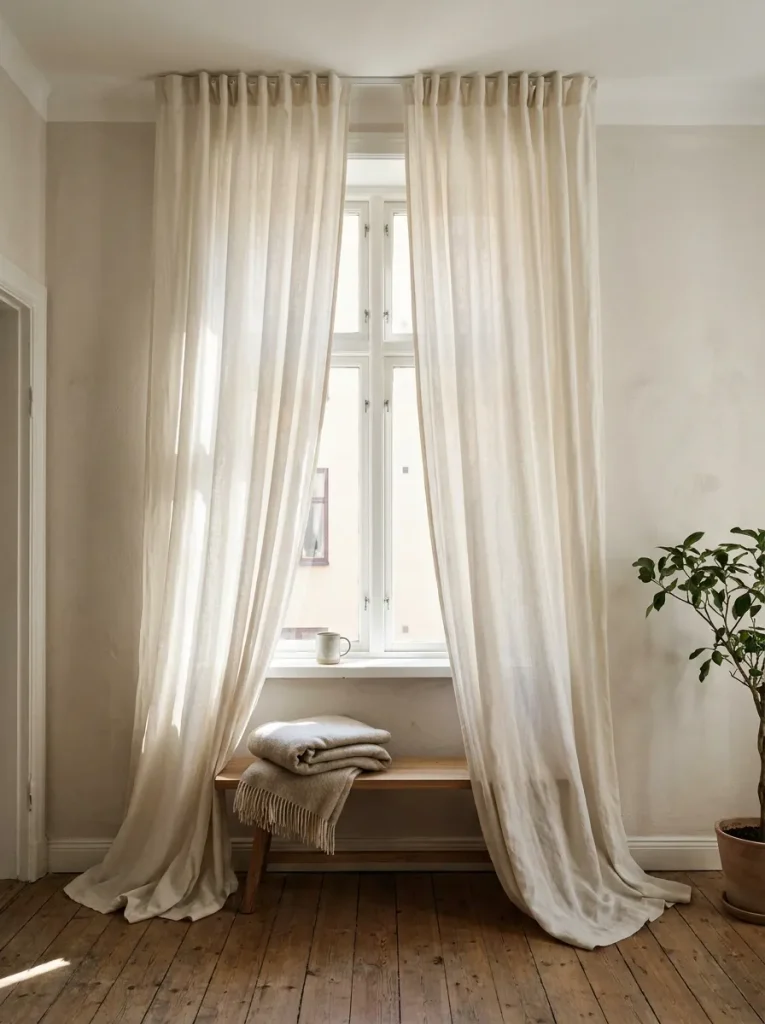
Rod placement is the cheapest trick in a small apartment, and almost nobody does it right.
Mount the rod close to the ceiling and extend it four to eight inches past the frame on each side. The window suddenly looks taller and wider than it is, and when the curtains are open they stack against the wall instead of covering glass. You keep every bit of daylight.
Pick a fabric with some weight. Thin panels hang limp and read cheap. Linen or a brushed cotton in a warm off white gives you softness without darkening the room.
Panels that stop above the floor cut the room in half visually. Let them just touch the boards.
12. Let a Rug Draw the Line Between Sleeping and Living
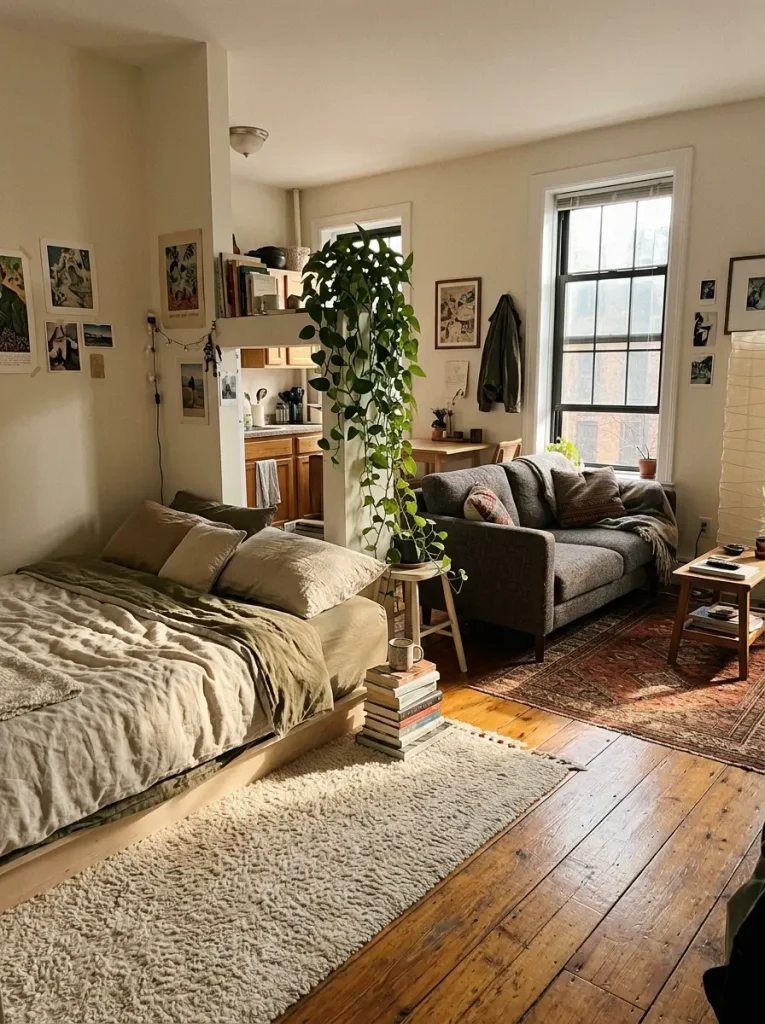
Studios have no walls, so the floor has to do the dividing.
Put one rug under the bed and a different one under the seating area. Two distinct zones appear immediately, even though nothing has been built. The eye reads each rug as its own room.
Sizing is where this goes wrong. Each rug needs to be large enough that the main furniture sits at least partly on it. A small rug floating in the middle of a zone does the opposite of what you want and makes the space look scattered.
Keep the two rugs in related tones so the studio still feels like one home. Different patterns are fine. Clashing color families are not.
Getting the zones right
A low shelf or a plant at the edge of one rug reinforces the divide without closing anything off.
A rug is the easiest boundary. If you want to take it further, here’s how to divide a studio into zones in a weekend.
13. Put a Mirror Where It Can Catch the Window
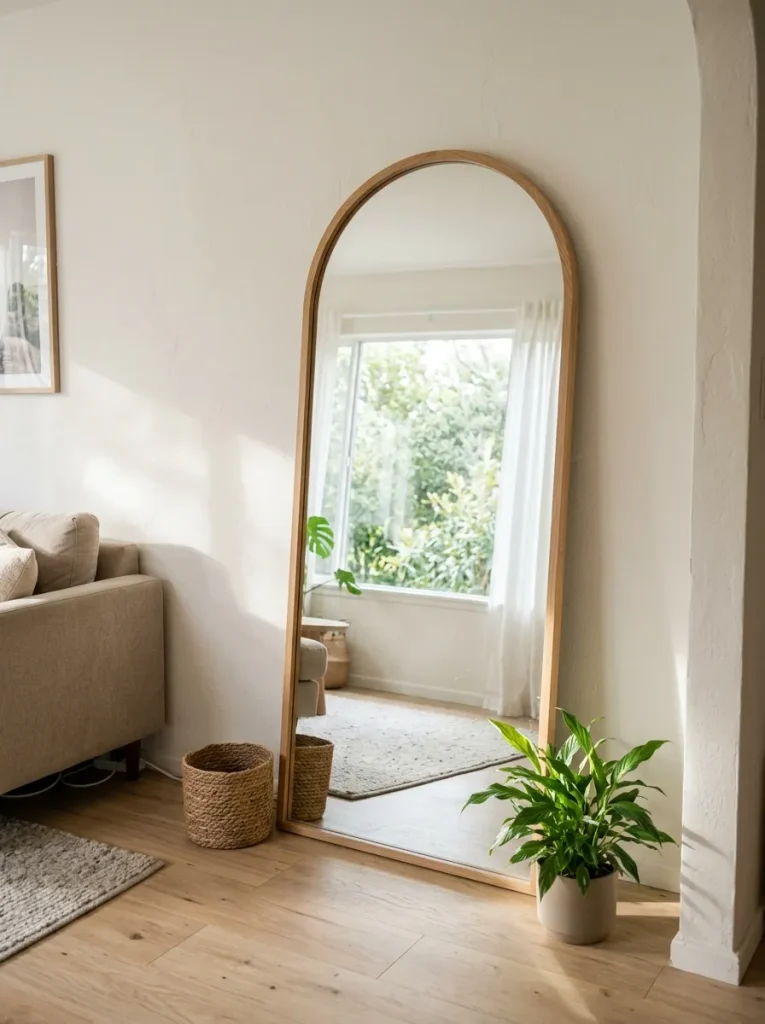
A mirror on the wall opposite your only window does more for a dark apartment than any lamp.
It picks up daylight and throws it back across the room, and it borrows the view, so a small space reads as having two openings instead of one. Position matters more than size. A mirror facing a blank wall just reflects blank wall.
Lean a tall one against the floor if you rent and can’t drill. It gives you the full height effect and moves with you.
One window doing all the work, the far side of the room dim by mid afternoon, walls closing in.
Light bouncing to the dark corner, the greenery outside visible from the sofa, the room reading noticeably deeper.
Skip the gallery of small mirrors. One large piece does the job. A cluster of little ones chops up the reflection and adds visual clutter to a room that needs less of it.
14. Reclaim the Space Under Your Bed

Bedrooms in small apartments rarely have a closet worth the name, and the biggest storage opportunity is already in the room, sitting empty.
Flat rolling bins hold off-season clothes, spare bedding, and anything you touch twice a year. Fabric ones with lids keep dust out and cost very little. Measure the clearance from floor to frame first, then buy to fit, not the other way around.
Bed risers add several inches if the gap is tight. They look industrial on their own, so a bed skirt or a long throw hanging down hides both the risers and the bins in one move.
Measure floor to frame at the lowest point, including any center support.
Sort what goes under by how often you need it, not by size.
Choose bins on wheels for anything you will pull out more than twice a year.
Label the ends, since that is the only part you will ever see.
Leave a little breathing room at the edges. Bins wedged in tight never get opened, and storage you avoid using is just hidden clutter.
Under the bed is one spot; my small apartment storage ideas for every room in your home cover the rest.
15. Mount a Drop-Leaf Table on the Wall
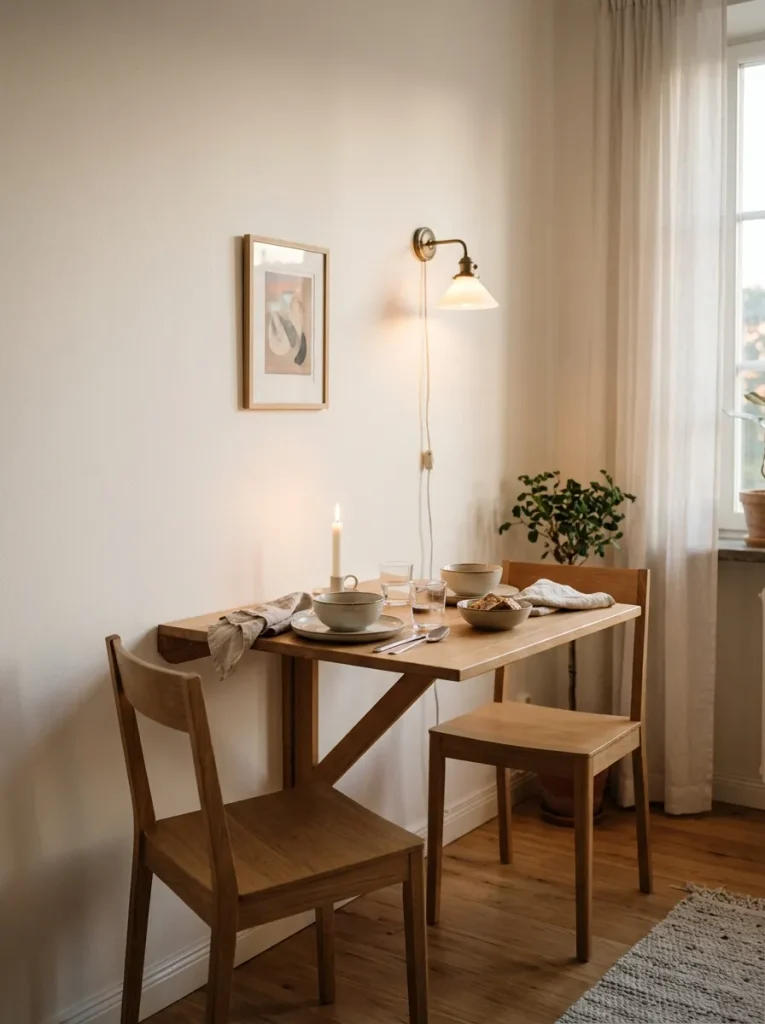
Dining tables eat floor space even when nobody is eating. A fold-down table only exists when you need it.
Open, it seats two for dinner or works as a laptop desk. Folded, it sits a few inches deep against the wall and reads as a shelf. Two chairs slide underneath a console or stack in a corner when they’re not in use.
The cozy part comes from treating the closed version as decor. A small lamp, a framed piece above it, one plant. Then it never looks like a folded-up table waiting for company.
| Wall-mounted drop leaf | Small standing table |
|---|---|
| Disappears when closed | Occupies floor space all day |
| Needs wall anchors and studs | No installation at all |
| Seats two comfortably | Can seat more if you size up |
| Doubles as a desk on weekdays | Always ready, nothing to set up |
Check your lease before drilling. Some landlords fine for anchor holes, and this needs real ones.
16. Build the Cozy You Can Smell and Hear

Everything on this list so far has been visual, and that leaves out half of what actually makes a home feel warm.
Scent works fastest. One candle or a small diffuser, running in a single scent family across the apartment, does more for atmosphere than another throw pillow. Cedar and vanilla in winter, citrus and herbs in summer.
Sound matters just as much in a small space where you hear every neighbor. A record player, a quiet speaker on low, even a small fountain covers hallway noise and gives the room its own soundtrack. Texture is the third one. Things you want to touch, like a chunky knit or a worn leather chair, register as comfort before you consciously notice them.
💡 Quick Tip
Pick one scent for the whole apartment instead of a different candle in every room. In a small space the smells mix anyway, and competing scents read as confusion rather than comfort.
Go easy on strong fragrance in a studio. What smells lovely in a house can overwhelm four hundred square feet by the second hour.
17. Swap Four Things Each Season and Leave the Rest

Redecorating a small apartment every few months is exhausting and expensive. Rotating a short list is neither.
Pick the items that carry the most color and texture for their size: throw pillow covers, one blanket, the candle scent, and whatever sits on the coffee table. Change those four and the room reads as a different season while the furniture stays exactly where it is.
Covers are the key detail. Storing four flat pillow covers takes almost no room. Storing four extra pillows takes a closet you don’t have.
One flat storage bag under the bed holds the whole off-season set, which ties back neatly to the space you cleared out earlier.
When it’s time for your winter swap, here are 17 easy ways to make a small rental feel warm in winter.
18. Go Up the Inside of Your Closet
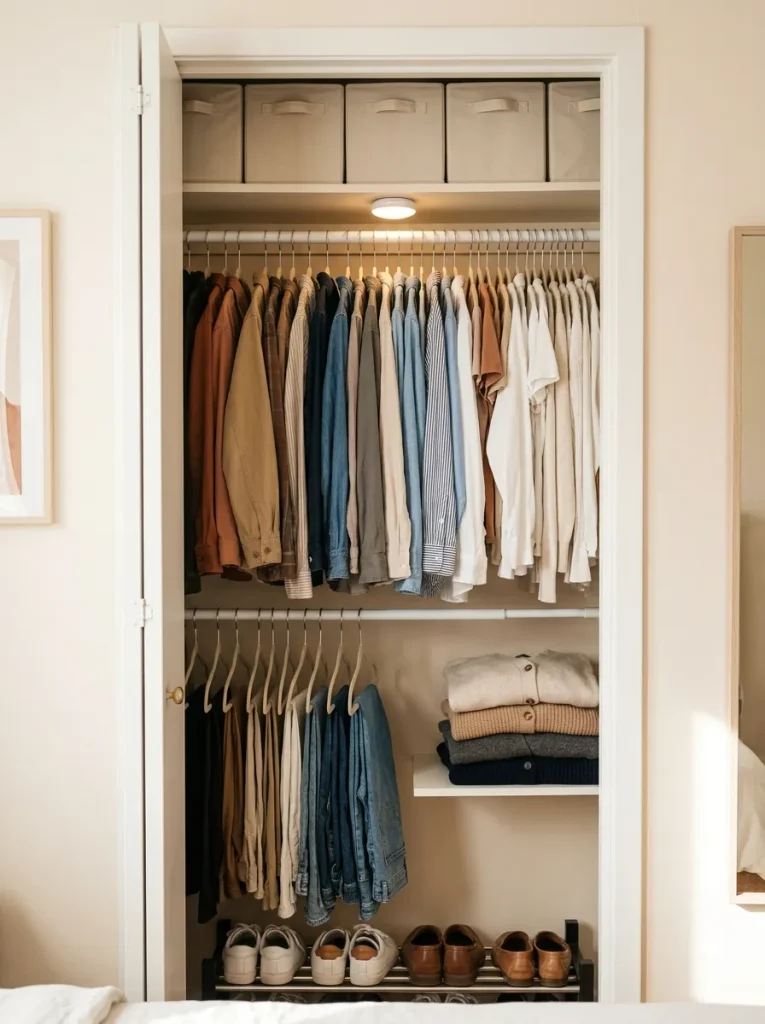
Rental closets waste an absurd amount of vertical space. One hanging rail, one shelf, and three feet of empty air above your clothes.
Stackable bins take that top zone. A second tension rod hung below the first doubles the hanging space for shirts and folded trousers. Over-the-door organizers handle shoes and small things without a single screw.
Lighting is the part people skip. A stick-on rechargeable puck light inside a dark closet means you can actually see what you own, and seeing what you own is most of the reason clothes end up piled on a chair instead.
Add a tension rod below the main rail for shorter items.
Use matching bins on the top shelf so it looks calm when open.
Stick a battery puck light to the inside top.
Bins too deep to reach into from the front.
Bulky hangers that steal an inch each across the rail.
Storing anything heavy on the very top shelf.
Slim velvet hangers alone can gain you several inches of rail. It’s the smallest change here with the biggest return.
19. Let Wood, Clay, and Leather Do the Warming

Warmth is a material question before it’s a color question. A room painted a lovely shade can still feel cold if everything in it is plastic, glass, and laminate.
Natural materials age visibly, and that’s the whole point. Oak develops a patina. Leather creases where you sit. Terracotta darkens where water has soaked in. A small apartment furnished with those reads as lived in within months, not years.
You don’t need to replace furniture to get it. A wooden tray on the coffee table, a clay pot swapped for a plastic one, a leather strap on a hanging shelf. Three small changes shift the whole feel of a room.
Materials that show their age make a rental feel like it belongs to you. Perfect surfaces stay anonymous no matter how long you live with them.
Mix at most three materials in one sightline. Beyond that a small room starts to look like a sample board.
Natural materials are also the quickest way to get an expensive look on a budget, and I break down the rest of that formula here.
20. Set Up a Coffee Corner on a Narrow Console
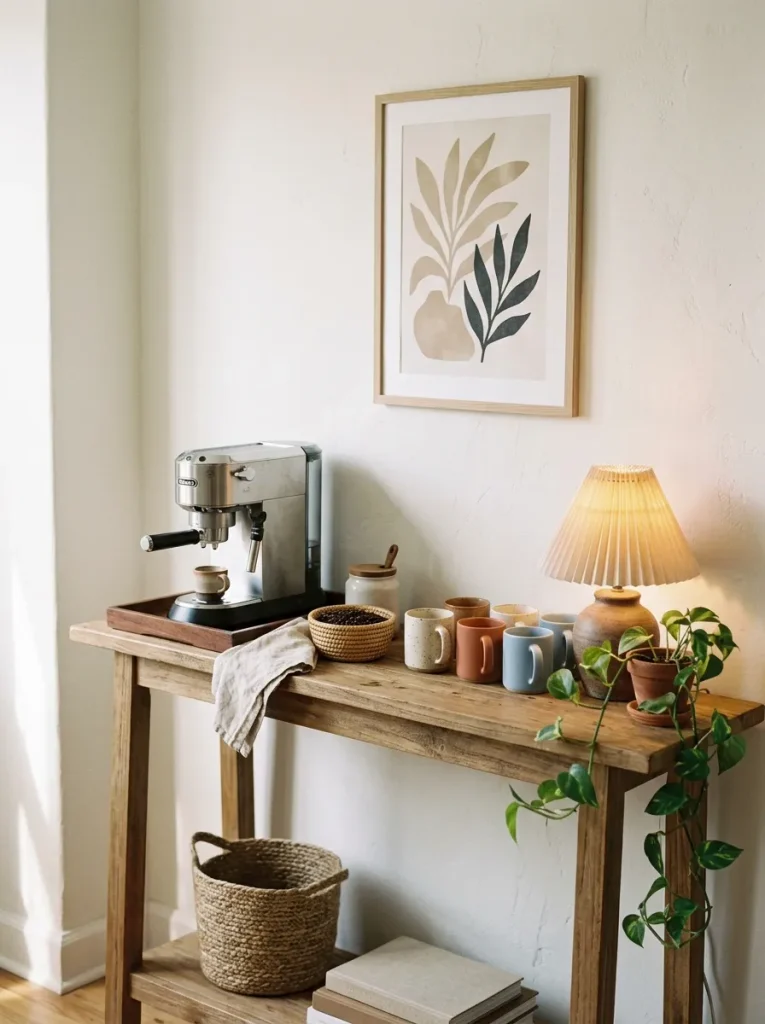
Small apartments rarely have counter space to spare, so the morning routine sprawls across the kitchen and never looks good.
A console table barely a foot deep, tucked against a wall anywhere in the apartment, fixes it. The machine sits on top with a tray for mugs, a small basket for beans and filters, and a lamp for the mornings when it’s still dark outside.
What makes it cozy rather than utilitarian is treating it as a destination. A framed piece above it, one plant, a stool nearby if you have room. It becomes the spot you walk toward instead of a shelf that holds an appliance.
- ▸Console under twelve inches deep so walkways stay clear.
- ▸A tray under the machine to catch grounds and drips.
- ▸Mugs out on display if they are worth looking at, hidden if not.
- ▸A warm bulb lamp, not the overhead light, for early mornings.
- ▸Within reach of an outlet, checked before you commit to the wall.
Keep it to one shelf’s worth of gear. The corner only stays charming while it stays uncrowded.
Conclusion
Pick one and do it this week. Not all twenty, not a whole-apartment plan you’ll abandon by Thursday. Hang the curtain rod higher, or move the mirror across from the window, or finally clear out under the bed. Small spaces respond fast, which is the best thing about them. One change lands and the room feels different that same evening.
The cozy apartment aesthetic you’re after is really just a collection of small decisions stacked over time, and you already live there, so you get to make them.
Save this one for when you’re ready, and pin the ideas you want to come back to.
📌 Good To Know
If you only do three things from this list, make them the ones that change light, storage, and texture. Those three carry more weight in a small apartment than anything else here.