
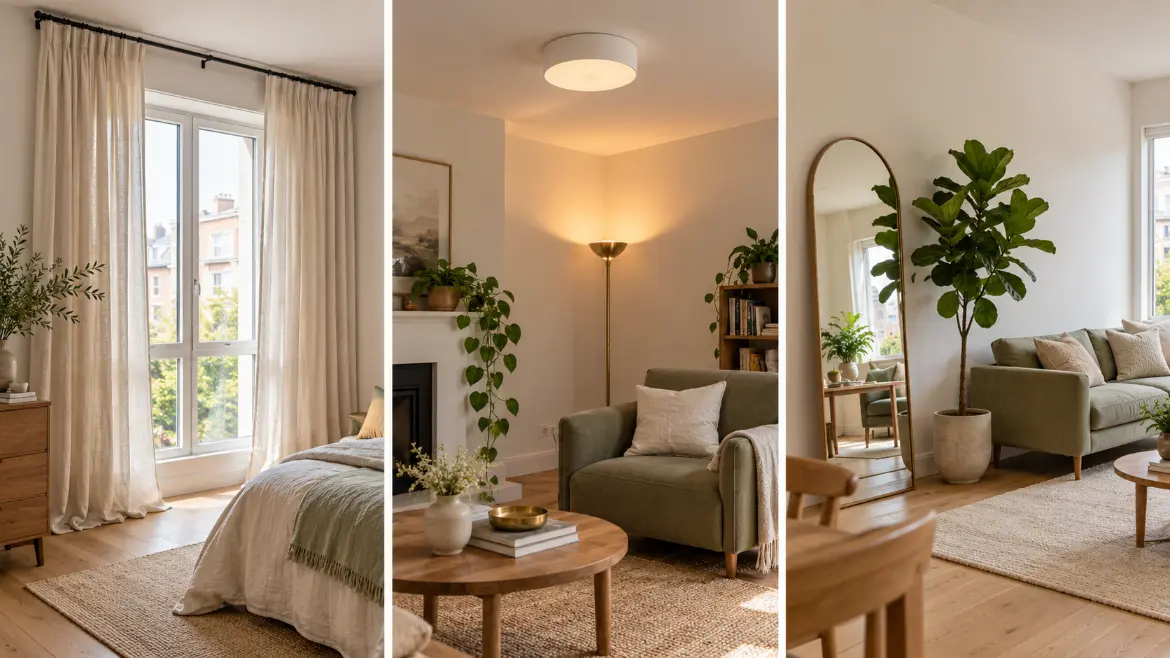
You walk into your apartment and the ceiling feels like it’s sitting on your head. Maybe it’s 8 feet. Maybe it’s less. You can’t raise it, and your lease won’t let you knock anything down. So you live in a room that feels squat and boxed in. I rented a place like that for three years, and I tried almost every trick out there to figure out how to make ceilings look higher. Some worked. A few made it worse.
This guide gives you the 10 changes that made the biggest difference, in the order you should do them. You’ll clear the clutter up top, brighten the ceiling, raise your curtains, flatten your light fixture, and keep everything else low so the space above feels open. None of it needs a contractor. Most of it is renter-friendly. Where a step needs paint or a drill, I’ll give you a workaround.
Why does this work? Your eye judges height by what it sees between the floor and the ceiling. Long vertical lines, a bright ceiling, and nothing heavy up high all tell your brain the room is taller than it is.
Plan on 4 to 6 hours of hands-on work. If you paint, give yourself a weekend so the ceiling can dry between coats.
Total Time
1 Weekend
About 3 hours if you skip painting
Active Time
4 to 6 Hours
Painting takes up most of it
Difficulty
Beginner
Only the light swap may need help
What You Need
Prep and Paint
- ✓Step stool or small ladder
- ✓2 to 3 storage bins or baskets
- ✓Flat white ceiling paint (1 gallon does 2 coats on most rooms up to 12 x 14 ft)
- ✓3/8-inch nap roller and paint tray
- ✓Roller extension pole
- ✓2-inch angled brush
- ✓Painter’s tape and drop cloth
- ✓Tape measure and pencil
Hang and Style
- ✓Curtain rod, 12 to 20 inches wider than the window frame
- ✓Drill, level, and wall anchors
- ✓Floor-length curtains (measure in Step 4)
- ✓Flush-mount ceiling light or plug-in wall sconces
- ✓1 to 2 uplight floor lamps
- ✓Tall floor mirror (at least 60 inches)
- ✓3 to 5 framed prints
- ✓One tall plant (5 to 6 feet)
- ✓Low-profile furniture, only if you’re swapping
Renting? The paint, drill, and light items are optional. Each of those steps gives you a workaround.
At a Glance
1. Clear everything off the tops of tall furniture
Baskets on a bookcase. Boxes on the fridge. A plant on the wardrobe. Each one fills the strip of wall under the ceiling, and that empty strip is what tells your eye the room is tall. Keep the top 12 to 18 inches of wall bare. Store the extras in bins under the bed or on a closet floor.

2. Paint the ceiling a brighter white to make ceilings look higher
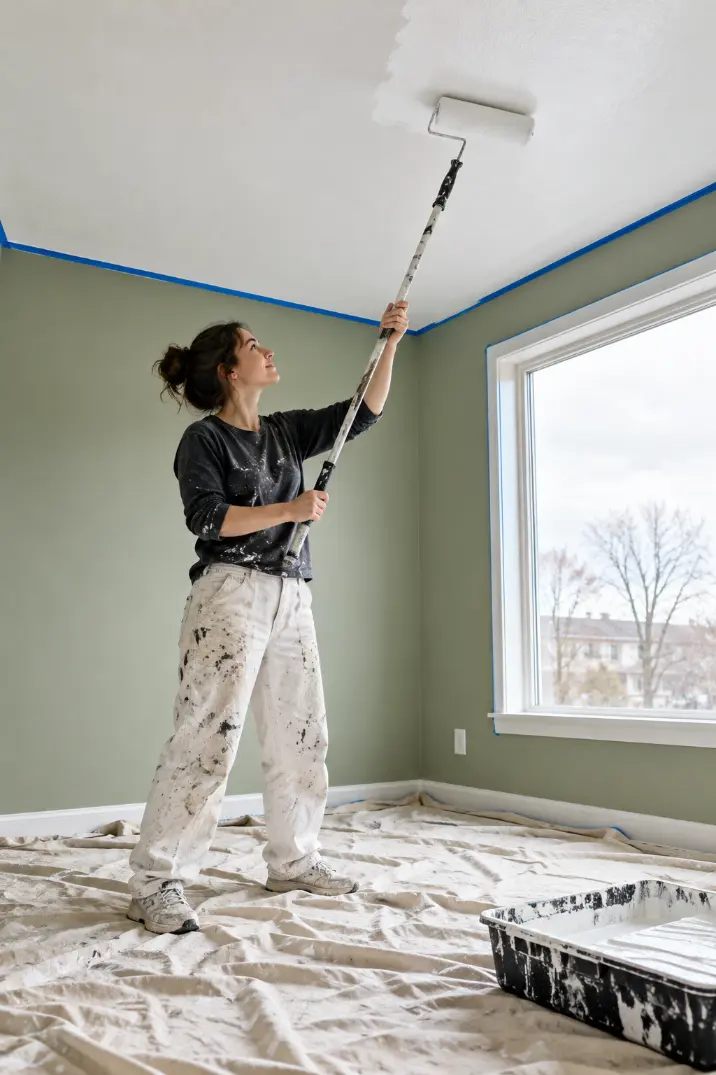
A ceiling even one shade darker than the walls seems to press down on the room. Bright white flat paint does the opposite. It spreads soft light around without glare, and it hides bumps and old patches.
- Tape the top edge of the walls and lay a drop cloth.
- Brush a 2-inch strip along every ceiling edge.
- Roll the rest in long, straight passes with a 3/8-inch roller on a pole.
- Wait 2 to 4 hours, then roll a second coat.
Keep the roller wet, because rolling over a half-dry patch leaves stripes. If you rent and can’t paint, skip to Step 3. The other nine steps still do the work.
⚠ Heads Up
Read your lease before you paint, drill, or touch a light fixture. Some leases ban all three. A two-line email to your landlord now can save your deposit later.
3. Mount your curtain rod 2 to 4 inches below the ceiling
A rod hung right above the frame draws a line across the wall at the lowest point possible. Measure 2 to 4 inches down from the ceiling and pencil a mark for each bracket. Let the rod reach 6 to 10 inches past each side of the frame. Level both marks before you drill. Renting? Small screw holes fill with a dab of spackle at move-out.

4. Hang floor-length curtains that graze the floor
Most store-bought panels are 84 inches long, which is too short once your rod sits near the ceiling. Measure from the rod down to the floor and buy that length, or the next size up (95, 96, or 108 inches). The hem should touch the floor or float no more than 1/2 inch above it. Curtains that stop short cut the wall in two. Too long? Iron-on hem tape fixes that in about 10 minutes, with no sewing.

★ Pro Tip
Pick curtains close to your wall color. They blend into one tall surface instead of framing the window like a box, so the eye keeps traveling up.
5. Swap the hanging light for a flush-mount fixture
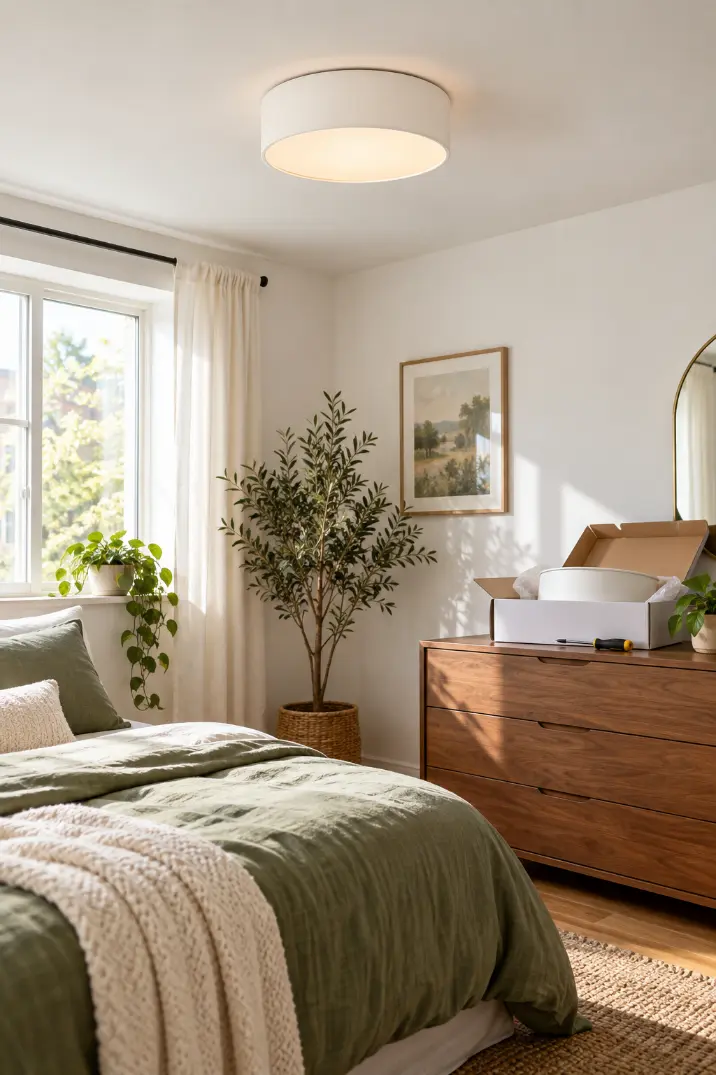
If your light hangs on a chain or rod, it drops right into your line of sight and marks where the ceiling “ends.” A flush-mount fixture under 6 inches tall sits tight to the ceiling, so the whole surface reads as one clean plane. Renting? Ask your landlord to handle the swap. You can also leave the old light alone and add plug-in wall sconces about 6 feet off the floor.
⚠ Heads Up
Turn off the breaker, not only the wall switch, before you touch any wires. Test them with a non-contact voltage tester. If the wiring looks different from the fixture’s instructions, stop and call an electrician.
6. Add lamps that throw light upward
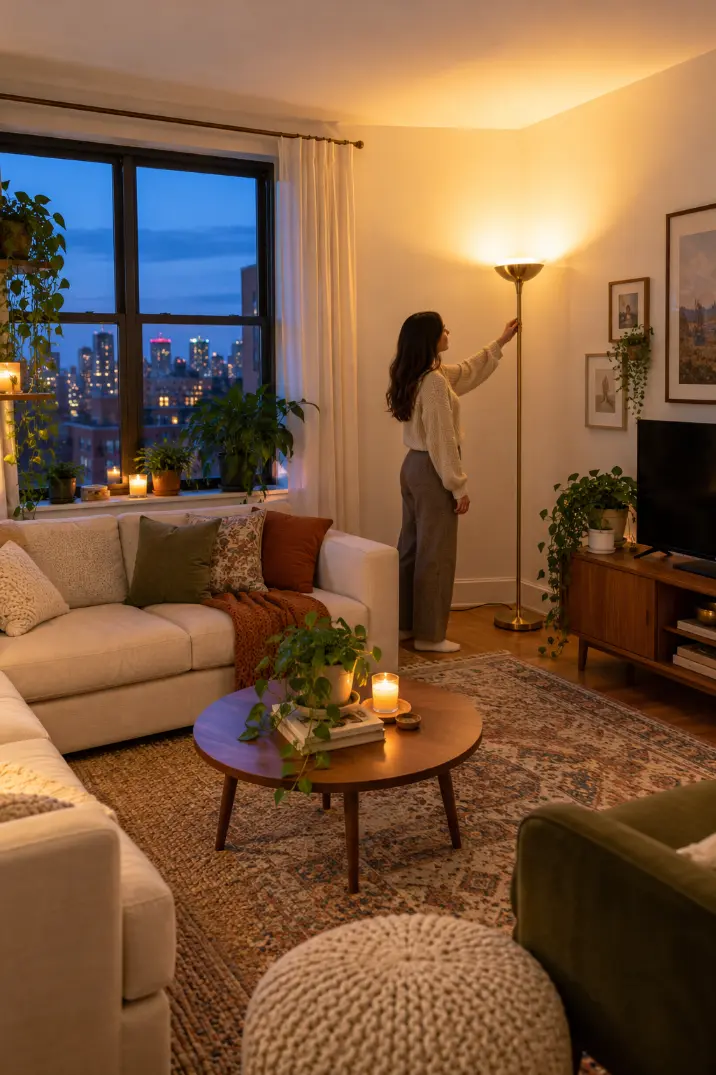
Light aimed at the ceiling makes it glow, and a glowing ceiling looks farther away. Place a torchiere floor lamp in the darkest corner of the room. Its shade faces up, so it washes the wall and ceiling instead of the floor. Use a warm bulb around 2700K and about 800 lumens so the light feels soft, not harsh. Short on floor space? A small uplight can tucked behind a plant or chair does the same job. Turn off the overhead light tonight and look up. The ceiling corners should feel brighter and less heavy.
7. Replace bulky furniture with low-profile pieces
Every inch of bare wall above your furniture reads as height. A sofa with a back under 32 inches and a bed with a low headboard leave more of that wall showing. Pick pieces on raised legs so a strip of floor shows underneath. You don’t need to swap everything. Start with the largest item in the room, since it blocks the most wall.

8. Lean a tall mirror against the wall
Sixty inches is the shortest mirror worth buying for this. A tall one draws a long vertical line from the floor toward the ceiling, and your eye follows it up. Set it across from a window or your new floor lamp so it doubles the light too. Rest the top against the wall with the base about 4 to 6 inches out. Leaning mirrors can slide, so press a rubber furniture pad under each bottom corner. With kids or pets around, add an anti-tip strap screwed into the wall.

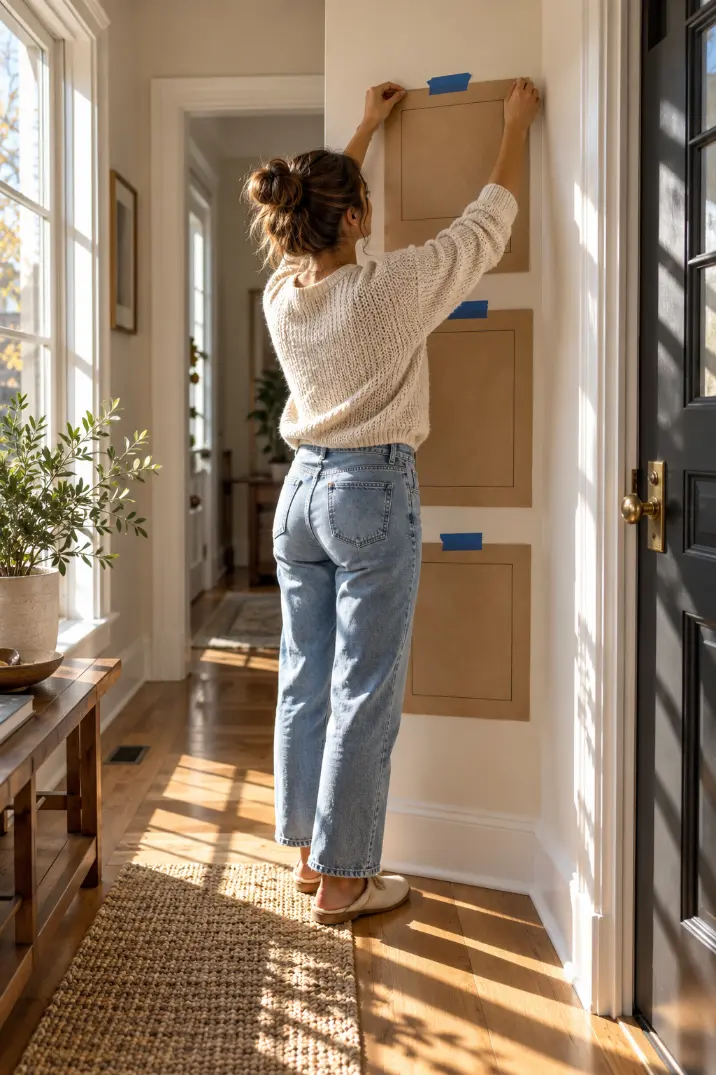
9. Hang your art in a vertical stack
Got a narrow wall between a window and a door? Stack your art in one column there instead of spreading it side to side.
- Pick 2 or 3 frames close in width.
- Trace each frame on paper and tape the cutouts to the wall.
- Leave 2 to 3 inches between frames.
- Stop the top frame about 12 inches below the ceiling.
A wide gallery wall pulls the eye sideways. A column pulls it up.
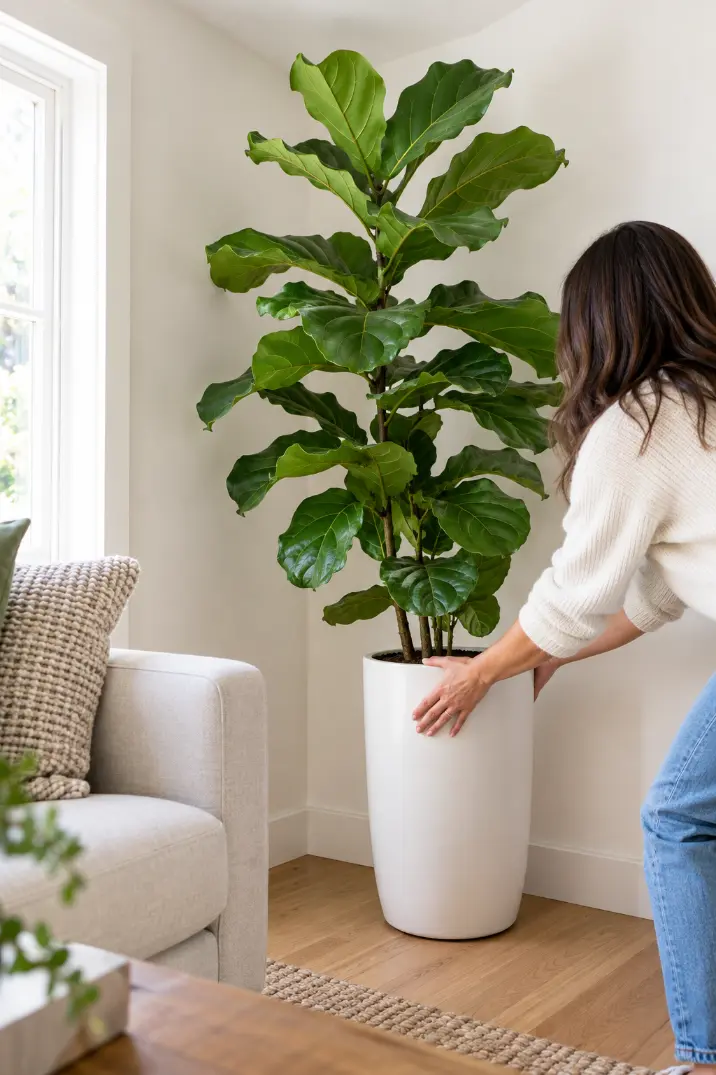
10. Place one tall plant in an empty corner
Upright leaves work like an arrow pointing at the ceiling. Choose a plant 5 to 6 feet tall with a narrow, vertical shape, such as a fiddle leaf fig, a dragon tree, or a bird of paradise. Skip bushy, spreading plants, which pull the eye sideways. Set it in a corner that’s still empty after Steps 6 and 8, in a pot no wider than 12 inches.
★ Pro Tip
Low-light apartment? A good faux plant works fine here. Nobody inspects the top leaves, and it never drops them on your floor.
Common Mistakes That Make Ceilings Look Lower
Painting the ceiling a dark, moody color
Dark ceilings feel cozy in tall rooms, but under 8 feet they seem to drop even lower. Save bold color for an accent wall or a piece of furniture.
Adding strong horizontal lines
A row of wide floating shelves, a chair rail, or wide horizontal stripes cuts the wall into layers, and each layer makes it look shorter. Stack shelves in a narrow column instead.
Leaving a dark border at the ceiling line
Crown molding or a wallpaper border in a contrasting color draws a hard line right where the ceiling starts. Paint trim the same color as the ceiling or walls so the edge blurs.
Relying on one overhead light
A single ceiling light leaves the upper corners in shadow, and shadowed corners make the ceiling feel close. Add at least one uplight so the top of the room stays bright after dark.
Frequently Asked Questions
Q.Do vertical stripes make a ceiling look higher?
Yes, when they’re soft. Thin, low-contrast stripes on one wall add height without feeling busy. Renters can get the look with peel-and-stick wallpaper.
Q.Should my ceiling match my wall color?
It can. Painting the walls and ceiling the same pale color blurs the line between them, so the eye can’t tell where the wall stops. Keep the shade light, since this trick backfires with dark colors.
Q.What if I can’t paint or drill at all?
Steps 1, 6, 7, 8, and 10 need no paint and no tools. For Step 9, adhesive picture strips hold lightweight frames and peel off when you move.
Q.How low is a “low” ceiling?
Most apartments have 8-foot ceilings, and anything under that tends to feel low. Older buildings and basement units often sit around 7 to 7.5 feet. These steps help at any height.
Q.Will a ceiling fan make the room feel shorter?
A fan on a long downrod will. Look for a low-profile “hugger” fan that mounts flush to the ceiling, and pick a white one so it blends in.
Save or Print
Quick Reference: Make Your Ceiling Look Higher
What You Need
- Storage bins
- Flat white ceiling paint
- Roller, pole, brush, tape
- Curtain rod, drill, level
- Floor-length curtains
- Flush-mount light or sconces
- Uplight floor lamp
- 60-inch mirror
- 2 to 3 frames
- 5 to 6 ft upright plant
Steps
- Clear the top 12 to 18 in. of every wall
- Paint the ceiling flat bright white, 2 coats
- Mount the rod 2 to 4 in. below the ceiling
- Hang curtains that touch the floor
- Swap to a flush mount under 6 in. tall
- Add a warm uplight in a dark corner
- Choose sofa backs under 32 in. on legs
- Lean a tall mirror facing a window
- Stack 2 to 3 frames in one column
- Add a 5 to 6 ft upright plant
Your room didn’t gain a single inch, but it sure feels like it did. You cleared the tops of the walls, pulled your curtains up high, and gave the ceiling light to bounce around. Now you know how to make ceilings look higher in any rental you move into. Next, try the same tricks in your bathroom or entryway, where low ceilings feel the tightest.
Save this pin to your apartment board so it’s ready the next time a room feels boxed in.