
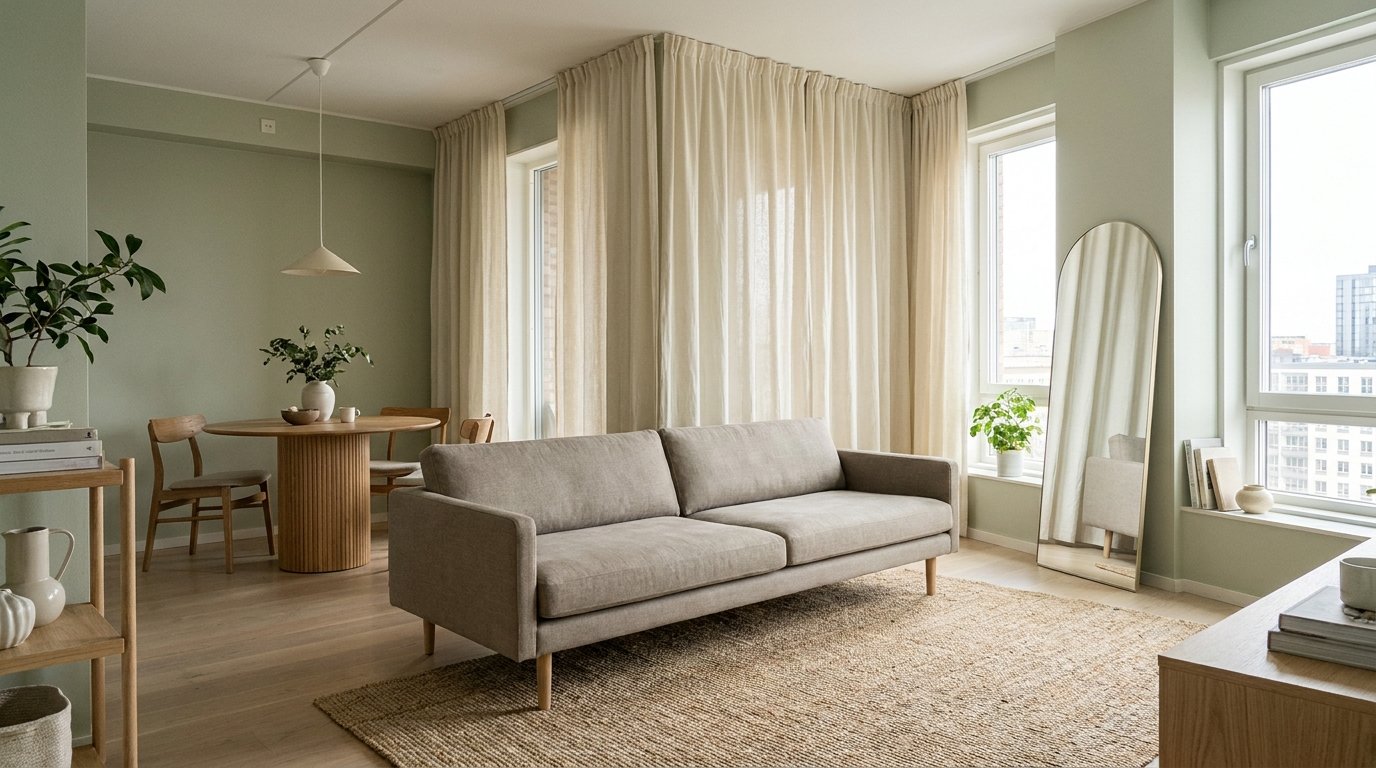
Most advice for a tiny apartment starts with one word: less. Less furniture, less color, less stuff on the walls. So you clear things out, and the room still feels like a shoebox with nicer shelves.
That advice misses how rooms actually work. A room looks big or small based on where your eye lands and how far it travels. If your eye stops at a chunky sofa arm, a curtain rod hung halfway up the wall, or a rug the size of a bath mat, the room reads as cramped. Even a half-empty room can feel tight when everything sits at the wrong height or scale.
Eyes are easy to steer, though. These small space design tricks work on light, height, and sightlines, so a studio or one-bedroom can feel open without anyone tearing down a wall.
Most of them are renter safe. Many cost nothing but an afternoon of moving things around. Start with the one that bugs you most in your own place.
If you’d rather work through it in order, start with the 8 rules for a bigger-looking room, then come back for the extras.
1. Hang Curtains Near the Ceiling and Past the Window Frame
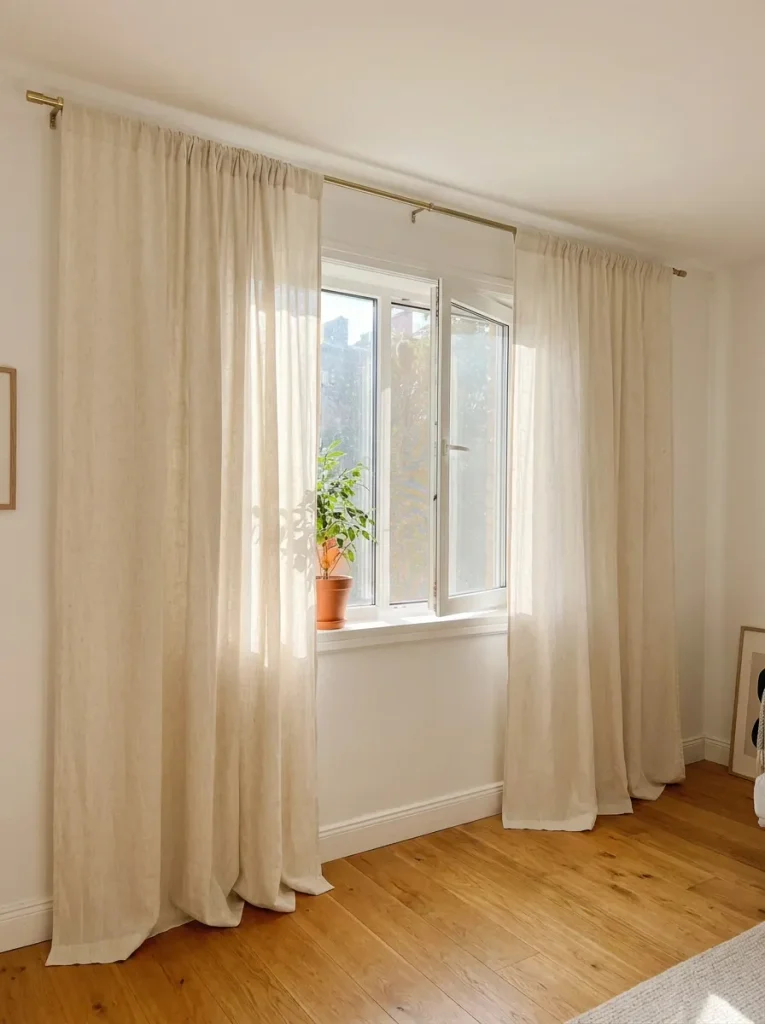
Look at where your curtain rod sits right now. If it hugs the top of the window frame, your window looks exactly as short as it is.
Move the rod up and out:
- Mount it a few inches below the ceiling, or just under the crown molding if you have it.
- Extend it past the frame on each side so the open panels rest on the wall instead of covering the glass.
- Buy panels long enough to just touch the floor. Curtains that stop partway down the wall undo the whole trick.
Once you do this, the window reads as tall as the room, and you get all your daylight back.
The rod sits right on top of the frame. Panels bunch over the glass and stop short of the floor. The ceiling feels low, and the window looks smaller than it is.
The rod sits near the ceiling and past the frame on both sides. Panels hang open against the wall and brush the floor. The wall looks taller, and the whole window stays uncovered.
2. Size Your Rug So the Front Furniture Legs Sit On It
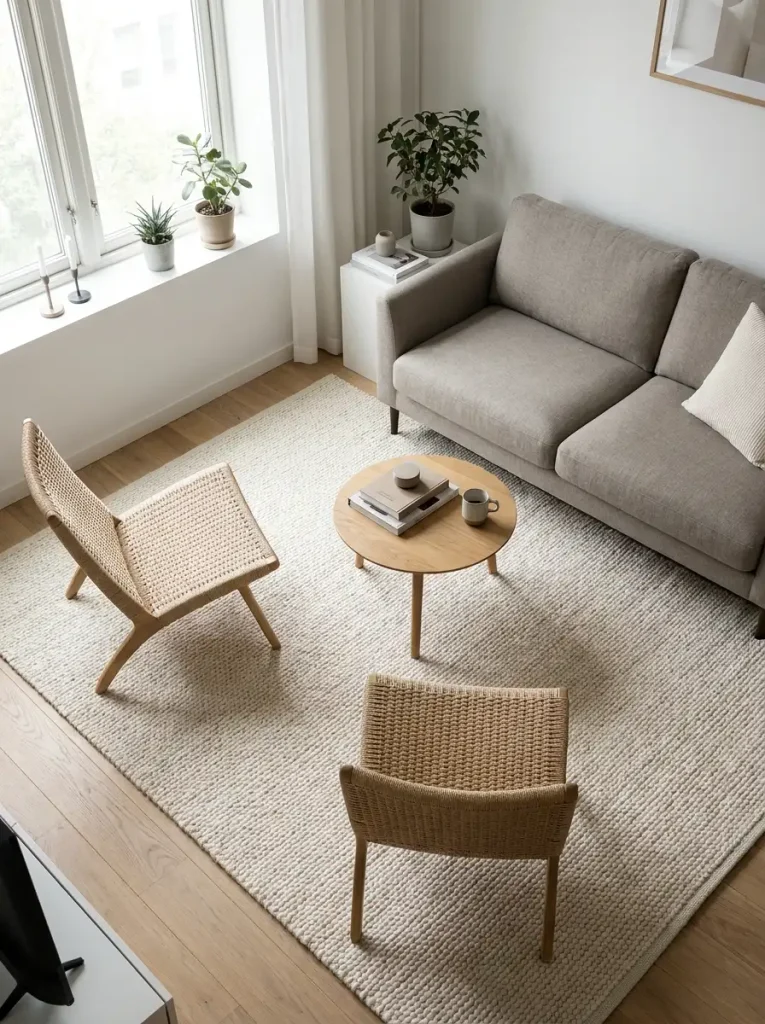
The most common rug mistake in a small room is buying one that’s too small.
It seems logical: small room, small rug. But a little rug floating in the middle of the floor chops the room into pieces. Your eye measures the space by the rug’s edges instead of the walls.
A bigger rug does the opposite. When the front legs of your sofa and chairs rest on it, the seating area reads as one connected zone. The bare floor around it then looks like extra room instead of leftover gaps.
Rugs aren’t cheap, so test the size before you buy one.
Set your furniture where it will actually live. Then tape a rug outline on the floor with painter’s tape, wide enough that the front legs of the sofa and chairs land inside it.
Leave a border of bare floor between the tape and the walls so the rug looks placed on purpose, not squeezed in.
Live with the tape for a day and walk around it. Then measure the outline and shop for the closest standard rug size.
3. Paint the Walls and Ceiling the Same Pale Shade
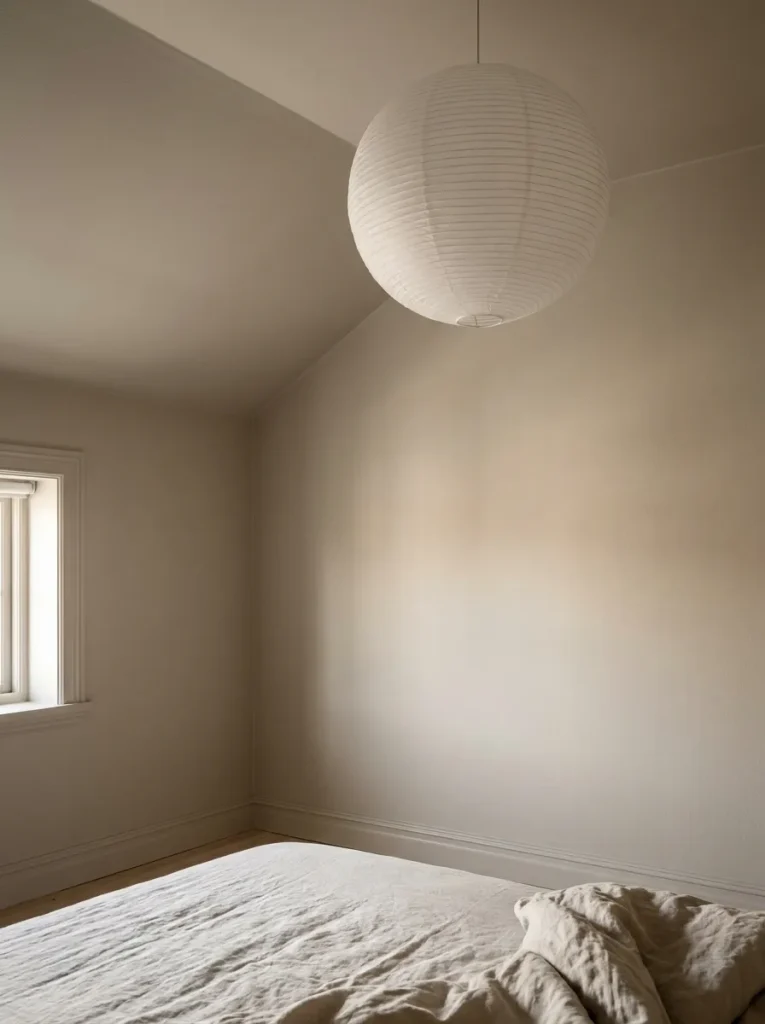
A bright white ceiling doesn’t always make a room look taller.
In a small room, the sharp line where a colored wall meets a white ceiling shows your eye exactly where the room stops. Paint both the same soft shade, and that line blurs. The walls seem to keep going up.
A few things help it work:
- Pick a pale, warm color like a soft greige or muted sage, so the room doesn’t feel cold.
- Use a flat finish on the ceiling to hide bumps, and eggshell on walls you’ll need to wipe down.
- Paint the trim the same color too, if you’re up for the extra taping.
This trick helps most in rooms with low ceilings, where that line is most noticeable.
4. Choose Furniture on Legs So More Floor Shows
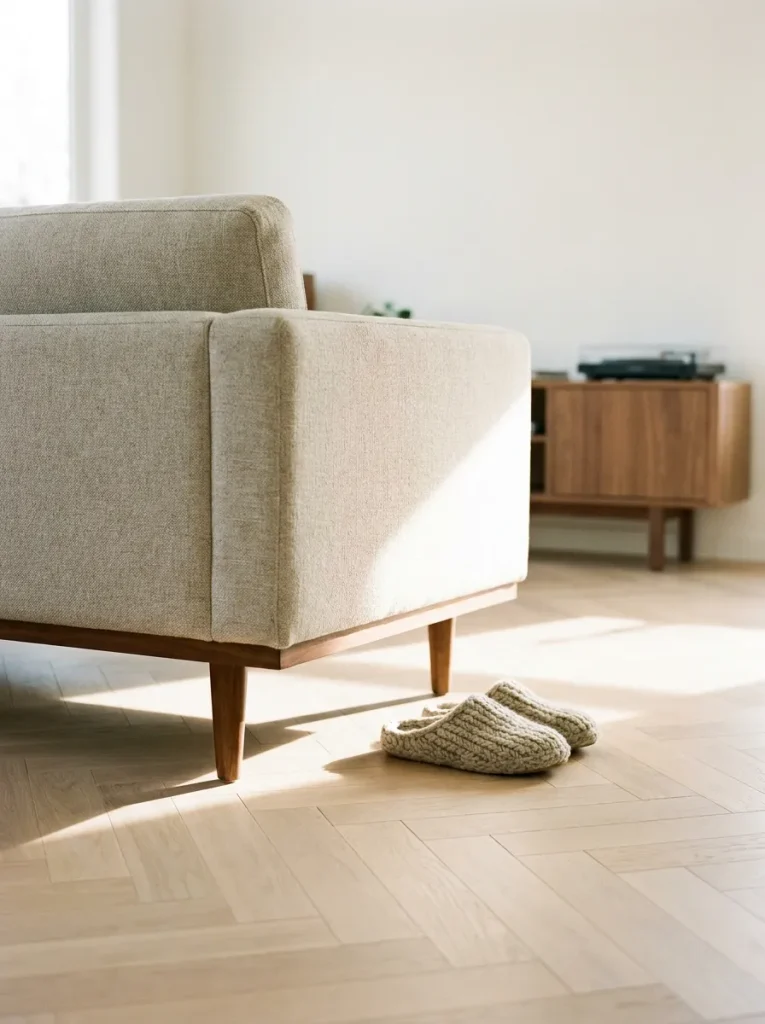
Floor you can see is floor your brain counts as space.
That’s why a skirted sofa or a dresser that sits flat on the ground feels so heavy in a small room. It blocks the floor and reads as one solid box. Raised pieces let light and floor run underneath them, so the room feels less packed with the same amount of furniture.
Look for legs on:
- the sofa and armchair
- the TV console
- the bed frame, with open space left underneath
Swap the biggest flat-bottomed piece first, because that’s where you’ll notice the change most.
💡 Quick Tip
Before you shop for a new sofa or dresser, flip your current one over and check the bottom corners. Some pieces have threaded plates where screw-in legs can go, so a set of taller replacement legs might be all you need.
5. Place a Big Mirror Where It Catches Window Light
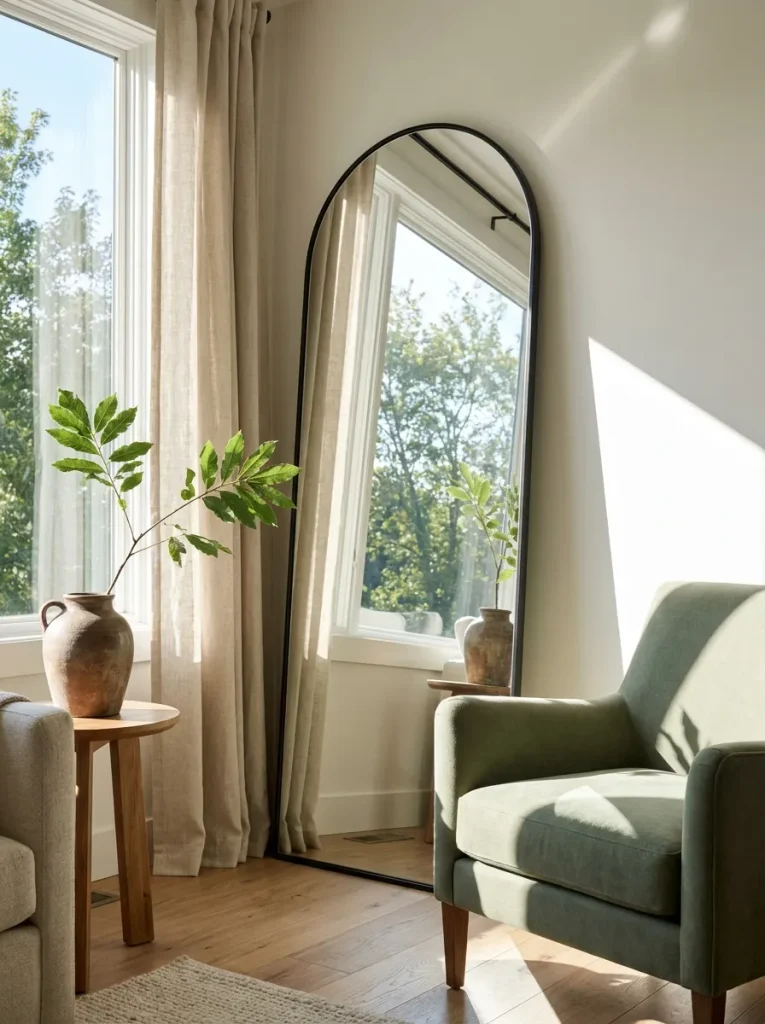
Put your biggest mirror somewhere it can see a window.
A mirror only makes a room look bigger when it reflects something worth doubling. Daylight and a view outside give you depth. A blank wall just gives you another blank wall.
Two spots work well:
- Across from the window, so the mirror shows the outdoors and acts like a second window.
- On the wall right beside the window, where it bounces light sideways into the darker half of the room.
A tall mirror leaning against the wall needs no nails, which makes it a good pick for renters. If you have kids or pets, strap the top to the wall so it can’t tip.
Placement matters more than size. Here’s where to hang mirrors in a small apartment so they actually bounce daylight.
Go large. One tall or wide mirror adds more depth than a cluster of small ones.
Check what it reflects from the sofa, since that’s where you’ll see it most.
Facing it toward a messy shelf or laundry corner. You’ll see the clutter twice.
Hanging it so high that it only reflects the ceiling.
6. Hang One Large Piece of Art Instead of Ten Small Frames
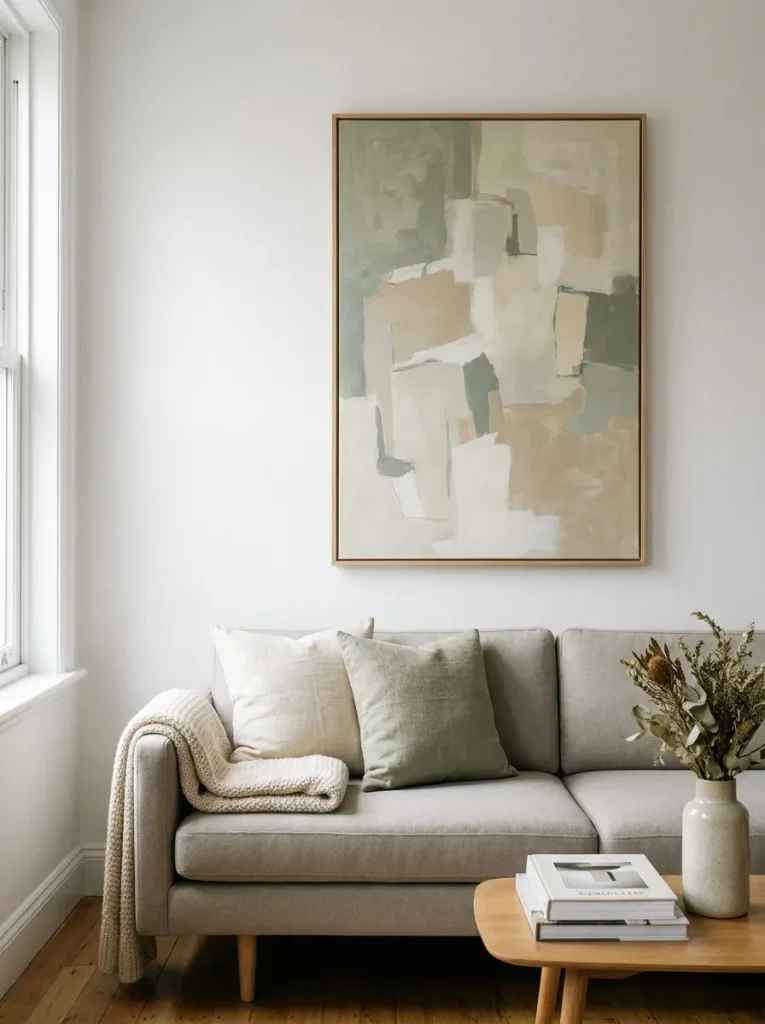
Ten small frames and one big print can cover the same wall. They don’t make it look the same size.
A cluster of little frames gives your eye a dozen tiny stops, and all those edges make the wall feel busy and broken up. One large piece gives your eye a single place to land, so the wall reads as calm and wide.
A few sizing rules:
- Over a sofa, aim for art about two-thirds the width of the sofa.
- Hang it so the center sits near eye level, not up by the ceiling.
- Leave about a hand’s width between the frame and the sofa back.
On a budget, an oversized poster in a simple frame does the job.
| Gallery of small frames | One large piece | |
|---|---|---|
| Your eye | Jumps from frame to frame | Rests in one spot |
| The wall | Looks busy and cut up | Looks calm and wider |
| Nail holes | A lot to patch at move out | One or two |
| Setup time | An afternoon of measuring | About ten minutes |
7. Light the Room in Three Layers to Erase Dark Corners

Most small apartments come with one light, a single fixture in the middle of the ceiling.
Lighting can backfire, so check these lighting mistakes that make small rooms look smaller.
That fixture lights the center of the room and leaves the corners in shadow. Dark corners seem to pull the walls in closer, because your eye reads the shadow as the edge of the room. Once you light those corners, the walls seem to move back.
The fix is to light at three heights instead of one. Put a lamp in at least one dark corner, and use the same warm white bulb everywhere so the light looks even.
Plug-in wall sconces help a lot here. They need no wiring, just a cord you can hide under a paintable cord cover.
If you want to set it up properly, my three-layer lighting plan walks through it one lamp at a time.
8. Swap One Bulky Piece for Clear Acrylic
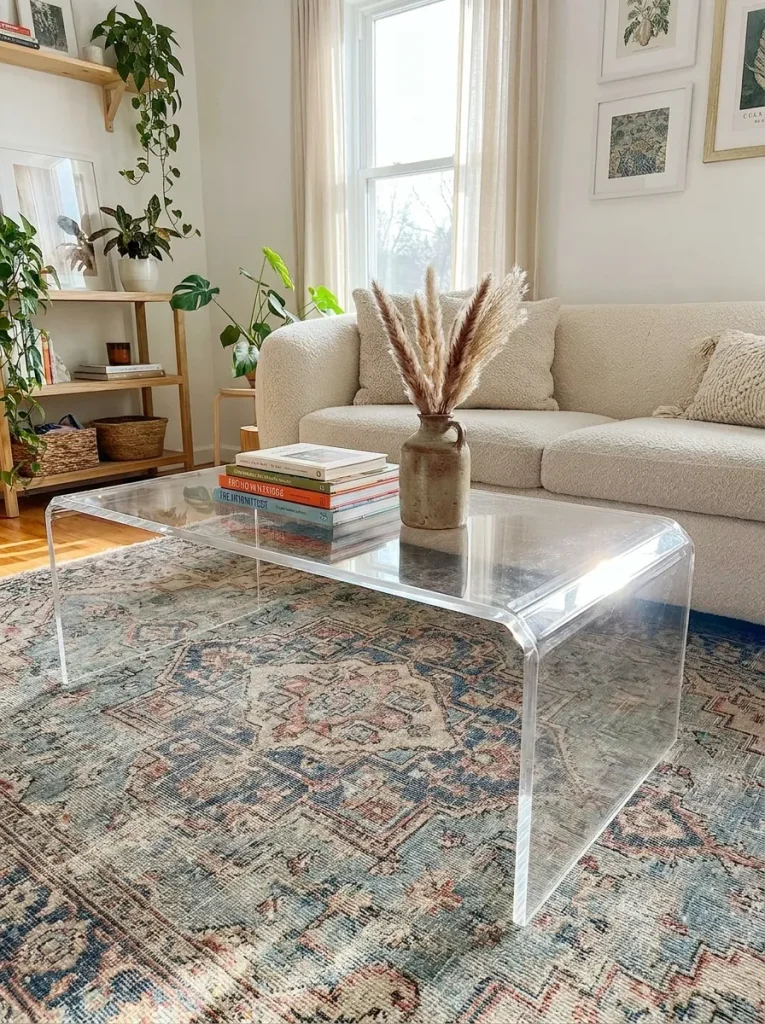
Walk through most small living rooms and you’ll find everyone stepping around the coffee table.
The table isn’t necessarily huge. The problem is that a solid wood or dark top blocks the floor right in the middle of the room, where your eye looks first. A clear acrylic or glass table does the same job and almost disappears.
Clear furniture comes with a few honest trade-offs:
- It shows fingerprints and dust, so keep a microfiber cloth nearby.
- Acrylic can scratch, so use coasters and don’t slide heavy things across it.
Stick to one clear piece per room. A room full of them starts to look like a store display.
Best spots for a clear piece
9. Go Tall With a Slim Bookcase That Almost Reaches the Ceiling
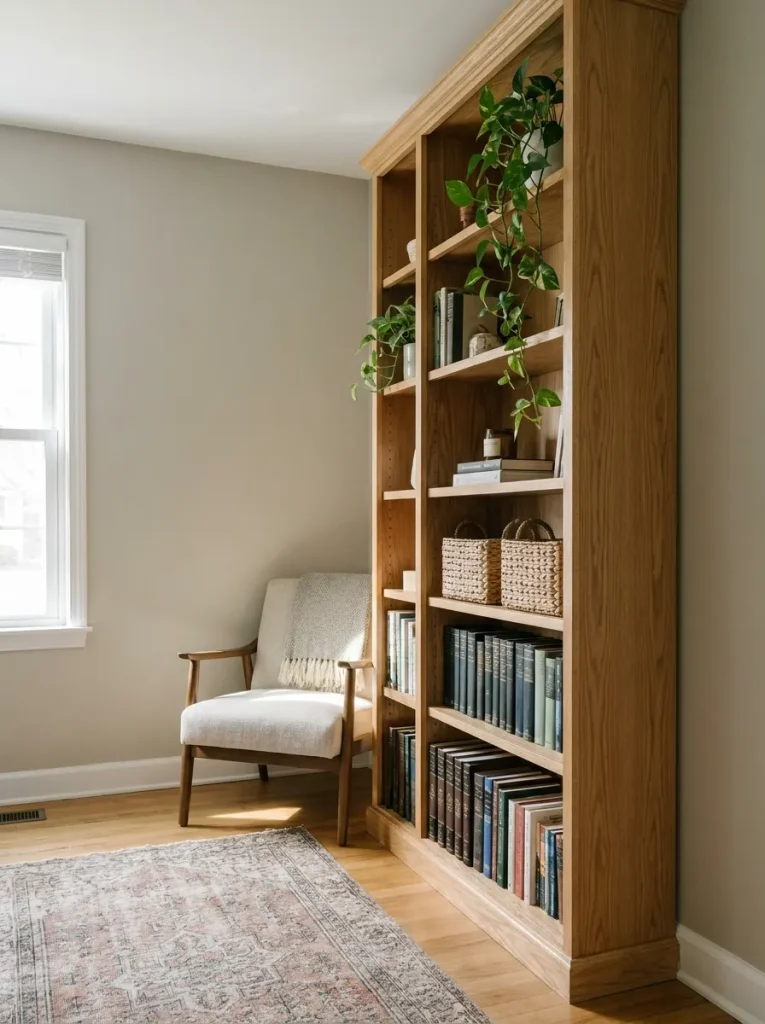
Your ceiling can look higher with a single piece of furniture.
A tall, narrow bookcase pulls your eye upward, and your brain judges the room by the path your eye follows. A short, wide shelf does the opposite. It stretches the room sideways and makes the ceiling feel lower.
Pick one that gets close to the ceiling and has a shallow depth, so it doesn’t eat into your walkway. Keep heavy books on the bottom shelves and lighter things like baskets or a trailing plant up top.
Anchor it to the wall with the anti-tip kit that usually comes in the box. A shelf this tall needs one, especially in a home with kids or pets.
When you run out of floor, build up. The space between your furniture and the ceiling is storage most small apartments never use.
10. Keep a Clear Line of Sight From the Door to the Farthest Window
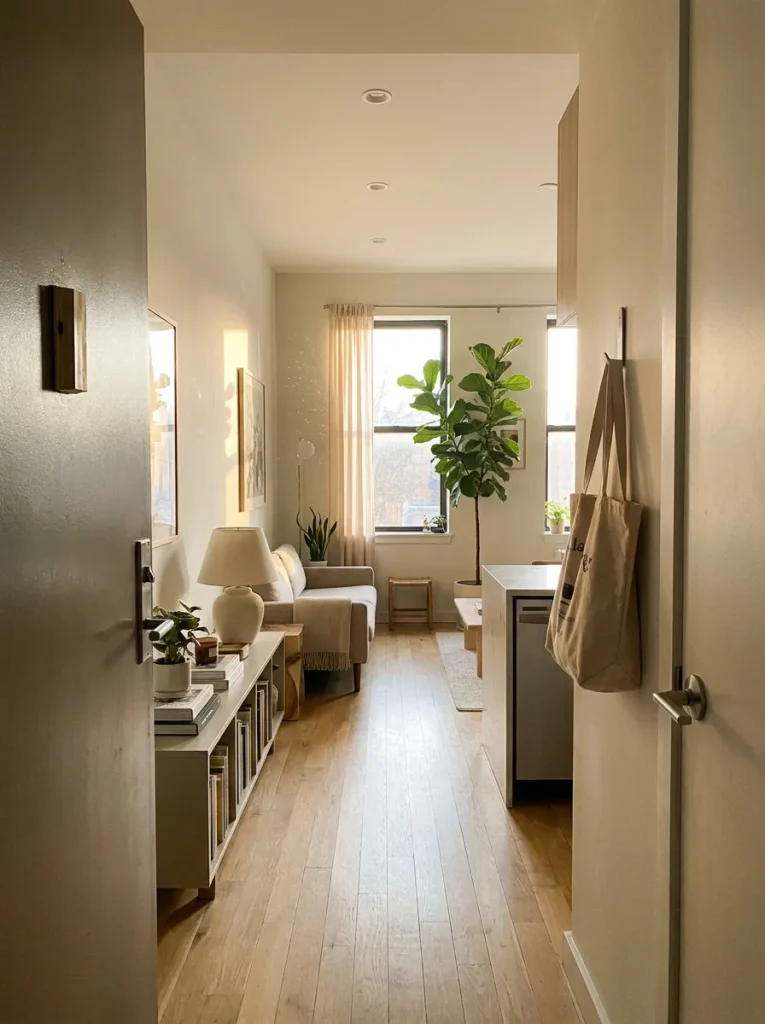
When you open your front door, you size up the whole apartment in one glance.
If your eye can travel straight from the door to the farthest window, the place feels long and open. If it hits the back of a bookcase or a coat rack right away, the apartment feels smaller before you’ve even stepped inside.
Stand in the doorway and look for anything blocking that line:
- tall furniture right by the entry
- a high-backed sofa facing the door
- the pile of shoes and bags that grows by the mat
Move the tall pieces to the side walls. Keep the middle path low so the window is the first thing people notice.
⚠️ Watch Out
Tall plants and room dividers often end up in this line because they seem to fill an empty spot. Put them along a side wall instead, where they still add height but don’t block the view.
11. Limit the Whole Room to Three Colors
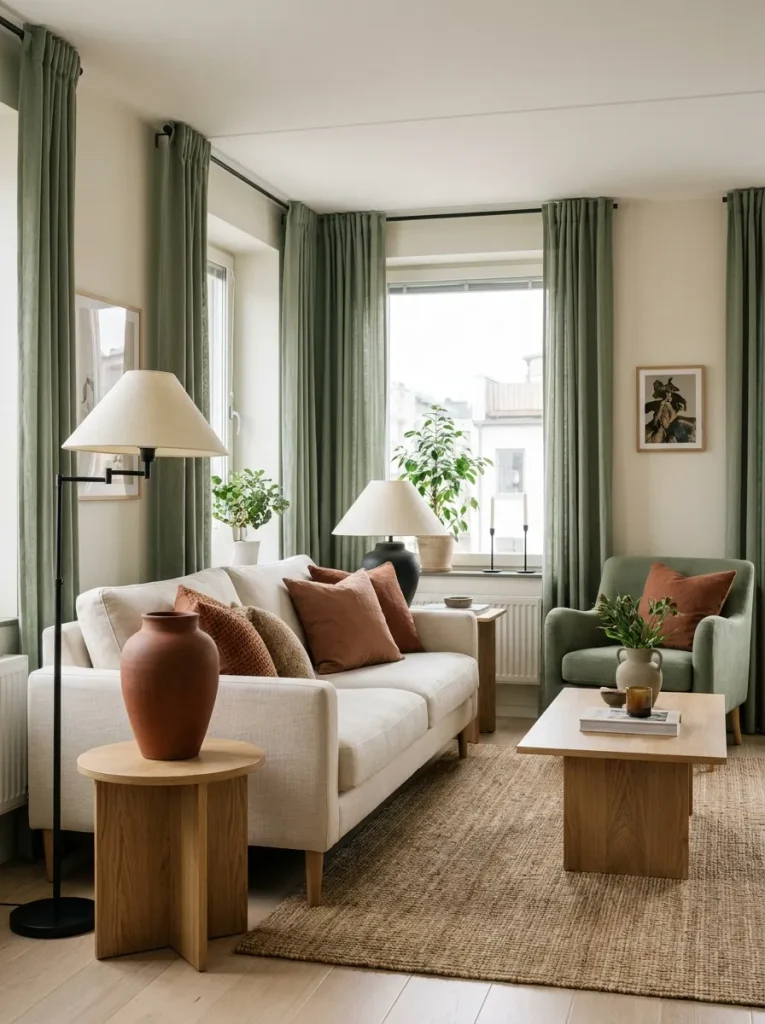
Three colors per room is plenty.
Every new color in a small room is one more thing competing for attention. A red throw, a teal lamp, a yellow pillow, and a green rug might each look nice on their own. Together they split the room into little islands, and the space feels crowded even when it’s tidy.
A quick way to check your room:
- Stand in the doorway and name every color you notice.
- If you count more than three, find the one you like least and swap it out first.
Natural wood, black hardware, and white trim don’t count toward your three. They act as neutrals and help tie everything together.
12. Mount Nightstands and Shelves on the Wall to Free the Floor
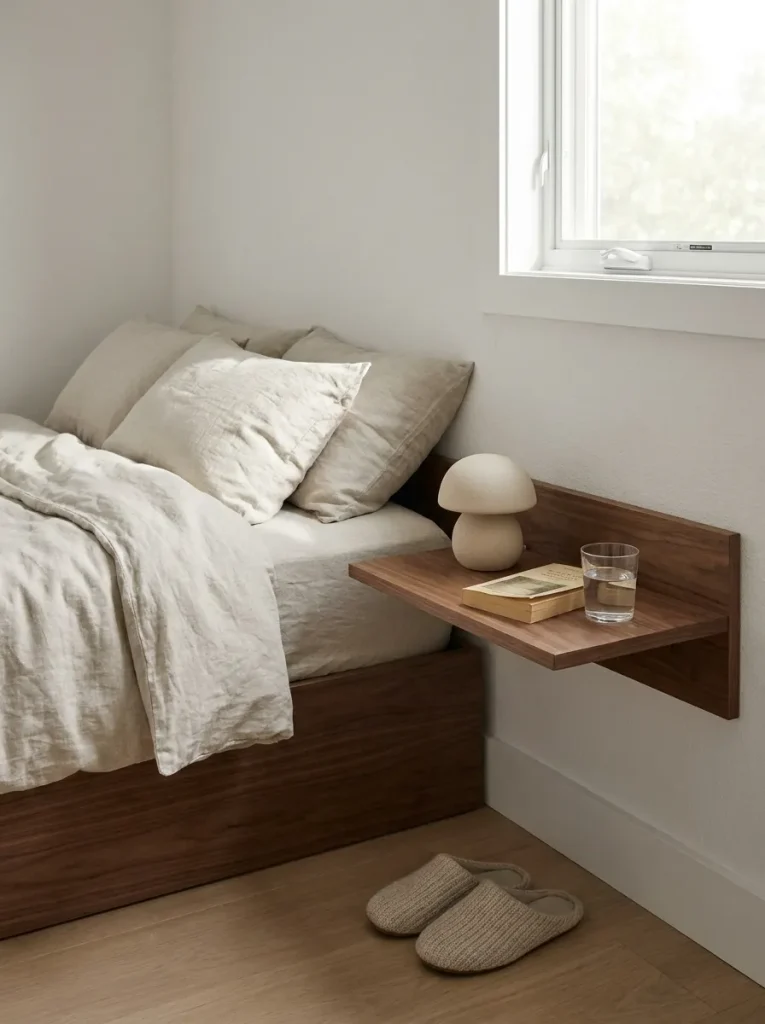
The side of the bed is usually the tightest spot in a small bedroom, and a nightstand with four legs takes up most of it.
Move that storage onto the wall and the floor underneath opens back up. It’s easier to vacuum, your slippers have a spot, and the room looks roomier because the floor runs all the way to the wall.
The same move works outside the bedroom too:
- a floating shelf as a desk in a corner
- a wall-mounted console under the TV
- a slim ledge by the front door for keys
Check your lease before you drill. Small screw holes usually patch quickly with spackle when you move out.
Hold the shelf so its top sits level with your mattress or a little above it, and mark the spot in pencil.
Find a stud with a stud finder. If there isn’t one where you need it, use wall anchors rated for more weight than the shelf will hold.
Check it with a level before you tighten the screws. Load it lightly for the first day to make sure nothing shifts.
13. Pick a Sofa With Slim Arms and a Low Back
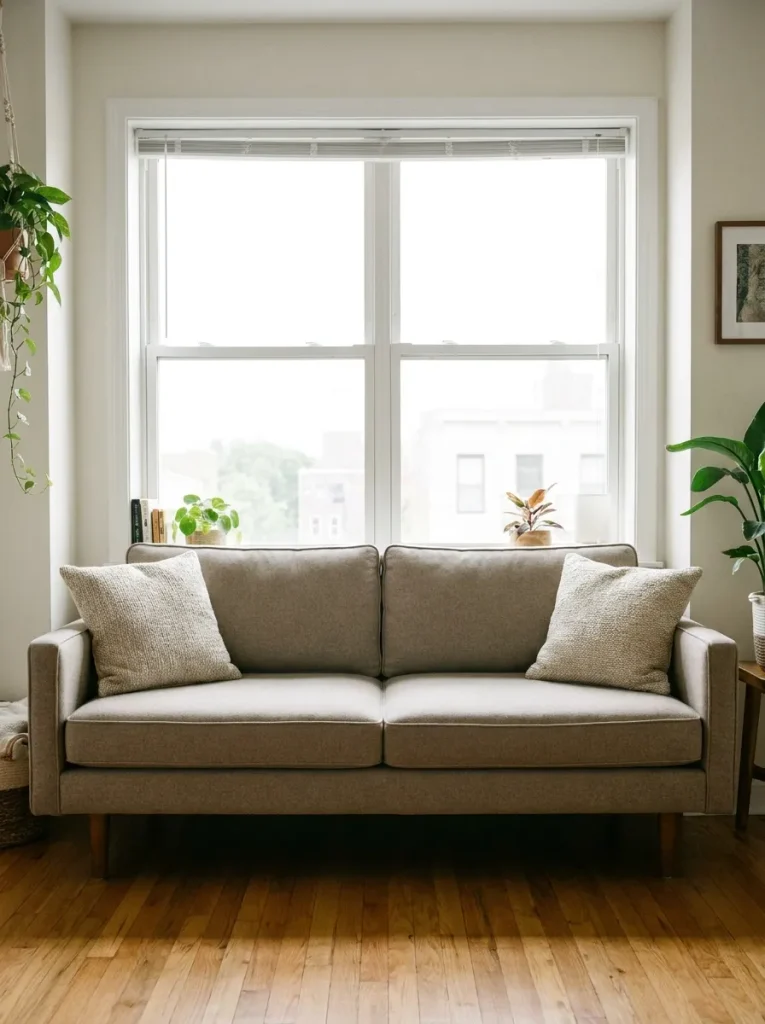
Big, puffy rolled arms look cozy in a showroom. At home, they take up a lot of width, and none of it is seating.
A sofa with slim, straight arms gives you the same seat in a smaller footprint, or a wider seat in the same footprint. Go for the wider seat if your room allows it.
The back matters too. A low back lets more of the wall show above it, and if the sofa sits under a window, it won’t block the light.
Before you order, sit on it in a store or read what reviewers say about seat depth. A low, slim sofa only helps if people actually want to sit on it.
14. Put Everyday Clutter Behind Closed Doors
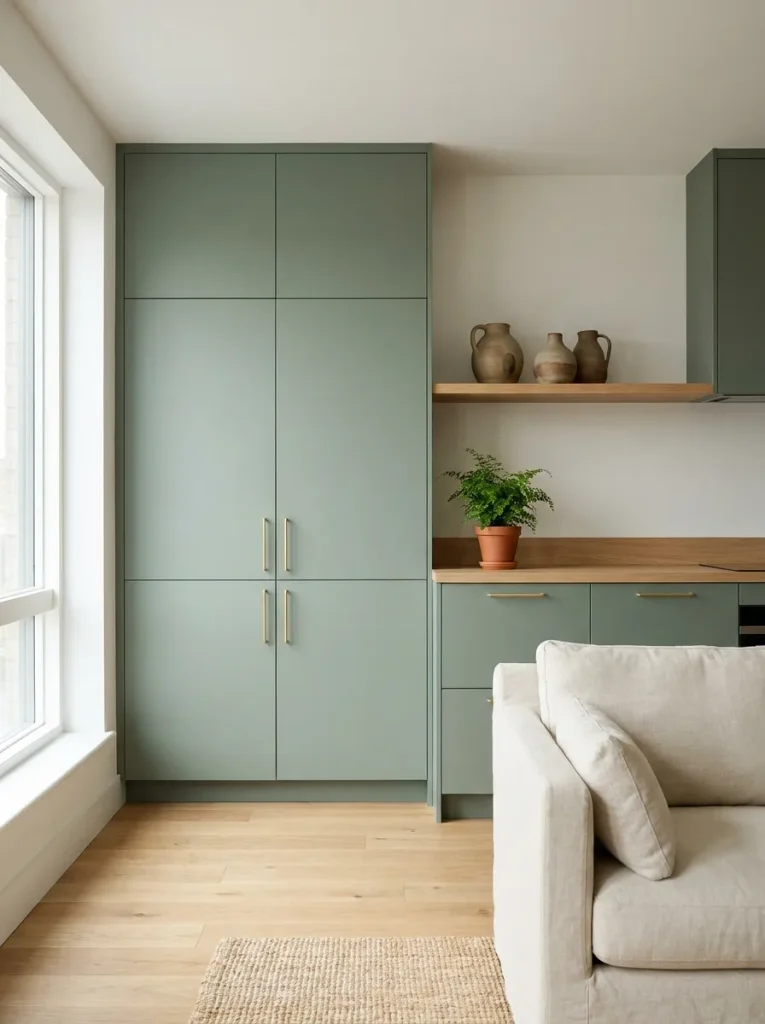
Open shelving has a reputation as the airy choice for small spaces. In a real, lived-in apartment, it often does the opposite.
Every open shelf ends up on show, whether you planned it or not. Cereal boxes, phone chargers, and that mug collection you never got around to arranging all stay in view. All that small stuff makes a room look fuller than it is.
These things almost always look calmer behind a door:
- cords, chargers, and remotes
- pantry food in mixed packaging
- cleaning supplies
- paperwork and mail
Keep one open shelf for the things you actually like looking at. Everything else goes out of sight.
| Open shelves | Closed cabinets | |
|---|---|---|
| What you see | Everything on them | One flat, calm front |
| Dusting | Item by item | Wipe the doors and done |
| Best for | A few favorite pieces | Everyday, unsorted stuff |
| In a small room | Reads as busy | Blends into the wall |
15. Trade a Square Dining Table for a Round One
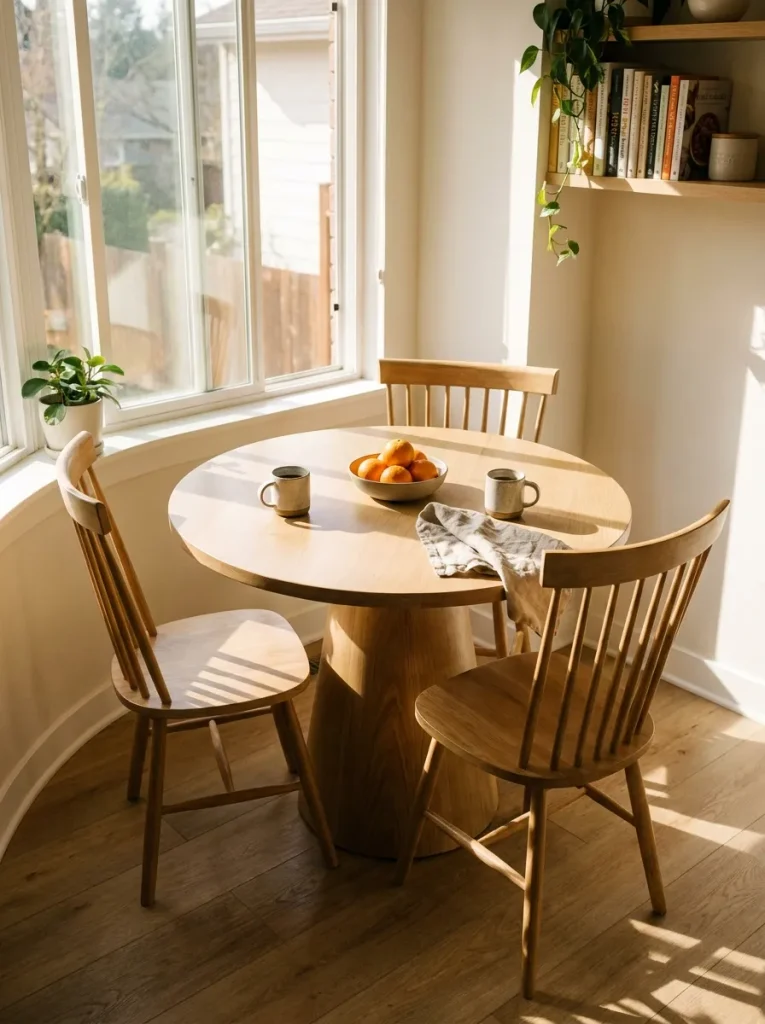
Every small dining nook seems to have one corner that catches your hip on the way to the kitchen.
A square or rectangular table pushes its corners right into the path you walk every day. A round table has no corners to bump into, so the walkway around it feels wider even when the table takes up about the same space. It’s also easier to pull in an extra chair when friends come over.
What to look for:
- a single pedestal base instead of four legs, so chairs and knees fit easily
- a size that seats the people who eat there daily, not the holiday crowd
A round drop-leaf table folds smaller on ordinary days, which helps in the tightest nooks.
A rectangle table fills the nook. Two corners stick into the walkway, and you turn sideways to get past a pushed-out chair.
A round pedestal table sits in the same spot. The path curves around it with nothing to bump, and the chairs tuck in close to the base.
16. Keep Most Furniture Below the Windowsill
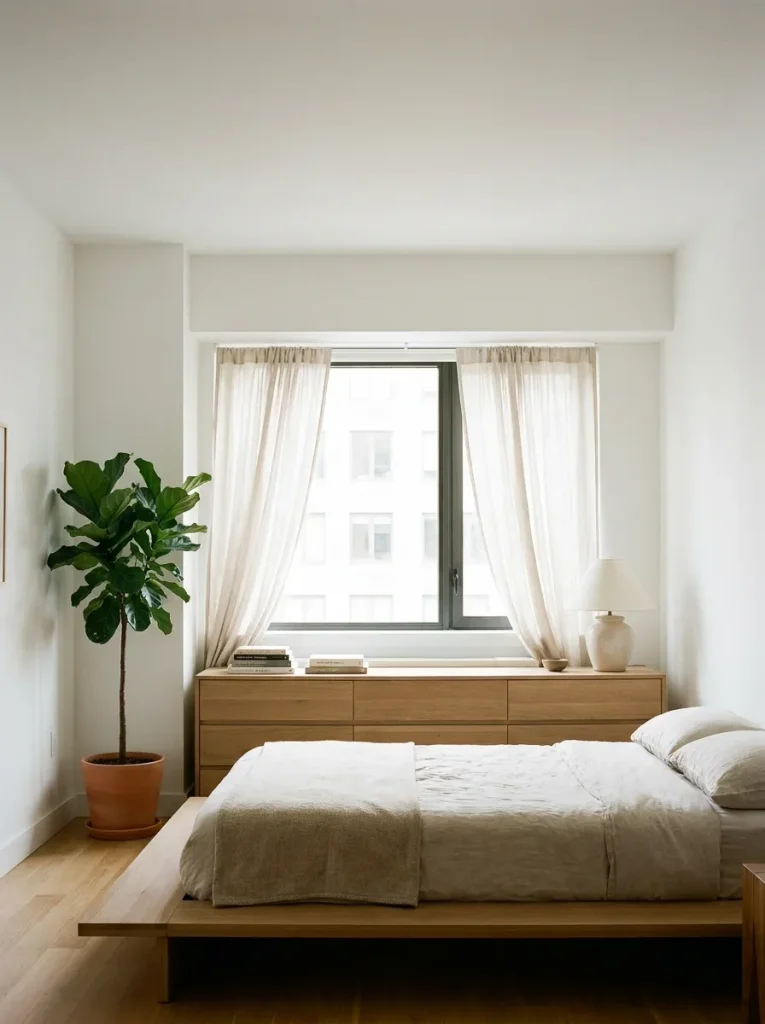
Keep your furniture low, and the walls above it will look taller.
When most pieces sit below the windowsill, a wide band of open wall runs around the room. That empty band is what makes a ceiling feel high. Put a tall dresser, a tall headboard, and a tall cabinet in one room, and the band disappears.
This doesn’t cancel out the tall bookcase from earlier. The goal is one or two tall pieces chosen on purpose, with everything else low enough that those pieces stand out.
A low media console, a platform bed, or a short, wide dresser is an easy place to start.
Quick windowsill check
17. Let Every Big Piece Do Two Jobs
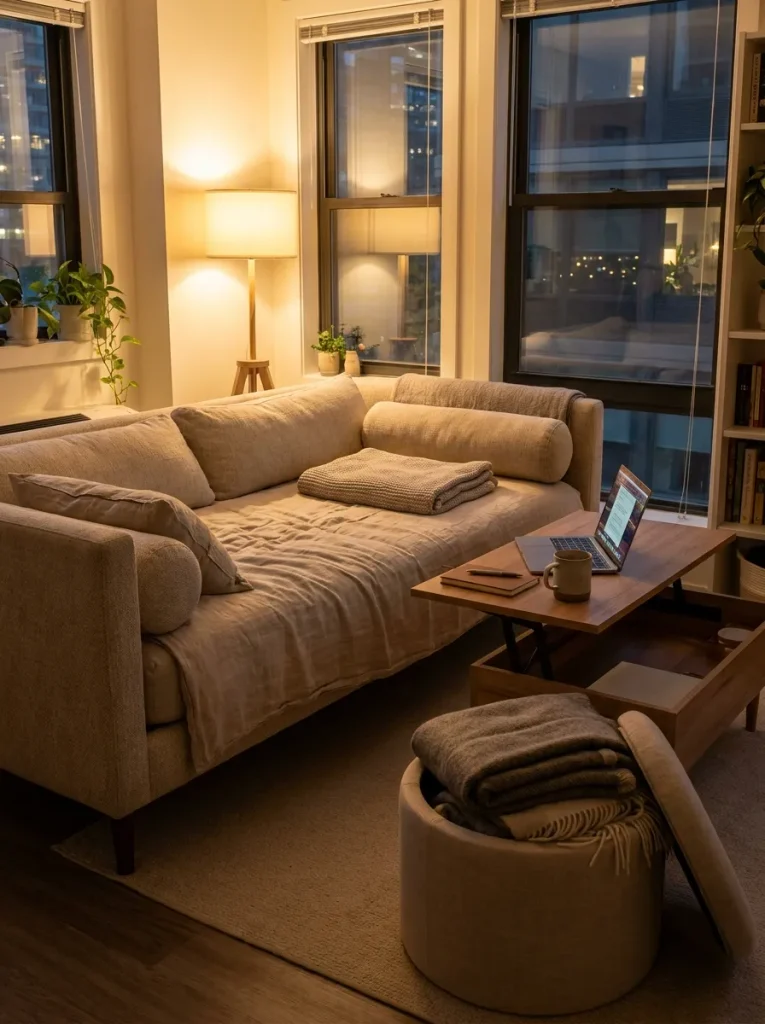
Small apartments often get crowded one single-purpose piece at a time.
A footstool here, a side table there, a blanket basket in the corner. Each one seemed reasonable when you bought it, but together they fill the floor with things that only do one thing.
Before you buy anything bigger than a lamp, ask two questions:
- What’s its main job?
- What second job could it do, like storage, extra seating, or a work surface?
If you can’t name a second job, think twice before buying it. One honest warning: pieces with lift tops or fold-out parts vary a lot in quality, so read reviews about the hinges first.
18. Divide a Studio With an Open Back Shelf, Not a Wall
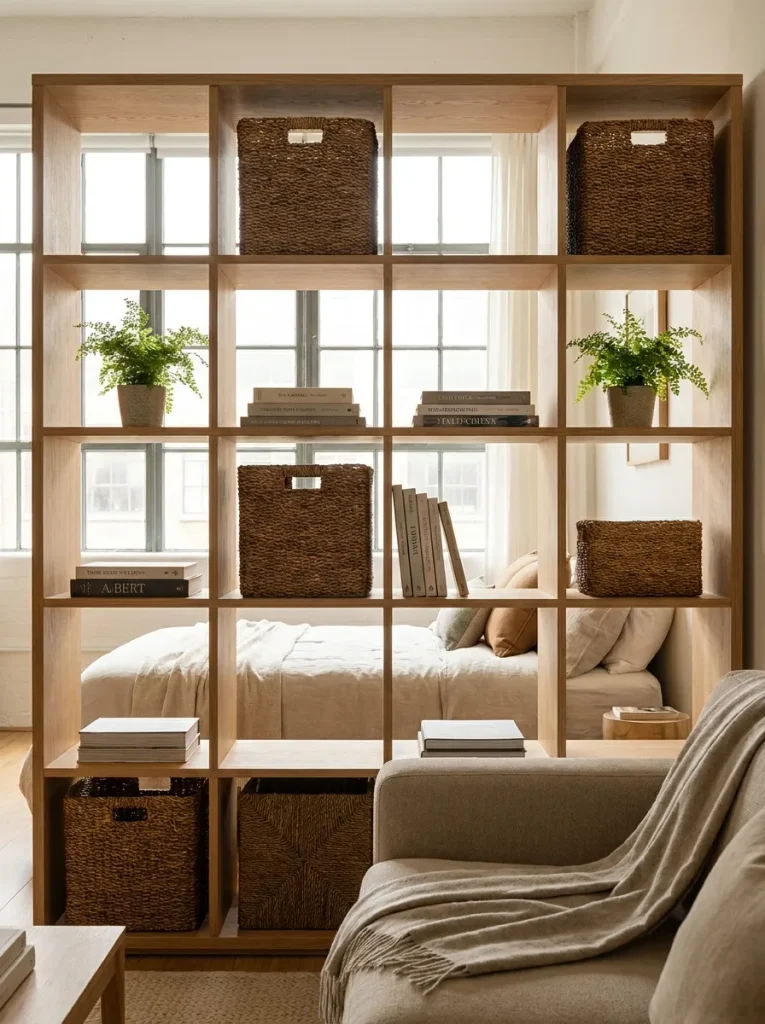
A solid bookcase and an open-back shelf can both split a studio in two. Only one of them lets the light through.
A solid divider creates a second, smaller room with its own dark side. An open-back cube shelf marks where the bedroom zone starts while still letting daylight, and your line of sight, pass through the gaps.
To keep it from turning into a wall anyway:
- leave about half the cubbies empty or nearly empty
- put heavier baskets and books on the lower shelves
- secure it to the nearest wall with a bracket, since it has nothing behind it to lean on
At the foot of the bed, it also hides the unmade sheets from the sofa.
If an open shelf doesn’t suit your layout, I have 15 studio divider ideas that keep the light moving.
📌 Good To Know
No room for a shelf? A sheer curtain on a ceiling track or a floor-to-ceiling tension rod does the same job. Pull it closed at night for privacy, and push it open in the morning so the whole studio gets the light.
19. Leave a Third of Every Surface Empty
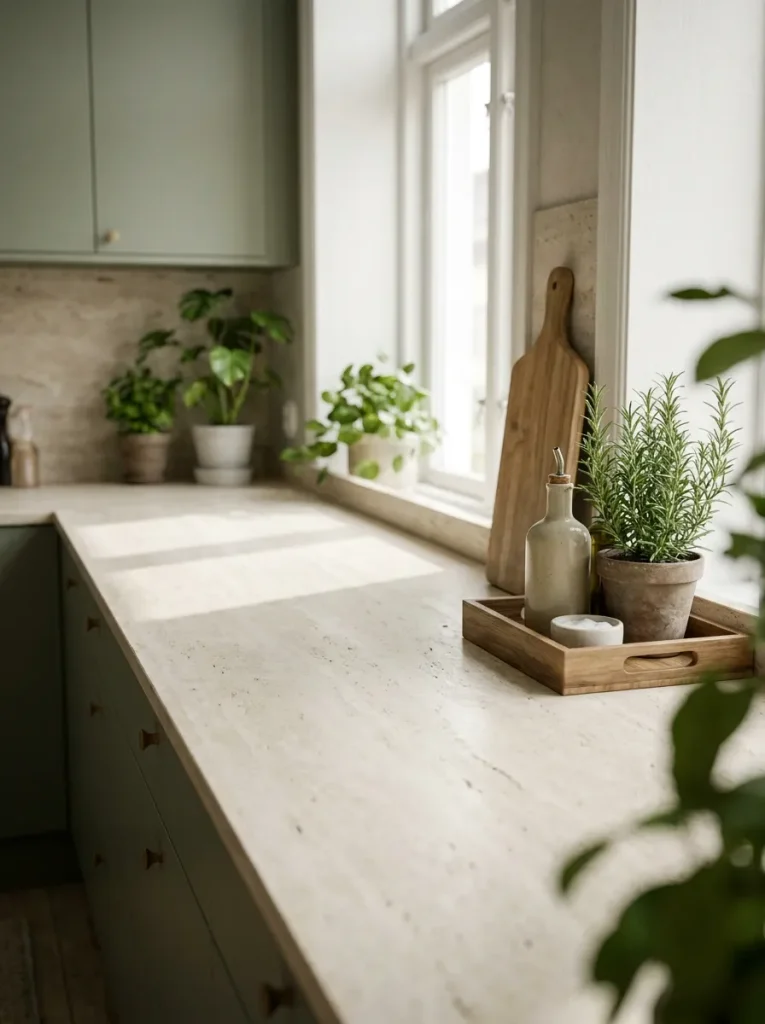
I’ve noticed that the calmest small apartments don’t always have less stuff. They just have more empty surface showing.
A bare stretch of counter or dresser top gives your eye somewhere to rest, the same way open floor does. When every flat surface is covered edge to edge, the room feels full, even if the floor is clear.
A simple goal is to leave about a third of each surface empty. Start with the spots you see most often:
- the kitchen counter
- the top of the dresser
- the coffee table
- the entry ledge where keys land
Clear one surface tonight, and see whether you even want to put everything back.
Group small things on a tray so they read as one object, not ten.
Give each surface one taller item, one low item, and open space around them.
Lining up rows of small objects along the edge of a shelf or counter.
Using the top of a dresser as a drawer for things that have no home yet.
20. Paint an Arch Behind the Bed Instead of Buying a Headboard
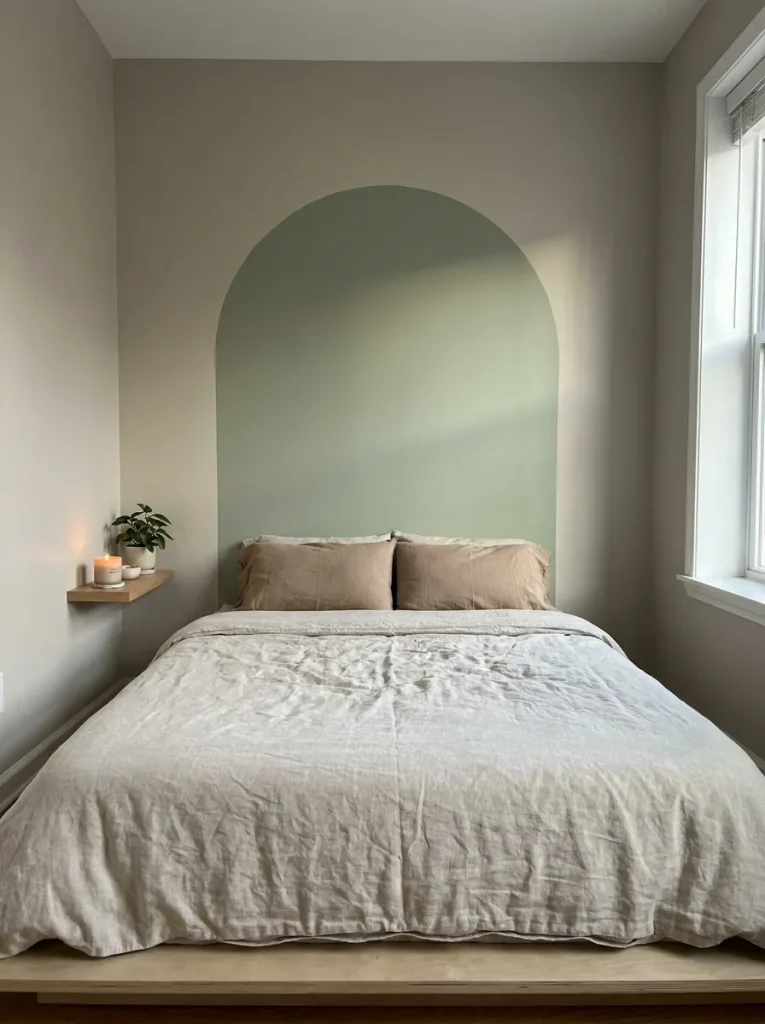
Skip the headboard and paint an arch on the wall behind your bed instead.
A padded headboard adds bulk and pushes the bed farther into the room. A painted arch takes up no space, and because it rises well above the mattress, it pulls your eye up the wall.
A few choices keep it looking intentional:
- Make it a little wider than the bed so it frames the whole thing.
- Take it much higher than a normal headboard would go.
- Pick a shade from your three-color palette, a few steps deeper than the wall.
Renters should get the go-ahead first, but a small arch is one of the easier paint jobs to cover at move-out.
Pull the bed away from the wall. Mark the center point behind it and the width you want, then tape the two straight sides with painter’s tape.
For the curve, tie a pencil to a piece of string, pin the other end at the center point where the curve starts, and swing the pencil across like a compass.
Paint the curve by hand with a small angled brush and fill the rest with a roller. Do two coats, and peel the tape while the last coat is still slightly wet for a clean edge.
Conclusion
A small apartment will never have more square feet than it has today. What you can change is how far your eye travels, how much light reaches the corners, and how much floor and wall stay in view.
That’s what all of these small space design tricks come down to. You don’t need to do all twenty. Pick two or three that fix whatever bugs you most, live with them for a week, and then add another. The changes build on each other, and the room keeps getting easier to live in.
Save this list to your apartment board so it’s there the next time a corner starts feeling cramped.
Working on the living room specifically? Here are 30 smart ways to style a small living room so it feels bigger.
Three free tricks to start with tonight