
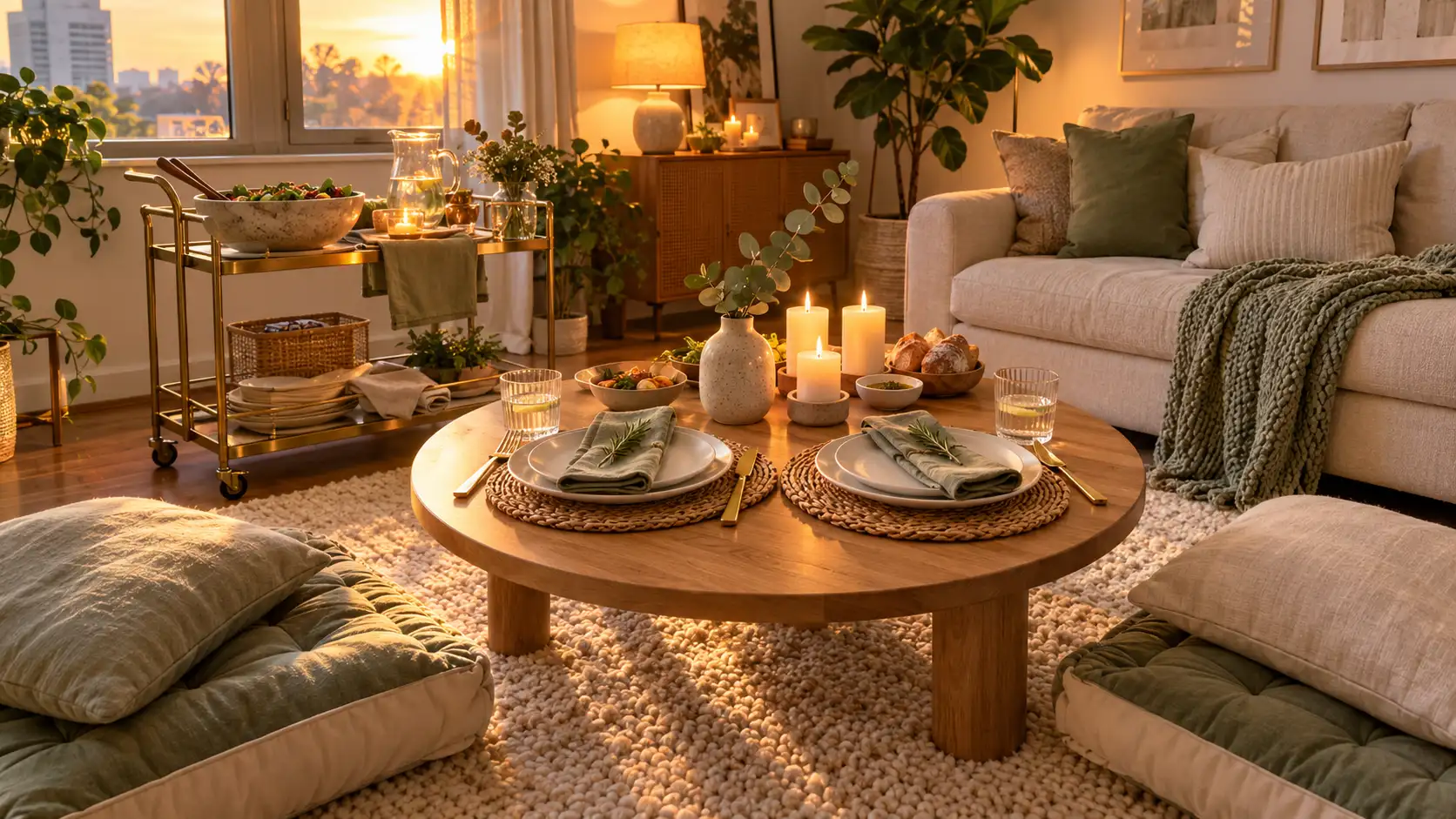
You have a sofa, a coffee table, and maybe a kitchen counter with two stools. What you don’t have is a dining room. So most nights, dinner happens on your lap in front of the TV. And when a friend comes over, you’re not sure where the plates should even go.
Here’s the good news. A no dining room table setting works on almost any flat surface you already own: a coffee table, a desk, a kitchen island, or a folding table pulled out of the closet. The surface matters less than the setup.
This guide walks you through it in order. You’ll pick your spot, measure it, protect it, and set each place the way a real table is set. Then you’ll add a few small touches that make it feel like a planned meal instead of a workaround.
By the end, you’ll have a table for 1 to 4 people that looks put together and packs away in minutes.
The first time takes about 30 minutes, counting the time to dig out supplies. After that, it’s closer to 10 minutes. You don’t need new furniture, and you probably own most of what’s on the list below. Grab a tape measure and let’s start.
Coffee table, counter, desk, or folding table
Swap: a measuring app on your phone
Swap: a folded bedsheet or large scarf
Floor cushions, stools, or chairs
One per person
Short, wide ones tip less at low tables
Cloth or paper both work
Small vase, candle, or bowl of fruit
Bar cart, stool, or windowsill
Swap: LED tea lights
1. Choose the one surface you’ll eat on
Good options, in rough order: a kitchen counter or island, a desk, a coffee table, or a folding table. Pick the one closest to where you’ll sit and sturdy enough not to wobble. Press down hard on one corner to test it. If it rocks, move to the next option on the list.
If your whole place is one room, here’s how I host guests in a studio apartment during the holidays.
Stick to one surface for the plates. Splitting place settings across two tables makes the meal feel scattered instead of cozy. No table at all? A sturdy ottoman topped with a large tray works for one or two people.
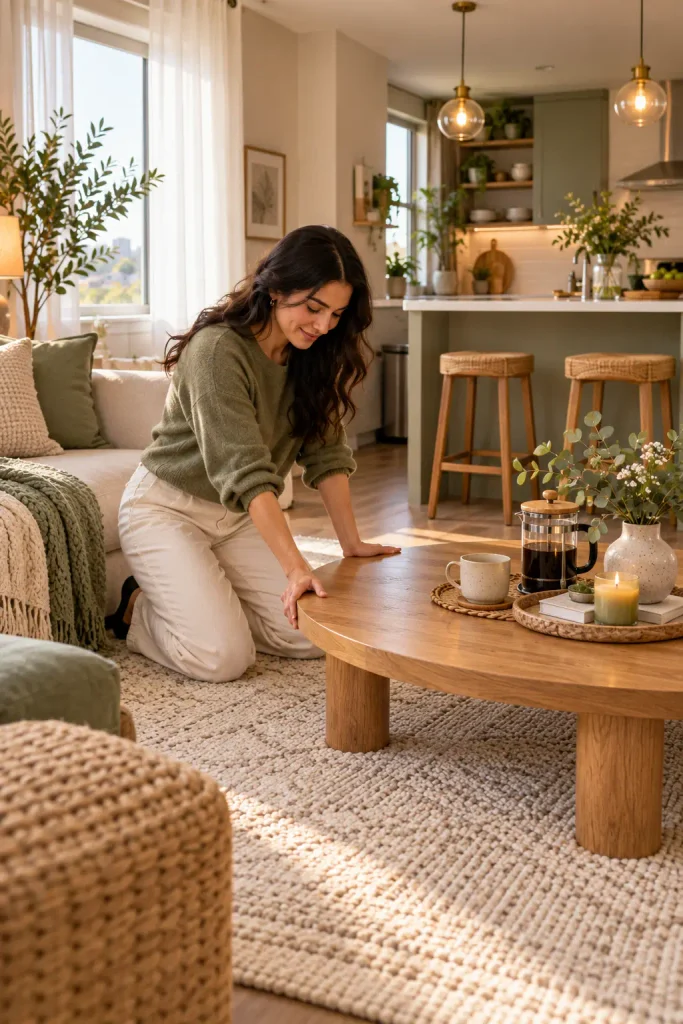
2. Measure how many place settings will fit
24 inches of width per person is the comfortable minimum. That leaves room for a plate, flatware on both sides, and elbows that don’t bump.
- Measure the longest edge of your surface.
- Divide that number by 24.
- Round down. That’s how many people fit on that side.
- Repeat for the opposite side if people can sit there too.
Each place also needs about 12 inches of depth. Most coffee tables and desks have this. Narrow console tables usually don’t.
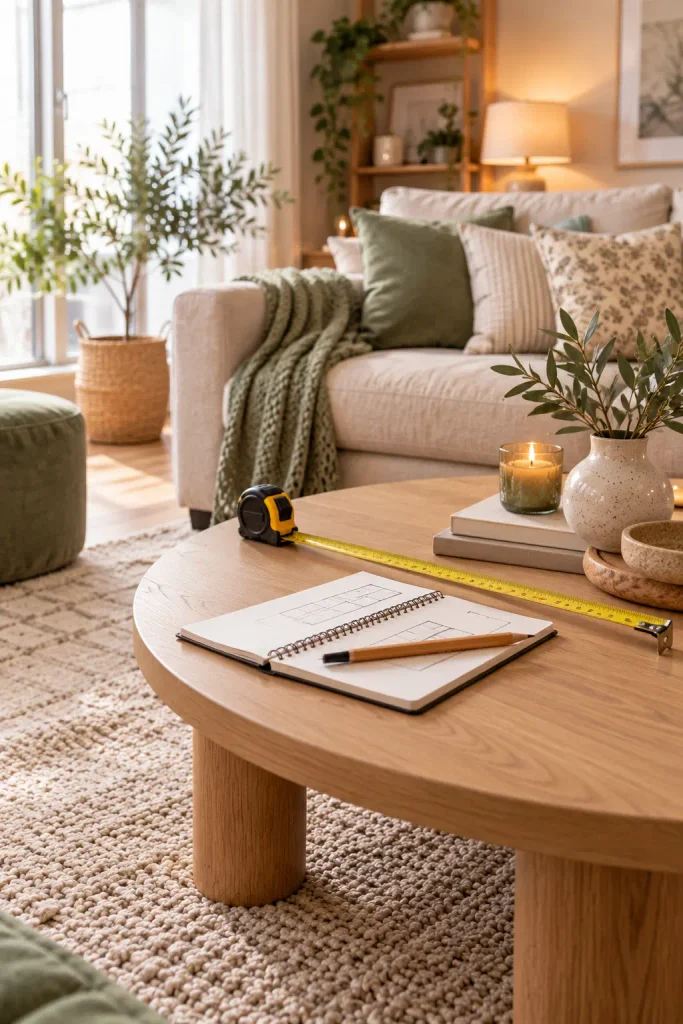
3. Clear the surface and wipe it down
Everything comes off: the remote, the mail, the laptop, the plant. Put it all in one bin or on a chair in another room so it doesn’t creep back during dinner. Wipe the top with a damp cloth, then dry it with a towel. Moisture trapped under a placemat can leave cloudy marks on wood.
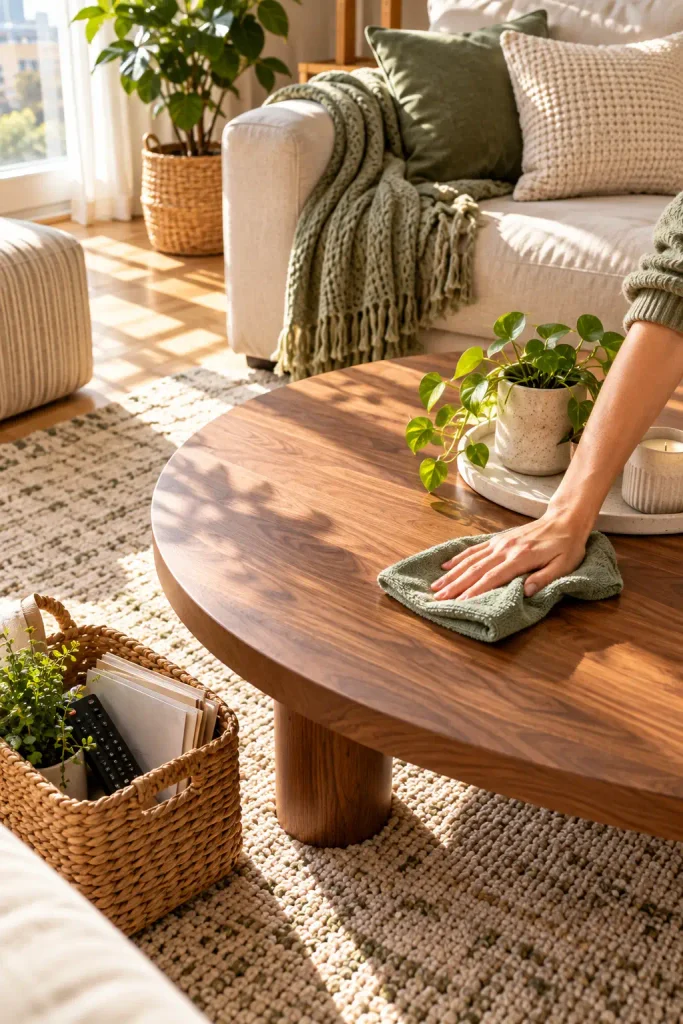
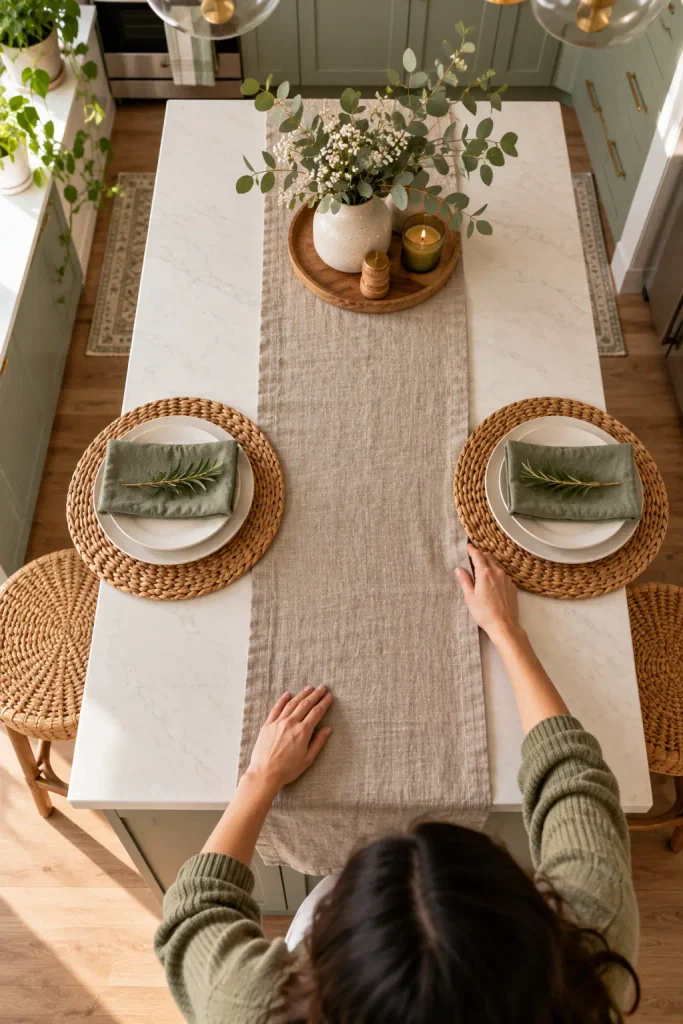
4. Lay down a runner, placemats, or a folded tablecloth
If your surface is long and narrow, a runner down the middle makes it read as a table. Placemats mark each seat, which helps on a desk or counter that doesn’t look like a dining spot on its own. A tablecloth works too, as long as it hangs no more than 6 inches past the edge. Longer fabric catches on knees, especially at a coffee table. No linens on hand? Fold a bedsheet or large scarf lengthwise and lay it down the center.
5. Set up seating at the right height for your surface
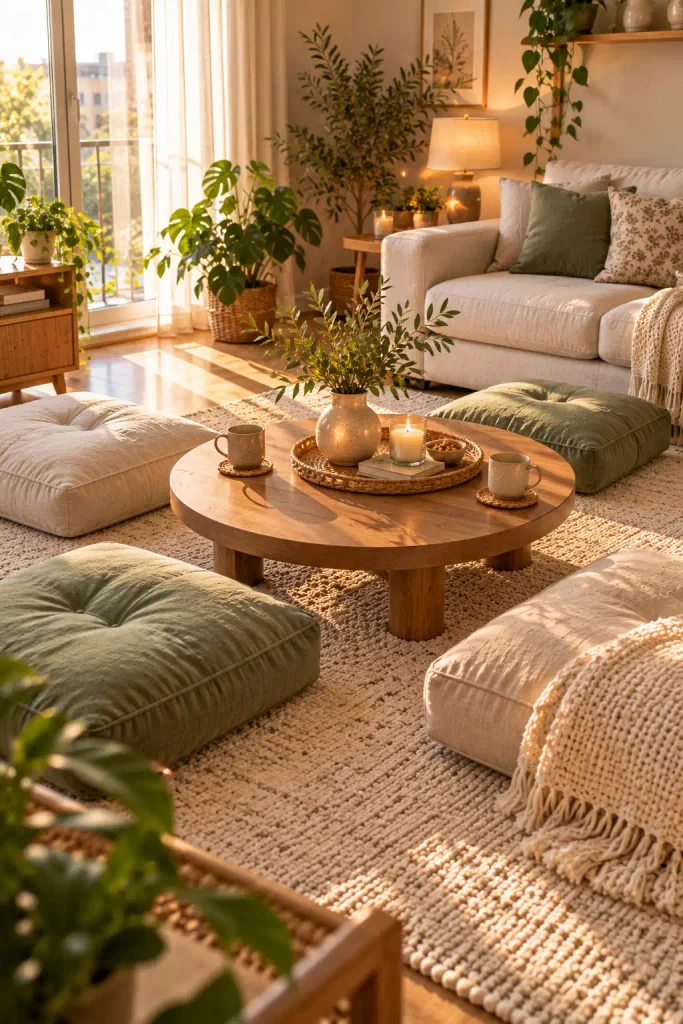
Comfort comes down to one gap: 10 to 12 inches between the top of the seat and the top of the surface. Match your seating to what you’re eating on.
- Kitchen counter (36 inches high): stools 24 to 26 inches tall
- Bar-height counter (42 inches): stools 28 to 30 inches tall
- Desk (about 30 inches): a regular chair
- Coffee table (16 to 18 inches): floor cushions 4 to 6 inches thick
Sitting on the sofa at a coffee table puts your plate down near your knees. Floor cushions bring you level with it. No cushions? Stack two bed pillows or a thickly folded blanket.
6. Place one plate in front of each seat
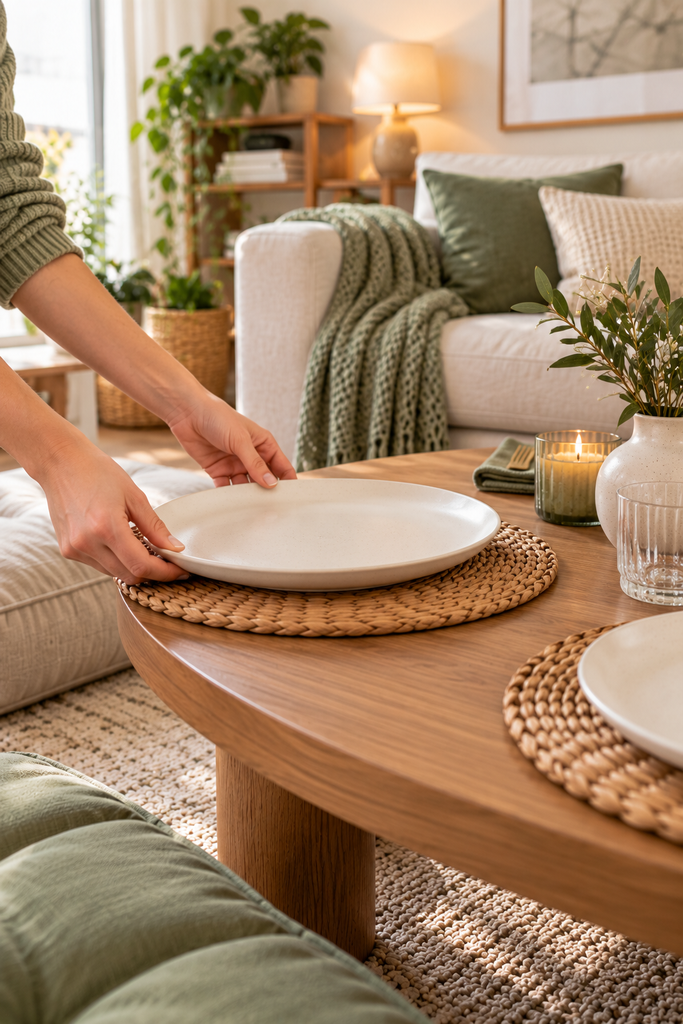
Plates come first because they set the spacing for everything else. Center each one in front of its seat, about 1 inch back from the edge. On a placemat, the plate sits in the middle with equal space on both sides. Mismatched plates are fine as long as they’re close in size. Serving soup or salad? Stack the bowl on top of the plate instead of setting it beside it. That saves about 6 inches of width per person, which matters on a small surface.
7. Arrange the flatware around each plate
“Fork” and “left” both have four letters. “Knife” and “right” both have five. That’s the whole rule.
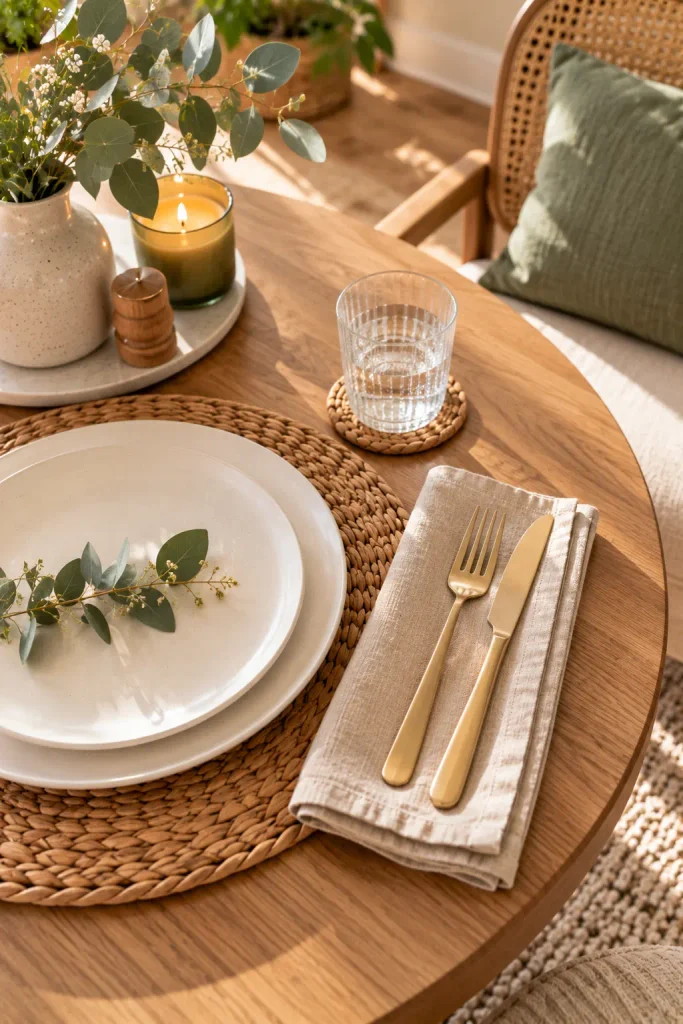
- Lay the fork on the left, about 1 inch from the plate.
- Lay the knife on the right, blade facing the plate.
- Put the spoon to the right of the knife.
- Line up the bottoms of all three with the bottom edge of the plate.
The blade faces inward so nobody reaches across a sharp edge. Short on room? Leave the spoon off unless the meal needs one.
8. Set the glass above the knife
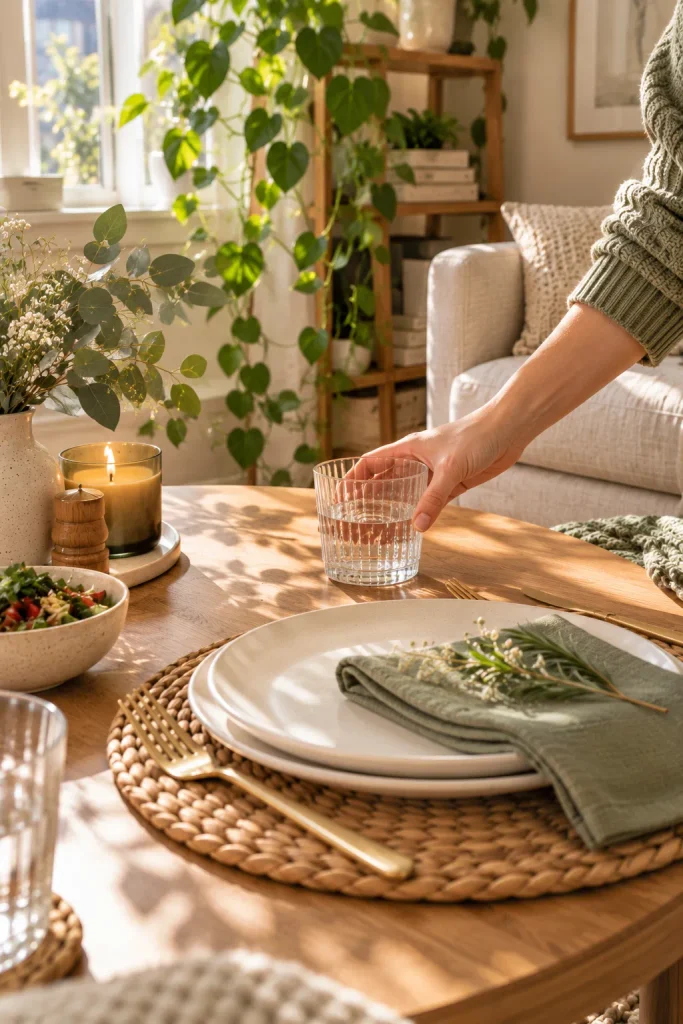
Most people reach for a drink with their right hand, which is why the glass lives here. Place it about 2 inches above the tip of the knife. At a coffee table, keep it at least 4 inches in from the edge. That’s the zone where knees and shifting cushions knock things over.
9. Fold the napkin and put it in place
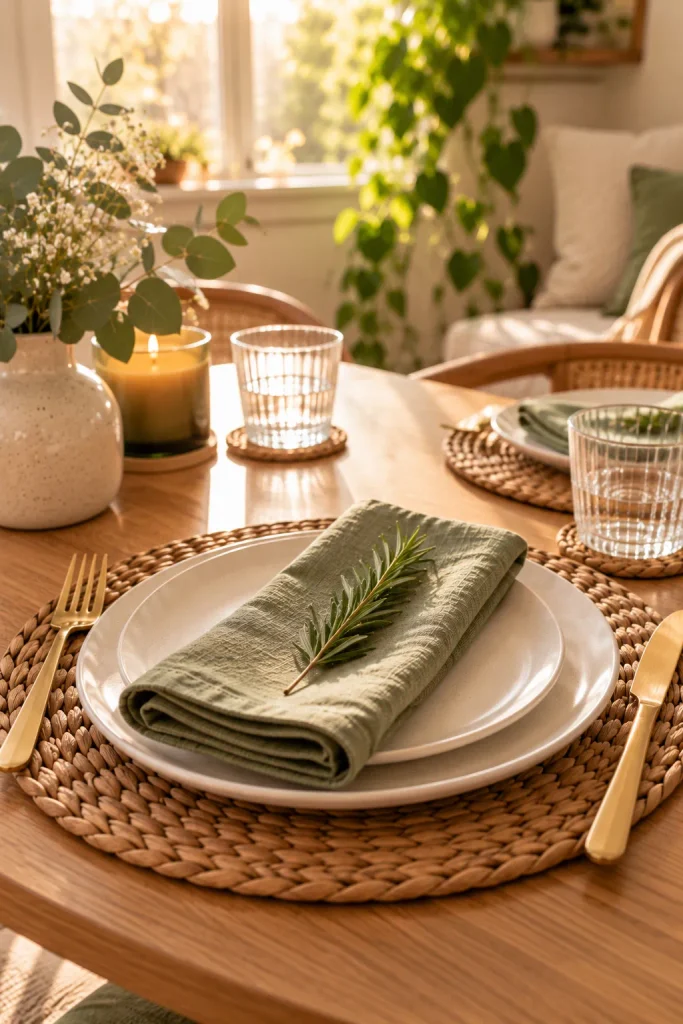
Where does the napkin go when space is tight? On the plate. It keeps the left side clear, which buys back width on a crowded surface. For cloth, fold it in half, then in half again to make a square. Fold that square in half once more into a neat rectangle and lay it across the center of the plate. Paper napkins fold the same way. If the fold looks puffy, press it flat with your palm.
10. Add a low centerpiece to finish your no dining room table setting
Anything taller than 10 inches blocks the face across from you. On a small surface, people sit close, so that matters more than it would at a big table. One bud vase with a single stem, a short candle, or a bowl of lemons is plenty. Set it in the center. If it crowds a plate, move it to the side station instead.
11. Create a side station for serving dishes and extras
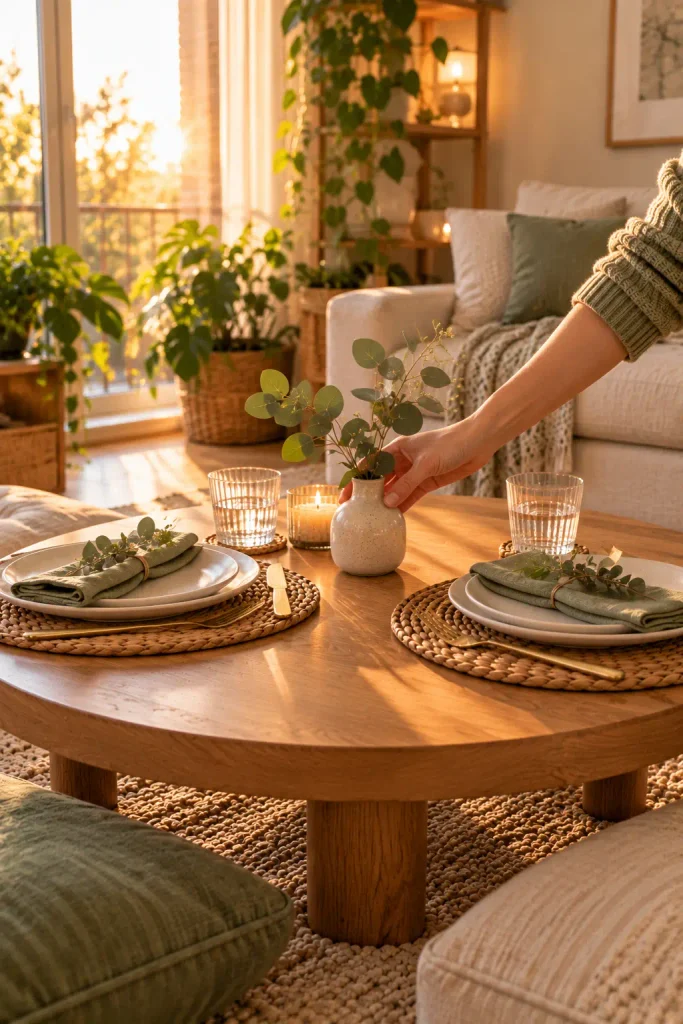
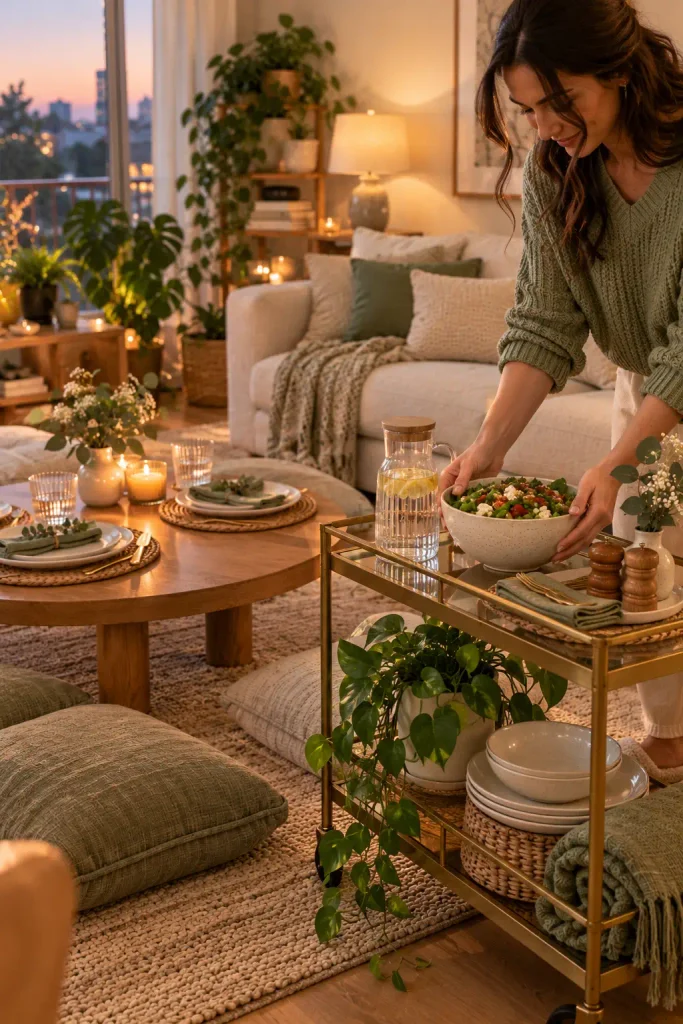
Unless your surface is unusually big, the serving dishes won’t fit on it once the plates are down. Pick a spot within arm’s reach of the seats, like a bar cart, a stool, a nearby counter, or a tray on an ottoman. Load it up:
Cooking for a holiday crowd? This small apartment Thanksgiving plan runs the entire meal from a single oven.
- Serving dishes, with spoons already in them
- A water pitcher or bottle
- Salt and pepper
- Extra napkins
- An empty bowl for scraps or pits
12. Switch to soft, low lighting
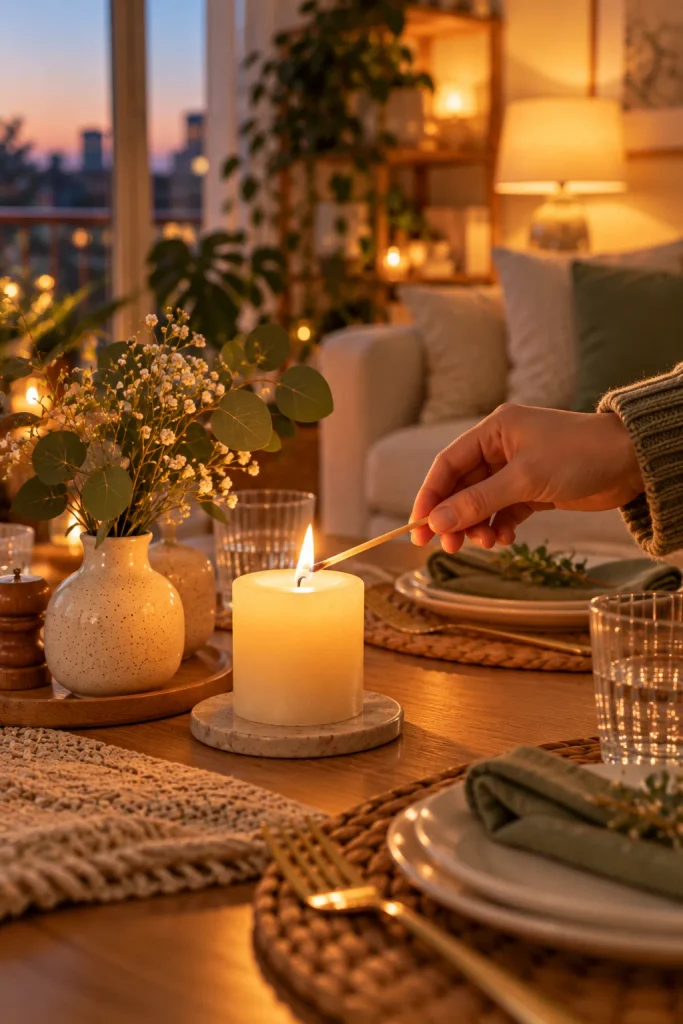
Overhead lights make even a nice setting feel like a quick snack in front of the TV. Turn the ceiling light off and light the room from table height instead: a nearby floor or table lamp with a warm bulb (2700K or lower), plus 2 or 3 candles. Keep every flame at least 12 inches from napkins, the runner, and cushions. At a coffee table, people shift around a lot, and fabric moves with them. LED tea lights are the safer pick around pets or kids.
13. Store the whole setting in one basket for next time
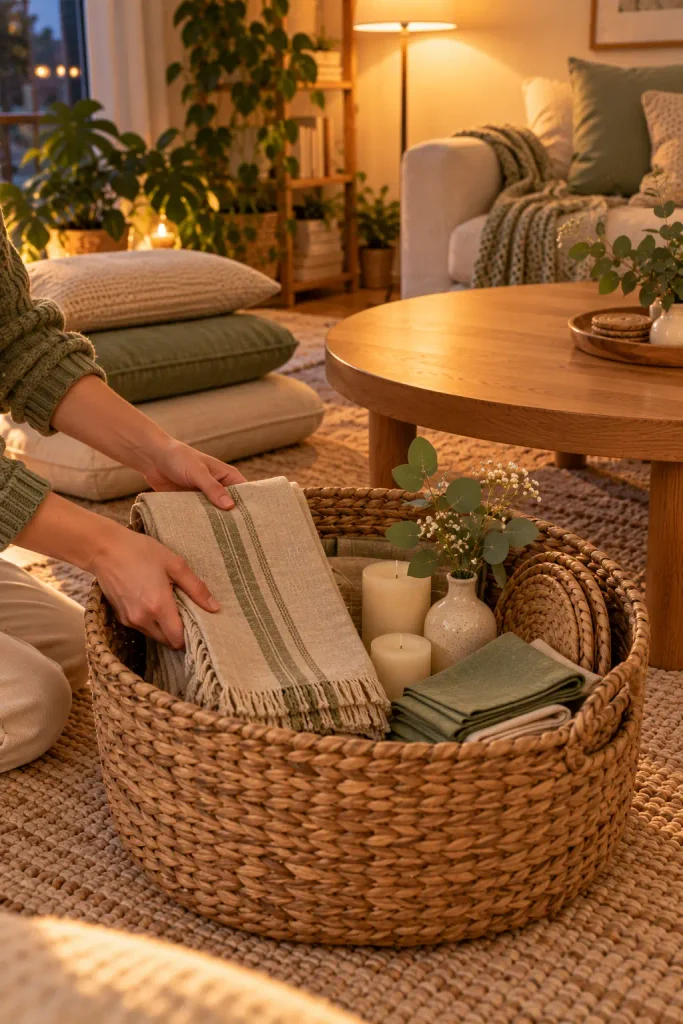
The slowest part of this whole setup is hunting for everything. Once the dishes are washed, gather the runner or placemats, cloth napkins, candles, and centerpiece into one basket. Plates and flatware can stay in the kitchen where they live. Slide the basket under the coffee table, onto a closet shelf, or under the bed, and keep the floor cushions stacked nearby. Next time, one grab gets you to a set table in about 10 minutes.
A basket is just one trick for stashing things between meals, and these hidden storage ideas for small apartments have a dozen more.
| If This Happens | Try This |
|---|---|
| Everything won’t fit on the surface | Drop to 20 inches per person, put napkins on the plates, and leave off any flatware the meal doesn’t need. |
| The folding table wobbles | Check that every leg lock is fully clicked in. Then slide a folded piece of cardboard under the short leg. |
| Glasses keep tipping at the coffee table | Swap stemmed glasses for short, wide tumblers. Keep them at least 4 inches in from the edge. |
| Floor seating gets sore fast | Seat guests with their backs against the sofa, or add a second cushion behind each person for support. |
| Hot dishes leave marks on the surface | Set a trivet or a folded dish towel under anything that comes straight from the oven or stove. |
| It still doesn’t feel like a real table | Add placemats to mark each seat, turn off the ceiling light, and light 2 or 3 candles. |
Conclusion
You now have a real place to eat, and you didn’t need a dining room to get it. Your no dining room table setting has a spot for every plate, seats at the right height, and soft light that makes dinner feel planned.
Ready to invite people over? Here’s how to host a small apartment dinner party that feels cozy, not cramped.
Try it first on a regular weeknight, even if it’s only for you. Once it feels natural, invite a friend over.
Save this pin to your apartment ideas board so the steps are ready the next time you set the table.